





Unlacquered Brass
Unlacquered Brass vs. Polished Brass: Which Finish Is Right for Your Home?
Jun
Brass fixtures have become a favorite choice for homeowners, designers, and architects looking to add warmth, character, and timeless appeal to kitchens and bathrooms. But when shopping for brass hardware, faucets, or lighting, you’ll often encounter two similar-looking finishes: unlacquered brass and polished brass.
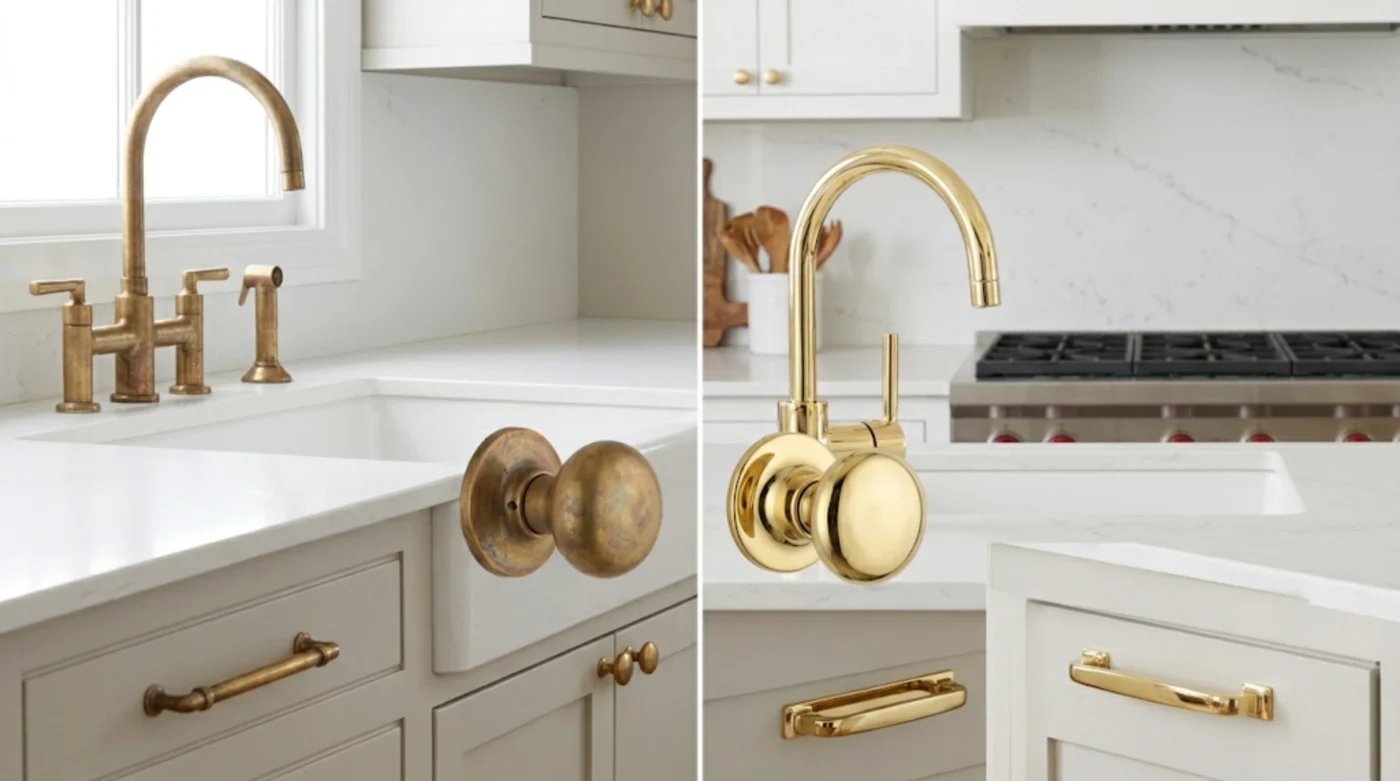
At first glance, they can appear nearly identical. Both feature the rich golden tone that makes brass so desirable. The difference becomes apparent over time.
If you’re deciding between the two, understanding how they age, how much maintenance they require, and the look they create in a space can help you make the right choice.
Quick Answer: What’s the Difference?
The biggest difference is simple:
- Unlacquered brass is raw brass without a protective coating. It naturally develops a patina as it reacts with air, moisture, and everyday use.
- Polished brass is typically coated with a clear lacquer that protects the surface and helps maintain its bright, shiny appearance.
In other words:
Unlacquered brass is a living finish that changes over time, while polished brass is designed to stay looking the same.
Side-by-Side Comparison
| Feature | Unlacquered Brass | Polished Brass |
|---|---|---|
| Protective Coating | No | Yes |
| Patina Development | Yes | No |
| Appearance Over Time | Changes naturally | Remains consistent |
| Maintenance | Optional polishing | Simple cleaning |
| Character | Unique and evolving | Uniform and polished |
| Best For | Traditional, luxury, historic interiors | Classic, transitional, contemporary interiors |
What Is Unlacquered Brass?
Unlacquered brass is solid brass that has not been sealed with a protective coating. Because the metal is exposed to the environment, it gradually reacts with oxygen, moisture, oils from hands, and household conditions.
This natural oxidation process creates what is known as a patina.
When first installed, unlacquered brass typically has a bright golden appearance. Over weeks, months, and years, the finish slowly develops deeper tones and subtle variations in color.
No two pieces age exactly the same way.
Why Homeowners Love Unlacquered Brass
Many people choose unlacquered brass specifically because it changes over time.
Benefits include:
- A unique finish that becomes more beautiful with age
- Rich character that cannot be replicated by factory-applied coatings
- Warm, authentic appearance
- A finish commonly found in luxury homes and historic renovations
- Natural variations that make each fixture one of a kind
For many designers, the evolving patina is the main attraction.
Potential Drawbacks
Unlacquered brass isn’t for everyone.
Because the finish changes naturally, homeowners should expect:
- Visible fingerprints and water spots
- Uneven aging in high-touch areas
- Color changes over time
- A look that becomes less shiny as patina develops
If you prefer a fixture that looks exactly the same year after year, another finish may be a better fit.
What Is Polished Brass?
Polished brass is brass that has been buffed to a highly reflective shine and then protected with a clear lacquer coating.
The coating acts as a barrier between the brass and the environment, preventing the oxidation process that creates patina.
As a result, polished brass maintains its bright golden appearance for many years with minimal effort.
Why Homeowners Love Polished Brass
Polished brass offers several advantages:
- Consistent appearance
- Bright, reflective finish
- Minimal maintenance
- Easy cleaning
- Predictable long-term look
For homeowners who want the beauty of brass without the aging process, polished brass is often the preferred choice.
Potential Drawbacks
While polished brass offers convenience, it lacks some of the character associated with unlacquered brass.
Possible disadvantages include:
- No natural patina development
- Less visual depth over time
- Can feel more formal or manufactured
- May eventually require refinishing if the lacquer wears down
Appearance: How They Look Over Time
Appearance is usually the deciding factor when choosing between these two finishes.
Unlacquered Brass
When new, unlacquered brass often looks bright and polished.
Over time it may develop:
- Honey-colored tones
- Soft amber hues
- Darker antique areas
- Natural highlights and lowlights
- Unique color variations around handles and frequently touched areas
The finish tells the story of how the fixture has been used.
Polished Brass
Polished brass is designed to preserve its original appearance.
You can expect:
- Consistent color
- High reflectivity
- Smooth uniform finish
- Minimal visible aging
For homeowners seeking a polished and predictable aesthetic, this consistency is a major advantage.
Maintenance Requirements
Another major difference is maintenance.
Caring for Unlacquered Brass
Unlacquered brass gives homeowners flexibility.
You can:
- Allow the patina to develop naturally
- Clean it gently with mild soap and water
- Restore the original shine whenever desired using brass polish
Many homeowners choose a middle ground—allowing some patina to develop while occasionally brightening the finish.
The choice is entirely personal.
Caring for Polished Brass
Polished brass generally requires less maintenance.
Routine care typically involves:
- Wiping with a soft cloth
- Cleaning with mild soap and water
- Avoiding abrasive cleaners
Since the lacquer protects the surface, polishing is usually unnecessary.
Which Finish Feels More Luxurious?
Both finishes are used in high-end homes, but they create different impressions.
Unlacquered Brass Creates
- Authenticity
- Warmth
- Old-world craftsmanship
- European-inspired elegance
- Character that improves with age
Many luxury designers favor unlacquered brass because it feels natural and timeless.
Polished Brass Creates
- Sophistication
- Glamour
- Formal elegance
- Bright visual impact
- A refined and finished appearance
The best choice depends on the atmosphere you want to create.
Which Design Styles Work Best With Each Finish?
Choose Unlacquered Brass If You Love
- Traditional interiors
- English country homes
- French-inspired kitchens
- Historic renovations
- Organic and lived-in spaces
- Natural materials such as stone, wood, and marble
Choose Polished Brass If You Prefer
- Contemporary interiors
- Transitional design
- Formal spaces
- Consistent finishes throughout the home
- Low-maintenance fixtures
Frequently Asked Questions
Does unlacquered brass start out shiny?
Yes. New unlacquered brass is often bright and reflective. Over time, exposure to the environment causes it to develop a natural patina.
Can unlacquered brass be polished back to its original shine?
Yes. One of the benefits of unlacquered brass is that patina can usually be removed with appropriate brass polish if you want to restore a brighter appearance.
Does polished brass tarnish?
The protective lacquer significantly reduces tarnishing. However, after many years, the coating may wear and require refinishing.
Which finish lasts longer?
Both finishes can last for decades when properly cared for. The primary difference is appearance, not durability.
Final Verdict
Choosing between unlacquered brass and polished brass comes down to your personal preferences.
Choose unlacquered brass if you want:
- A living finish
- Natural patina
- Unique character
- Timeless luxury
Choose polished brass if you want:
- A consistent appearance
- Minimal maintenance
- Lasting shine
- Predictable results
Neither option is inherently better. The right choice depends on whether you want your brass fixtures to age gracefully and develop character or maintain their original polished look for years to come.
For homeowners who appreciate authenticity, craftsmanship, and the beauty of natural aging, unlacquered brass remains one of the most distinctive and rewarding finishes available.
