





Uncategorized
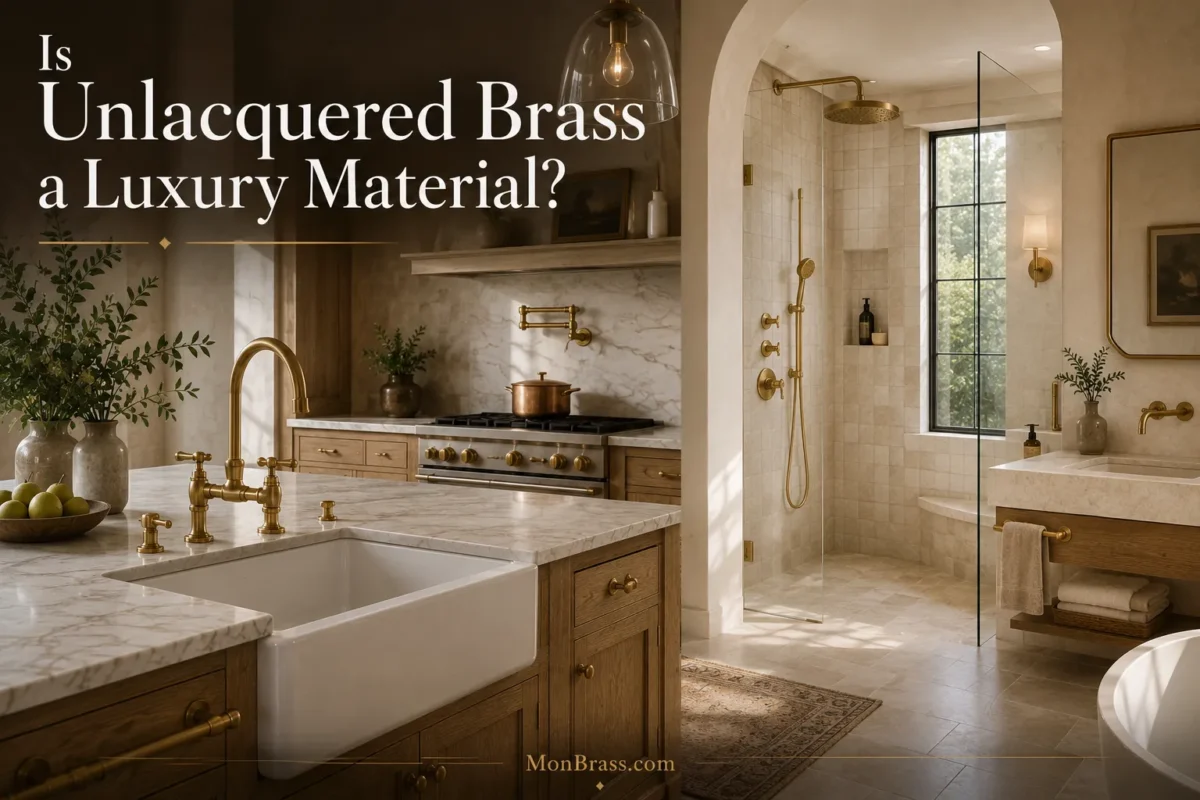
Is Unlacquered Brass a Luxury Material? A Practical Look at Quality, Design, and Value
Jul
Walk through a high-end kitchen showroom or browse the portfolio of an interior designer, and you’ll quickly notice one material appearing again and again: unlacquered brass. Its warm glow, natural patina, and timeless character have made it a favorite in luxury homes. But does that automatically make it a luxury material?
The answer is yes—but not simply because it costs more. Unlacquered brass earns its reputation through a combination of craftsmanship, material quality, longevity, and the unique way it ages over time. At the same time, it’s important to understand that luxury doesn’t always mean it’s the right choice for every project. Knowing what makes unlacquered brass different can help you decide whether it’s represents the kind of quality and long-term value you’re looking for.
What Defines a Luxury Material?
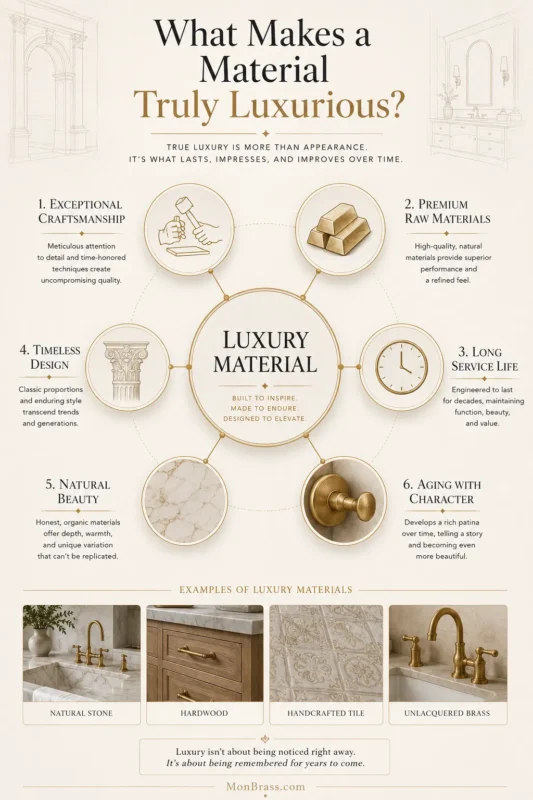
Luxury isn’t determined by price alone.
In residential design, materials are often considered luxurious because they offer qualities that go beyond basic functionality, such as:
- Exceptional craftsmanship
- High-quality raw materials
- Long service life
- Timeless design
- Natural beauty
- Unique aging characteristics
Natural stone, hardwood flooring, handcrafted tile, and unlacquered brass all share one important trait—they develop character rather than simply wearing out.
Unlike synthetic finishes designed to remain unchanged, luxury materials often become more visually interesting as they age.
Why Unlacquered Brass Is Considered a Luxury Material
It Uses Premium Materials
Many high-quality unlacquered brass fixtures are manufactured from solid brass rather than lower-cost plated metals.
Solid brass is valued for its durability, corrosion resistance, and long service life, making the underlying material an important part of the fixture’s premium reputation.
It Develops a Living Finish
Perhaps the most recognizable feature of unlacquered brass is its evolving surface.
Instead of preserving a factory-new appearance with a clear protective coating, the metal gradually develops a natural patina that becomes unique to each installation.
For many homeowners, this individuality is part of what distinguishes unlacquered brass from more conventional finishes.
It Prioritizes Longevity Over Short-Term Appearance
Luxury products are often designed with decades—not years—in mind.
Rather than relying on a surface coating to maintain a uniform appearance, unlacquered brass is intended to age naturally while remaining durable in everyday use.
Why It’s Associated With Luxury Design
Unlacquered brass is frequently found in thoughtfully designed homes because it complements premium natural materials and creates a sense of authenticity that manufactured finishes often lack.
Its warm appearance works comfortably across both traditional and contemporary interiors, which has helped it remain popular through changing design trends.
Does Luxury Mean High Maintenance?
This is one of the biggest misconceptions.
Many buyers assume luxury materials require constant upkeep.
In reality, routine care is generally straightforward and focuses on gentle cleaning while allowing the finish to age naturally.
The larger adjustment isn’t the maintenance itself—it’s understanding that the appearance will continue evolving over time.
Is Unlacquered Brass Expensive?
Compared to chrome, stainless steel, or brass-plated fixtures, unlacquered brass generally carries a higher initial cost.
Several factors contribute to that price:
- Solid brass construction
- Precision manufacturing
- Higher-quality internal components
- Premium craftsmanship
The price reflects both the material and the quality of construction.
That doesn’t automatically make every unlacquered brass fixture a luxury product, but high-quality manufacturers often position their collections within the premium market.
Does It Add Value Beyond Appearance?
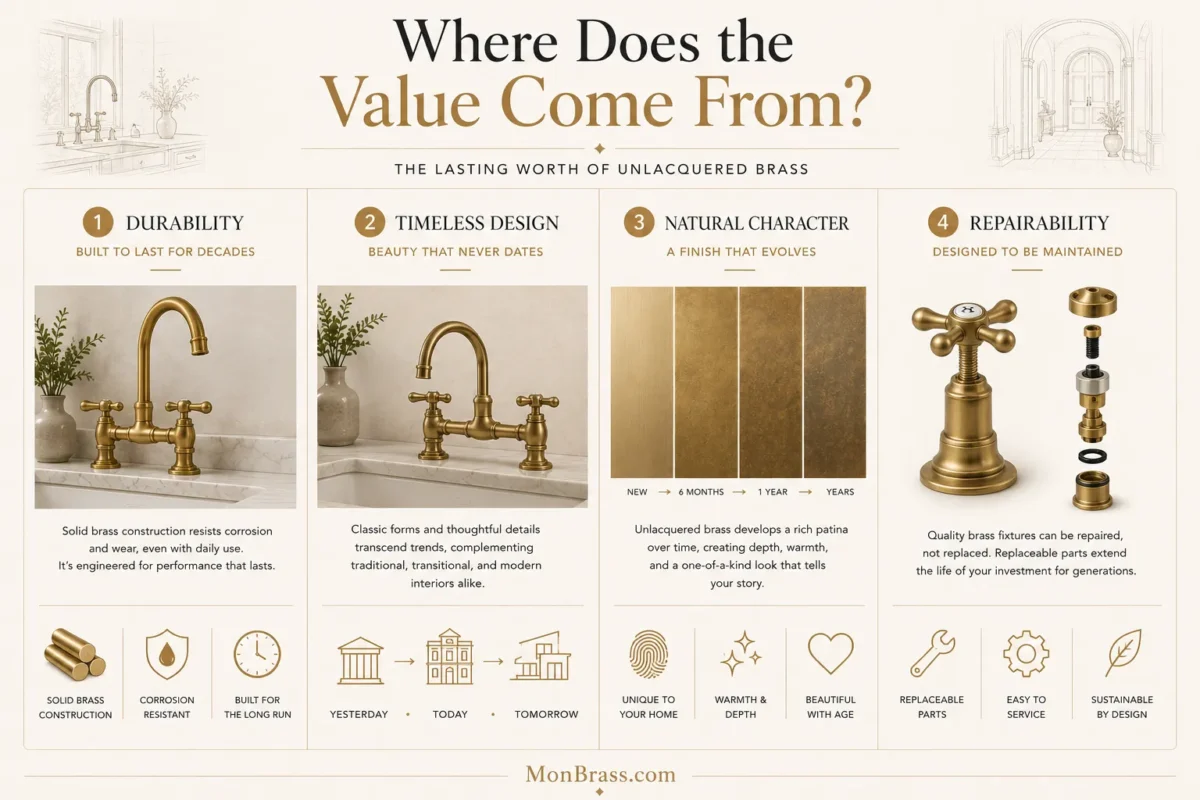
Luxury materials should provide more than visual appeal.
They should also offer lasting quality and an ownership experience that improves over time.
Unlacquered brass provides value through:
Durability
Quality fixtures are designed for long-term performance.
Timeless Design
Unlike trend-driven finishes, unlacquered brass has remained relevant across generations of residential design.
Character
Its appearance gradually becomes unique to the home rather than remaining factory uniform.
Repairability
Many premium manufacturers offer replacement internal components, extending the usable life of the fixture.
Things to Consider Before Choosing Unlacquered Brass
While unlacquered brass has many advantages, it isn’t the ideal choice for everyone.
Advantages
- Timeless appearance
- Natural aging process
- Excellent durability
- Complements premium materials
- Develops unique character
- Often manufactured from solid brass
Drawbacks
- Higher upfront investment
- Finish changes continuously
- Water spots may be more noticeable in hard water areas
- Not suitable for homeowners wanting a perfectly consistent appearance
Maintenance Expectations
Routine care is generally simple.
The key consideration is being comfortable with a finish that naturally changes over time.
Budget Considerations
Premium fixtures typically cost more because they emphasize higher-quality materials and construction rather than simply appearance.
Suitability for Different Homes
- Luxury remodels: An excellent match for premium natural materials.
- Historic homes: Complements traditional architecture.
- Modern homes: Adds warmth to minimalist spaces.
- Rental properties: A more consistent finish may be preferable where appearance uniformity is a priority.
Real-World Examples
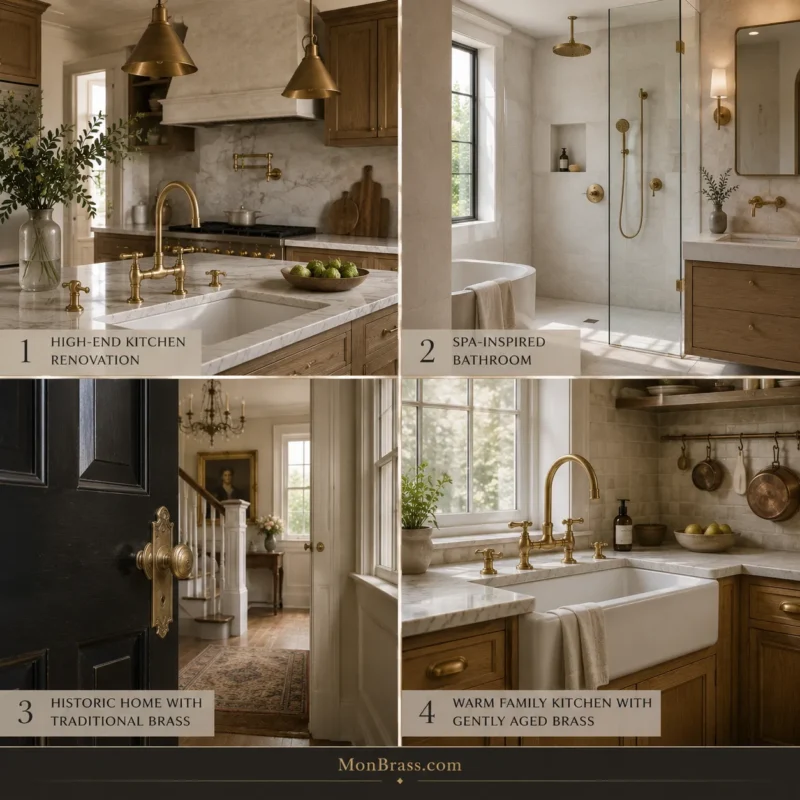
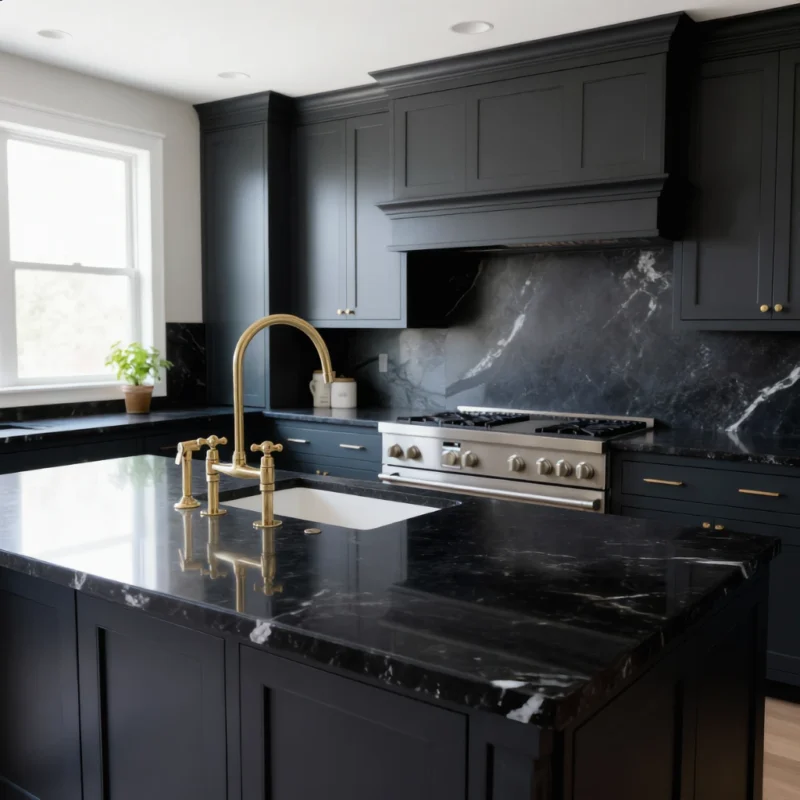
A High-End Kitchen Renovation
Premium natural materials paired with unlacquered brass create a layered, timeless appearance that many homeowners associate with luxury.
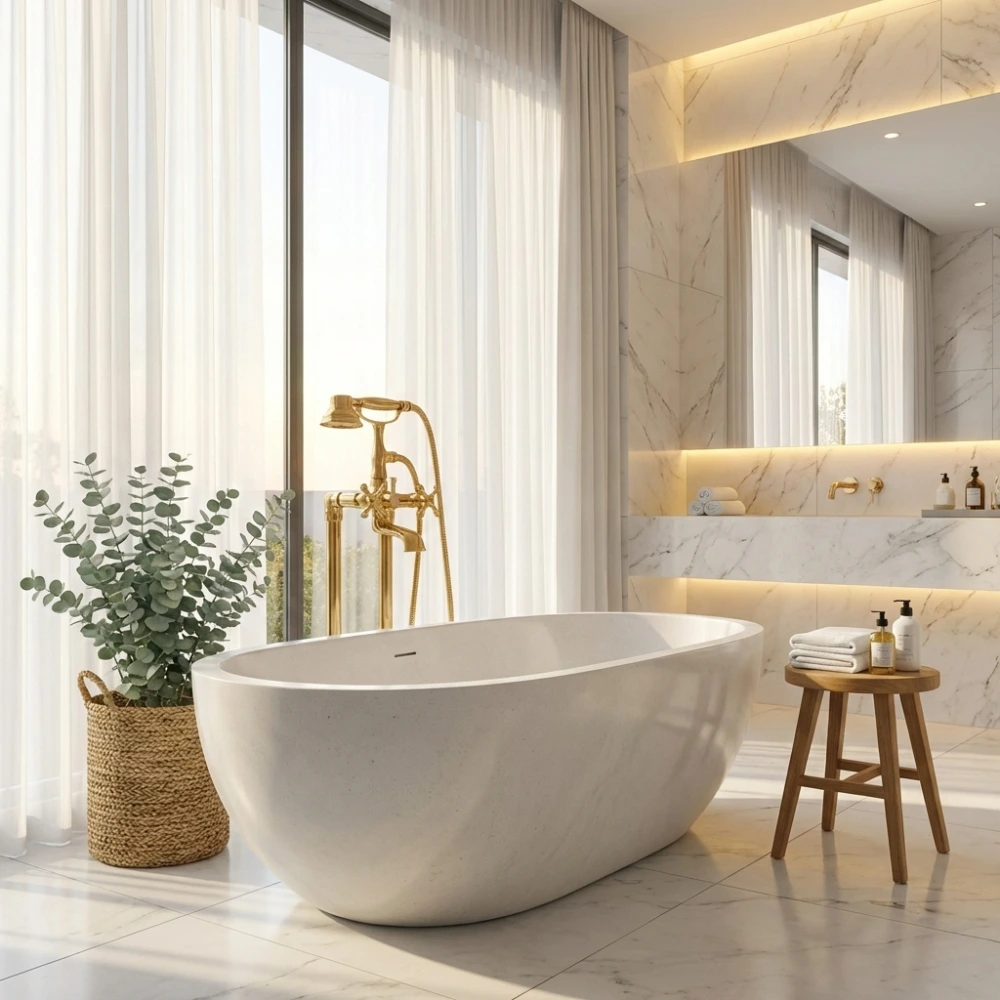
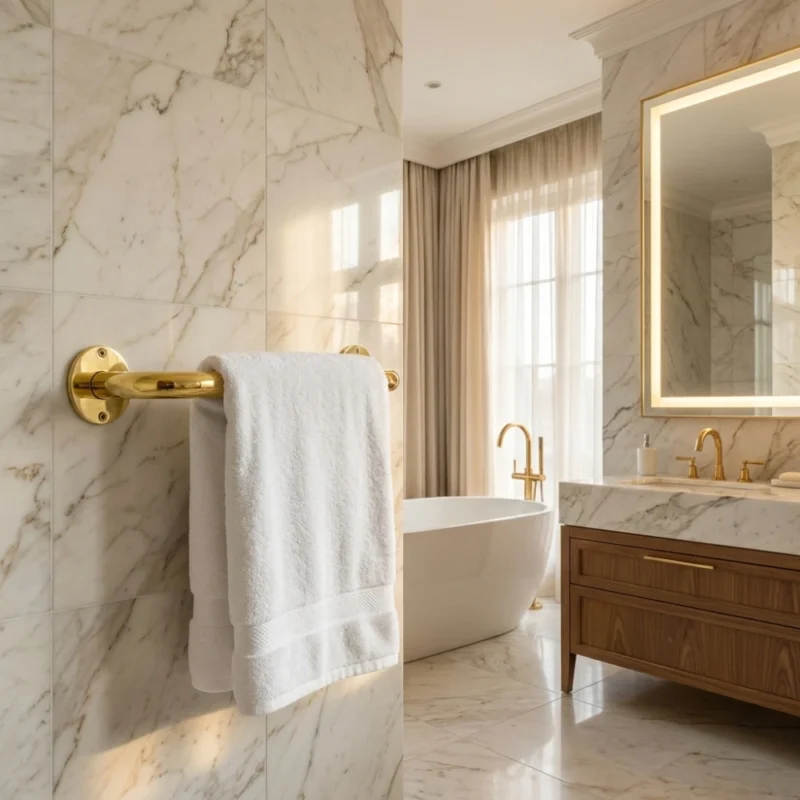
A Spa-Inspired Bathroom
The finish adds warmth while complementing stone, tile, and soft lighting.
A Historic Home
Older homes often benefit from materials that feel authentic rather than overly manufactured.
A Family Home
Daily use gradually creates an appearance unique to the household, reinforcing the finish’s character over time.
Common Misconceptions
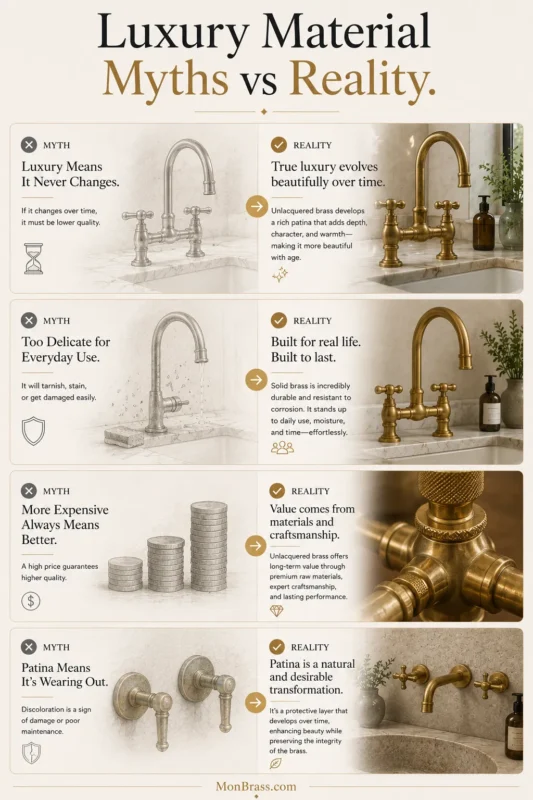
“Luxury Means It Never Changes.”
Many luxury materials—including leather, hardwood, copper, and unlacquered brass—develop character through age.
“It’s Too Delicate for Everyday Use.”
Properly manufactured solid brass fixtures are designed for everyday residential use.
“More Expensive Means Better.”
Price alone doesn’t determine quality.
Construction, craftsmanship, and manufacturer quality remain equally important.
“Patina Means the Fixture Is Wearing Out.”
Natural patina changes appearance rather than structural performance.
Frequently Asked Questions
Is unlacquered brass considered a premium finish?
Yes. Its natural aging process, high-quality construction, and long-standing association with premium residential design make it widely regarded as a luxury finish.
Why is unlacquered brass associated with luxury homes?
Because it combines quality materials, craftsmanship, timeless aesthetics, and a finish that develops character over time.
Does unlacquered brass increase resale appeal?
While no individual fixture guarantees higher resale value, premium materials can contribute to an overall impression of quality.
Is unlacquered brass worth the extra cost?
For homeowners who value longevity, craftsmanship, and natural materials, many consider it a worthwhile long-term investment.
Can unlacquered brass work in modern homes?
Yes. Its warm tones pair well with both contemporary and traditional interiors.
Conclusion
Unlacquered brass has earned its place among luxury materials because it offers more than a beautiful finish. Its solid construction, timeless appearance, natural aging process, and long-term durability distinguish it from many mass-produced alternatives.
Whether it’s the right choice depends on your expectations. If you appreciate materials that evolve gracefully and become more distinctive with time, unlacquered brass can represent a lasting investment in quality rather than simply a decorative upgrade.
