
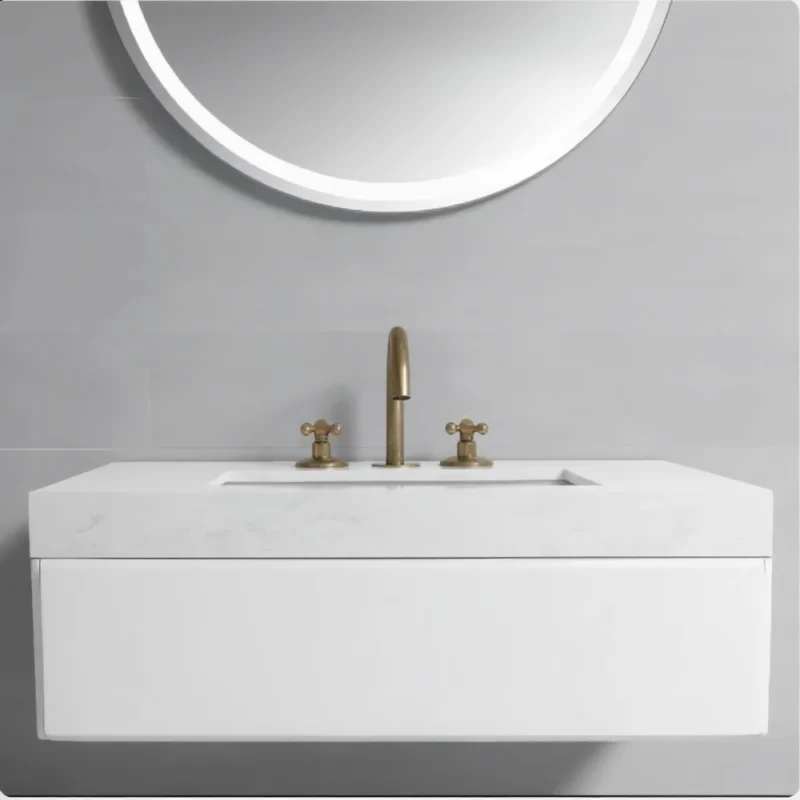
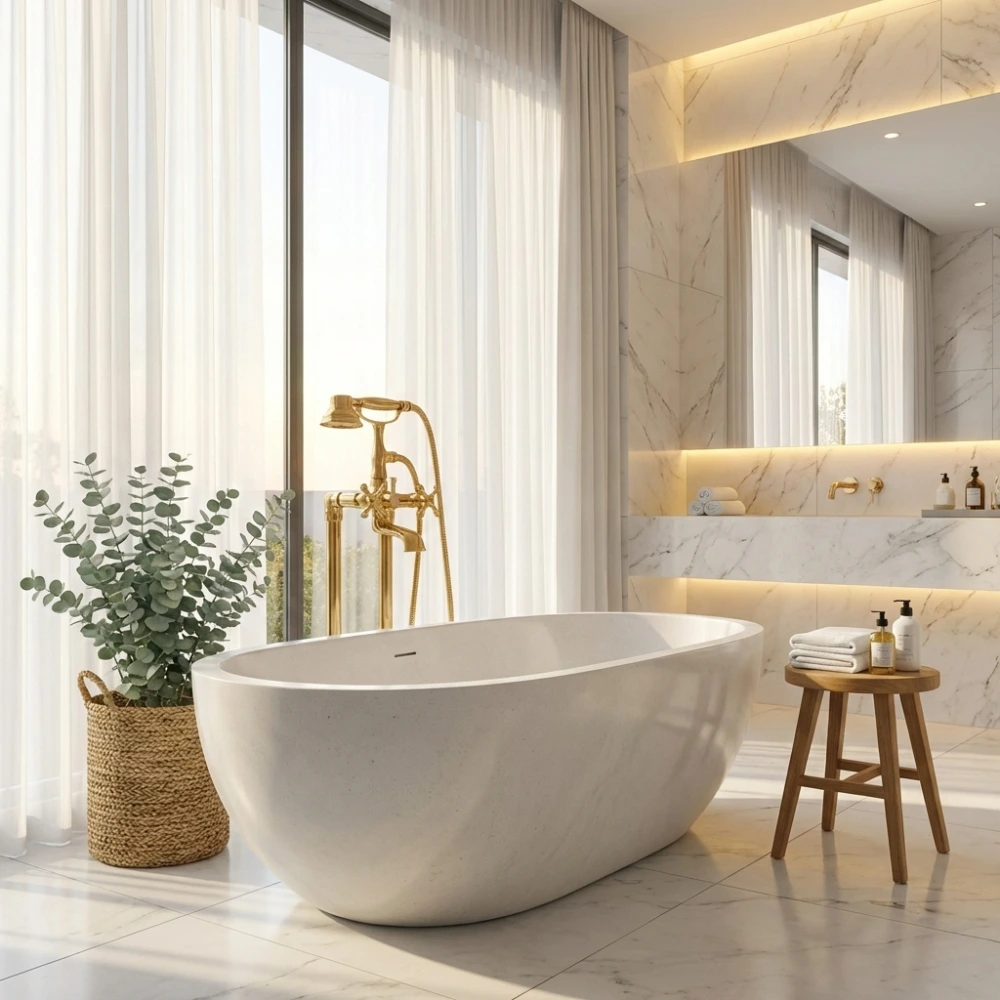
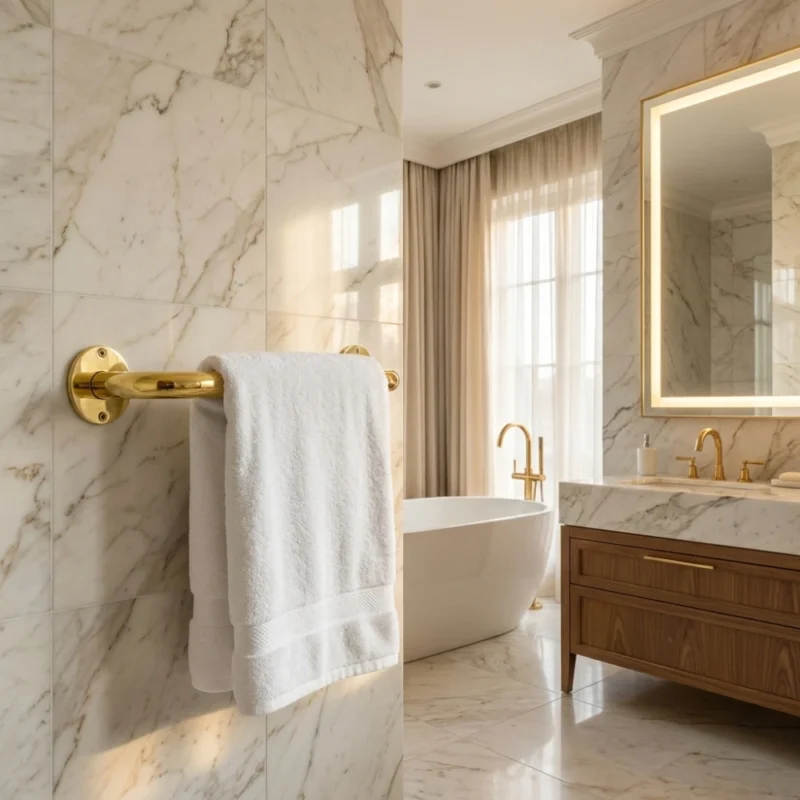
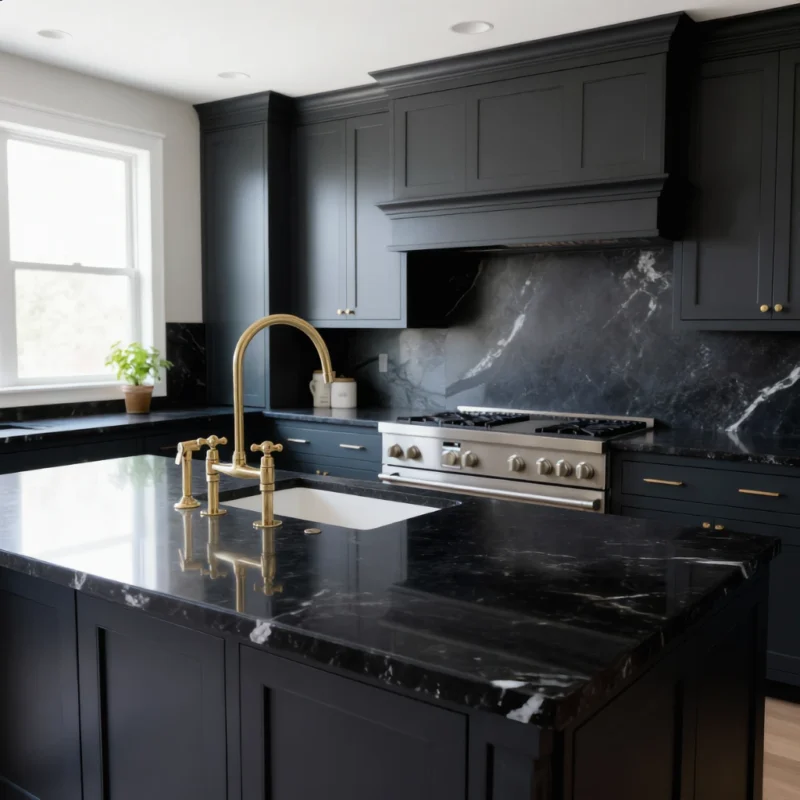





Uncategorized
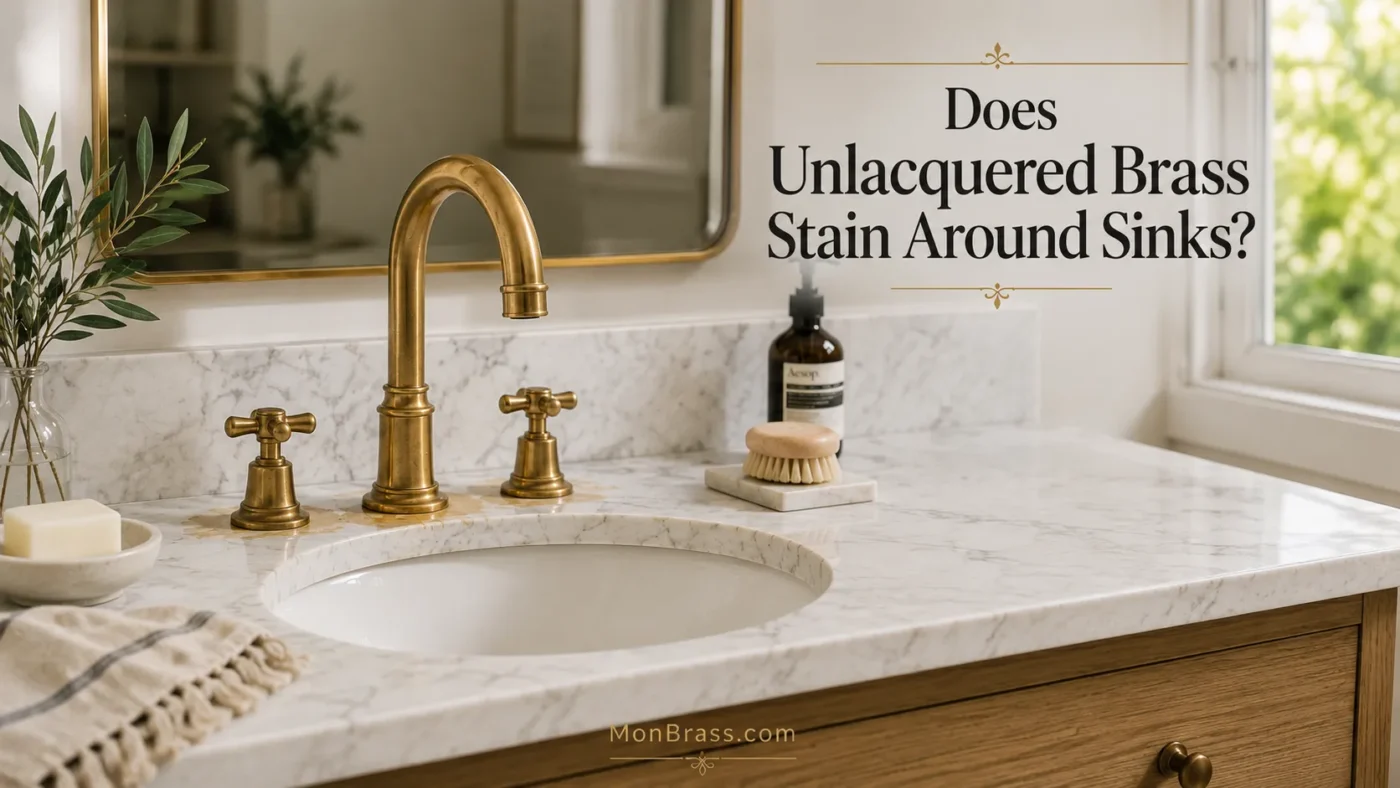
Does Unlacquered Brass Stain Around Sinks? What Homeowners Should Expect
Jul
If you’re considering a brass sink or faucet, you’ve probably wondered: Does unlacquered brass stain around sinks? It’s a fair question, especially since water, soap, toothpaste, food residue, and cleaning products all come into contact with sink fixtures every day.
The short answer is that unlacquered brass itself doesn’t typically “stain” in the way people often imagine. What homeowners usually notice is the natural development of patina, mineral deposits from hard water, or residue left behind by soap and everyday use. Understanding the difference can help you avoid unnecessary concern and enjoy the unique character that unlacquered brass develops over time.
Why the Area Around a Sink Changes Over Time
The area around any sink experiences constant exposure to moisture.
Water splashes, humidity, hand soaps, toothpaste, food acids, and cleaning products all affect nearby surfaces. Since unlacquered brass has no protective lacquer coating, it reacts naturally to these environmental conditions.
Instead of remaining unchanged, the surface slowly develops a patina.
In practice, this means the brass may become:
- Slightly darker
- Richer in color
- More matte than glossy
- Varied in tone across different areas
This is a normal part of the material’s aging process and should not be confused with permanent staining.
Patina vs. Stains: Understanding the Difference
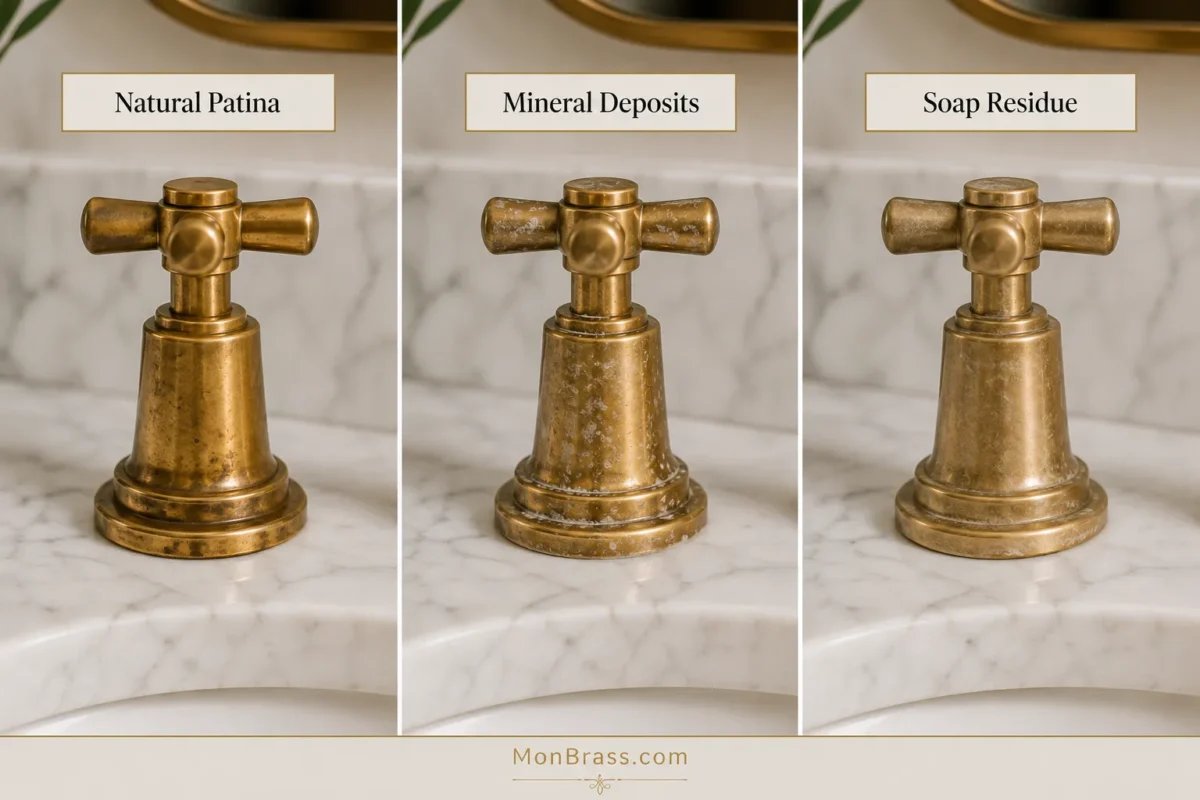
Many homeowners use the terms patina, tarnish, and stain interchangeably, but they are not the same thing.
In most cases, what appears around an unlacquered brass sink is natural patina or removable surface residue rather than permanent staining. Mineral deposits, soap film, and toothpaste residue typically sit on the surface and can be cleaned away, while patina is a normal change in the brass itself.
The key point is that normal color variation around a sink usually reflects the way unlacquered brass ages rather than damage to the fixture.
Can Water Cause Stains Around Unlacquered Brass?
Water itself rarely stains unlacquered brass. More commonly, minerals left behind as water evaporates create visible deposits that sit on the surface.
Homes with hard water may notice these spots more often than homes with soft water, but they are generally removable with gentle routine cleaning.
What Actually Causes Discoloration Around Brass Sinks?
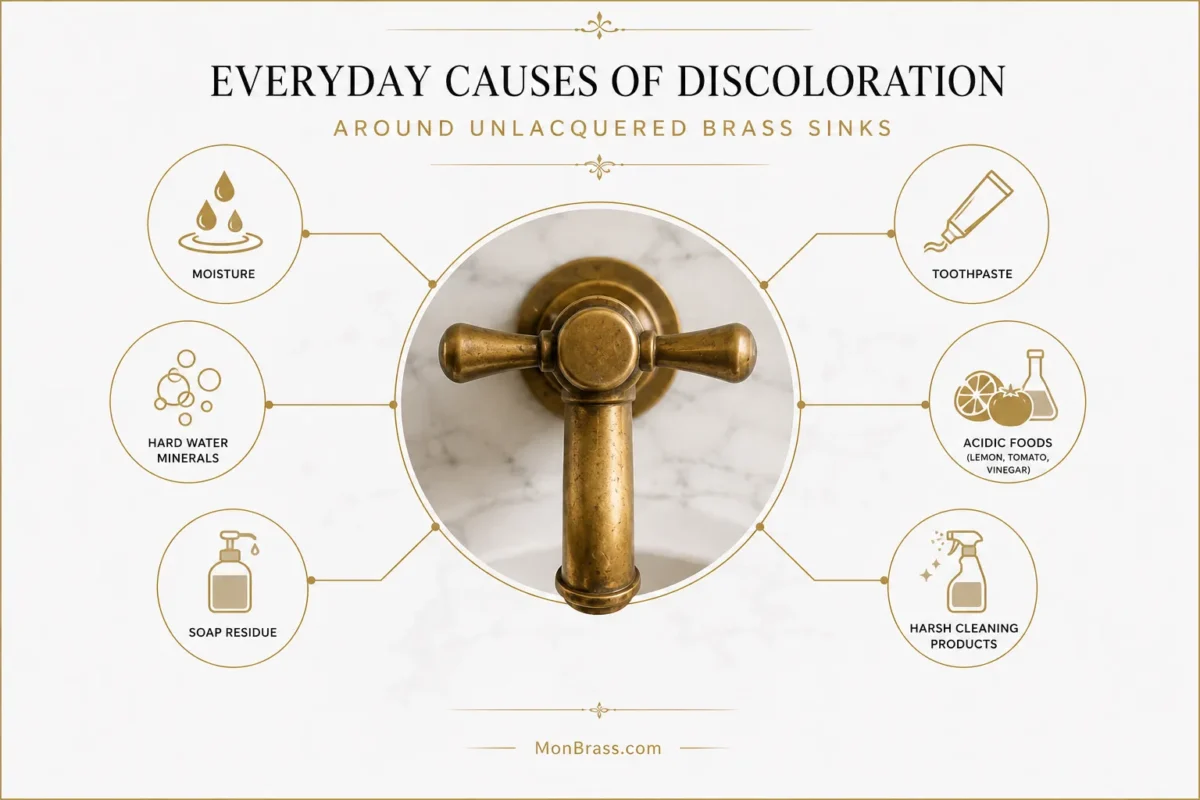
Several everyday factors influence how unlacquered brass changes over time.
Moisture
Constant moisture speeds up the natural aging process.
Around kitchen and bathroom sinks, the base of the faucet often develops patina before areas farther from the water.
Soap Residue
Liquid soap can leave a thin film on brass if it’s allowed to dry repeatedly.
Fortunately, this residue is usually easy to remove with gentle cleaning.
Toothpaste
In many bathrooms, dried toothpaste around the faucet base creates white residue that homeowners sometimes mistake for permanent staining.
This buildup sits on the surface and doesn’t typically damage the brass when cleaned promptly.
Food Acids
Kitchen sinks regularly come into contact with citrus juice, vinegar, tomatoes, and other acidic foods.
Occasional exposure isn’t usually a concern, but allowing acidic residue to sit on the brass for extended periods may accelerate localized patina development.
Cleaning Products
Harsh cleaners often cause more problems than everyday use.
Products containing bleach, ammonia, or abrasive particles may alter the surface appearance more quickly than water alone.
Does an Unlacquered Brass Sink Stain the Countertop?
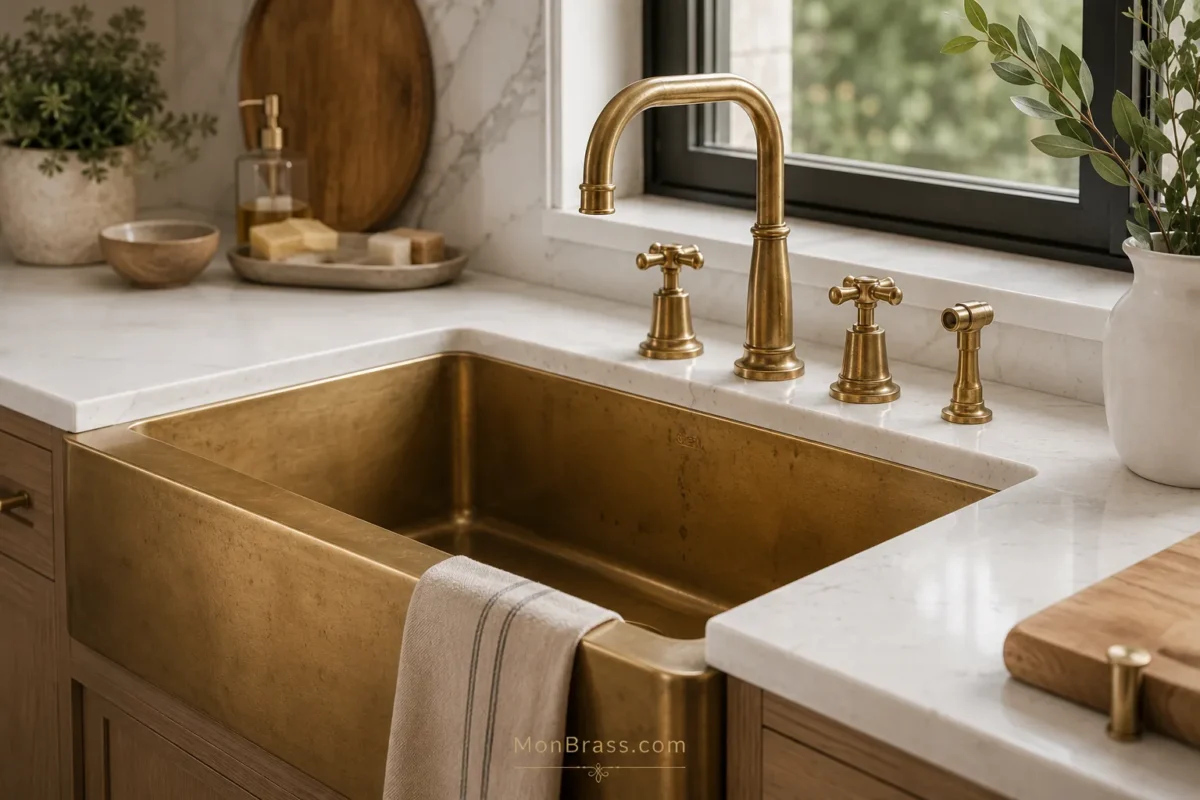
This is another common concern.
Under normal household use, an unlacquered brass sink should not stain surrounding countertops simply because it’s made from brass.
However, water carrying dissolved minerals can sometimes leave deposits where it repeatedly evaporates.
From a maintenance standpoint, keeping standing water from collecting around the sink rim helps reduce visible residue on both the sink and the countertop.
Proper installation also matters.
A well-sealed undermount or drop-in sink minimizes opportunities for water to become trapped beneath the edge.
Things to Consider Before Choosing Unlacquered Brass Around Sinks
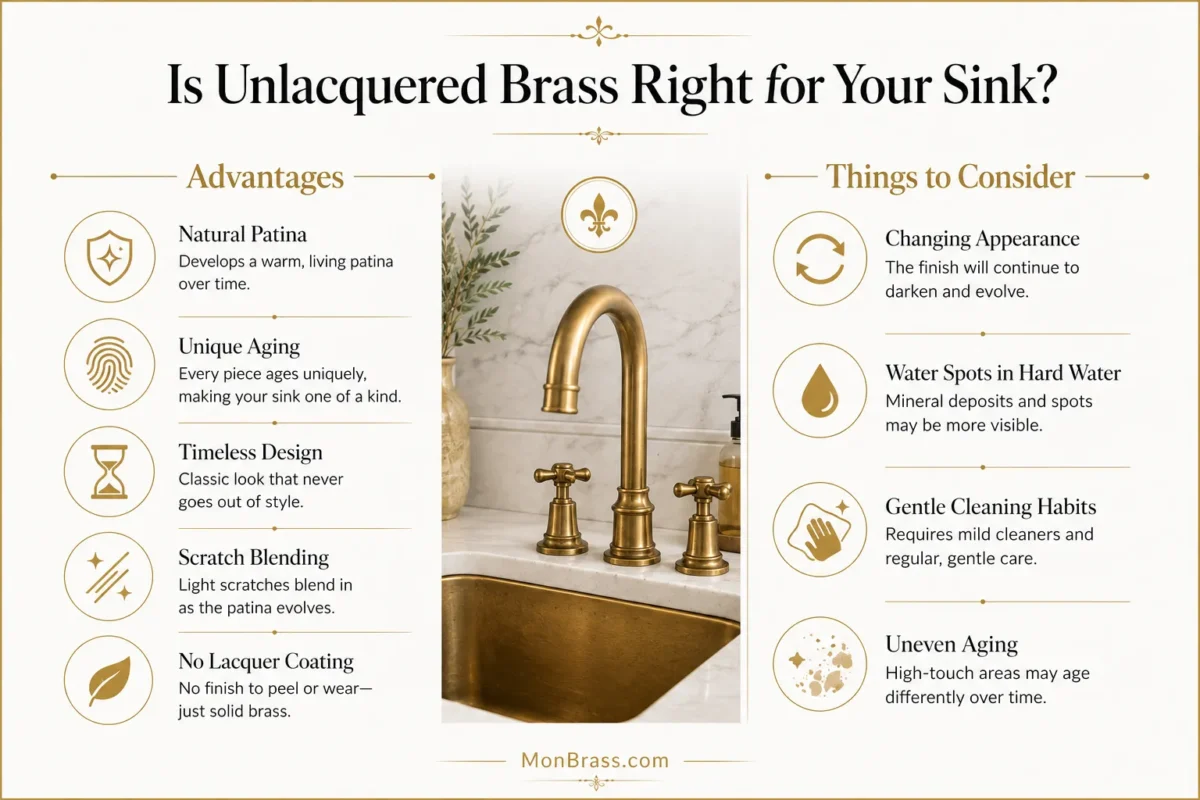
Before selecting an unlacquered brass faucet or sink, it’s helpful to understand both the advantages and the trade-offs.
Advantages
- Develops a unique, natural patina.
- Every fixture ages differently.
- Complements traditional and modern interiors.
- Minor scratches often blend into the evolving finish.
- Doesn’t rely on a clear coating that may eventually wear away.
Drawbacks
- Appearance changes over time.
- Water spots may be more noticeable in hard water areas.
- Requires gentle cleaning habits.
- Patina develops unevenly depending on how the fixture is used.
Maintenance Requirements
Routine care is usually enough to keep unlacquered brass looking its best. Wiping away residue, cleaning gently with mild soap, and avoiding harsh chemicals help reduce buildup without preventing the finish from aging naturally.
Common Mistakes Homeowners Make
Mistaking Patina for Permanent Damage
One of the biggest misconceptions is believing every color change indicates a problem.
Patina is a natural characteristic of unlacquered brass—not a defect.
Using Abrasive Cleaners
Scouring powders, steel wool, and harsh scrubbing pads can scratch the surface unnecessarily.
Gentle cleaning is usually all that’s needed.
Letting Mineral Deposits Build Up
Hard water spots become easier to remove when addressed regularly.
Waiting months before cleaning often requires more effort.
Expecting Every Area to Age Equally
Depending on how the fixture is used, some sections naturally darken faster than others.
This uneven aging contributes to the distinctive appearance many homeowners value.
Choosing Unlacquered Brass Without Wanting Patina
If maintaining a consistent factory-fresh finish is your priority, a lacquered brass fixture may be a better fit.
Understanding this expectation before purchasing helps prevent disappointment.
Frequently Asked Questions
Does unlacquered brass permanently stain around sinks?
No. Most visible changes are natural patina, soap residue, or mineral deposits rather than permanent staining.
Can hard water damage unlacquered brass?
Hard water typically causes mineral buildup rather than structural damage. Regular cleaning helps minimize visible deposits.
Why does the base of my brass faucet darken first?
The base often stays damp longer and receives more contact from hands and water, causing patina to develop faster.
Can I restore the original shine?
Yes. Brass polish can remove much of the patina if you prefer a brighter appearance, although many homeowners choose to let the finish age naturally.
Is an unlacquered brass sink difficult to maintain?
Not usually. Routine cleaning with mild soap and a soft cloth is sufficient for most households. The key is avoiding harsh chemicals and understanding that the finish is designed to change over time.
Conclusion
Unlacquered brass doesn’t typically stain around sinks in the way many people expect. What you’re more likely to see is a combination of natural patina, occasional hard water deposits, and everyday residue from normal household use.
For homeowners who appreciate materials that develop character with age, these changes become part of the fixture’s appeal rather than a maintenance problem. With gentle cleaning and realistic expectations, an unlacquered brass sink or faucet can continue to look beautiful while reflecting the unique history of how it’s been used.
