





Brass Care & Maintenance
How to Restore the Original Shine of Unlacquered Brass
Jun
Unlacquered brass is designed to age naturally. Over time, exposure to air, water, and everyday use creates a darker patina that gives the metal its character. While many homeowners love this evolving finish, others prefer the bright golden appearance of new brass.
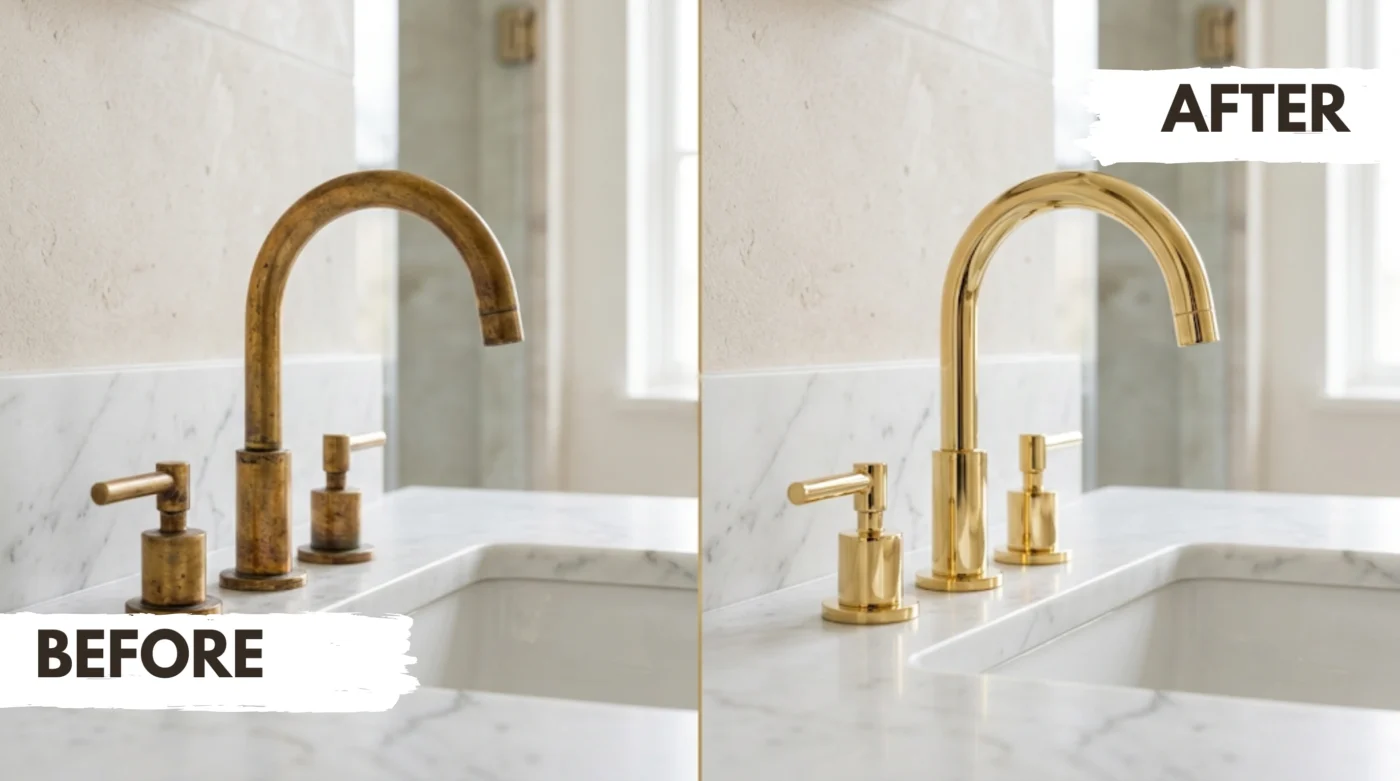
The good news is that unlacquered brass can be polished back to its original shine whenever you choose. Unlike lacquered finishes, there is no protective coating preventing you from restoring the surface.
Why Does Unlacquered Brass Lose Its Shine?
Unlacquered brass reacts naturally with oxygen, moisture, fingerprints, and water minerals. This process creates a surface patina that gradually changes the color from bright gold to deeper honey, bronze, or brown tones.
This isn’t damage—it’s simply the natural aging process of real brass.
Several factors can affect how quickly patina develops:
- Humidity levels
- Water quality
- Frequency of use
- Exposure to soaps and cleaning products
- Skin oils and fingerprints
Because of these factors, faucets and frequently touched hardware often darken faster than decorative pieces.
Can You Make Unlacquered Brass Look New Again?
Yes.
One of the biggest advantages of unlacquered brass is that the finish is completely renewable. Since there is no lacquer coating, the patina exists only on the surface and can be removed through polishing.
Whether your brass has developed a light tarnish or years of patina, you can usually restore much of its original golden shine with proper cleaning and polishing.
Keep in mind that polishing removes the aged patina. If you enjoy the character that develops over time, you may prefer occasional touch-ups rather than full restoration.
How to Restore the Original Shine of Unlacquered Brass
Step 1: Clean the Surface
Before polishing, remove any dirt, grease, soap residue, or mineral buildup.
You’ll need:
- Warm water
- Mild dish soap
- Soft microfiber cloth
Gently wipe the brass surface and rinse with clean water. Dry thoroughly before moving to the next step.
Avoid:
- Steel wool
- Abrasive scrub pads
- Harsh chemical cleaners
- Bleach-based products
These can scratch or damage the brass surface.
Step 2: Apply a Brass Polish
Apply a quality brass polish according to the manufacturer’s instructions.
Using a soft cloth:
- Apply a small amount of polish.
- Rub gently in circular motions.
- Focus on darker areas where patina is most visible.
- Allow the polish to work for the recommended time.
For heavily aged brass, you may need more than one application.
Step 3: Buff the Surface
Using a clean microfiber cloth, buff the brass until the polish residue is removed.
As you buff, the original warm golden color will begin to reappear.
Continue until you achieve the level of shine you want.
Some homeowners prefer a mirror-like finish, while others stop once the brass has a softer satin glow.
Step 4: Rinse and Dry
Once polishing is complete:
- Wipe away any remaining residue.
- Rinse if recommended by the polish manufacturer.
- Dry thoroughly with a clean cloth.
Proper drying helps prevent water spots and uneven tarnishing.
Restoring Light vs. Heavy Tarnish
Not all brass requires the same level of effort.
| Tarnish Level | Recommended Approach |
|---|---|
| Light dullness | Clean and buff with brass polish |
| Moderate patina | Full polishing process |
| Heavy darkening | Multiple polishing applications |
| Green oxidation spots | Clean oxidation first, then polish |
If your brass has been allowed to age for several years, restoring a bright finish may require additional polishing sessions.
Common Mistakes to Avoid
Using Abrasive Materials
Steel wool and abrasive pads can scratch the surface and leave permanent marks.
Overusing Harsh Chemicals
Strong acidic or bleach-based cleaners may damage the metal and create uneven discoloration.
Leaving Moisture Behind
Water left on brass can create spots and accelerate tarnishing.
Confusing Solid Brass with Brass-Plated Hardware
Solid unlacquered brass can generally be polished repeatedly. Brass-plated products require more caution because aggressive polishing may wear through the plating layer.
How Often Should You Polish Unlacquered Brass?
There is no single correct schedule.
If you prefer the bright, freshly polished look:
- Polish every 2–4 months.
- Wipe surfaces regularly to reduce tarnish buildup.
If you enjoy some natural aging:
- Polish once or twice per year.
- Perform occasional spot-cleaning as needed.
Many designers appreciate the balance between a lightly aged patina and periodic restoration.
Frequently Asked Questions
Does polishing remove patina?
Yes. Polishing removes the oxidation layer that creates the darker aged appearance.
Will unlacquered brass tarnish again after polishing?
Yes. Once polished, the natural patina process begins again immediately. The speed depends on the environment and how frequently the brass is used.
Can vinegar make brass shiny again?
Vinegar-based solutions can help remove oxidation, but they should be used carefully and rinsed thoroughly. For valuable fixtures, a dedicated brass polish is usually the safer option.
Is polishing bad for unlacquered brass?
No. Polishing is a normal part of maintaining unlacquered brass for homeowners who prefer a brighter finish.
Final Thoughts
One of the unique benefits of unlacquered brass is that you’re never locked into a single appearance. You can allow the finish to develop a rich natural patina or restore the original golden shine whenever you choose.
With proper cleaning, gentle polishing, and routine maintenance, unlacquered brass can continue looking beautiful for decades—whether you prefer the character of age or the brilliance of freshly polished brass.
Related Reading: Unlacquered Brass: The Complete Guide to Patina, Care & Buying Decisions
