





Uncategorized
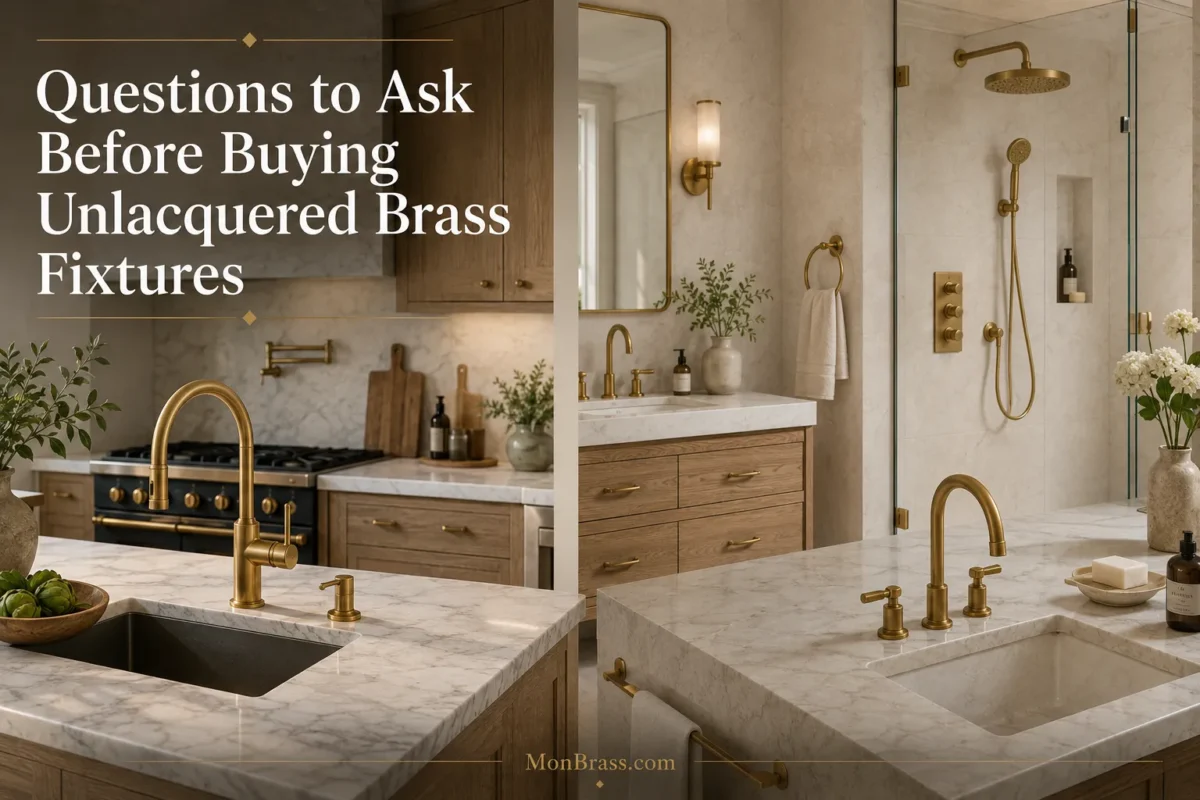
Questions to Ask Before Buying Unlacquered Brass Fixtures
Jul
Unlacquered brass has become one of the most sought-after finishes for kitchens and bathrooms, but it isn’t the right choice for every homeowner. Its warm appearance, natural aging process, and timeless appeal attract many buyers, yet those same qualities can surprise people who expect it to behave like polished chrome or stainless steel.
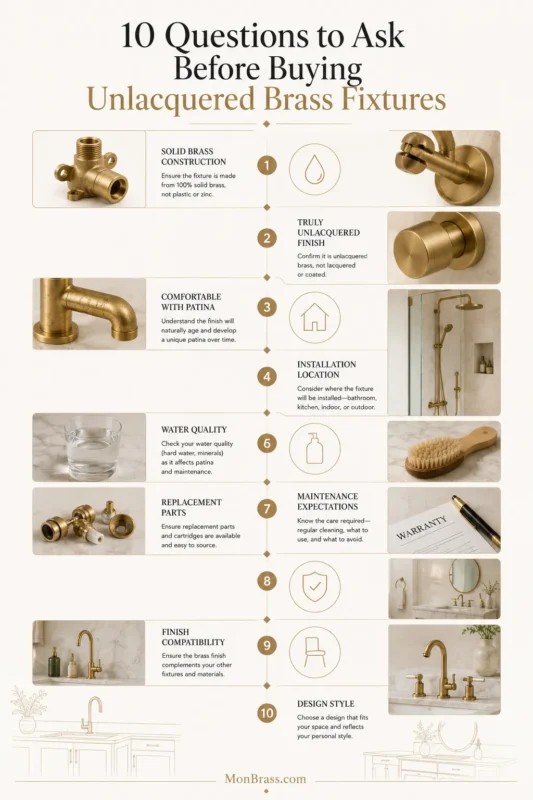
Before investing in new faucets, shower systems, cabinet hardware, or accessories, it’s worth asking a few important questions. The answers will help you determine whether unlacquered brass fits your lifestyle, maintenance preferences, and long-term renovation goals—not just your design inspiration.
1. Is the Fixture Made From Solid Brass?
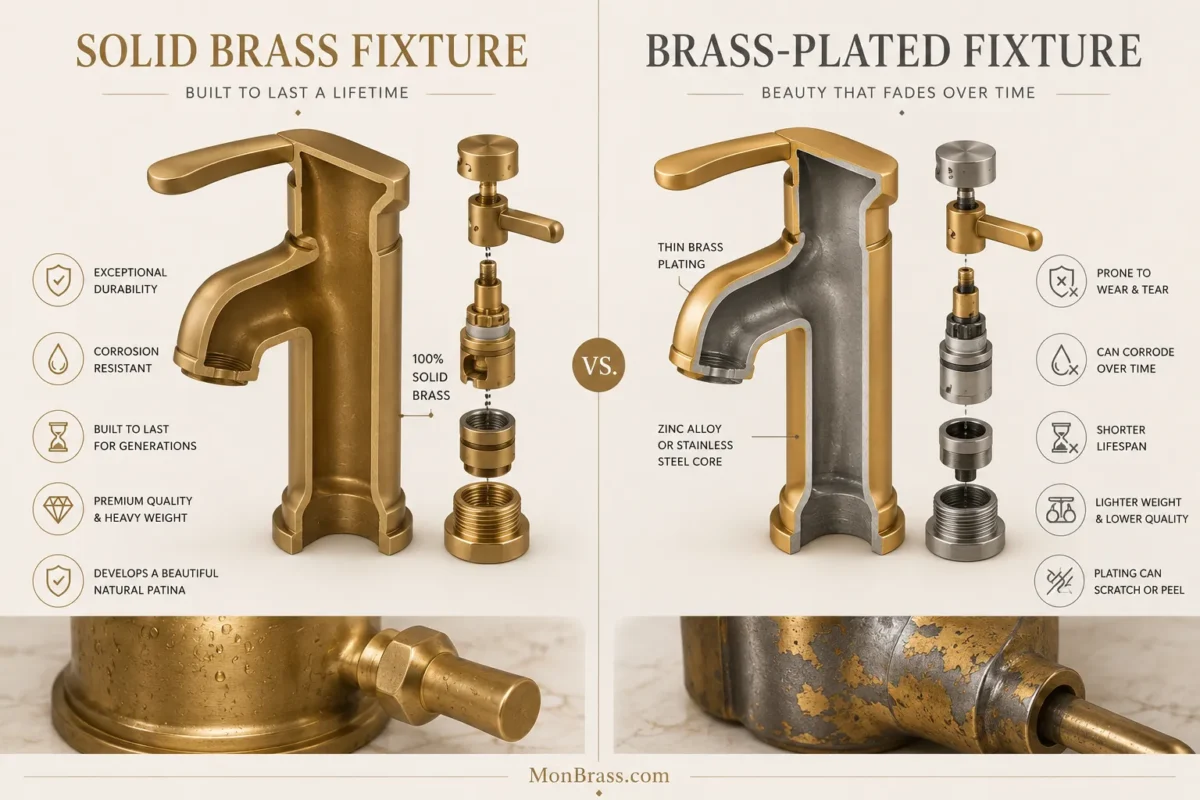
This should be the first question you ask.
Many fixtures advertised as having a “brass finish” are actually made from zinc alloy, stainless steel, or another base metal with a thin brass coating.
Solid brass generally offers better durability and corrosion resistance than brass-plated alternatives, making the base material just as important as the finish itself.
If the manufacturer isn’t clear about construction, ask whether the product is solid brass or simply brass-plated.
2. Is It Truly Unlacquered Brass?
Not every brass fixture marketed as “living brass” or “natural brass” is completely unlacquered.
Some products include protective coatings that slow the aging process, while others
are entirely exposed to air and moisture.
Ask:
- Is there a clear lacquer?
- Will the finish naturally patina?
- Does the manufacturer recommend polishing?
- Is the finish intended to change?
Knowing exactly how the finish behaves helps prevent disappointment later.
3. Am I Comfortable With Patina?
This may be the most important question of all.
Unlacquered brass is designed to change over time.
Areas that receive more frequent contact often develop character sooner than less frequently touched surfaces, so the appearance gradually becomes more individual.
If you want your fixtures to remain bright and uniform indefinitely, a lacquered finish may be a better fit.
4. Where Will the Fixture Be Installed?
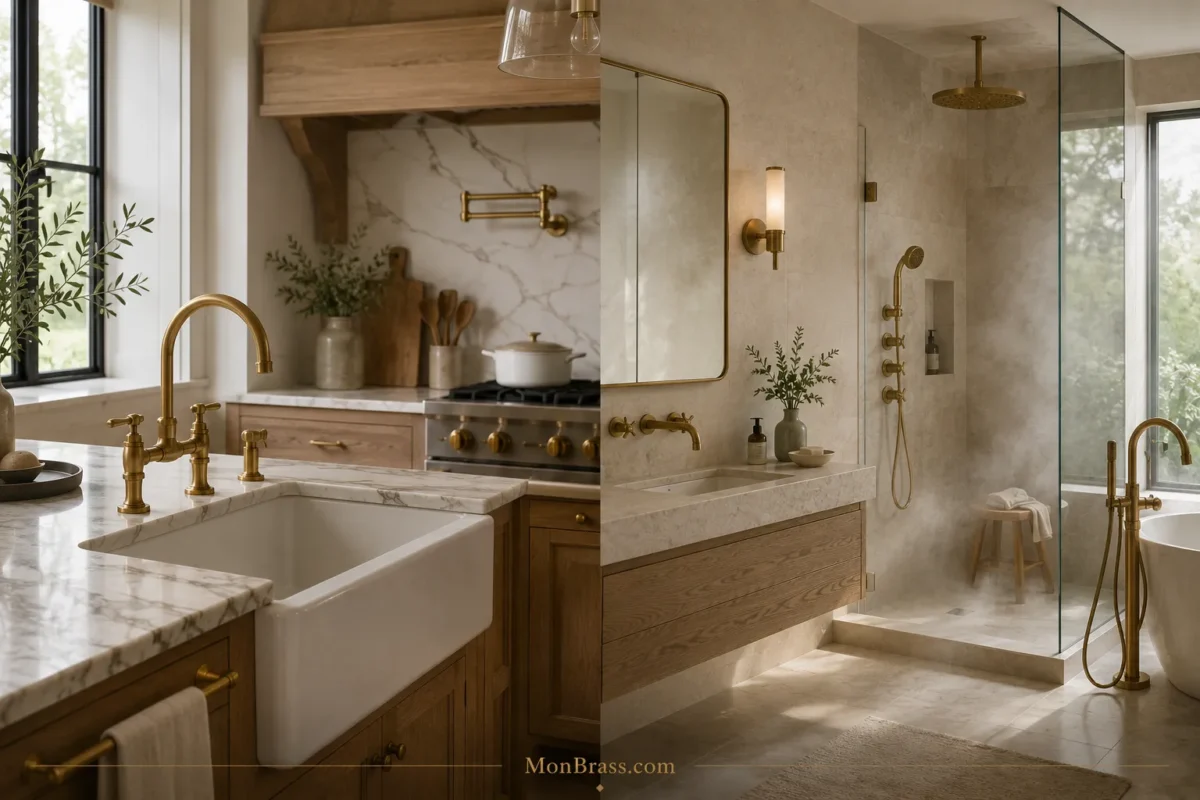
Location influences both appearance and maintenance expectations.
Kitchen
Kitchen faucets experience:
- Cooking oils
- Food acids
- Constant hand contact
- Frequent cleaning
These conditions typically create more visible changes over time.
Bathroom
Bathrooms expose brass to:
- Humidity
- Soap residue
- Toothpaste
- Hard water deposits
Fixtures in different locations may age differently depending on how often they’re used.
5. What Type of Water Do I Have?
Water quality affects every plumbing fixture.
Homes with hard water often develop mineral deposits that appear as white spots after water evaporates.
Soft water generally produces fewer visible mineral deposits.
Understanding your local water conditions helps set realistic expectations for everyday care and appearance.
6. How Much Maintenance Am I Willing to Do?
Routine care is generally straightforward.
Most homeowners simply clean unlacquered brass with mild soap, water, and a soft cloth while allowing the finish to evolve naturally.
The most important consideration isn’t the amount of maintenance required—it’s whether you’re comfortable with a finish that changes over time.
7. Are Replacement Parts Available?
Many buyers focus only on appearance.
Instead, ask about the components you’ll never see.
Quality manufacturers typically offer replacement:
- Ceramic cartridges
- Valve assemblies
- O-rings
- Seals
- Handles
- Trim pieces
Readily available replacement parts can help extend the useful life of a fixture.
8. Does the Warranty Cover the Finish?
This question often surprises buyers.
Because unlacquered brass is designed to age naturally, changes in color usually aren’t considered manufacturing defects.
Ask the manufacturer:
- What does the warranty cover?
- Is natural patina excluded?
- Are internal components covered?
- How long is cartridge coverage?
Understanding warranty terms helps avoid unrealistic expectations.
9. Will the Finish Match My Other Fixtures?
Brass finishes vary between manufacturers.
Even unlacquered brass products may appear slightly different depending on:
- Brass alloy
- Manufacturing process
- Surface finishing
- Production batch
If you’re purchasing multiple fixtures over time, verify finish compatibility before ordering.
10. Does This Fit My Overall Design Style?
Unlacquered brass works across a wide range of interiors and pairs well with many natural materials.
Before buying, consider whether you’re looking for a finish that develops character over time or one that maintains a more uniform appearance throughout the life of the fixture.
Things to Consider Before Choosing Unlacquered Brass Fixtures
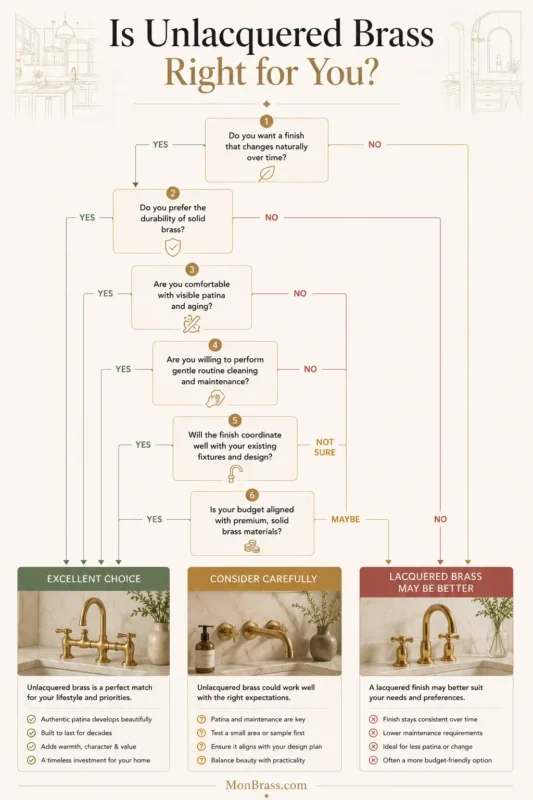
Advantages
- Develops unique character over time
- Timeless appearance
- Excellent durability when made from solid brass
- Small scratches blend naturally into the finish
- Complements many architectural styles
Drawbacks
- Higher initial cost
- Finish changes continuously
- Water spots may be more noticeable in hard water areas
- Doesn’t maintain a uniform polished appearance
Maintenance Requirements
Routine care is generally simple.
For most homeowners, gentle cleaning with mild soap, water, and a soft cloth is enough while allowing the finish to age naturally.
Budget Considerations
Premium unlacquered brass fixtures usually cost more than plated or lacquered alternatives.
However, the higher price often reflects:
- Better materials
- Solid brass construction
- Higher-quality valves
- Longer service life
Looking beyond the purchase price often provides a more accurate picture of long-term value.
Suitability for Different Households
- Busy family kitchens: Well suited for homeowners who appreciate an evolving finish.
- Guest bathrooms: Changes often develop more slowly because fixtures receive less daily use.
- Rental properties: A lacquered finish may be preferable if maintaining a consistent appearance is a priority.
Real-World Buying Scenarios
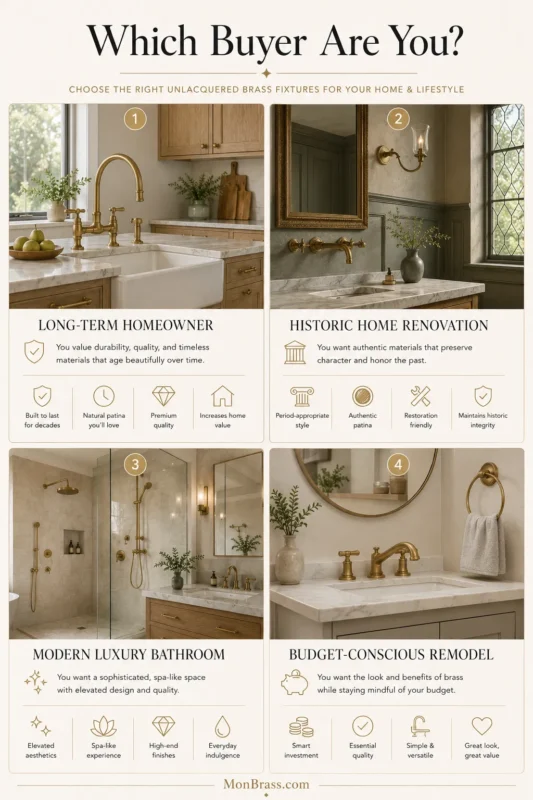
The Long-Term Homeowner
Someone planning to stay in their home for many years often appreciates a finish that develops character over time.
The Historic Home Renovation
Older homes frequently benefit from fixtures that complement traditional materials and architecture.
The Modern Luxury Bathroom
Many contemporary bathrooms use unlacquered brass to introduce warmth without overwhelming clean lines.
The Budget-Conscious Remodel
If every dollar matters, investing first in frequently used fixtures while choosing simpler coordinating accessories can provide a balanced approach.
Common Mistakes Buyers Make
Choosing the Finish Without Understanding Patina
Many buyers love the showroom appearance but haven’t considered how the finish will change over time.
Assuming Every Brass Fixture Is Solid Brass
A brass-colored finish doesn’t necessarily mean solid brass construction.
Always verify the material specifications.
Ignoring Internal Components
Cartridges, valves, and seals often determine long-term performance.
Comparing Price Instead of Value
The least expensive fixture may cost more over time if replacement becomes necessary much sooner.
Buying From Different Manufacturers Without Comparing Samples
Small differences in brass tone can become noticeable when fixtures are installed side by side.
Whenever possible, compare finishes before purchasing.
Frequently Asked Questions
Should I buy unlacquered brass if I don’t like patina?
Probably not. Patina is one of the defining characteristics of unlacquered brass. If you prefer a finish that remains consistent, lacquered brass may be a better choice.
Are unlacquered brass fixtures worth the higher price?
For homeowners who value premium materials, natural aging, and long-term durability, many find the additional investment worthwhile.
How can I tell if a fixture is solid brass?
Check the manufacturer’s specifications or ask directly. Marketing terms like “brass finish” don’t necessarily indicate solid brass construction.
Will all unlacquered brass fixtures age the same way?
No. Usage, humidity, water quality, and handling all influence how quickly and evenly patina develops.
Should every unlacquered brass fixture come from the same manufacturer?
Not necessarily, but comparing finish samples helps ensure similar tones and consistency throughout the space.
Conclusion
Buying unlacquered brass fixtures is about more than choosing a beautiful finish. It’s about understanding how the material is made, how it will change over time, and whether those changes match your expectations.
By asking the right questions before you buy—about construction, maintenance, warranties, replacement parts, and long-term performance—you’ll be much more likely to choose fixtures you’ll continue enjoying for many years. A thoughtful purchase today often leads to fewer surprises and greater satisfaction long after the renovation is complete.
