





Uncategorized
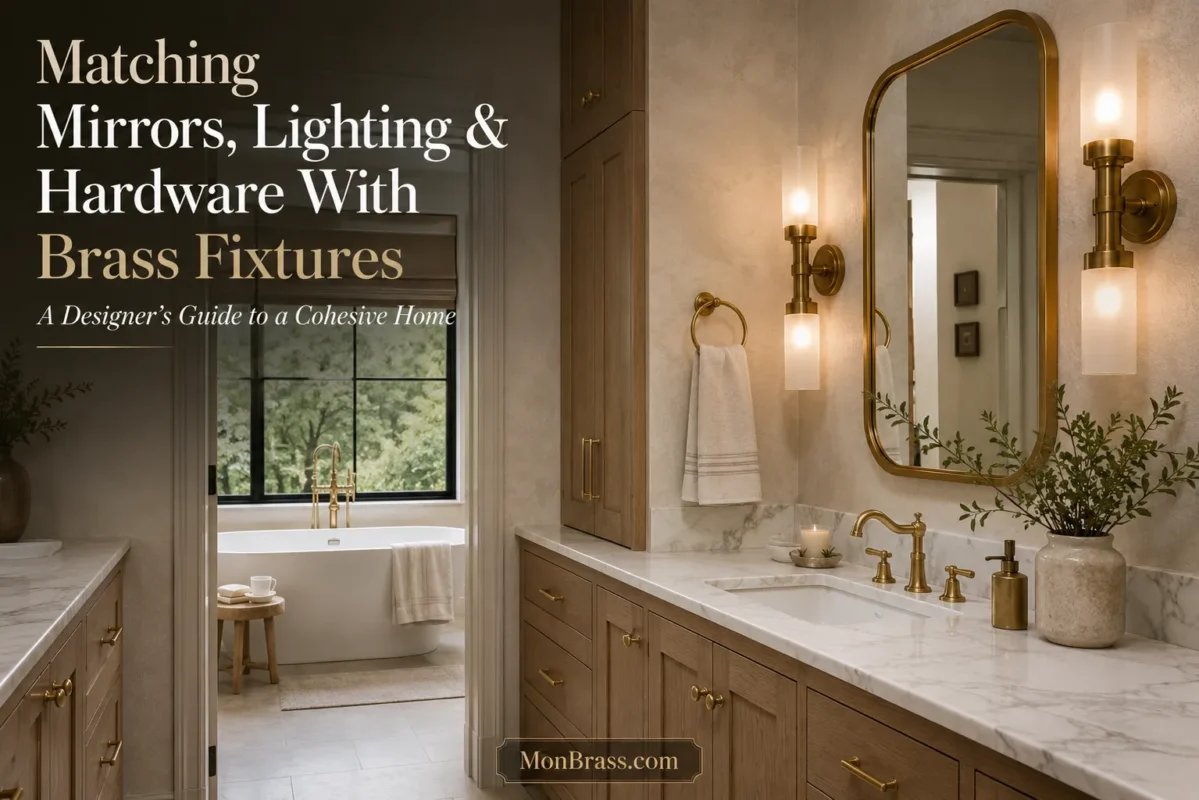
Matching Mirrors, Lighting & Hardware With Brass Fixtures: A Designer’s Guide to a Cohesive Home
Jul
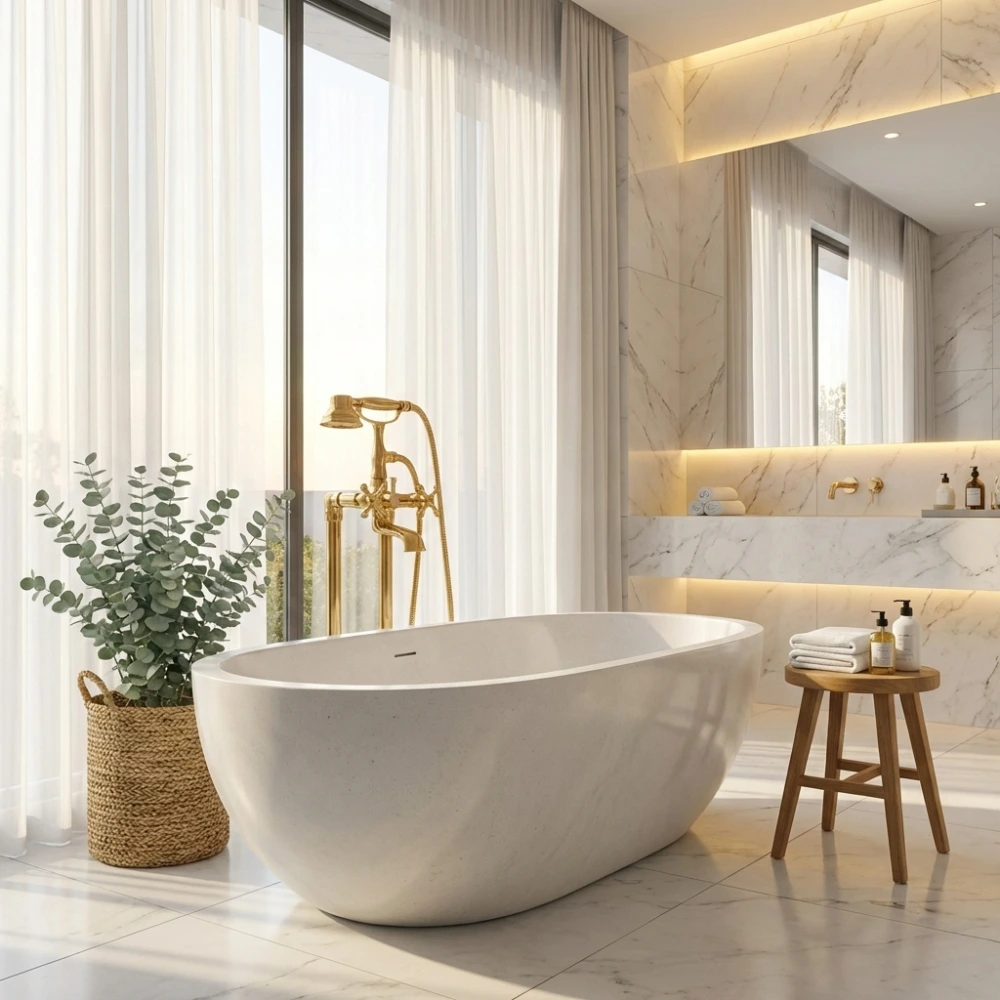
Brass fixtures can instantly make a kitchen or bathroom feel warmer, richer, and more inviting. The challenge isn’t choosing the faucet or shower system—it’s making sure every surrounding detail works together. That’s why matching mirrors, lighting & hardware with brass fixtures is one of the most important parts of creating a polished space.
Many homeowners assume every metal finish must match exactly, while others mix finishes without a plan and end up with a room that feels disconnected. The reality falls somewhere in between. A well-designed space balances consistency, proportion, and contrast, allowing brass fixtures to stand out without overwhelming the room. Understanding how brass interacts with mirrors, lighting, cabinet hardware, and other finishes helps create a timeless look that still feels personal.
Why Brass Fixtures Set the Tone for the Entire Room
Unlike chrome or matte black, brass naturally draws attention. Its warm undertones become one of the dominant visual elements in a kitchen or bathroom, influencing the finishes that surround it.
Whether you’re using polished brass, satin brass, brushed brass, or unlacquered brass, the finish often becomes the reference point for selecting:
- Vanity mirrors
- Wall sconces
- Pendant lights
- Cabinet pulls
- Door hardware
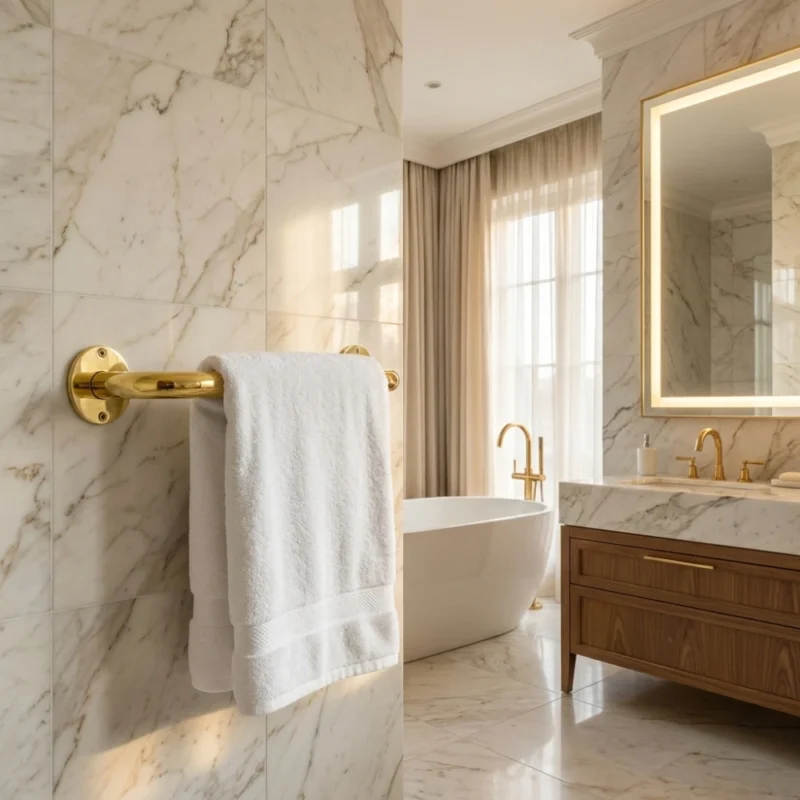
- Towel bars
- Shower accessories
Rather than treating each fixture as an individual purchase, think of them as parts of one design story.
Should Every Brass Finish Match Exactly?
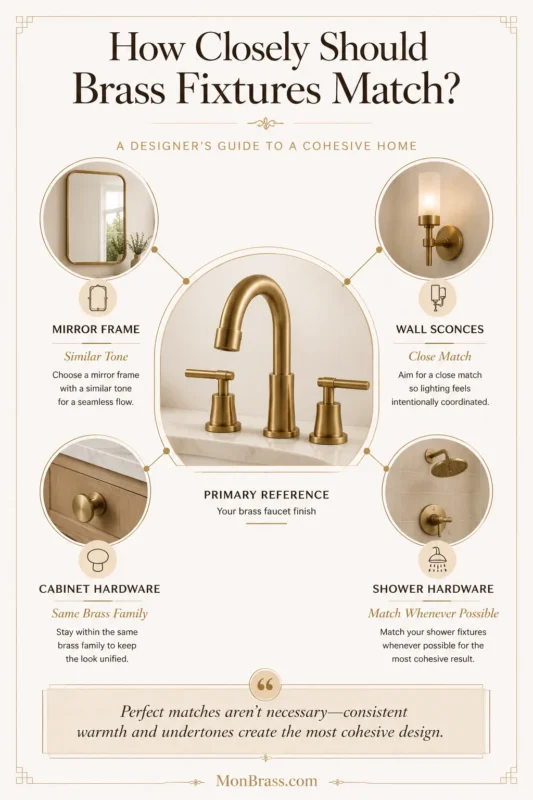
One of the biggest misconceptions is that every brass item must come from the same manufacturer.
That isn’t necessary.
Even professional designers regularly mix slightly different brass finishes as long as they share similar warmth and undertones.
| Fixture | Recommended Approach |
| Faucet | Primary brass finish |
| Mirror frame | Similar tone, not necessarily identical |
| Wall sconces | Close match to faucet |
| Cabinet hardware | Within the same warm brass family |
| Shower hardware | Match faucet whenever possible |
Small variations often make a room feel more collected rather than overly coordinated.
However, combining bright polished brass with dark antique brass or heavily aged brass can create noticeable inconsistencies unless done intentionally.
Choosing the Right Mirror for Brass Fixtures
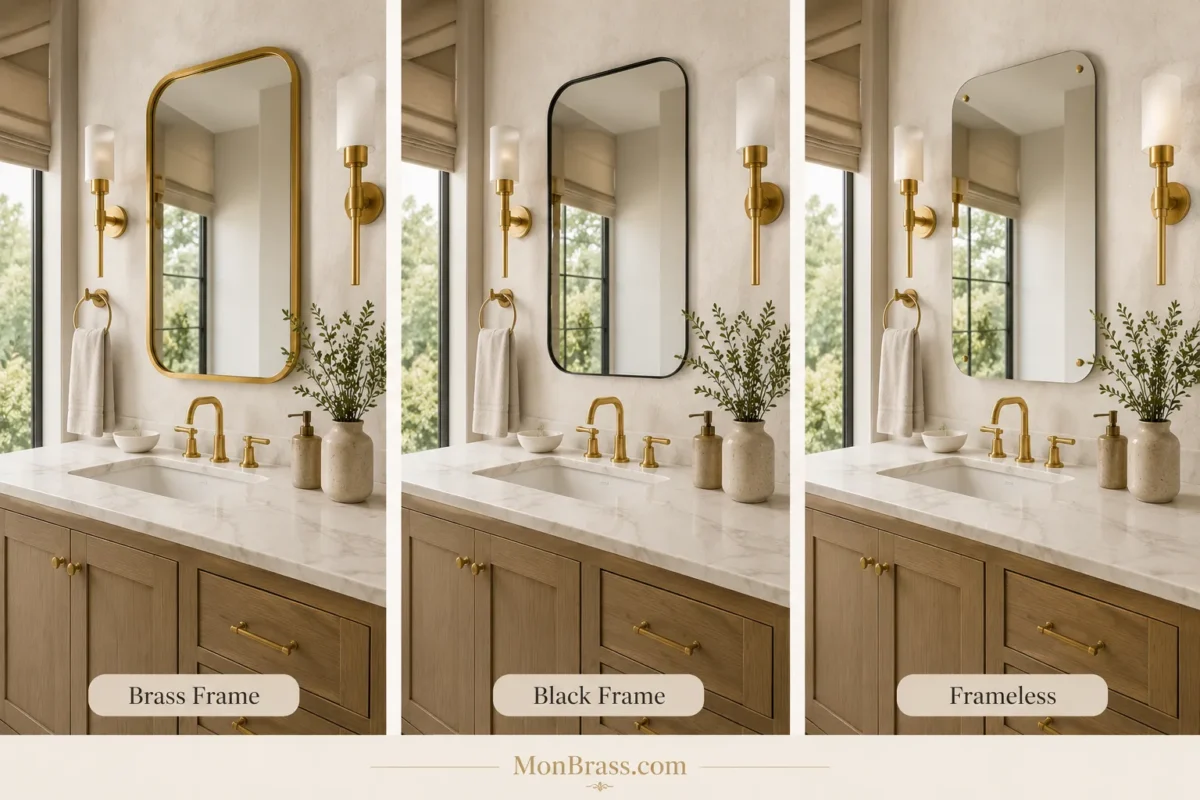
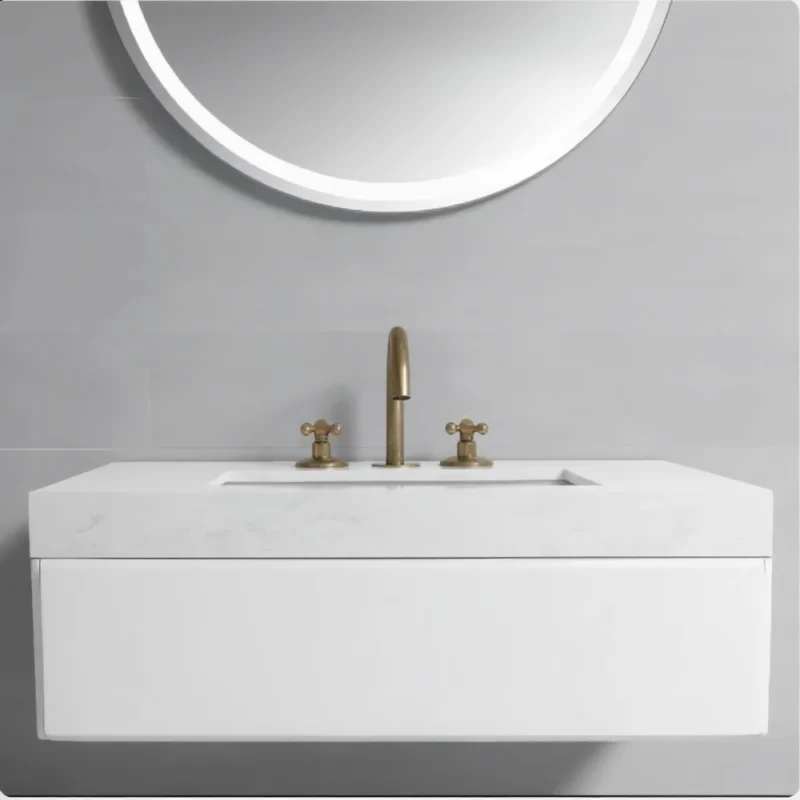
The mirror is usually positioned directly above the faucet, making it one of the most influential coordinating elements.
Brass-Framed Mirrors
A brass-framed mirror creates the most cohesive appearance, especially when paired with matching faucets and lighting.
If you’re using unlacquered brass, remember that the mirror frame may develop patina differently than the faucet depending on humidity and how often each surface is touched.
Black-Framed Mirrors
Black provides contrast without competing with brass.
This pairing works especially well when brass is intended to remain the room’s primary accent.
Frameless Mirrors
Frameless mirrors allow brass fixtures to remain the focal point.
Without an additional frame finish to coordinate, the overall palette stays simple and flexible.
How to Match Lighting With Brass Fixtures
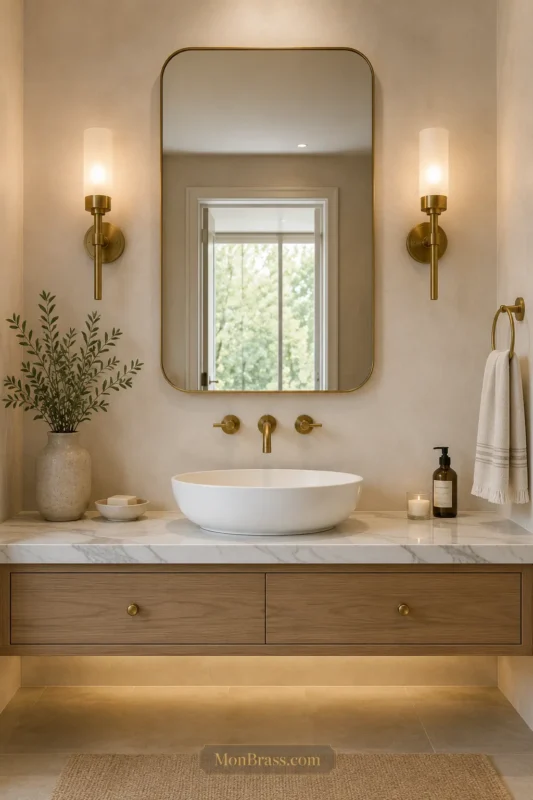
Lighting should feel connected to the plumbing fixtures without looking repetitive.
Wall Sconces
Wall sconces often sit beside the vanity mirror, placing them within the same visual field as the faucet.
Brass sconces typically create the most unified appearance, while glass shades help soften the warmth of brass without adding another dominant finish.
Pendant Lighting
Pendant lights work beautifully above kitchen islands with brass faucets.
To maintain balance:
- Choose brass accents rather than entirely brass fixtures if the room already contains numerous metal finishes.
- Repeat brass elsewhere, such as cabinet hardware or shelving brackets.
Ceiling Fixtures
Ceiling-mounted fixtures don’t need to match perfectly because they’re farther from eye level.
Consistency in tone is generally more important than identical finishes.
Coordinating Cabinet Hardware With Brass Fixtures
Cabinet hardware quietly reinforces the design.
Popular combinations include:
Brushed Brass + Brushed Brass
The most seamless option, especially for homeowners who prefer a cohesive appearance while minimizing visible fingerprints.
Satin Brass + Matte Black
A balanced combination that introduces contrast without competing with the brass fixtures.
Unlacquered Brass Hardware
Unlacquered brass cabinet pulls gradually darken as they are handled.
Natural variation between frequently used and rarely used hardware is expected and can contribute to a collected, lived-in appearance.
Mixing Brass With Other Metal Finishes
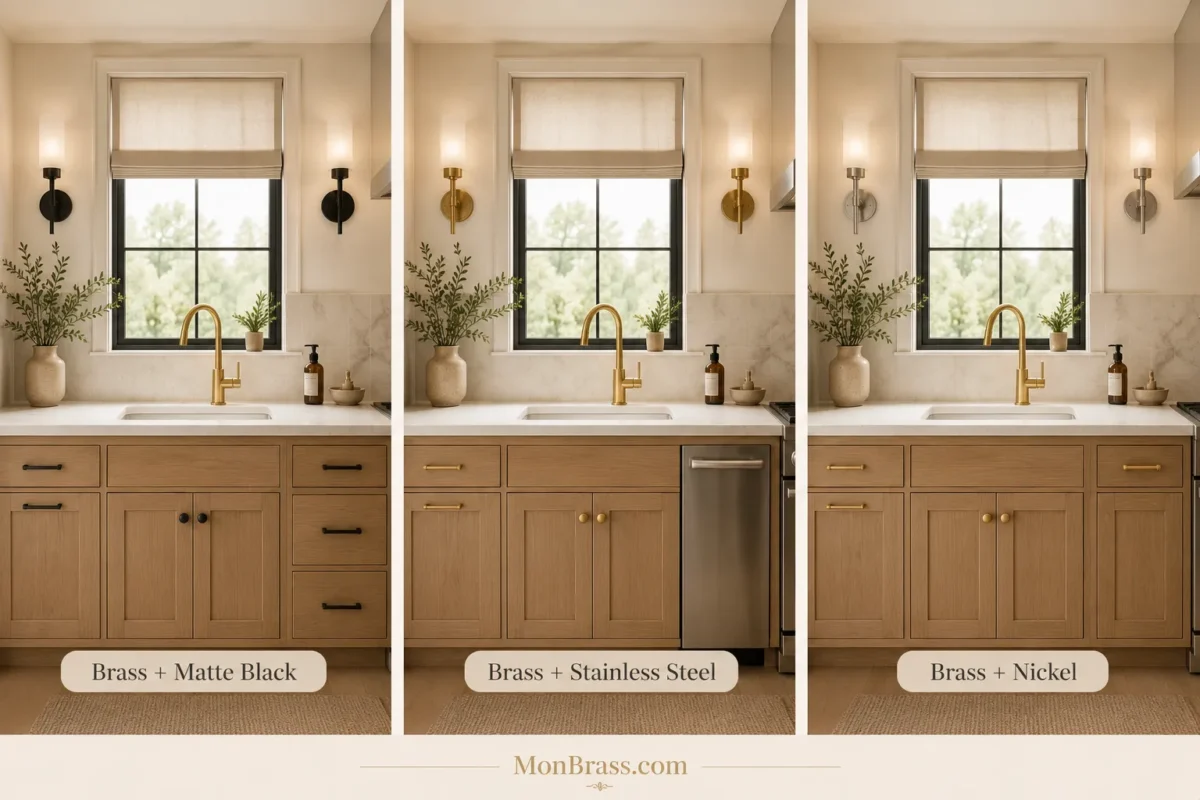
Mixing metals has become increasingly common in interior design.
The key is making the combinations feel intentional.
Brass and Matte Black
One of the most popular pairings.
Brass adds warmth while matte black introduces definition.
Brass and Stainless Steel
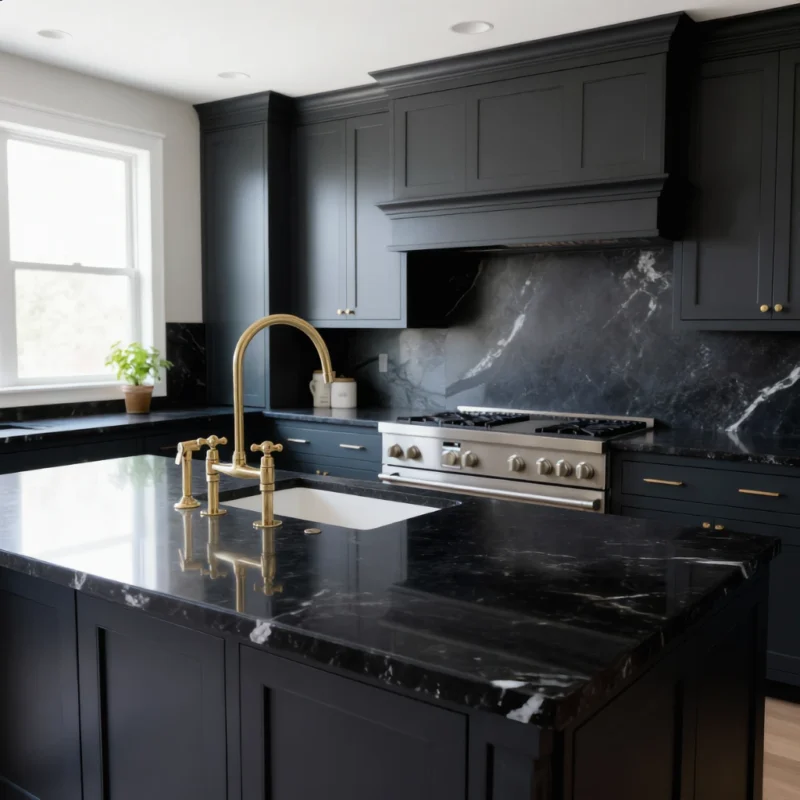
A practical option for kitchens.
For example:
- Brass faucet
- Stainless steel appliances
- Brass cabinet hardware
This keeps appliances from dominating the space while maintaining visual warmth.
Brass and Nickel
Nickel’s cooler undertones contrast gently with brass.
This works best when one finish clearly serves as the primary metal and the other acts as an accent.
Things to Consider Before Choosing Brass Fixtures and Matching Accessories
Before selecting mirrors, lighting, and hardware, consider how the finishes will work together over time.
Advantages
- Creates a warm, inviting atmosphere.
- Complements natural wood and stone.
- Works across a wide range of interior styles.
- Offers lasting visual appeal.
Drawbacks
- Different manufacturers may produce noticeably different brass tones.
- Some polished finishes show fingerprints more easily.
- Unlacquered brass changes naturally with age.
Maintenance
Lacquered brass generally requires only gentle cleaning with mild soap and water.
Unlacquered brass gradually develops patina, so coordinating pieces may change at different rates depending on use.
Budget
If you’re prioritizing spending, many homeowners invest first in the primary plumbing fixtures and then choose mirrors, lighting, and hardware with compatible brass tones rather than purchasing everything from a single collection.
Common Mistakes When Coordinating Brass Fixtures
Buying Different Brass Shades Without Comparing Samples
Product photos rarely show true color.
Whenever possible, compare finish samples under your home’s actual lighting.
Forgetting About Warm and Cool Undertones
Brass naturally carries warmth.
Pairing it with cooler finishes without introducing other warm materials can make the room feel less cohesive.
Ignoring Patina Development
Unlacquered brass develops naturally over time, so nearby accessories may not age at exactly the same rate.
Overusing Brass
Too much brass can overwhelm a room.
Natural wood, glass, stone, painted finishes, and textiles help maintain visual balance.
Frequently Asked Questions
Should mirrors always match brass faucets?
Not necessarily. Brass-framed mirrors create a cohesive look, but black-framed and frameless mirrors also pair beautifully with brass fixtures depending on the overall design style.
Can I mix brushed brass and polished brass?
Yes, although the finishes should have similar undertones. Slight variations often look intentional, while dramatic differences can appear accidental.
Is unlacquered brass harder to coordinate than lacquered brass?
It requires slightly more planning because the finish changes over time, meaning nearby fixtures may age differently.
What cabinet hardware looks best with brass faucets?
Brushed or satin brass hardware creates the most seamless appearance. Matte black hardware is another popular option for modern spaces.
Do all brass fixtures have to come from the same brand?
No. Many designers successfully mix manufacturers by focusing on similar warmth and sheen instead of brand names.
Final Thoughts
Creating a cohesive space isn’t about making every piece identical. It’s about repeating warmth, balancing contrast, and selecting complementary finishes that work together visually. When mirrors, lighting, cabinet hardware, and plumbing fixtures support one another, the room feels intentional without appearing overly coordinated.
