





Unlacquered Brass
Unlacquered Brass vs Lacquered Brass: What’s the Difference?
Jun
If you’re shopping for brass faucets, cabinet hardware, or bathroom fixtures, you’ll likely come across two options: unlacquered brass and lacquered brass.
At first glance, they can look nearly identical. Both offer the warm golden tones that make brass a timeless choice in kitchens, bathrooms, and luxury interiors. The real difference becomes apparent over time.
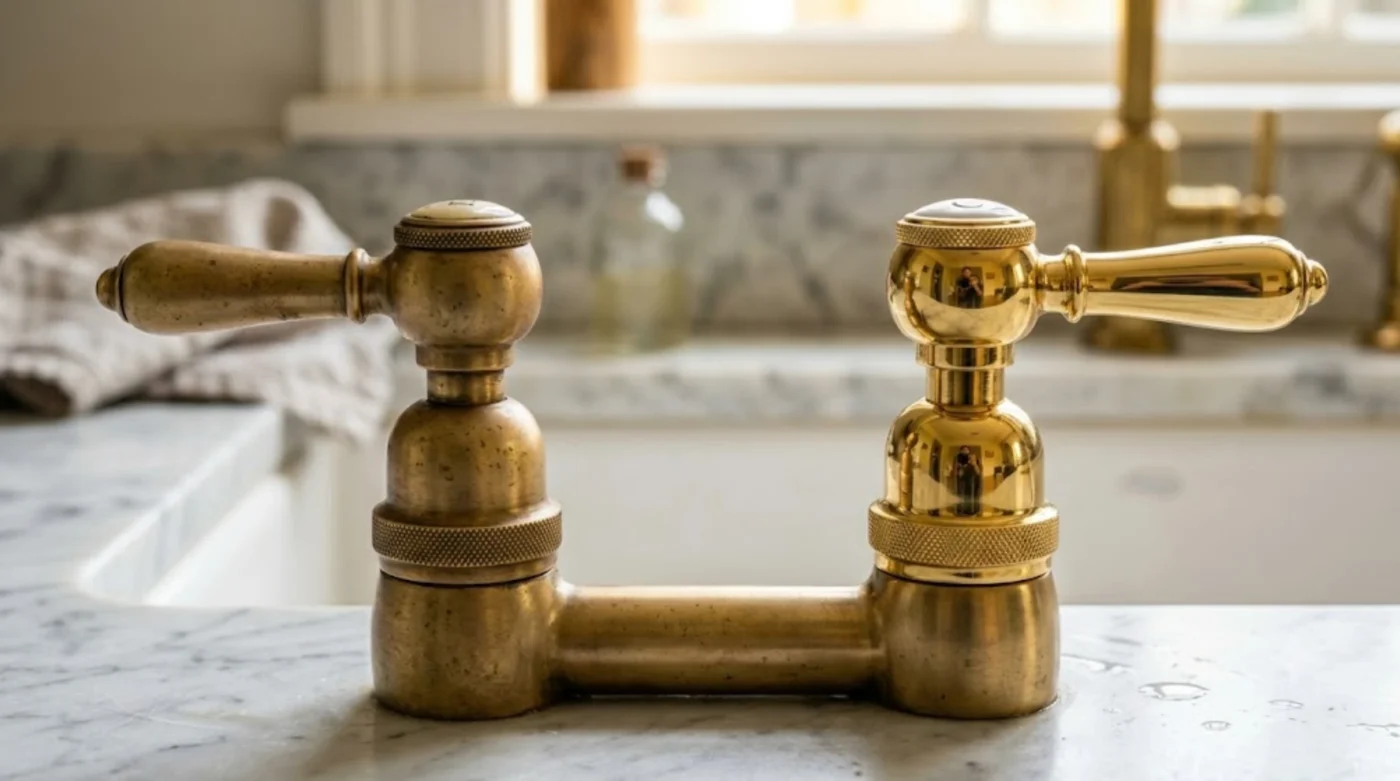
Unlacquered brass is designed to age naturally, developing a rich patina that evolves with use. Lacquered brass is sealed with a clear protective coating that helps preserve its original appearance for years.
Understanding how each finish behaves will help you choose the right option for your home and lifestyle.
What Is Unlacquered Brass?
Unlacquered brass is solid brass with no protective coating applied to the surface. Because the metal is exposed to air, moisture, and everyday handling, it naturally oxidizes over time.
This oxidation creates a patina—a gradual darkening and aging of the finish that gives brass its distinctive character.
For this reason, unlacquered brass is often called a living finish. Every fixture develops its own unique appearance based on its environment and how frequently it is touched.
Benefits of Unlacquered Brass
- Develops a natural patina
- Creates a unique, one-of-a-kind finish
- Can be polished to restore its original shine
- Popular in luxury and historic homes
- Adds warmth and character over time
What Is Lacquered Brass?
Lacquered brass has a clear protective coating applied over the brass surface. This coating acts as a barrier between the metal and the environment, significantly slowing the oxidation process.
The goal of lacquer is simple: keep the brass looking as close as possible to the day it was installed.
Because the metal is protected, lacquered brass maintains a more consistent appearance and requires less maintenance than unlacquered brass.
Benefits of Lacquered Brass
- Resists tarnishing and oxidation
- Maintains a uniform appearance
- Requires minimal upkeep
- Easier to clean
- Ideal for homeowners who prefer consistency
Unlacquered Brass vs Lacquered Brass: Side-by-Side Comparison
| Feature | Unlacquered Brass | Lacquered Brass |
|---|---|---|
| Protective Coating | No | Yes |
| Develops Patina | Yes | No (or very slowly) |
| Appearance Over Time | Changes naturally | Stays relatively consistent |
| Maintenance | Moderate | Low |
| Can Be Polished | Yes | Limited |
| Character and Aging | High | Minimal |
| Best For | Traditional, luxury, historic designs | Modern, low-maintenance interiors |
Appearance Over Time
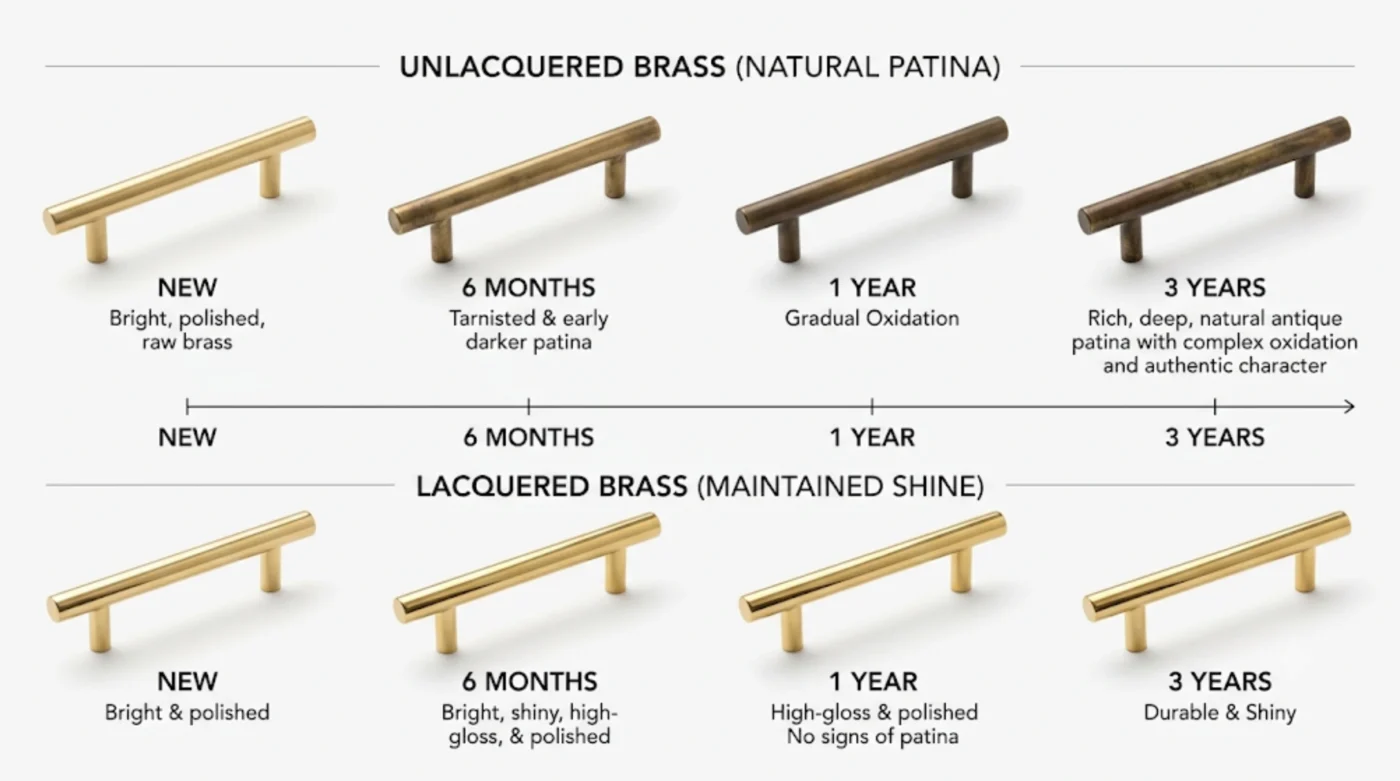
The biggest difference between these two finishes is how they age.
Unlacquered Brass
A new unlacquered brass fixture starts with a bright golden color. Over time, exposure to moisture, oils from hands, cleaning products, and air causes the surface to darken and mature.
The finish may develop:
- Warm honey tones
- Rich amber colors
- Deep bronze highlights
- Natural variations around frequently touched areas
Many homeowners and designers consider this aging process part of the beauty of unlacquered brass.
Lacquered Brass
Lacquered brass is designed to look nearly the same year after year.
Because the protective coating prevents direct contact between the brass and the environment, oxidation occurs much more slowly. The finish remains brighter and more uniform, making it ideal for those who prefer a predictable appearance.
Maintenance Requirements
Caring for Unlacquered Brass
Maintenance depends on your goals.
If you enjoy the natural patina, simply clean the fixture with mild soap and water when needed.
If you prefer the original polished look, you can periodically use a brass polish to remove oxidation and restore the shine.
Many homeowners choose unlacquered brass specifically because they appreciate the changing appearance and don’t feel the need to polish it regularly.
Caring for Lacquered Brass
Lacquered brass is generally easier to maintain.
For routine cleaning:
- Use a soft cloth
- Clean with mild soap and water
- Avoid abrasive cleaners or scrubbing pads
Since the lacquer protects the surface, polishing is usually unnecessary and may even damage the coating.
Durability and Longevity
Both finishes are durable because the underlying material is brass.
The difference lies in how they age.
With unlacquered brass, the patina becomes part of the finish itself. Small scratches and signs of wear often blend naturally into the aging process.
With lacquered brass, the protective coating does most of the work. However, over many years, lacquer can wear down, scratch, or begin to peel in high-use areas. When that happens, refinishing may be required to restore a uniform appearance.
Which Finish Is Right for You?
Choose Unlacquered Brass If:
- You love natural materials
- You appreciate character and patina
- You want a timeless, luxury look
- You don’t mind changes in appearance over time
- You prefer a finish that tells a story as it ages
Choose Lacquered Brass If:
- You want the brass to stay bright and polished
- You prefer a low-maintenance finish
- You dislike tarnish or patina
- You want a more predictable appearance
- You are designing a contemporary or minimalist space
Frequently Asked Questions
Does lacquered brass tarnish?
The protective lacquer greatly reduces tarnishing. However, if the coating becomes damaged or wears away, the exposed brass underneath can begin to oxidize.
Can unlacquered brass be restored to its original shine?
Yes. Most oxidation and patina can be removed with brass polish, allowing the fixture to regain much of its original golden appearance.
Which finish lasts longer?
Both can last for decades. Unlacquered brass ages naturally, while lacquered brass depends on the condition of its protective coating.
Final Verdict
When comparing unlacquered brass vs lacquered brass, neither option is inherently better—the right choice depends on your preferences.
If you love the idea of a living finish that develops character and patina over time, unlacquered brass is the clear winner.
If you prefer a brass finish that remains bright, polished, and easy to maintain, lacquered brass may be the better fit.
The key question to ask yourself is simple:
Do you want your brass to evolve with age, or do you want it to stay as close as possible to its original appearance?
Your answer will determine which finish feels right in your home.
