





Uncategorized
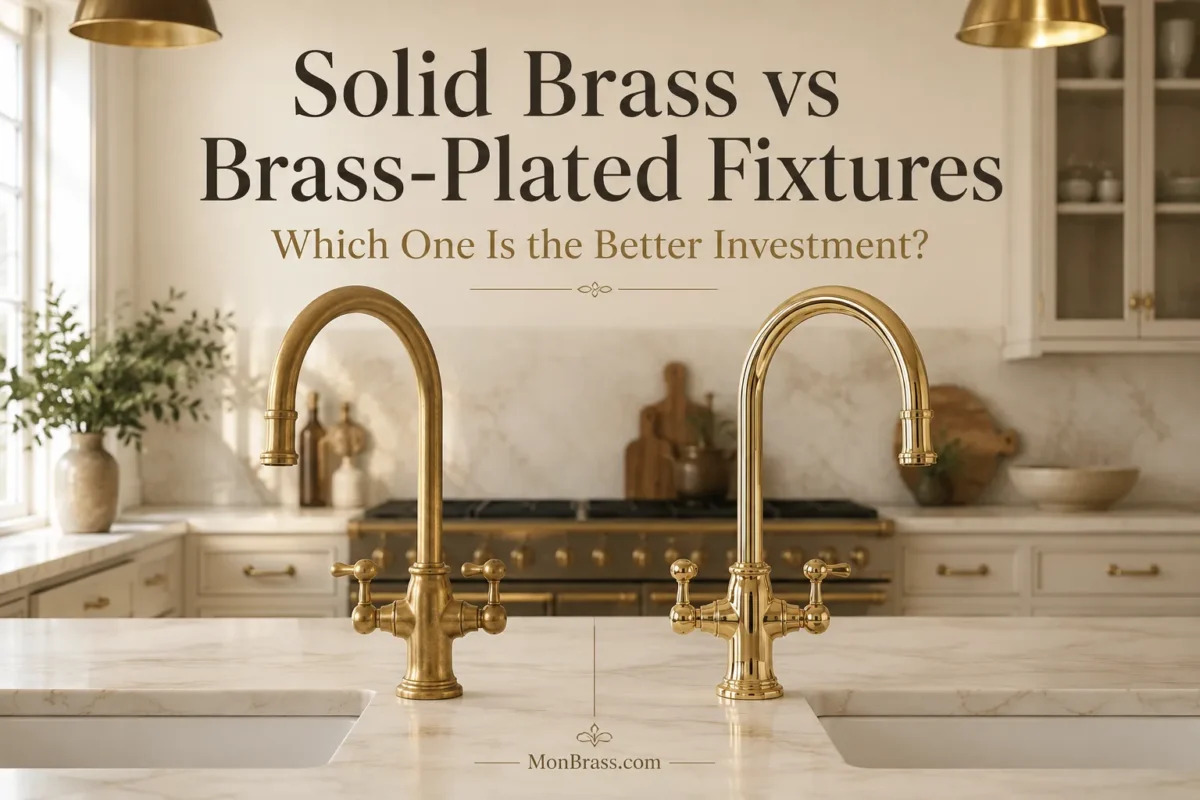
Solid Brass vs Brass-Plated Fixtures: Which One Is the Better Investment?
Jul
Choosing between solid brass vs brass-plated fixtures isn’t always as straightforward as it seems. At first glance, both can deliver the warm, timeless look that makes brass so popular in kitchens and bathrooms. The real differences only become apparent after months—or even years—of everyday use.
If you’re investing in a new faucet, shower system, or cabinet hardware, understanding what’s beneath the finish is just as important as choosing the right style. While solid brass is often associated with premium quality and longevity, brass-plated fixtures can be a practical and attractive option in the right setting.
Knowing how each material performs over time will help you spend your renovation budget where it matters most.
What Are Solid Brass and Brass-Plated Fixtures?
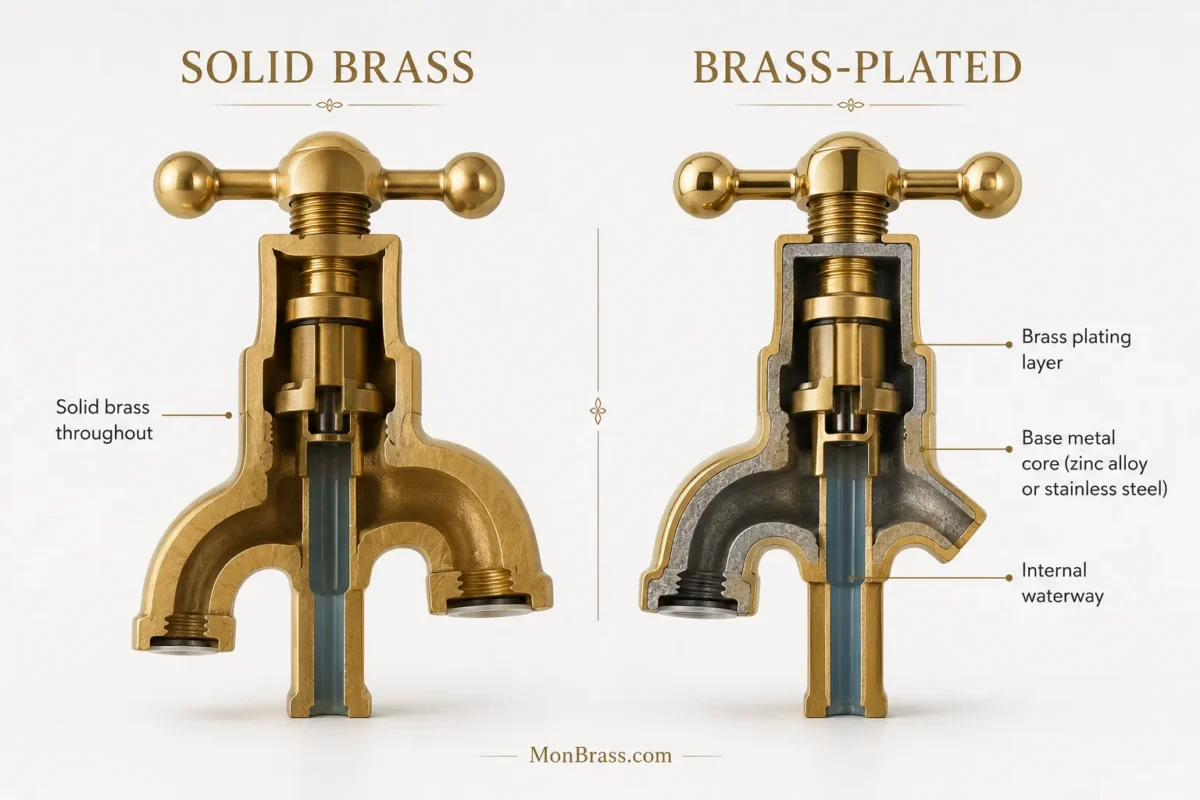
Although they can look nearly identical when new, these fixtures are constructed very differently.
Solid Brass Fixtures
A solid brass fixture is made entirely from brass, an alloy primarily composed of copper and zinc. Because the material is brass throughout, scratches, dents, or years of use won’t expose a different metal underneath.
Solid brass is commonly used for:
- Kitchen faucets
- Bathroom faucets
- Shower systems
- Cabinet knobs and pulls
- Door handles
- Pot fillers
- Towel bars and accessories
Its durability is one reason many premium plumbing manufacturers continue to use it for higher-end products.
Brass-Plated Fixtures
Brass-plated fixtures begin with another material, such as zinc alloy, steel, or stainless steel. A thin layer of brass is then applied over the surface through electroplating or another finishing process.
The outer brass layer creates the desired appearance, but the underlying metal provides most of the structure.
This approach reduces manufacturing costs while still offering the classic look of brass.
Solid Brass vs Brass-Plated: Quick Comparison
| Feature | Solid Brass | Brass-Plated |
| Construction | Brass throughout | Base metal with brass coating |
| Durability | Excellent | Good to Moderate |
| Scratch Resistance | High | Depends on plating thickness |
| Patina Development | Natural | Usually limited |
| Can Be Refinished | Often yes | Usually no |
| Lifespan | Several decades | Varies by quality |
| Initial Cost | Higher | Lower |
| Long-Term Value | Excellent | Good |
Durability: What Happens After Years of Use?
The biggest difference between these materials usually becomes noticeable long after installation.
Solid Brass Holds Up Better to Daily Wear
In high-use kitchens, faucet handles may be turned dozens of times every day. Cabinet pulls, towel bars, and bathroom hardware experience constant handling.
With solid brass, everyday wear generally results in:
- Minor surface scratches
- Gradual color changes
- Natural aging
Because the fixture remains brass all the way through, small scratches rarely affect its overall appearance.
Brass-Plated Fixtures Depend on the Finish
Brass-plated fixtures can last many years, especially when they’re well made and installed in lower-traffic spaces.
However, once the decorative brass layer begins wearing away, the base metal underneath may become visible.
Areas touched repeatedly—such as faucet handles or cabinet pulls—typically show wear sooner than decorative pieces that receive little contact.
How Their Appearance Changes Over Time
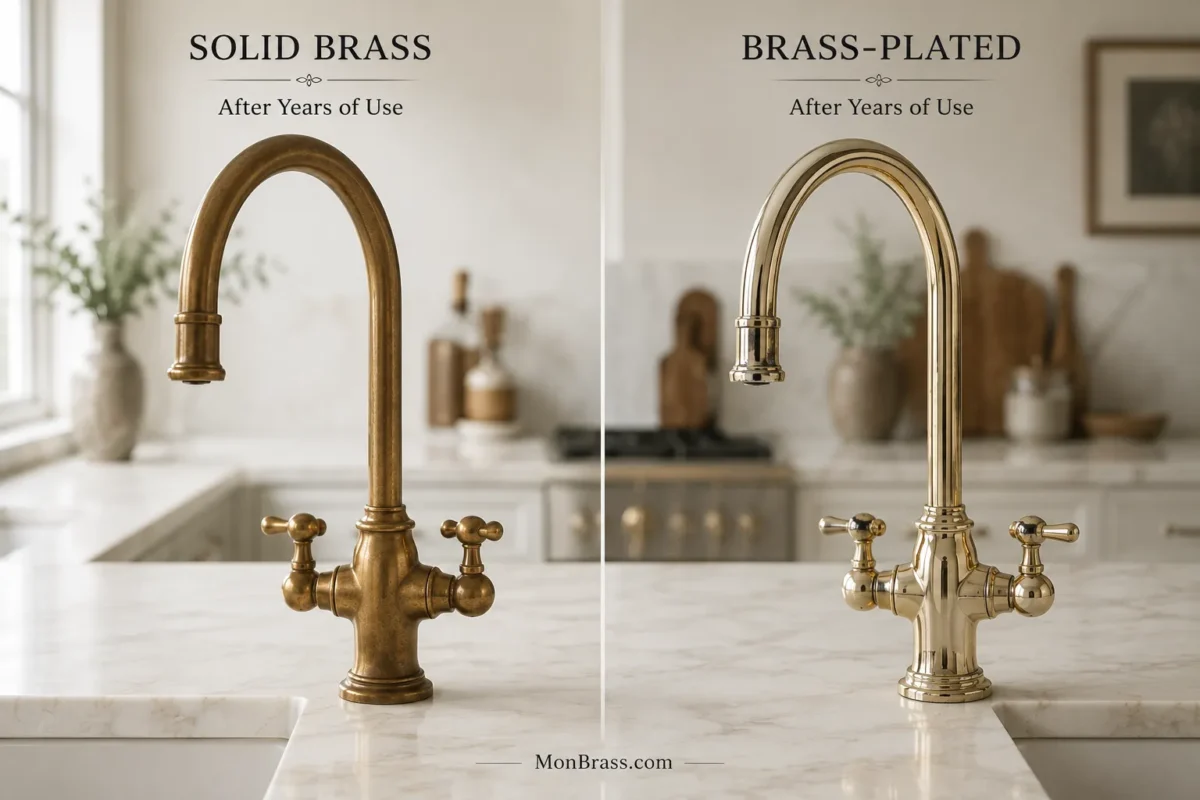
The way brass ages is often one of the deciding factors for homeowners and designers.
Solid Brass Develops Character
When left without a protective lacquer, solid brass gradually changes in appearance through everyday exposure to air, moisture, and handling. Many homeowners appreciate this natural evolution rather than viewing it as wear.
If you’re considering this type of finish, understanding how long unlacquered brass lasts and whether unlacquered brass is worth it can help set realistic expectations.
Brass-Plated Fixtures Stay More Consistent
Many brass-plated fixtures are sealed with a clear protective lacquer designed to preserve their original color.
That’s an advantage if you prefer fixtures that continue looking much like they did on installation day.
If the coating eventually wears through, however, the finish may begin showing signs of uneven wear instead of developing the gradual aging associated with solid brass.
Maintenance Requirements
Neither option requires complicated maintenance, but they do benefit from proper care.
Caring for Solid Brass
Maintenance depends largely on the finish.
Lacquered brass usually needs nothing more than mild soap, water, and a soft cloth.
Unlacquered brass may be left to age naturally or polished occasionally, depending on the appearance you prefer.
Caring for Brass-Plated Fixtures
Brass-plated finishes need a slightly gentler touch.
Avoid using:
- Abrasive scrub pads
- Steel wool
- Strong acidic cleaners
- Metal polishes unless recommended by the manufacturer
Aggressive cleaning can gradually wear away the decorative brass layer.
Cost vs Long-Term Value
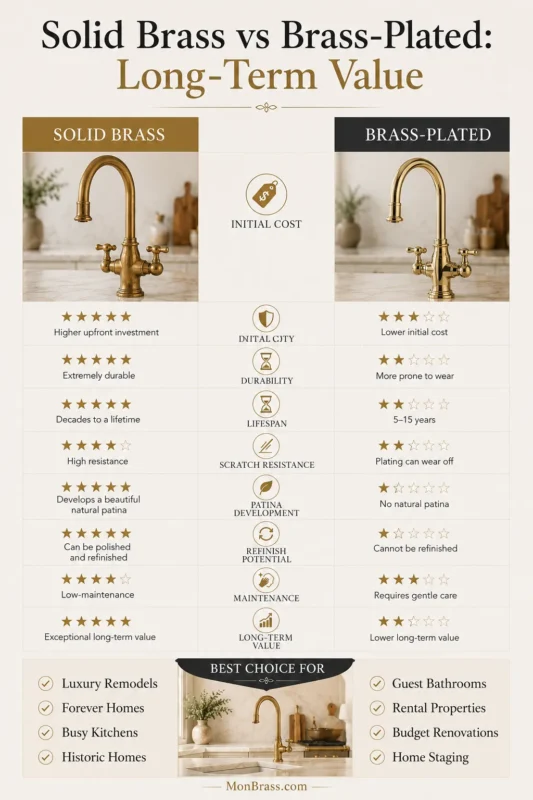
Solid brass typically comes with a higher price tag because brass itself is a relatively expensive material and manufacturing an entire fixture from it costs more than applying a decorative coating over another metal.
Brass-plated fixtures offer a more affordable way to achieve a similar appearance.
For homeowners updating a guest bathroom, staging a home for sale, or renovating on a tighter budget, they can be an excellent choice.
For long-term renovations where durability is the priority, solid brass often delivers stronger value over the life of the fixture.
Matching the Material to Your Home
The better choice often depends less on the fixture itself and more on where it’s being installed.
Busy Family Kitchens
A kitchen faucet experiences constant handling, frequent cleaning, and regular exposure to water.
Solid brass generally performs better under this kind of daily use.
Guest Bathrooms
A guest bathroom typically sees much lighter use.
A quality brass-plated faucet or towel bar can maintain its appearance for many years simply because it isn’t handled as often.
Luxury Renovations
Designers working on luxury homes frequently choose solid brass because it complements natural stone, handcrafted cabinetry, and other premium materials.
Historic Homes
Many historic renovations favor solid brass hardware because it naturally complements traditional architectural details.
Rental Properties
For rental homes or apartments where renovation costs are a priority, brass-plated fixtures often provide an attractive balance between appearance and affordability.
Common Buying Misconceptions
“They Look the Same, So They Must Perform the Same”
Two faucets can appear identical in a showroom while having completely different construction.
Always check whether the product description refers to the material or simply the finish.
“All Brass-Plated Fixtures Wear Out Quickly”
Quality varies significantly between manufacturers.
A well-made brass-plated fixture with a durable protective coating can last much longer than an inexpensive alternative.
“Solid Brass Doesn’t Need Maintenance”
Even premium materials benefit from proper care.
Routine cleaning helps preserve lacquered finishes, while unlacquered brass naturally changes over time.
“Heavier Always Means Better”
Weight can sometimes indicate better construction, but it’s not a guarantee.
Reading the manufacturer’s specifications is still the most reliable way to confirm whether a fixture is solid brass.
How to Identify a Solid Brass Fixture
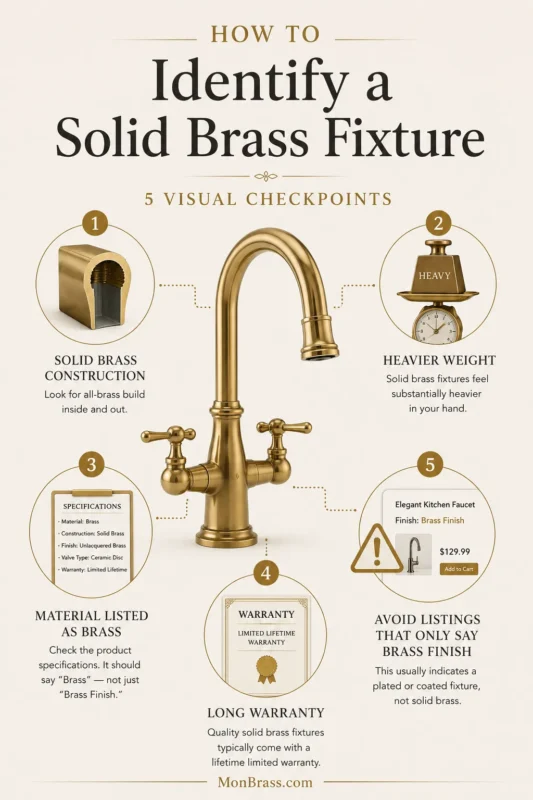
If you’re shopping online or comparing products in a showroom, look for these clues:
- The specifications clearly state solid brass construction
- The product feels noticeably heavier than similar fixtures
- The manufacturer lists brass as the primary material—not simply the finish
- The warranty reflects long-term durability
If a listing only mentions a “brass finish” or “brass-colored finish,” it doesn’t necessarily mean the fixture is made from solid brass.
Frequently Asked Questions
Is solid brass worth the higher price?
For homeowners planning to stay in their home for many years, solid brass often provides better long-term value thanks to its durability.
Can brass-plated fixtures rust?
That depends on the base metal. If the protective coating becomes damaged, corrosion may eventually develop on metals that are susceptible to rust.
Does solid brass always develop a patina?
No. Only unlacquered solid brass naturally develops a patina. Lacquered brass is designed to maintain a more consistent appearance.
Can brass-plated fixtures be refinished?
Usually not. Once the plating wears away, replacement is often more practical. Solid brass generally offers more restoration options if refinishing is important.
Which material is better for kitchen faucets?
Because kitchen faucets receive heavy daily use, solid brass is generally the better long-term investment.
Are expensive brass fixtures always solid brass?
No. Price alone doesn’t determine construction quality. Always verify the product specifications before buying.
Final Thoughts
Both solid brass and brass-plated fixtures have a place in modern homes, and neither is automatically the better choice. The right option depends on how the fixture will be used, your renovation budget, and your expectations for appearance over time.
If you value authentic materials, natural durability, and decades of service, solid brass is often worth the additional investment. If your goal is achieving the look of brass at a lower upfront cost, a well-made brass-plated fixture can still provide years of reliable performance.
Taking a few extra minutes to understand the construction, finish, and maintenance requirements before buying will help you choose fixtures that suit both your home and your long-term expectations.
