





Brass Care & Maintenance
How to Speed Up the Aging Process of Unlacquered Brass: The Fume Methode
Jun
Unlacquered brass is prized for its ability to develop a rich, living patina over time. Unlike lacquered finishes that stay the same year after year, unlacquered brass reacts to its environment, gradually darkening and gaining character through exposure to air, moisture, and daily use.
For some homeowners, that transformation is part of the appeal. Others love the aged look but don’t want to wait months for it to develop naturally. The good news is that there are safe ways to encourage patina formation and speed up the aging process without damaging the finish.
In this guide, we’ll cover natural aging, vinegar and salt methods, and a few common mistakes to avoid.
How Unlacquered Brass Ages Naturally
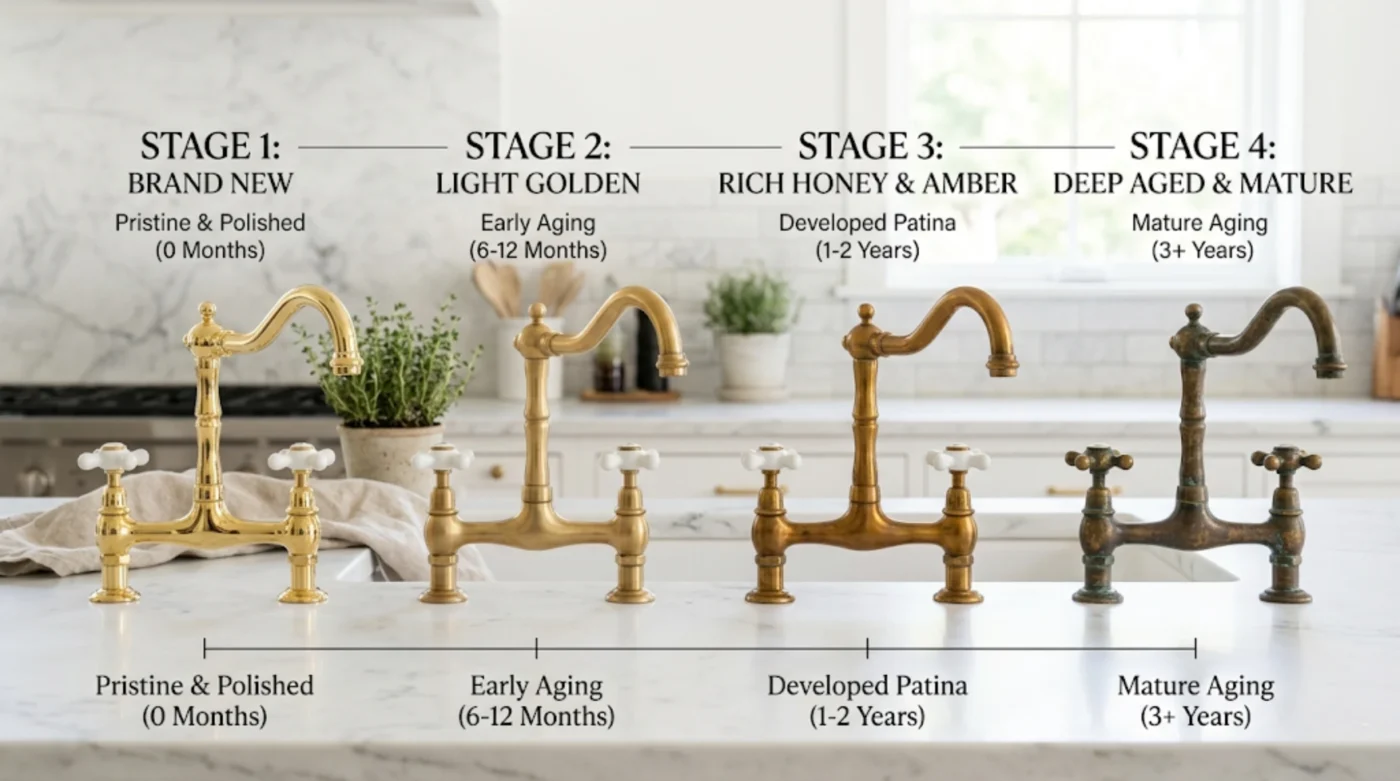
Unlacquered brass is raw brass without a protective coating. Because the metal is exposed, it begins reacting with oxygen, water, oils from your hands, and environmental conditions from the moment it’s installed.
Over time, the bright golden finish softens into deeper honey, bronze, and brown tones. The exact appearance varies depending on where the fixture is used and how often it is touched.
Factors that naturally accelerate patina include:
- High humidity
- Frequent handling
- Water exposure
- Kitchen environments
- Coastal climates
A busy kitchen faucet, for example, will usually develop patina much faster than a decorative fixture in a low-traffic powder room.
Patina is not a defect—it’s the defining characteristic of authentic unlacquered brass.
Method 1: Speed Up Patina with Vinegar
One of the easiest ways to encourage patina is with ordinary white vinegar.
Because vinegar is mildly acidic, it helps accelerate the oxidation process that naturally occurs on brass surfaces.
What You’ll Need
- White vinegar
- Soft microfiber cloth
- Clean water
- Dry towel
How to Do It
- Clean the brass with mild soap and water.
- Dry the surface completely.
- Dampen a soft cloth with white vinegar.
- Lightly wipe the brass surface.
- Allow it to air dry naturally.
- Repeat daily until the desired look develops.
What to Expect
You may notice:
- Reduced shine
- Slight darkening
- More visible character
- Faster development of warm aged tones
The change is usually gradual and more natural-looking than aggressive chemical treatments.
Method 2: Accelerate Patina Using a Vinegar Fume Chamber
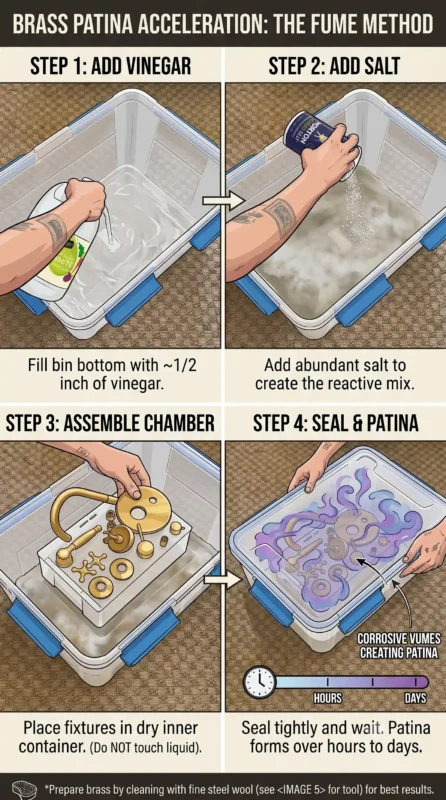
If you want a richer, more even patina without directly coating the brass in vinegar, a vinegar fume chamber can be highly effective.
Instead of touching the metal, the vinegar vapors react with the brass surface and encourage oxidation. This often produces a softer, more natural-looking aged finish.
What You’ll Need
- Large plastic storage bin with lid
- Smaller plastic tray or container
- White vinegar
- Table salt
- Fine steel wool (#0000 grade)
- Unlacquered brass fixtures
Step 1: Prepare the Brass
Before aging, lightly rub the brass surface with fine steel wool.
This removes oils, fingerprints, and residue that can prevent the patina from developing evenly.
Avoid aggressive scrubbing. The goal is simply to expose a clean brass surface.
Step 2: Create the Fume Chamber
Pour approximately ½ inch (1–2 cm) of white vinegar into the bottom of the large plastic container.
Add a generous amount of table salt and stir lightly.
Place the smaller tray or container inside the larger bin so it sits above the liquid.
Step 3: Position the Brass
Arrange the brass parts on the smaller tray.
Important: The brass should never touch the vinegar solution.
Only the fumes should come into contact with the metal.
Step 4: Seal the Container
Place the lid on the container and allow the vinegar vapors to circulate around the brass.
As the fumes build up, oxidation begins to accelerate.
Step 5: Monitor the Patina
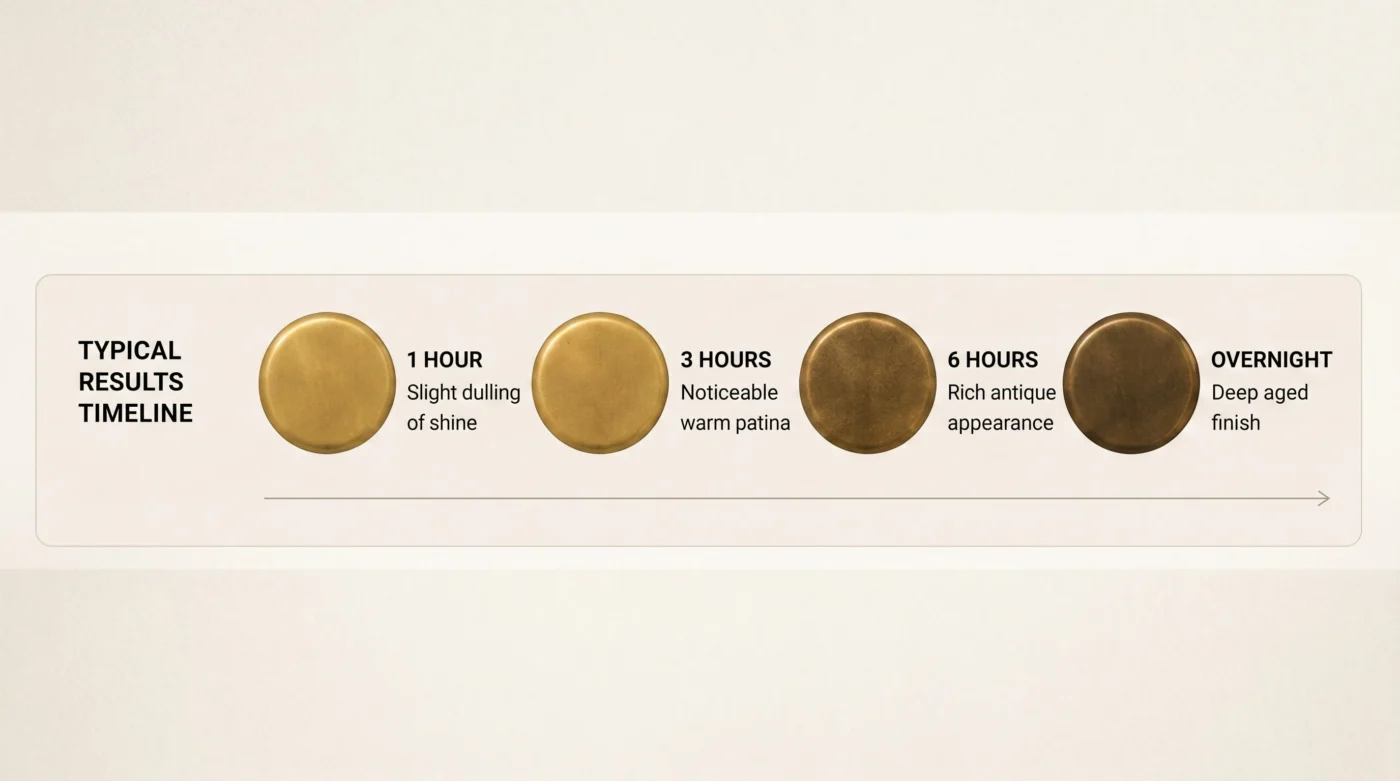
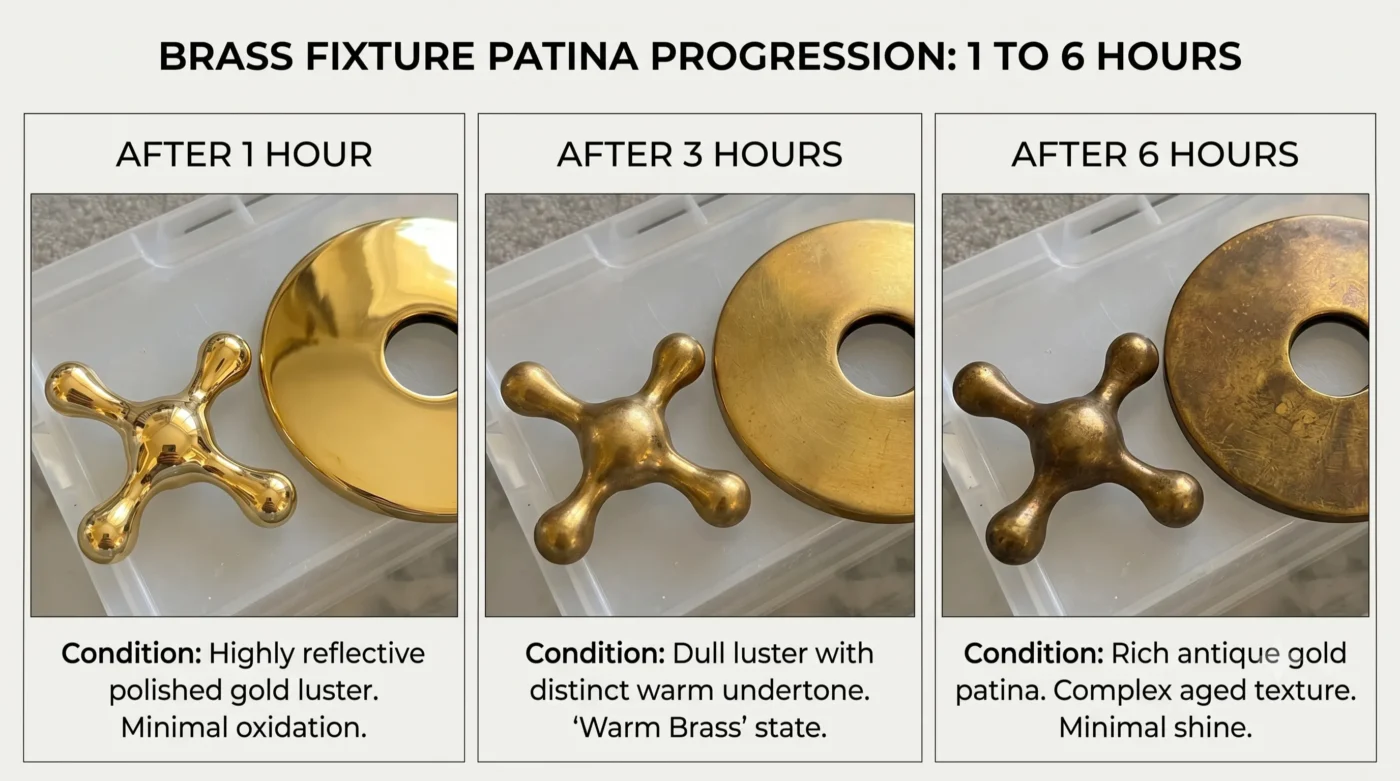
The exact timing depends on temperature, humidity, and the brass alloy, but visible changes can happen surprisingly quickly.
| Time | Typical Result |
|---|---|
| 1 Hour | Slight dulling of shine |
| 3 Hours | Noticeable warm patina |
| 6 Hours | Rich antique appearance |
| Overnight | Deep aged finish |
The screenshots from the process show gradual darkening becoming visible within the first few hours.
Expected Results
Compared to vinegar alone, this method may produce:
- Faster darkening
- More noticeable color variation
- A stronger antique appearance
Because every brass alloy reacts differently, always test a small hidden area first before treating an entire fixture.
Why This Method Works
The vinegar and salt mixture releases acidic vapors inside the sealed container.
These vapors react with the copper content in the brass, encouraging oxidation without soaking the fixture or leaving liquid marks.
Because the metal remains dry, the resulting patina often appears more natural and uniform than direct liquid applications.
Pro Tip
Check the brass every hour during the first treatment.
Patina develops quickly once the reaction begins, and it’s easier to stop the process than to reverse an overly dark finish.
Natural Aging: The Safest Approach
While DIY methods can speed up the process, many designers and brass enthusiasts prefer natural aging.
Allowing unlacquered brass to develop patina on its own often creates the most authentic and balanced appearance.
To encourage natural aging:
- Use the fixture regularly.
- Allow occasional water spots to dry naturally.
- Avoid excessive polishing.
- Don’t worry about fingerprints.
- Let normal environmental exposure do the work.
This approach may take longer, but it often produces the most beautiful results because the patina develops organically over time.
Typical Patina Timeline
| Environment | Approximate Aging Speed |
|---|---|
| Dry climate | Several months |
| Average home | 1–6 months |
| Humid bathroom | Several weeks |
| Busy kitchen | Weeks to months |
| Vinegar and salt treatment | Hours to days |
Keep in mind that no two unlacquered brass fixtures will age exactly the same way.
Things to Avoid
When trying to accelerate patina, it’s important not to damage the metal in the process.
Avoid Harsh Chemical Cleaners
Strong commercial cleaners can strip the surface unevenly and create unnatural discoloration.
Avoid Abrasive Scrubbing Pads
Steel wool, scouring pads, and abrasive brushes can scratch the brass and permanently affect its appearance.
Avoid Over-Polishing
Polishing removes oxidation. If you’re trying to develop patina, frequent polishing works against that goal.
Avoid Clear Coatings and Sealants
Wax, lacquer, and protective coatings prevent the metal from reacting with air and moisture, slowing or stopping the aging process.
Don’t Expect Perfect Uniformity
One of the most attractive qualities of unlacquered brass is that it ages differently across the surface. Variations in tone, color, and wear are signs of genuine patina, not flaws.
Frequently Asked Questions
Can vinegar damage unlacquered brass?
When used sparingly and rinsed properly, vinegar is generally considered safe for encouraging patina development on unlacquered brass.
How long does it take for unlacquered brass to develop patina naturally?
Most fixtures begin showing changes within a few weeks, while a fully developed patina may take several months or longer depending on environmental conditions.
Is vinegar and salt better than natural aging?
It depends on your goal. Vinegar and salt can produce faster results, while natural aging typically creates the most authentic-looking patina.
Can I restore the original shine later?
Yes. One of the advantages of unlacquered brass is that patina can usually be removed through polishing if you decide you prefer a brighter finish in the future.
Final Thoughts
Unlacquered brass is designed to evolve. Whether you choose to let nature take its course or encourage the process with vinegar and salt, the goal is the same: creating the rich, lived-in patina that makes unlacquered brass so distinctive.
For the most natural appearance, patience is often the best approach. But if you’re eager to achieve that aged look sooner, gentle treatments and regular use can help your fixtures develop character much faster.
Related Reading: Can You Restore the Original Shine of Unlacquered Brass? and The Complete Guide to Unlacquered Brass Patina, Care, Design & Buying Decisions.
