





Brass Care & Maintenance
How to Clean Unlacquered Brass Without Removing Patina
Jun
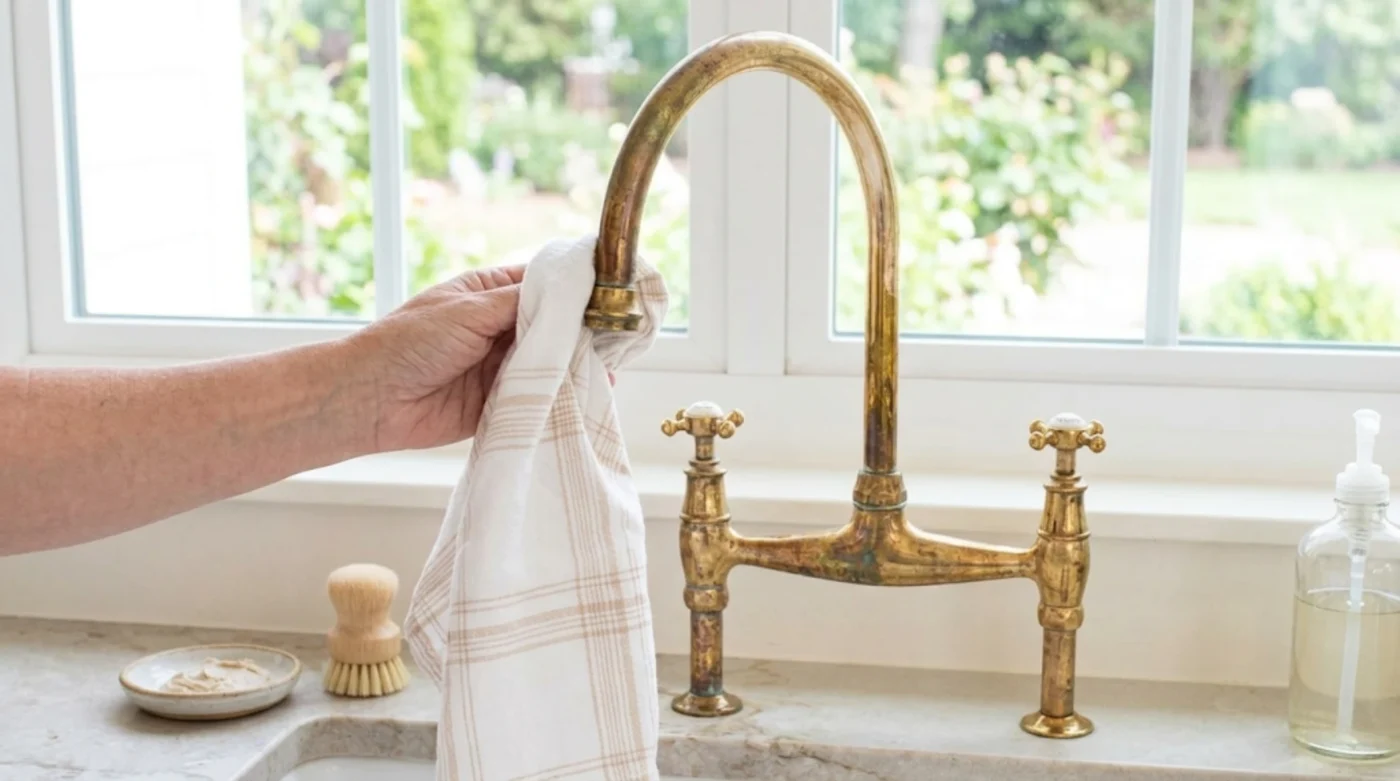
Unlacquered brass is prized for its living finish. Unlike lacquered brass, which is sealed to maintain a consistent appearance, unlacquered brass naturally develops a patina over time through exposure to air, water, and daily use. For many homeowners and designers, this evolving character is exactly what makes unlacquered brass so appealing.
The challenge is knowing how to clean it without accidentally removing the patina you’ve spent months or years developing. The good news is that routine cleaning doesn’t require harsh chemicals or brass polish. In most cases, a gentle approach is all that’s needed to keep unlacquered brass clean while preserving its aged appearance.
Dirt vs. Patina: Know the Difference Before Cleaning
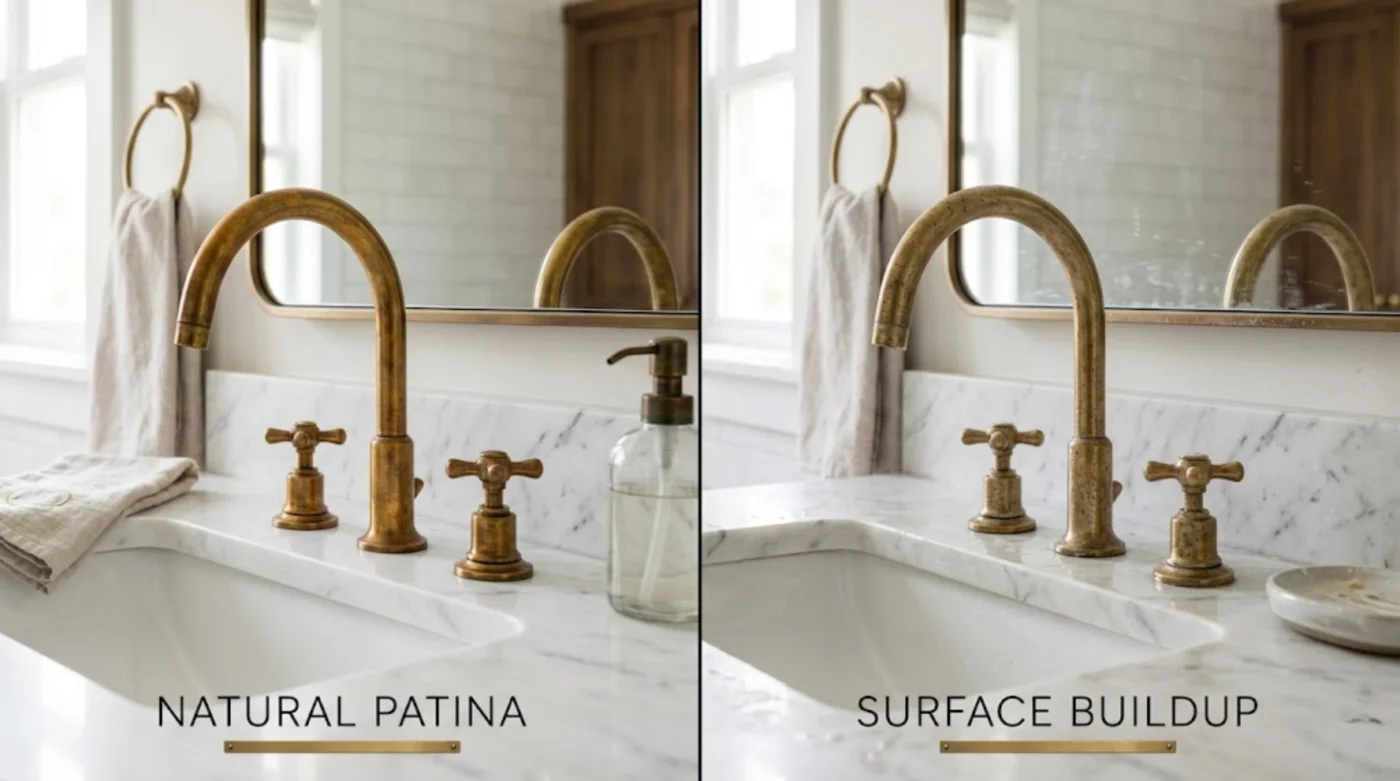
Before reaching for a cleaner, it’s important to understand what you’re looking at.
Patina is the natural darkening, mellowing, and color variation that develops on unlacquered brass over time. It can range from warm golden tones to rich amber, brown, and even subtle olive hues. Patina is not damage—it’s a natural part of the material’s aging process.
Dirt and buildup, on the other hand, may include:
- Soap residue
- Fingerprints and skin oils
- Dust
- Hard water deposits
- Toothpaste splashes
- Kitchen grease
Many people mistake patina for tarnish or dirt and accidentally remove years of beautiful aging by using aggressive cleaners. The goal should be to remove surface contaminants while allowing the brass to continue aging naturally.
The Safest Way to Clean Unlacquered Brass
For regular maintenance, keep the process simple.
Step 1: Remove Dust and Loose Debris
Use a clean, dry microfiber cloth to wipe away dust and loose particles. This prevents scratching the surface during cleaning.
Step 2: Clean With Mild Soap and Warm Water
Mix a few drops of gentle dish soap into warm water.
Using a soft cloth:
- Dampen the cloth lightly
- Wipe the brass surface gently
- Focus on fingerprints, splashes, and residue
- Avoid excessive scrubbing
A soft cloth and mild soap are usually enough to remove everyday dirt without affecting the patina.
Step 3: Rinse and Dry Immediately
After cleaning:
- Wipe away any soap residue with a clean damp cloth
- Dry thoroughly using a soft towel
Standing water can leave mineral deposits and water spots, especially in areas with hard water.
How to Remove Water Spots Without Stripping Patina
Hard water is one of the most common causes of buildup on brass faucets and fixtures.
If you notice white spots or mineral deposits, start with the gentlest solution possible.
For light deposits:
- Dampen a soft cloth with warm water.
- Gently rub the affected area.
- Dry immediately.
For more stubborn mineral buildup:
- Mix equal parts water and white vinegar.
- Apply the solution to a soft cloth rather than directly to the fixture.
- Wipe only the affected area.
- Rinse immediately with clean water.
- Dry thoroughly.
The key is moderation. Prolonged exposure to acidic cleaners can lighten the surface and affect the developing patina. Spot treatment is usually sufficient for occasional mineral deposits.
Cleaning Kitchen and Bathroom Brass Fixtures
Unlacquered brass behaves differently depending on where it’s installed.
Kitchen Faucets
Kitchen faucets are frequently exposed to:
- Grease
- Food residue
- Water spots
Regular wiping with a damp microfiber cloth can prevent buildup from accumulating and reduce the need for deeper cleaning.
Bathroom Faucets
Bathroom fixtures often collect:
- Toothpaste residue
- Soap splashes
- Hard water deposits
A quick wipe after cleaning the sink can help maintain the fixture while preserving its natural finish.
In both cases, gentle routine maintenance is far better than occasional aggressive cleaning.
What Not to Use on Unlacquered Brass
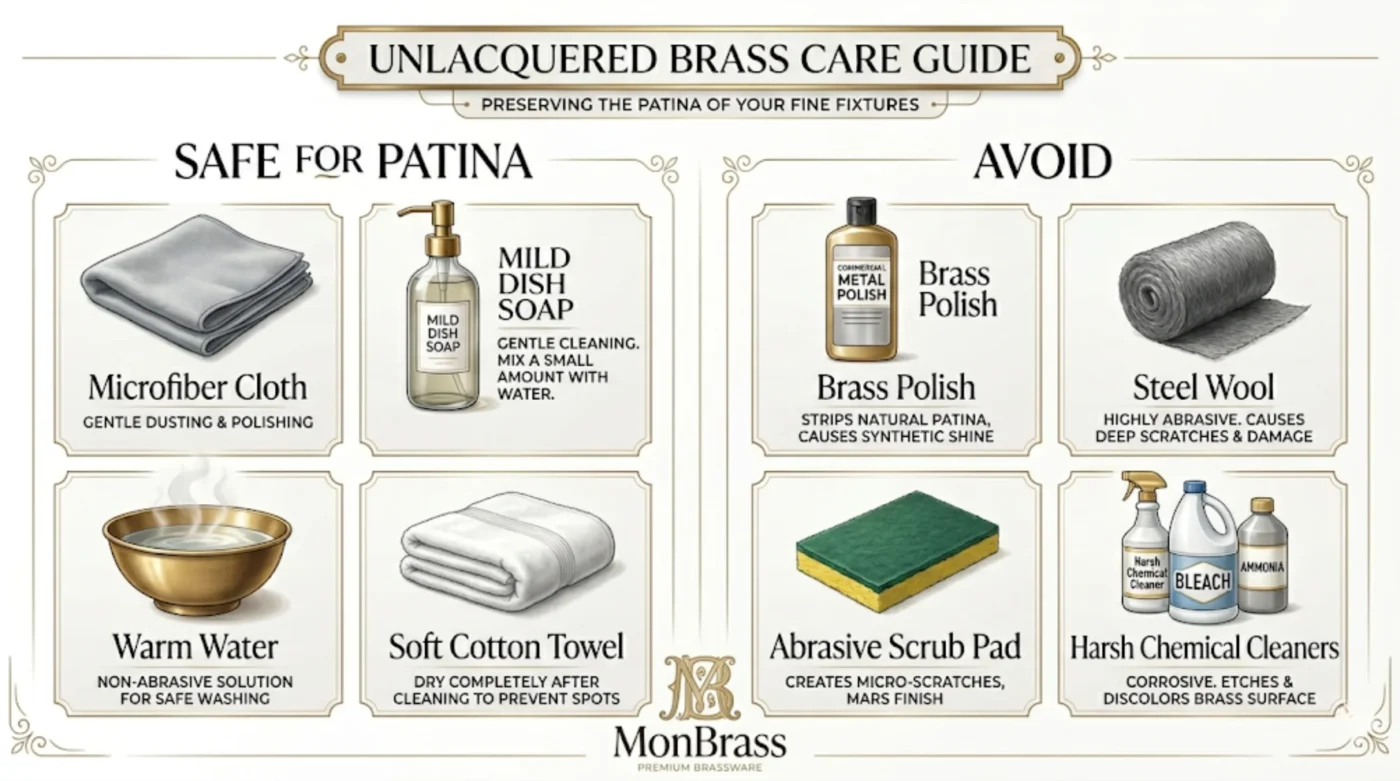
Many cleaning products marketed for brass are designed to restore shine, not preserve patina.
Avoid:
Brass Polish
Polishes are designed to remove oxidation and return brass to a brighter appearance.
Brasso and Similar Products
These products can quickly strip away patina and reveal fresh brass underneath.
Abrasive Pads
Scouring pads and rough sponges may scratch the surface and create uneven wear patterns.
Steel Wool
Steel wool can scratch brass and leave behind particles that may rust over time.
Harsh Chemical Cleaners
Strong acidic or alkaline cleaners may alter the finish and accelerate uneven discoloration.
If your goal is to preserve the aged look, gentle cleaning is almost always the best approach.
How Often Should You Clean Unlacquered Brass?
One of the biggest misconceptions about unlacquered brass is that it requires constant maintenance.
In reality, less is often more.
A simple routine works well for most homeowners:
- Weekly: Wipe with a dry microfiber cloth
- Monthly: Clean with mild soap and water if needed
- As needed: Remove water spots or mineral deposits
Over-cleaning can interfere with the natural aging process that makes unlacquered brass unique.
Frequently Asked Questions
Will cleaning remove the patina?
Routine cleaning with mild soap and water should not remove patina. Polishing products and abrasive cleaners are far more likely to strip away the aged finish.
Can I use vinegar on unlacquered brass?
Yes, but only sparingly and primarily for mineral deposits or water spots. Always dilute it, rinse thoroughly, and dry the surface immediately afterward.
Why does my brass look uneven?
Patina develops differently depending on moisture, handling, and exposure. Areas that are touched frequently often age differently than areas that are rarely touched. This variation is a normal and desirable characteristic of unlacquered brass.
Should unlacquered brass be polished?
Only if you want to restore a brighter, newer appearance. If you appreciate the aged character of the brass, avoid polishing products.
Preserve the Patina, Not the Shine
The beauty of unlacquered brass lies in its ability to evolve over time. Every mark, color shift, and subtle variation tells the story of how the fixture has been used and lived with.
When cleaning unlacquered brass, the goal isn’t to make it look brand new—it’s to remove dirt, fingerprints, and buildup while preserving the character that has developed naturally. In most cases, warm water, mild soap, a soft cloth, and proper drying are all you need.
If you’re still exploring how unlacquered brass ages, develops patina, and compares to other finishes, read our complete guide to unlacquered brass for a deeper look at care, design considerations, and buying decisions.
