





Uncategorized
Unlacquered Brass vs Stainless Steel: Which Is the Better Choice for Your Home?
Jul
Choosing between unlacquered brass and stainless steel isn’t just about appearance. It’s a decision that affects maintenance, durability, style, and even how your kitchen or bathroom will look years from now.
At first glance, stainless steel often seems like the practical option, while unlacquered brass is viewed as the luxury choice. In reality, each material has strengths that make it a better fit for certain homes, lifestyles, and design preferences. Understanding how they age, respond to daily use, and fit into different interiors can help you invest in fixtures you’ll still appreciate long after your renovation is complete.
Understanding the Difference Between Unlacquered Brass and Stainless Steel
Although both materials are popular for faucets, shower systems, cabinet hardware, and accessories, they behave very differently over time.
Unlacquered brass is solid brass with no protective lacquer coating. Because the raw metal is exposed to air, moisture, and skin oils, it gradually develops a natural patina. This aging process is intentional and often considered part of its appeal.
Stainless steel is an alloy primarily made of steel and chromium. The chromium forms an invisible protective layer that resists corrosion, staining, and rust, helping stainless steel maintain a relatively consistent appearance for many years.
The biggest difference isn’t durability—both materials can last decades when well made—but how they evolve with everyday use.
Quick Comparison
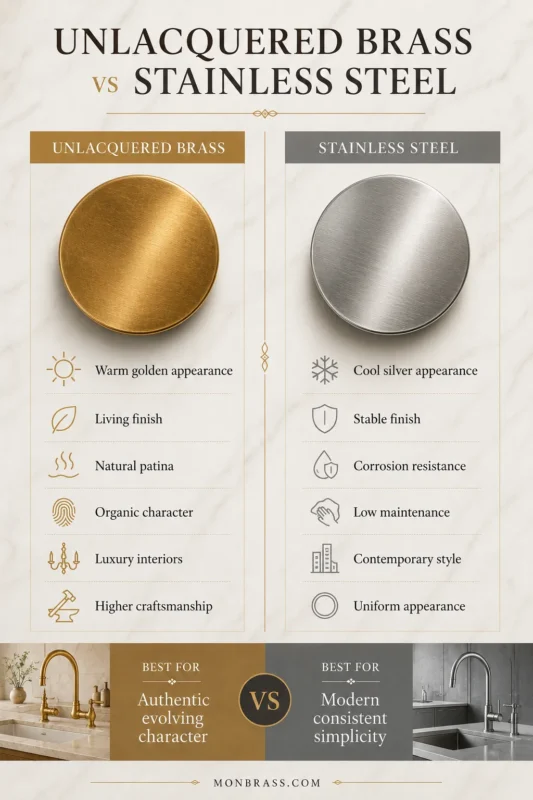
| Feature | Unlacquered Brass | Stainless Steel |
| Appearance | Warm, golden tones that develop patina | Cool silver finish with consistent appearance |
| Aging | Changes naturally over time | Changes very little |
| Maintenance | Occasional cleaning depending on desired look | Simple routine cleaning |
| Design Style | Traditional, transitional, luxury, vintage, organic | Modern, contemporary, industrial, minimalist |
| Corrosion Resistance | Excellent when properly maintained | Excellent |
| Fingerprints | Less noticeable as patina develops | Often visible, especially polished finishes |
| Cost | Usually higher | Available across a wider price range |
| Character | Becomes more unique over time | Remains more uniform |
Appearance: Warm Character vs Clean Simplicity
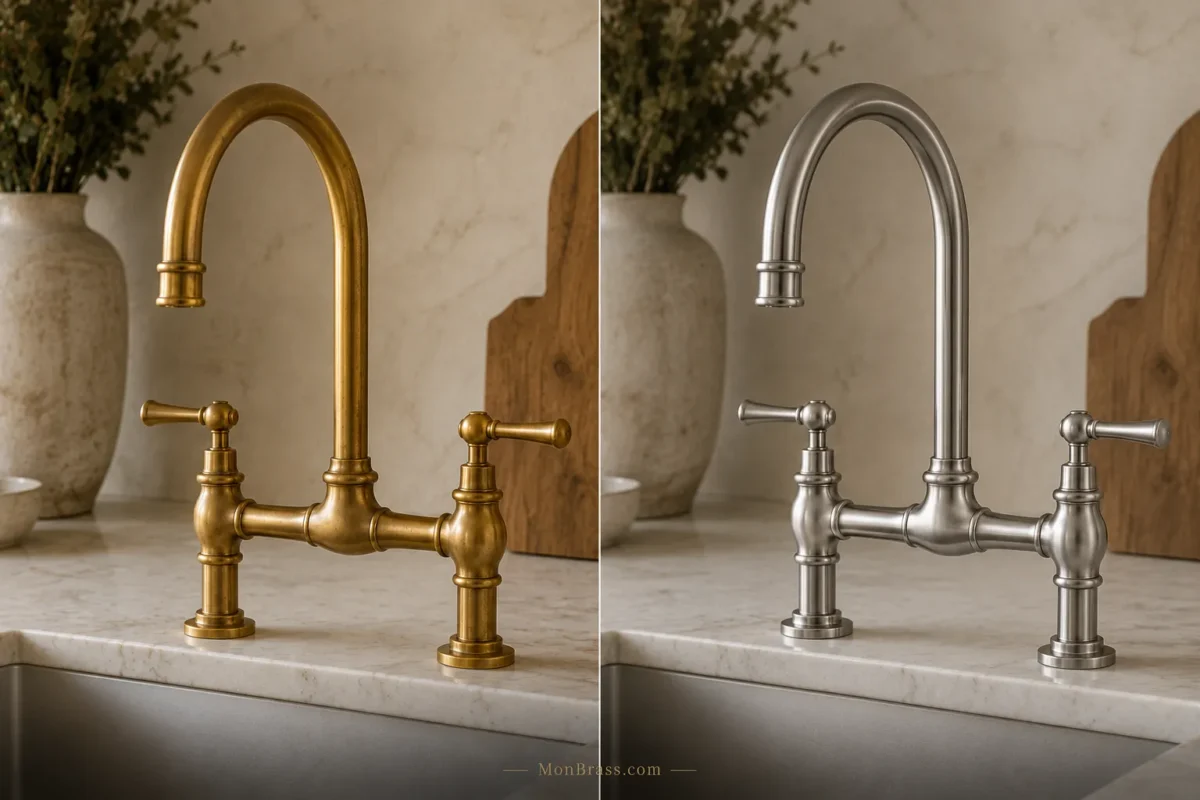
For many homeowners, appearance is the deciding factor.
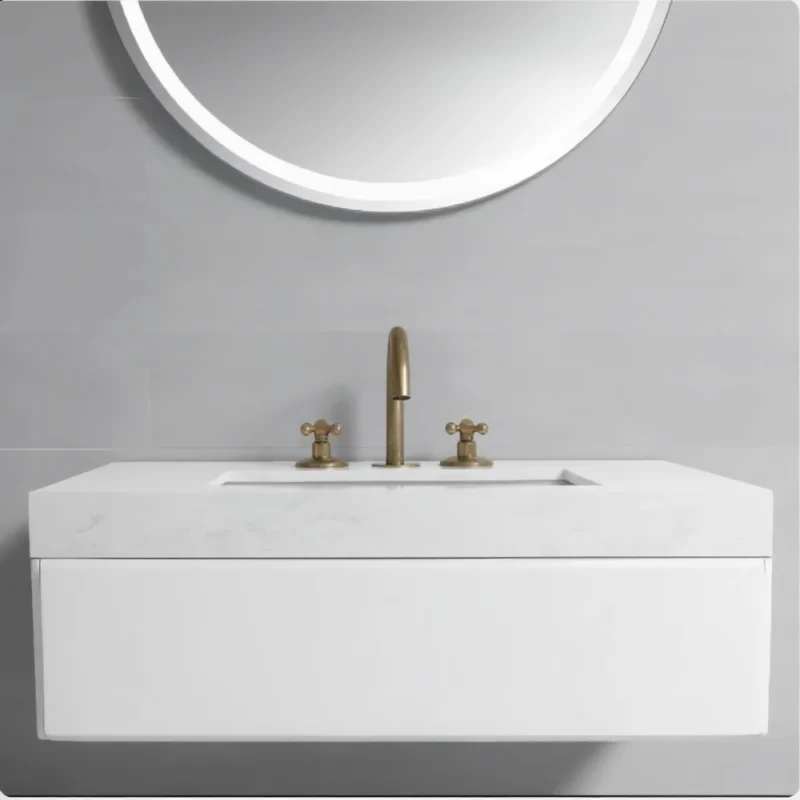
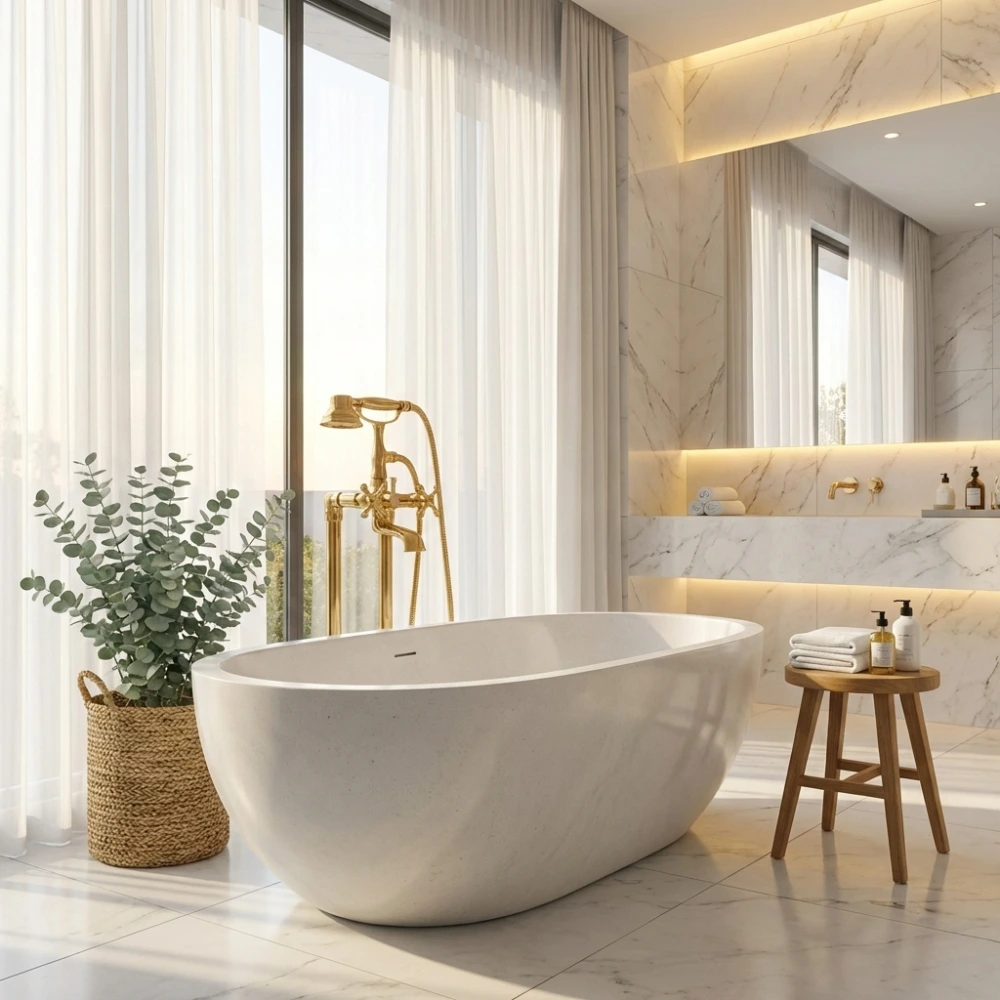
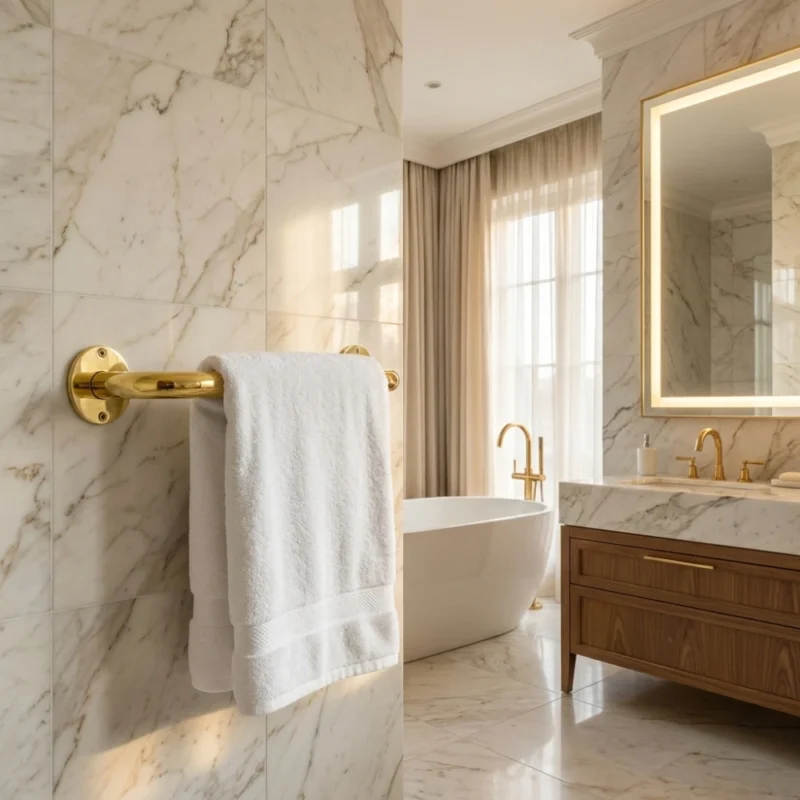
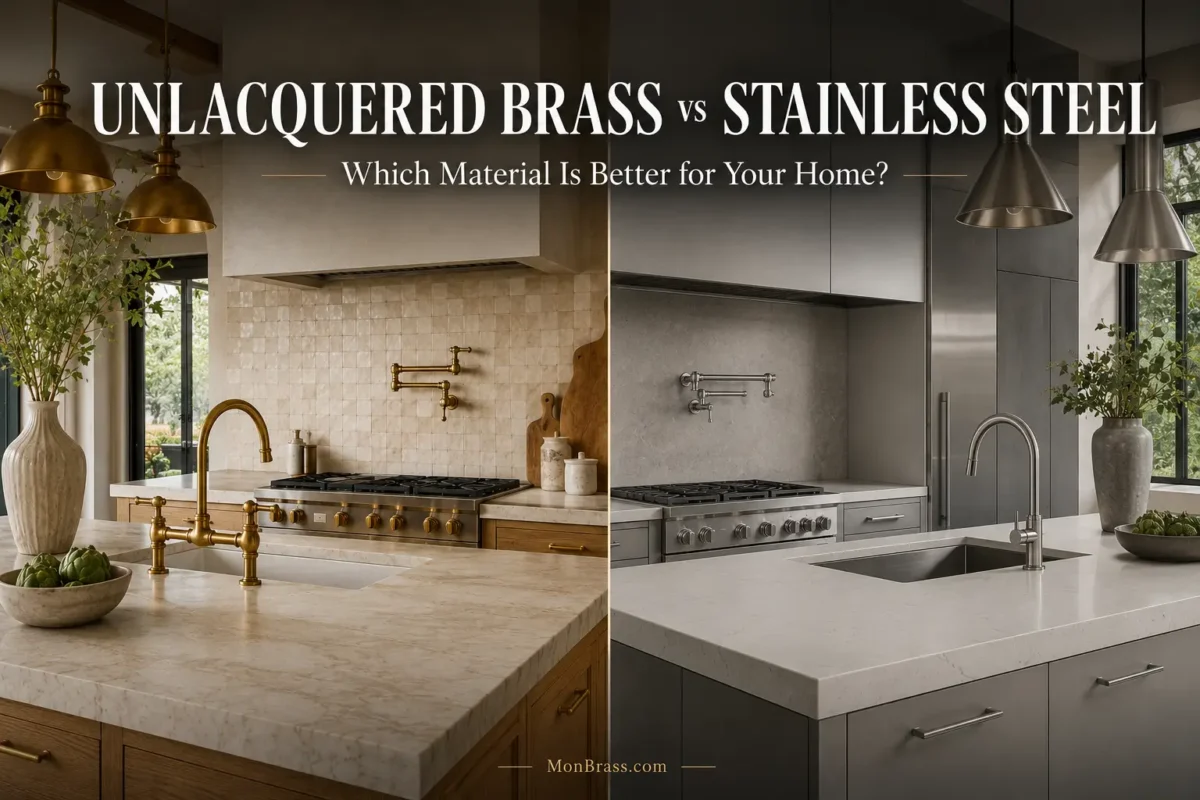
Unlacquered brass offers warmth that few other finishes can match. Its golden color softens kitchens and bathrooms, pairing beautifully with marble, natural wood, limestone, soapstone, and handcrafted tile.
Over time, the finish gradually develops natural variation that gives each fixture a more individual appearance.
Stainless steel creates a very different impression. Its cool, reflective surface complements modern cabinetry, quartz countertops, concrete, and sleek architectural details. Because its appearance changes very little, it delivers a cleaner, more predictable aesthetic.
If you enjoy materials that tell a story through age, brass often feels more inviting. If consistency is your priority, stainless steel usually wins.
Durability and Long-Term Performance
Both materials have excellent reputations for longevity, but they perform differently.
High-quality unlacquered brass fixtures are typically made from solid brass, making them extremely durable. Surface scratches often become less noticeable as patina develops, blending naturally into the finish rather than standing out.
Stainless steel also resists everyday wear exceptionally well. It handles moisture, humidity, and frequent cleaning with little impact on its appearance. However, polished stainless steel can show scratches more clearly, particularly in busy kitchens.
From a structural standpoint, quality matters more than the material itself. A well-manufactured stainless steel faucet will generally outperform a poorly made brass fixture, and vice versa.
Maintenance Requirements
Maintenance is one of the biggest differences between these finishes.
Caring for Unlacquered Brass
Unlacquered brass doesn’t require constant polishing unless you want to preserve its original bright finish.
Routine care is generally straightforward and depends on the appearance you prefer.
Some homeowners simply clean the surface gently and allow the finish to evolve naturally, while others occasionally polish it to maintain a brighter look.
Mineral deposits should be removed using methods appropriate for brass to help preserve the finish.
Caring for Stainless Steel
Stainless steel is generally easier for homeowners seeking a consistent finish.
Routine cleaning with mild soap and a microfiber cloth is usually enough. Water spots and fingerprints can become noticeable, especially on polished surfaces, but they wipe away easily.
Unlike brass, stainless steel doesn’t develop a decorative patina that changes its overall appearance.
Which Material Ages Better?
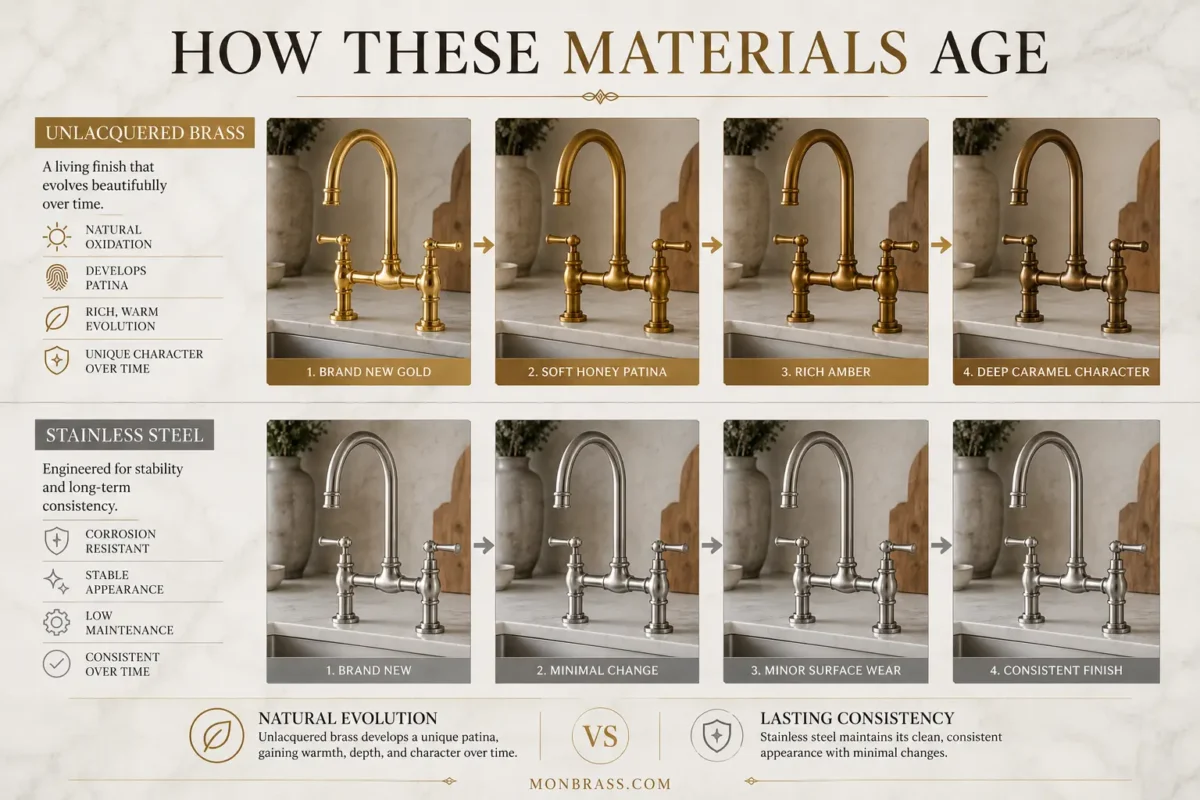
This depends entirely on what you consider “better.”
For homeowners who appreciate materials that evolve naturally, unlacquered brass develops increasing character over time, while stainless steel is designed to retain a more consistent appearance.
For homeowners who prefer fixtures to look almost identical year after year, stainless steel provides greater consistency.
Neither material is aging incorrectly—they’re simply designed with different expectations in mind.
Design Styles That Suit Each Material
Unlacquered Brass Works Especially Well In:
- Traditional homes
- Transitional interiors
- European-inspired kitchens
- Luxury bathrooms
- Farmhouse designs
- Historic renovations
- Organic modern interiors
Its warmth pairs naturally with natural stone, unlacquered wood, textured plaster, and handcrafted finishes.
Stainless Steel Is Ideal For:
- Contemporary homes
- Minimalist interiors
- Industrial lofts
- Scandinavian-inspired spaces
- Commercial-style kitchens
- Ultra-modern bathrooms
Its clean lines and neutral color make it easy to coordinate with many appliances and fixtures.
Things to Consider Before Choosing Between Unlacquered Brass and Stainless Steel
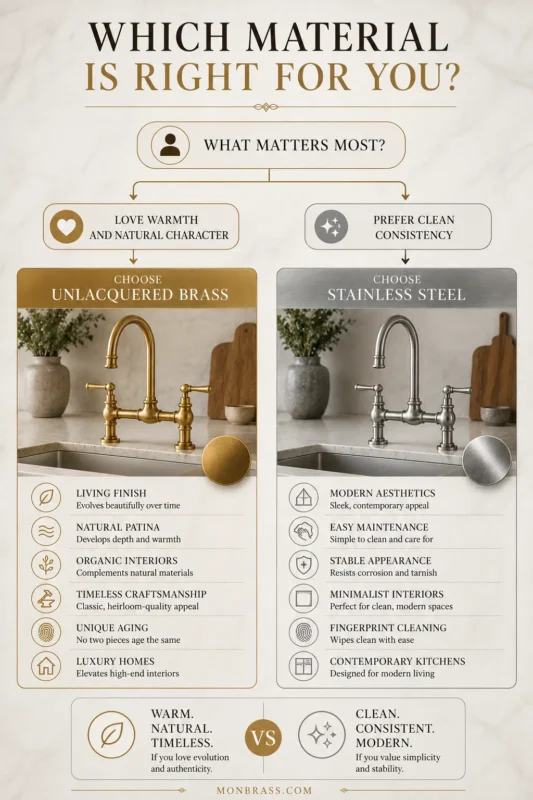
Before making a final decision, think beyond today’s appearance.
Choose Unlacquered Brass If You:
Advantages
- Appreciate natural aging
- Want every fixture to develop unique character
- Prefer warm-toned interiors
- Enjoy timeless materials
- Value craftsmanship and authenticity
Trade-Offs
- The finish will change.
- Color variations are normal.
- Bright brass requires occasional polishing.
- Usually costs more than comparable stainless steel.
Choose Stainless Steel If You:
Advantages
- Prefer consistency
- Want lower day-to-day maintenance
- Like clean contemporary design
- Coordinate with stainless appliances
- Want a finish that changes very little
Trade-Offs
- Can show fingerprints.
- Scratches may remain visible.
- Doesn’t develop the character many homeowners seek in natural metals.
Ultimately, neither choice is universally better. The right option depends on how you want your fixtures to look five, ten, or twenty years from now.
Real-World Examples
Many luxury bathrooms use unlacquered brass to introduce warmth alongside natural materials, while stainless steel is often chosen when a cleaner, more contemporary look is preferred.
Common Mistakes Homeowners Make
Expecting Brass to Stay Bright Forever
One of the most common misconceptions is believing unlacquered brass should always remain shiny. Patina is not a flaw—it’s the defining characteristic of the finish.
Choosing Based Only on Today’s Appearance
Many renovation decisions focus on how a fixture looks in the showroom.
Instead, imagine how the material will look after several years of daily use.
Ignoring Water Conditions
Hard water can affect both materials through mineral deposits. Regular gentle cleaning helps maintain either finish.
Mixing Finishes Without a Plan
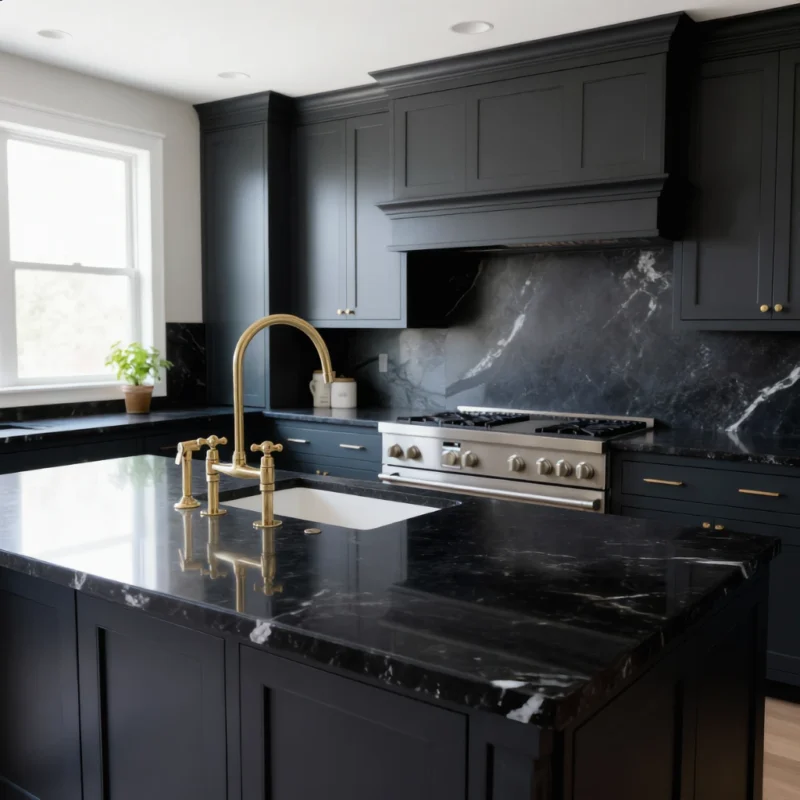
Combining brass and stainless steel can work beautifully, but it should feel intentional. Repeating each finish throughout the room helps create balance instead of visual clutter.
Buying Low-Quality Fixtures
The material alone doesn’t determine longevity. Construction quality, solid materials, and reputable manufacturers matter just as much.
Frequently Asked Questions
Is unlacquered brass more durable than stainless steel?
Both materials are highly durable when made to a high standard. Their biggest difference is appearance over time rather than structural strength.
Does stainless steel require less maintenance?
Generally, yes. Stainless steel usually needs only routine cleaning, while unlacquered brass may require occasional polishing if you want to maintain a brighter finish.
Which is more expensive?
High-quality unlacquered brass fixtures are often more expensive because of the material and craftsmanship involved, although premium stainless steel products can also be costly.
Can unlacquered brass be used in kitchens?
Absolutely. In fact, many homeowners appreciate how kitchen faucets develop distinctive patina in frequently touched areas.
Will unlacquered brass rust?
No. Solid brass does not rust like iron or steel. Instead, its surface naturally changes appearance over time.
Conclusion
Choosing between unlacquered brass and stainless steel comes down to how you want your home to age. Stainless steel offers consistency, low-maintenance care, and a clean contemporary look. Unlacquered brass offers warmth, individuality, and a finish that becomes more distinctive with everyday use.
If you enjoy materials that evolve naturally and add character to your home, unlacquered brass is often a rewarding long-term investment. If you prefer a fixture that looks much the same year after year with minimal upkeep, stainless steel is an excellent choice.
Both materials can serve beautifully for decades—the better option is the one that matches your design style, maintenance preferences, and expectations for how your home should mature over time.
