





Uncategorized
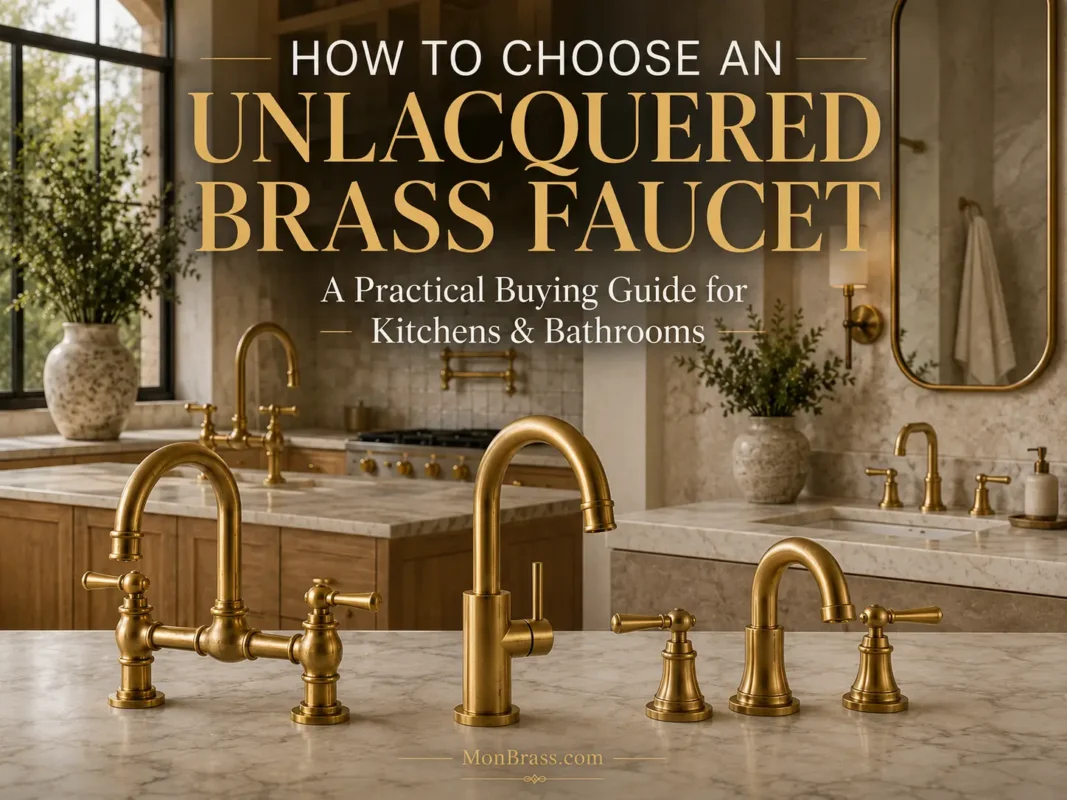
How to Choose an Unlacquered Brass Faucet: A Practical Buying Guide for Kitchens and Bathrooms
Jul
An unlacquered brass faucet can become one of the most striking features in a kitchen or bathroom—but only if you choose the right one. Style is important, but so are construction quality, installation requirements, daily maintenance, and how the finish will evolve over time.
Many homeowners are surprised to learn that not all brass faucets are made the same. Some are solid brass, while others are simply brass-plated. Some are designed for busy kitchens, while others are better suited for powder rooms or guest bathrooms. Understanding these differences before you buy can help you avoid costly mistakes and choose a faucet you’ll enjoy for decades.
Start with the Right Room
The first question isn’t which faucet looks best—it’s where the faucet will be used.
An unlacquered brass faucet responds differently in a frequently used kitchen than it does in a lightly used guest bathroom because everyday use influences how the finish develops over time.
Kitchen Faucets
Kitchen faucets receive constant daily use, making functionality just as important as appearance.
When choosing a kitchen faucet, look for:
- High-arc spouts for larger pots
- Pull-down or pull-out sprayers if needed
- Comfortable handle operation
- Durable ceramic disc cartridges
- Adequate spout reach for your sink
Bridge faucets are especially popular in traditional and European-inspired kitchens, while single-hole designs suit modern spaces with a cleaner appearance.
Bathroom Faucets
Bathrooms often place different demands on a faucet than kitchens.
Bathroom faucet choices typically depend on:
- Sink size
- Countertop drilling configuration
- Vanity width
- Splash clearance
- Desired design style
For vessel sinks, taller faucets may be necessary, while undermount sinks often work well with widespread or wall-mounted designs.
Make Sure It’s Solid Brass
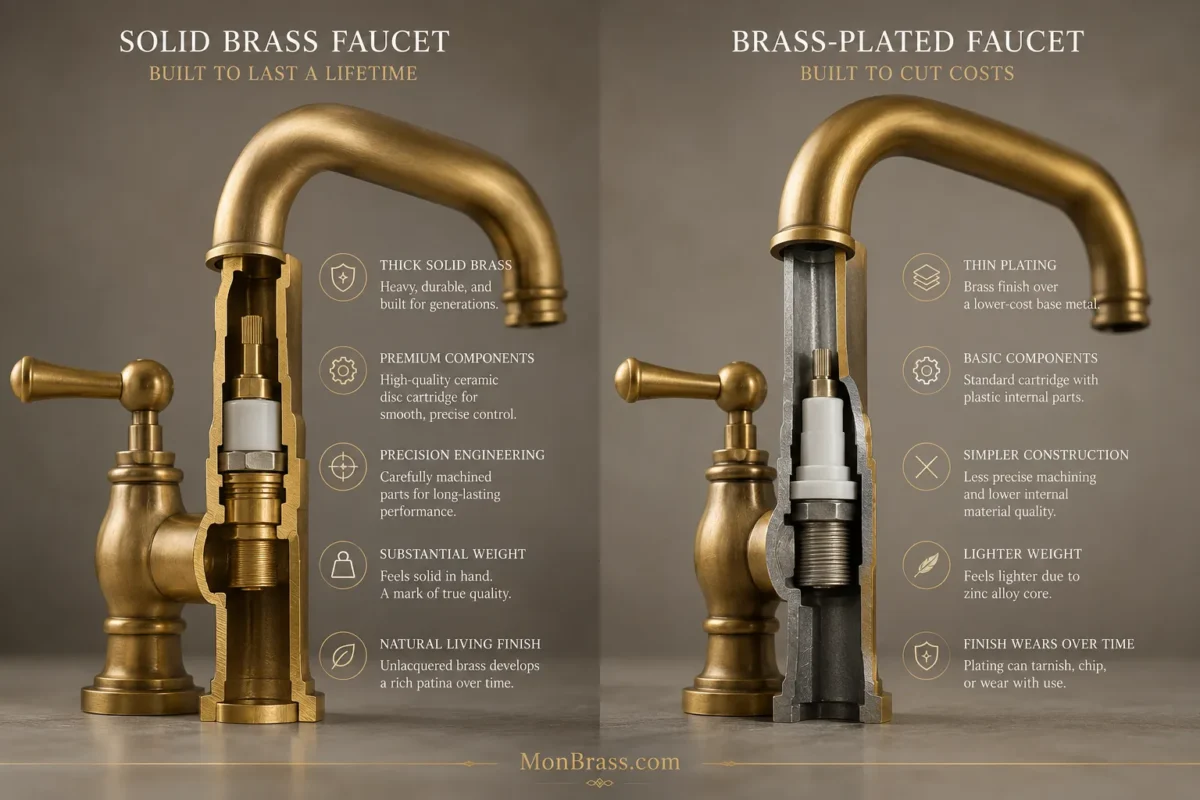
One of the biggest buying mistakes is assuming every brass faucet contains solid brass.
Many inexpensive products use brass plating over zinc alloy or other base metals. While they may look similar initially, they generally don’t offer the same long-term durability or develop the same authentic appearance over time.
A quality unlacquered brass faucet should feature:
- Solid brass construction
- Heavy weight
- Precision machining
- Durable valve components
- Ceramic disc cartridges
Although solid brass usually costs more upfront, it typically provides better long-term value.
Choose the Right Faucet Configuration
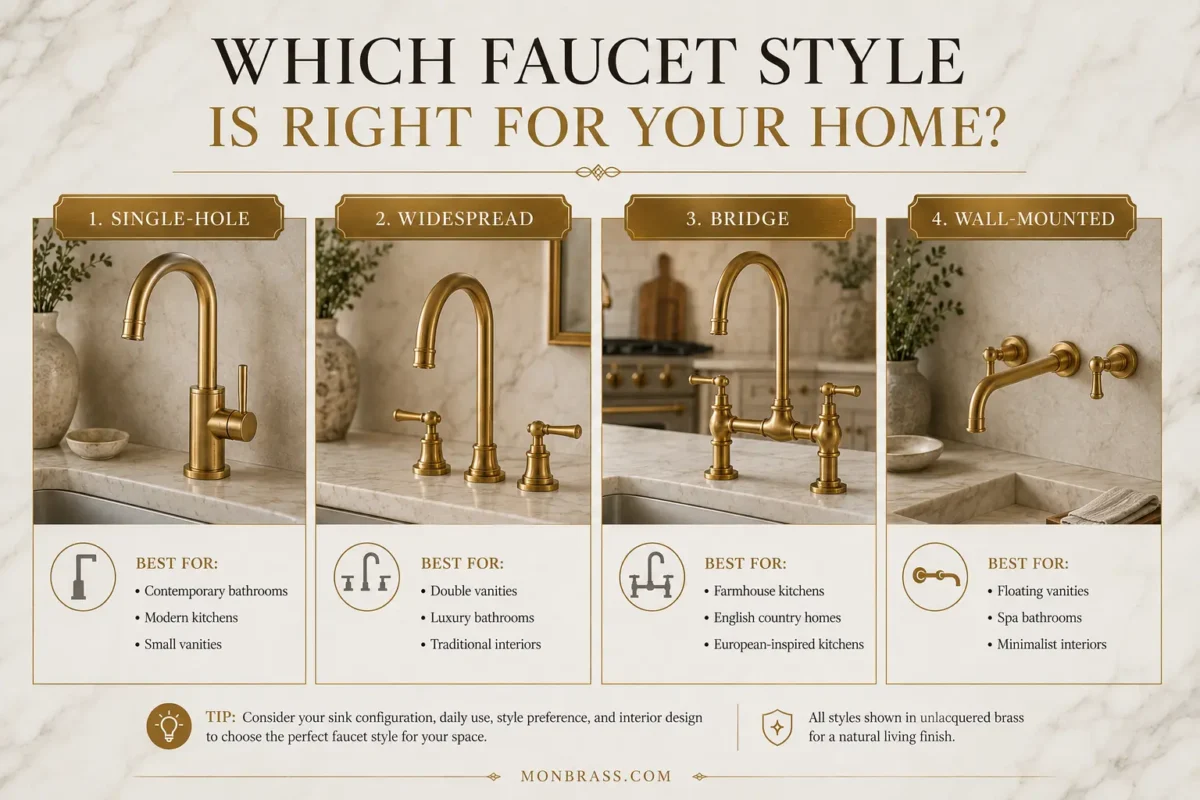
Your sink and countertop largely determine which faucet styles will work.
Single-Hole Faucets
Single-hole faucets combine the spout and control into one streamlined fixture.
They’re well suited for:
- Contemporary bathrooms
- Smaller vanities
- Modern kitchens
- Minimalist interiors
Because they occupy less space, they’re often easier to clean around.
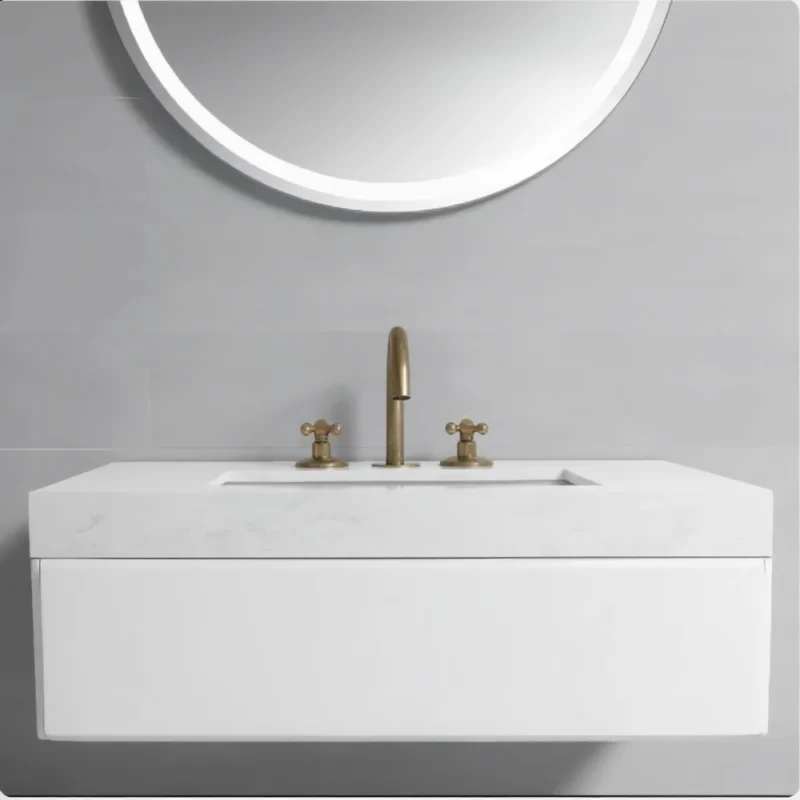
Widespread Faucets
Widespread faucets separate the handles from the spout.
These work particularly well for:
- Double vanities
- Luxury bathrooms
- Traditional interiors
- Larger countertops
They provide a balanced, elegant appearance while allowing flexible handle spacing.
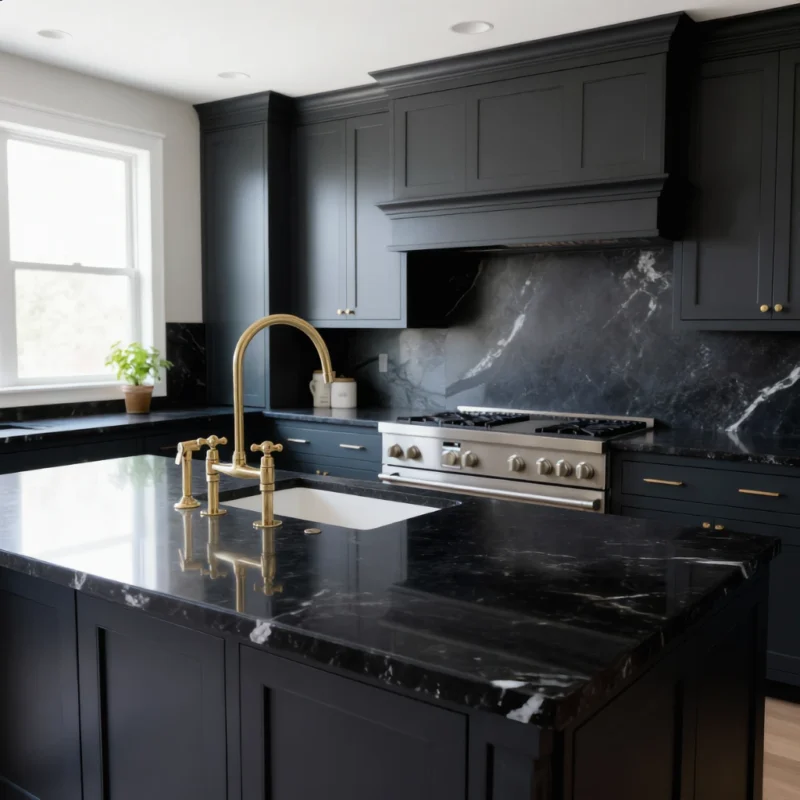
Bridge Faucets
Bridge faucets connect the hot and cold water lines with an exposed horizontal bar.
These faucets are especially popular in farmhouse, English country, and classic European kitchens where they serve as both practical fixtures and visual focal points.
Wall-Mounted Faucets
Wall-mounted faucets create a clean countertop while simplifying cleaning around the sink.
However, installation is more involved because plumbing must be positioned inside the wall before finishes are completed. Careful planning before installation is essential.
Think About How Patina Fits Your Lifestyle
One of the defining characteristics of unlacquered brass is that the finish naturally changes with everyday use.
Rather than remaining identical year after year, it gradually develops a more individual appearance that reflects how the faucet is used and the environment around it.
If maintaining a perfectly consistent finish is important to you, another finish may be a better fit.
Consider Your Water Quality
Water conditions can influence the day-to-day appearance of any faucet.
Homes with Hard Water
Hard water doesn’t damage solid brass itself, but mineral deposits can accumulate around the spout and aerator.
Routine gentle cleaning is usually enough to keep buildup under control while preserving the finish.
High-Humidity Bathrooms
Humidity may encourage the finish to change somewhat more quickly than it would in drier environments. This is a normal characteristic of unlacquered brass rather than a sign of damage.
Match the Faucet to Your Design Style
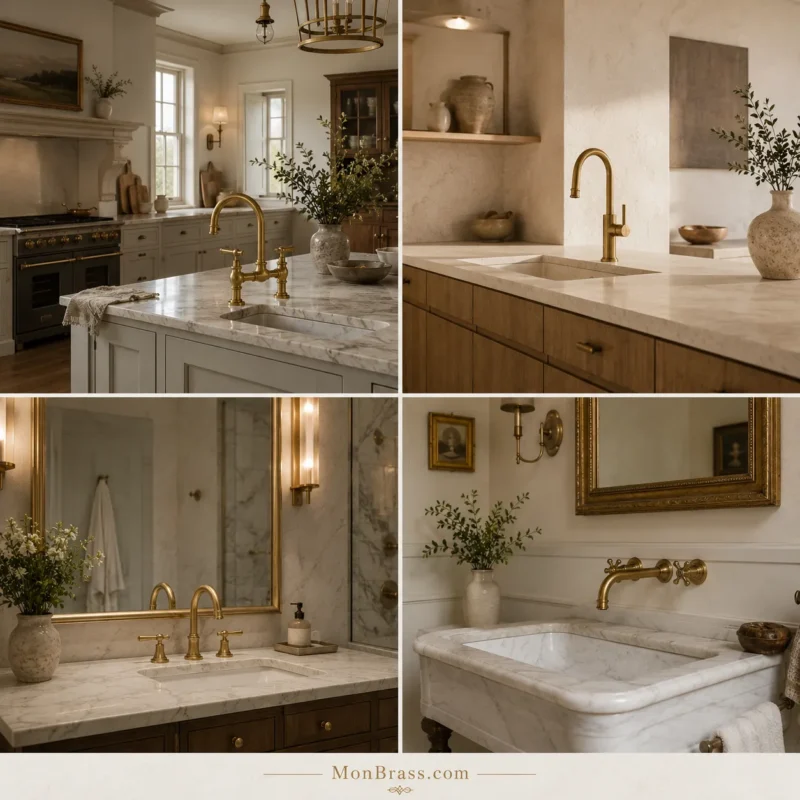
An unlacquered brass faucet should feel connected to the overall design rather than standing out as an isolated accent.
Traditional Homes
Bridge faucets, cross handles, and widespread bathroom faucets naturally complement traditional architecture.
Modern Homes
Simple single-hole faucets with clean lines allow unlacquered brass to introduce warmth without overwhelming minimalist spaces.
Historic Renovations
Because brass has been used in plumbing fixtures for generations, unlacquered finishes often feel especially appropriate in older homes.
Organic Modern Interiors
Warm metals, natural wood, limestone, plaster walls, and unlacquered brass frequently work together to create relaxed, timeless spaces.
Things to Consider Before Choosing an Unlacquered Brass Faucet
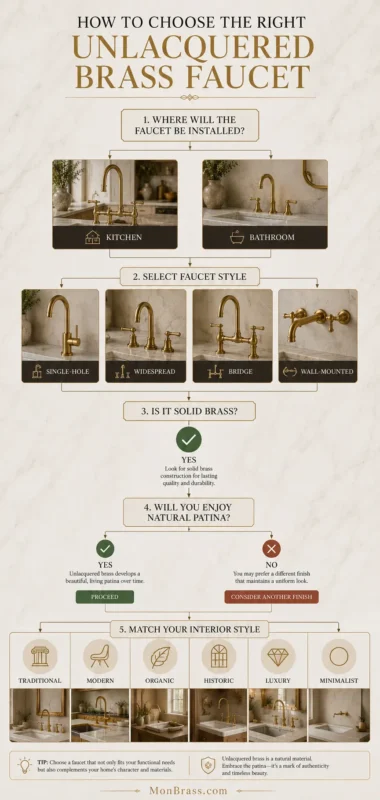
Before making your final decision, consider how the faucet fits your home—not just your inspiration photos.
Advantages
- Solid brass offers excellent long-term durability
- Develops an individual appearance over time
- Warm finish complements many natural materials
- Minor scratches often become less noticeable as the finish evolves
- Adds timeless character
Drawbacks
- Appearance changes naturally over time
- Bright finish won’t remain identical forever
- Usually costs more than plated alternatives
- May not suit homeowners who prefer a perfectly uniform finish
Maintenance Expectations
Maintenance is generally straightforward.
Routine gentle cleaning is usually sufficient, while polishing is optional for homeowners who prefer a brighter appearance.
Budget Considerations
A quality unlacquered brass faucet typically represents a higher upfront investment than standard finishes.
However, many homeowners consider the combination of durability, solid construction, and timeless design worthwhile over the life of the fixture.
Real-World Buying Scenarios
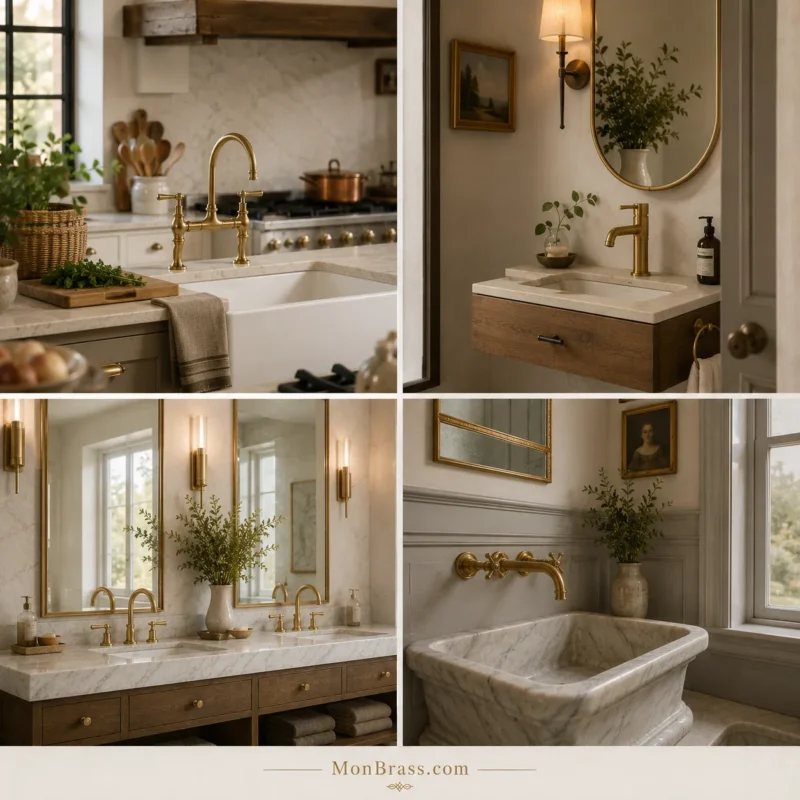
A Busy Family Kitchen
A high-arc bridge faucet provides generous clearance for large cookware while offering the functionality needed for frequent daily use.
A Small Powder Room
A compact single-hole faucet keeps the vanity uncluttered while introducing warmth into a limited space.
A Luxury Primary Bathroom
Widespread faucets pair beautifully with stone countertops and double vanities, creating a balanced, upscale appearance.
A Historic Home Renovation
Wall-mounted or bridge-style brass faucets often feel more historically appropriate than ultra-modern fixtures.
Common Mistakes to Avoid
Buying Brass-Plated Instead of Solid Brass
The two may appear similar when new, but they often perform very differently over time.
Ignoring Installation Requirements
Wall-mounted faucets require plumbing inside the wall, while widespread faucets need multiple countertop holes.
Confirm compatibility before ordering.
Choosing Only Based on Photos
Online images usually show brand-new fixtures.
Remember that unlacquered brass is intended to develop a naturally changing appearance over time.
Using Abrasive Cleaners
Harsh chemicals and abrasive pads should be avoided because they can damage the finish.
Forgetting About Sink Size
An oversized faucet can overwhelm a small vanity, while a short spout may create splashing in a large sink.
Always consider proportions as carefully as finish.
Frequently Asked Questions
Is an unlacquered brass faucet good for a kitchen?
Yes. High-quality unlacquered brass faucets are widely used in kitchens and are well suited to everyday household use.
How do I know if a faucet is solid brass?
Look for product specifications that clearly state “solid brass construction.” Weight, build quality, and reputable manufacturers are also helpful indicators.
Will an unlacquered brass faucet require constant polishing?
No. Polishing is optional and depends entirely on the appearance you prefer.
Which faucet style is easiest to install?
Single-hole faucets are generally the simplest because they require only one mounting hole.
Can I mix unlacquered brass with other finishes?
Yes. Brass pairs well with materials and finishes such as natural stone, wood, matte black accents, and stainless steel when incorporated thoughtfully throughout the space.
Conclusion
Choosing the right unlacquered brass faucet involves much more than selecting a finish you like. The room, faucet style, construction quality, installation requirements, water conditions, and your expectations for how the finish will change all play an important role.
By focusing on solid brass construction, selecting a style that matches your sink and overall design, and understanding the characteristics of an unlacquered finish, you can choose a faucet that remains a lasting feature of your home for many years.
