





Uncategorized
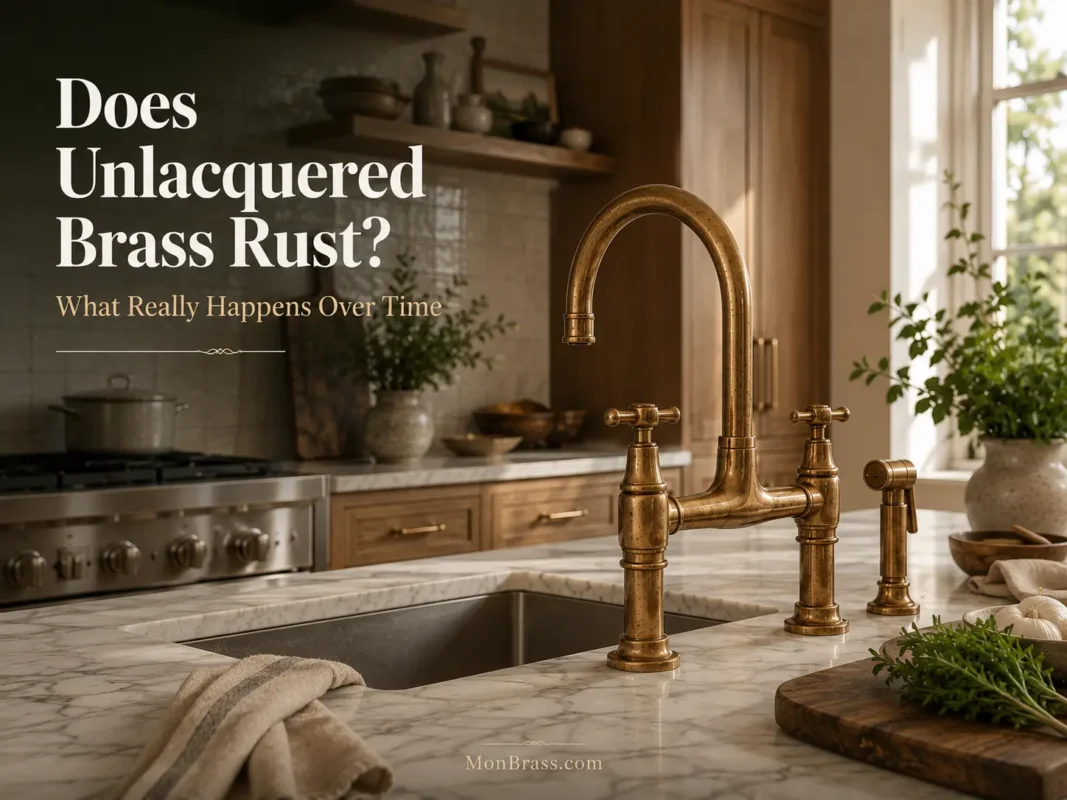
Does Unlacquered Brass Rust? What Really Happens Over Time
Jul
If you’re considering an unlacquered brass faucet, shower system, or cabinet hardware, you’ve probably wondered whether it will rust after years of exposure to water. It’s a reasonable question, especially since these fixtures are commonly installed in kitchens, bathrooms, and other high-moisture environments.
The short answer is no—solid unlacquered brass does not rust because it doesn’t contain enough iron to produce rust in the way steel does. What many people mistake for rust is actually the brass developing a natural patina, which is an expected part of the material’s aging process.
Understanding the difference between rust, corrosion, oxidation, and patina can help you know what to expect and avoid unnecessary concern when your brass fixtures begin changing appearance.
Why Unlacquered Brass Doesn’t Rust
Rust is a specific type of corrosion that occurs when iron or steel reacts with oxygen and moisture. The familiar reddish-brown flakes seen on old steel tools, fences, or vehicles are iron oxide.
Brass is different.
Brass is primarily an alloy of copper and zinc, with little or no iron in its composition. Because rust requires iron, solid brass simply cannot develop rust the way steel can.
Instead, brass undergoes oxidation that gradually creates a protective surface layer known as a patina.
This distinction is one of the biggest misconceptions surrounding unlacquered brass fixtures.
What Happens to Unlacquered Brass Instead?
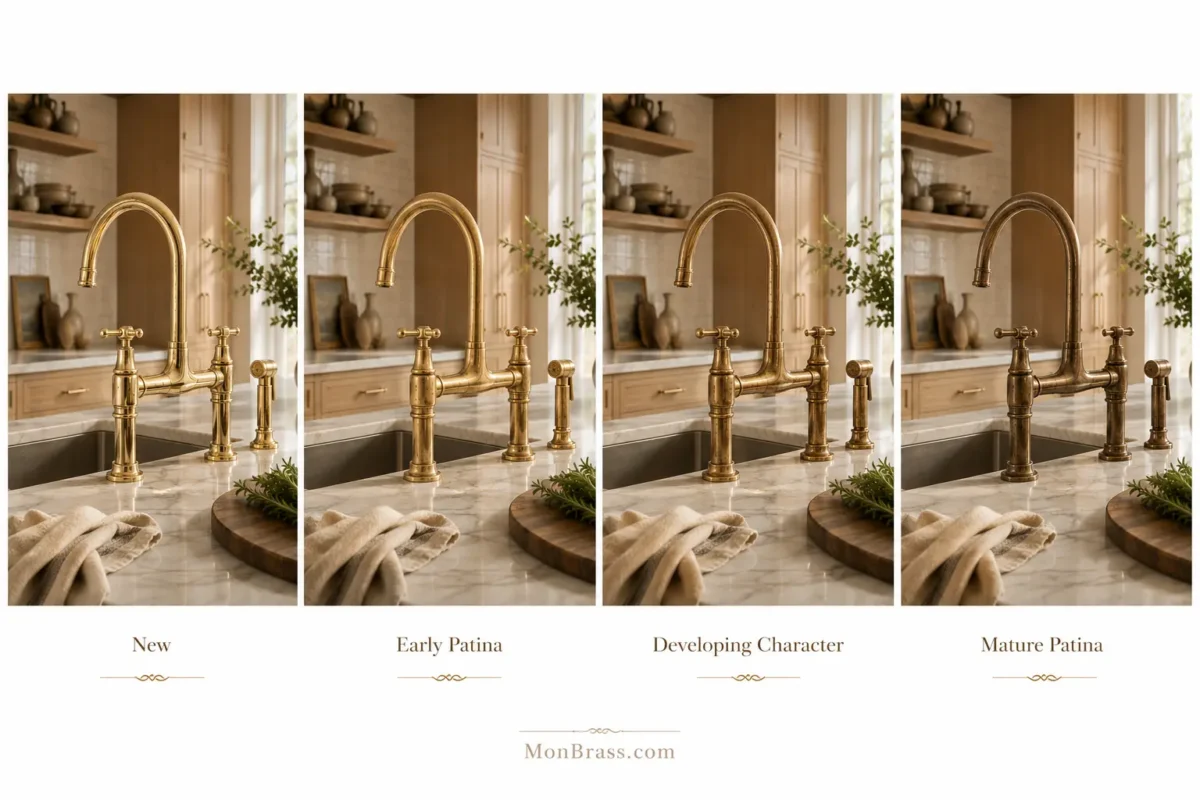
Rather than rusting, unlacquered brass gradually develops a natural surface patina as it reacts to everyday environmental exposure. This change is a normal characteristic of the material and differs completely from rust.
Patina vs Rust: What’s the Difference?
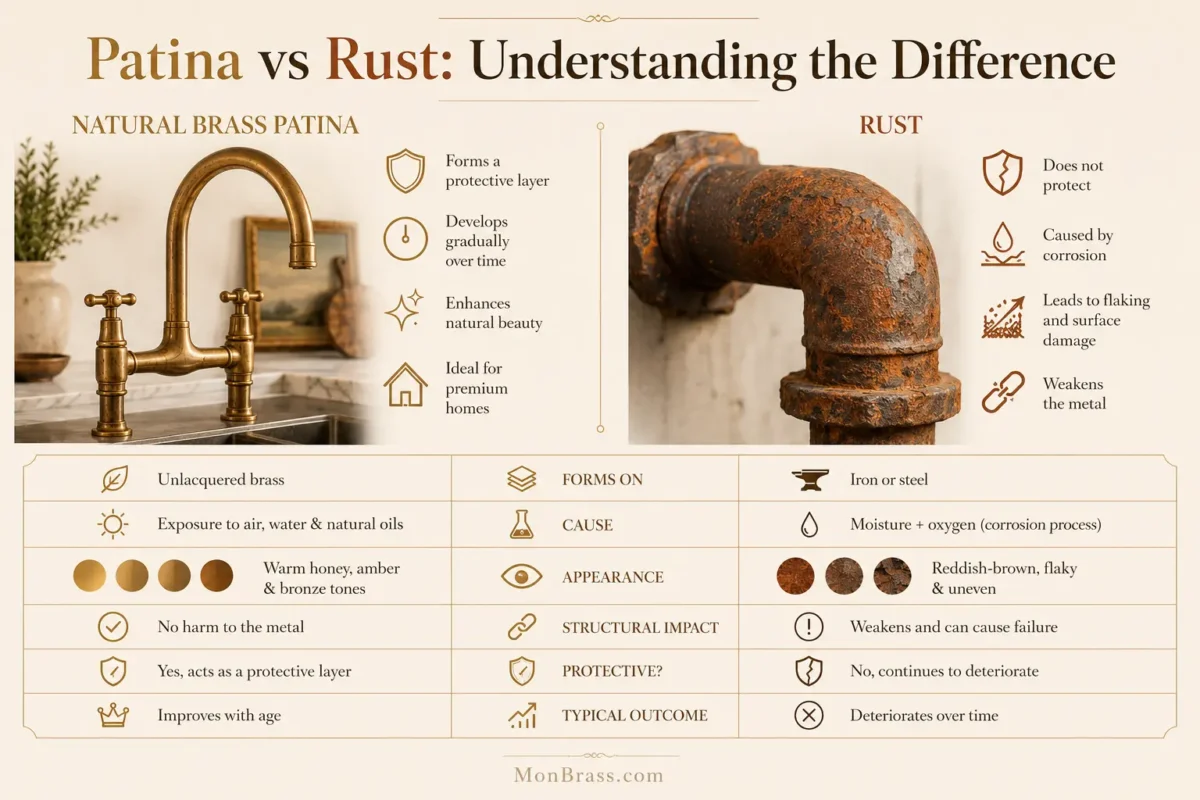
These terms are often confused, but they’re completely different.
| Patina | Rust |
| Forms on brass, copper, and bronze | Forms on iron and steel |
| Expected and natural | Indicates iron oxidation |
| Often considered attractive | Usually considered damage |
| Helps protect the surface | Weakens metal over time |
| Develops gradually | Can spread aggressively |
Patina is part of the appeal of unlacquered brass. Rust is generally something homeowners try to prevent.
Can Brass Corrode?
Although brass doesn’t rust, it isn’t completely immune to corrosion.
Under certain conditions, brass can experience forms of corrosion, although they’re relatively uncommon in normal residential use.
These situations usually involve:
- Highly aggressive water chemistry
- Industrial environments
- Saltwater exposure
- Improper cleaning chemicals
- Poor-quality brass alloys
For quality solid brass fixtures installed in typical kitchens and bathrooms, these problems are rarely encountered.
What About Green or Blue Stains?
Occasionally, homeowners notice green or blue discoloration around brass fixtures and wonder if the metal is rusting.
This isn’t rust.
Green deposits usually result from copper oxidation or mineral interactions. Similar color changes can be seen on historic copper roofs or statues.
In many cases, the discoloration appears in tiny amounts around water outlets or where moisture remains for extended periods.
In most cases, these deposits are cosmetic rather than a sign of damage.
Does Water Damage Unlacquered Brass?
Water itself does not damage solid brass.
After all, brass has been used in plumbing systems for generations because of its durability and resistance to corrosion.
However, water can influence how quickly the finish develops patina.
Homes with Hard Water
Hard water often leaves mineral deposits on faucets regardless of the finish.
These deposits aren’t harmful to the brass itself, although they may affect the faucet’s appearance if allowed to accumulate.
High-Humidity Bathrooms
Humid environments may influence how the surface changes over time, but this is a normal characteristic of unlacquered brass rather than a sign of deterioration.
Busy Kitchens
Kitchens expose brass to frequent everyday use, which naturally influences how the finish develops over time.
Does Patina Protect Brass?
Yes. Unlike rust, the surface patina that develops on brass generally helps protect the underlying metal while contributing to its changing appearance.
Can You Prevent Patina?
Only temporarily. Because unlacquered brass is intentionally left uncoated, some degree of surface change is expected over time. Whether you maintain a brighter appearance or allow the finish to age naturally is entirely a matter of personal preference.
Things to Consider Before Choosing Unlacquered Brass
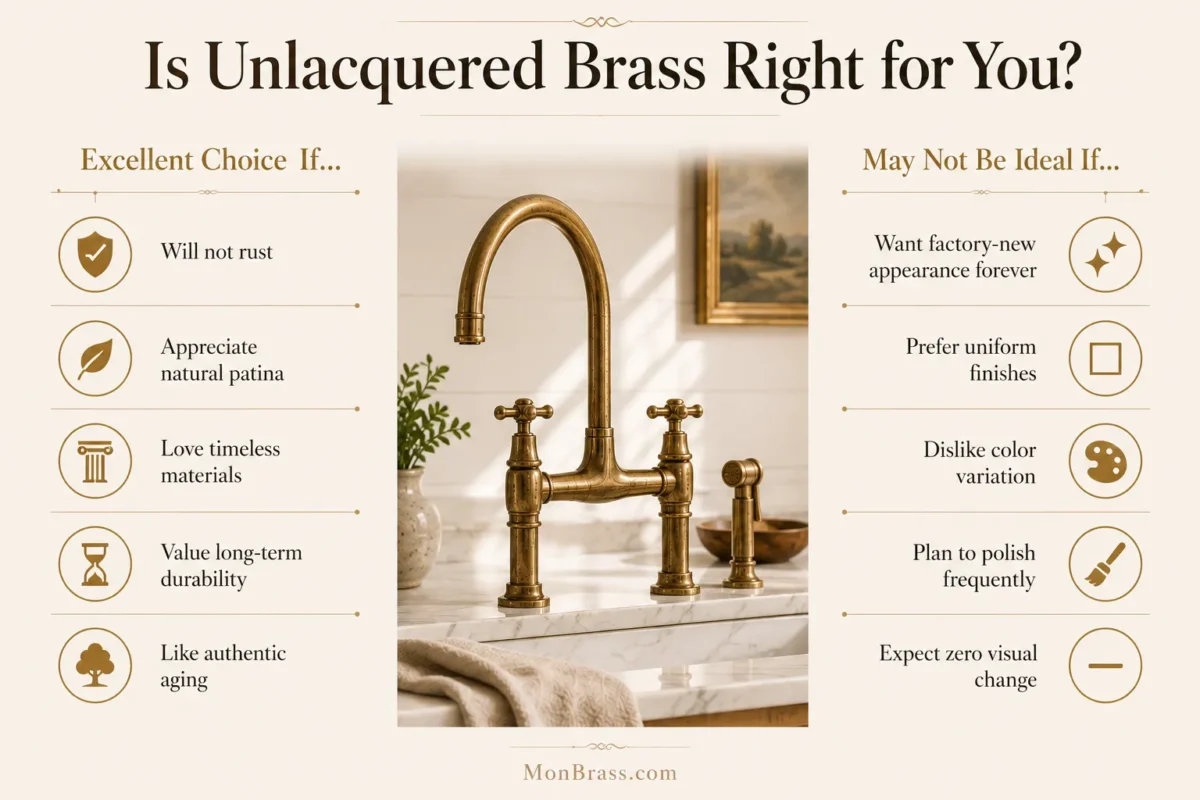
Understanding how brass behaves over time helps set realistic expectations before purchasing.
Advantages
- Will not rust like steel
- Develops a natural protective patina
- Ages uniquely over time
- Minor scratches become less noticeable
- Offers exceptional long-term durability
Drawbacks
- Appearance changes continuously
- Color variations are normal
- Bright finish requires occasional polishing if you want to maintain it
- May not suit homeowners who prefer uniform finishes
Maintenance Expectations
Routine gentle cleaning is generally sufficient for normal household use. The exact care routine depends on whether you prefer to preserve a brighter appearance or allow the finish to age naturally.
Real-World Examples
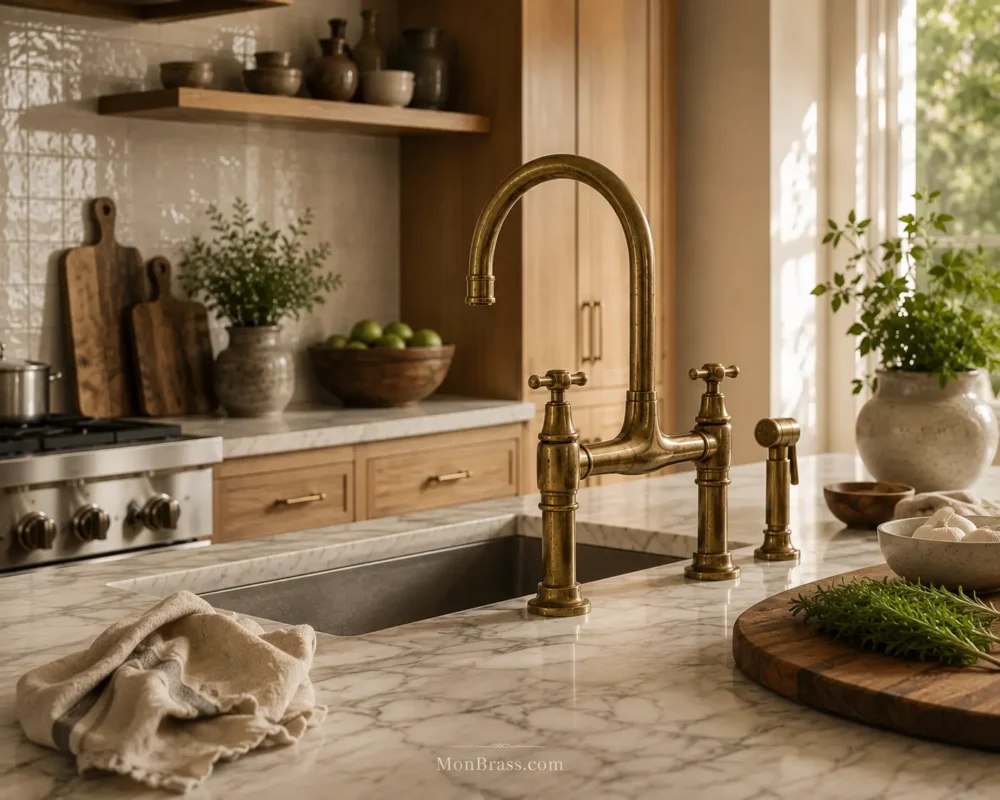
A Family Kitchen
Even after years of everyday use, a quality unlacquered brass faucet develops natural surface character rather than rust.
A Guest Bathroom
Fixtures in lightly used spaces may show more gradual visual changes over time.
A Historic Home
Many historic homes feature brass fixtures that have developed beautiful patina over decades without showing rust.
Their appearance demonstrates why natural brass has remained popular for generations.
Homes Near the Coast
Salt air can accelerate oxidation on many metals, including brass.
Coastal conditions may influence the surface appearance more quickly than inland environments, but this is different from rust.
Common Misconceptions About Brass and Rust
“Dark Brass Means It’s Rusting”
No.
Darkening is usually patina, not rust.
“Green Color Means the Faucet Is Damaged”
In most cases, green oxidation is simply part of copper’s natural reaction with the environment.
Small amounts are usually cosmetic rather than structural.
“Brass Should Stay Bright Forever”
Only lacquered brass is designed to maintain a factory-new appearance.
Unlacquered brass is intentionally chosen because it changes.
“Rust and Patina Are the Same Thing”
They are entirely different chemical processes involving different metals.
“Polishing Is Required”
Polishing is optional.
Many homeowners never polish their unlacquered brass fixtures and simply enjoy the evolving finish.
Frequently Asked Questions
Can solid brass ever rust?
No. Solid brass does not contain enough iron to produce rust. Instead, it develops a natural patina through oxidation.
Why is my brass faucet turning darker?
A darker appearance is usually the result of the brass’s normal surface aging rather than rust.
Is green discoloration on brass rust?
No. Green deposits are usually the result of copper oxidation or mineral buildup rather than rust.
Will polishing remove patina?
Yes. Metal polish can remove some surface patina and temporarily restore a brighter appearance.
How long will an unlacquered brass faucet last?
A well-made solid brass fixture can last for decades with normal residential use, making it one of the most durable materials used for plumbing fixtures.
Conclusion
Unlacquered brass does not rust because brass isn’t an iron-based metal. Instead, it develops a natural patina that gradually changes its appearance while helping protect the surface. This aging process is one of the defining characteristics that makes unlacquered brass so popular in kitchens, bathrooms, and luxury renovations.
If you appreciate materials that develop character over time rather than remaining unchanged, unlacquered brass offers both exceptional durability and timeless appeal. Understanding the difference between rust and patina allows you to enjoy the finish with confidence, knowing that the changes you see are part of the material’s natural beauty—not a sign of failure.
