





Uncategorized
Is Unlacquered Brass Good for Kitchen Faucets? Pros, Cons, and What to Expect
Jul
An unlacquered brass kitchen faucet is one of those design choices that tends to spark strong opinions. Some homeowners love its warm, living finish that develops character over time, while others worry about maintenance, water spots, or whether it can stand up to daily use.
The good news is that a high-quality unlacquered brass faucet can perform exceptionally well in a kitchen. The key is understanding how the finish behaves and deciding whether its natural aging process fits your expectations. If you’re looking for a faucet that stays exactly the same forever, unlacquered brass may not be the right choice. If you appreciate materials that become more distinctive with age, it’s one of the most rewarding finishes you can install.
Why Unlacquered Brass Works Well in Kitchens
Unlike lacquered finishes, unlacquered brass is designed to develop a naturally changing appearance over time. A busy kitchen provides the everyday use that gives the finish its distinctive character, making it a popular choice for homeowners who appreciate materials that evolve naturally.
Advantages of an Unlacquered Brass Kitchen Faucet
Timeless Appearance
Brass has been used in kitchens for generations because it complements a wide variety of materials.
Whether your kitchen features marble, soapstone, butcher block, quartz, limestone, or painted cabinetry, the warm tones of unlacquered brass often add depth without overpowering the space.
Unlike trendy finishes that may fall out of favor, natural brass has a long history in both traditional and contemporary interiors.
Natural Patina Adds Character
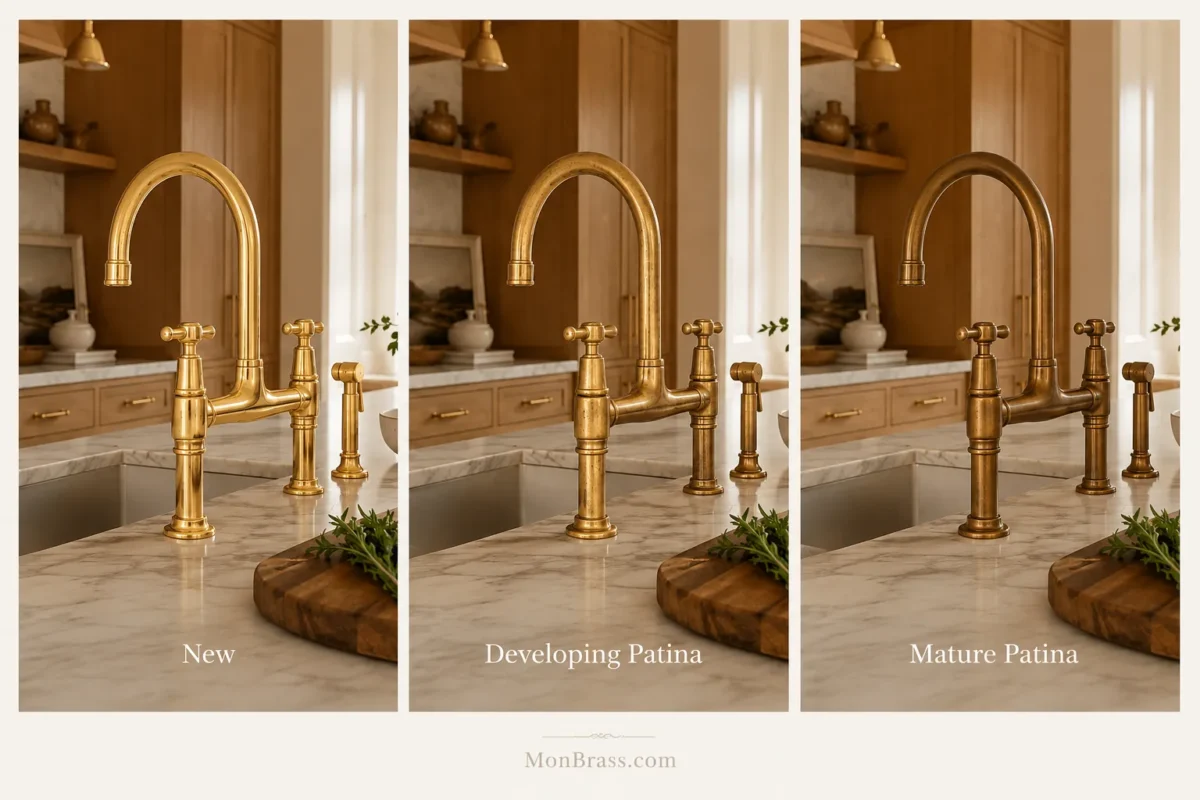
The biggest advantage is the finish itself.
Over time, the finish develops a more individual appearance that reflects everyday use. Many homeowners appreciate that this natural evolution adds character rather than detracting from the faucet.
Excellent Long-Term Durability
When made from solid brass, these faucets are designed to withstand decades of daily use.
The finish changes, but the underlying material remains exceptionally durable.
From a structural standpoint, quality manufacturing is more important than the finish itself. Look for solid brass construction, ceramic disc cartridges, and precision-machined components.
Complements Luxury Kitchen Designs
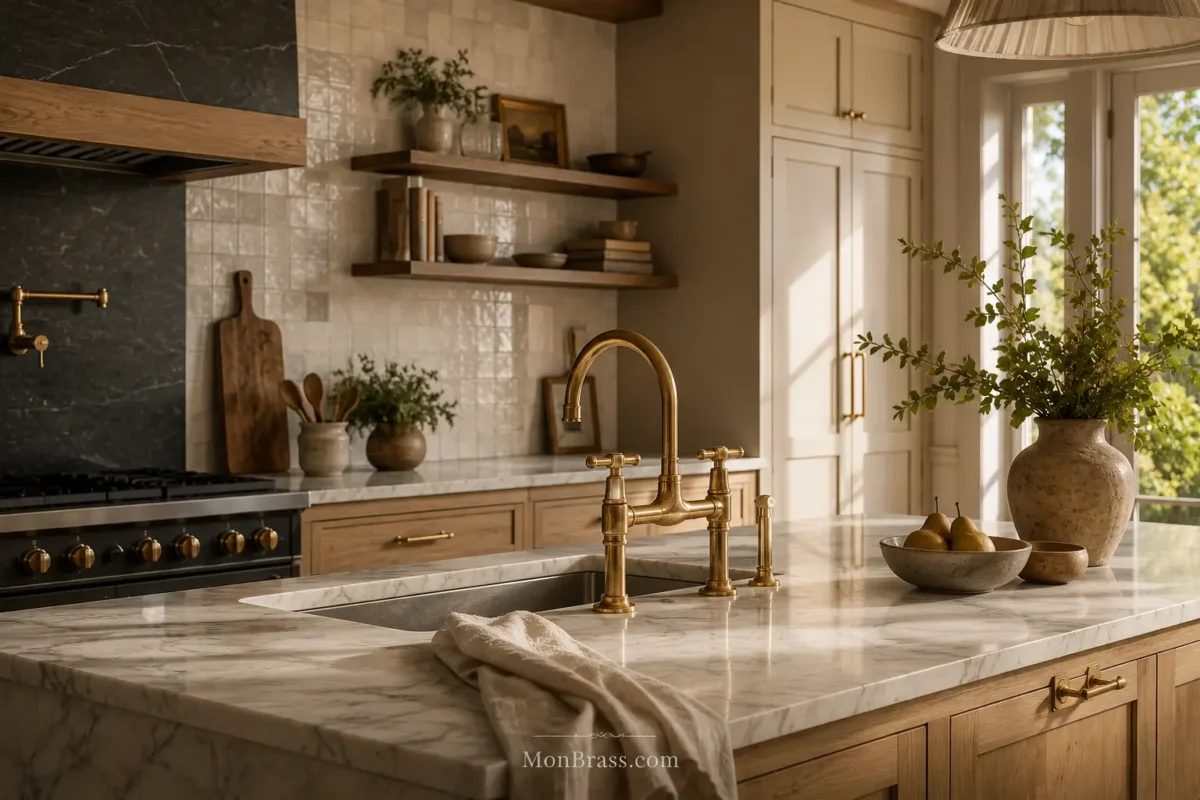
Unlacquered brass pairs beautifully with:
- White marble countertops
- Soapstone
- Natural oak cabinetry
- Walnut cabinets
- Limestone
- Handmade tile
- Shaker kitchens
- European-inspired interiors
- Transitional designs
Its warmth softens modern kitchens while adding authenticity to historic renovations.
Potential Drawbacks to Consider
Although unlacquered brass offers many advantages, it isn’t the right choice for every homeowner.
The Finish Will Change
This is the most important expectation to understand.
The faucet you install won’t look exactly the same several years later.
The finish gradually changes appearance as part of its normal aging process.
For many homeowners, this is exactly what makes unlacquered brass desirable. Others may prefer a finish that remains more consistent.
Higher Initial Cost
Quality unlacquered brass faucets are often more expensive than standard chrome or stainless steel options.
That added cost typically reflects:
- Solid brass construction
- Premium manufacturing
- Higher-quality components
- Long-term durability
Viewed over decades of use, many homeowners find the investment worthwhile.
Patina Isn’t Always Uniform
No two faucets age exactly alike.
Every kitchen creates slightly different conditions, so each faucet develops its own unique appearance over time.
This individuality is part of the appeal, but homeowners expecting perfect uniformity may be disappointed.
Maintenance: Easier Than Many People Expect
A common misconception is that unlacquered brass requires constant polishing.
In reality, maintenance depends entirely on the appearance you prefer.
Routine care is generally straightforward. Gentle cleaning is usually sufficient, while polishing is optional for homeowners who prefer a brighter appearance. The exact routine depends on the look you want to maintain.
Is It Practical for a Busy Kitchen?
Absolutely.
A well-made unlacquered brass faucet performs just as reliably in a busy kitchen as many other premium finishes.
Family Kitchens
Frequent cooking and cleaning create faster patina development.
Rather than appearing damaged, the faucet develops a finish that reflects daily life.
Homes with Hard Water
Hard water can leave mineral deposits on any faucet finish.
Routine cleaning helps keep the faucet looking its best regardless of water conditions.
Open-Concept Kitchens
Because the faucet is often a prominent feature, its finish can have a noticeable impact on the overall feel of the kitchen.
Choosing the Right Faucet Style
Selecting the right configuration is just as important as choosing the finish.
Bridge Faucets
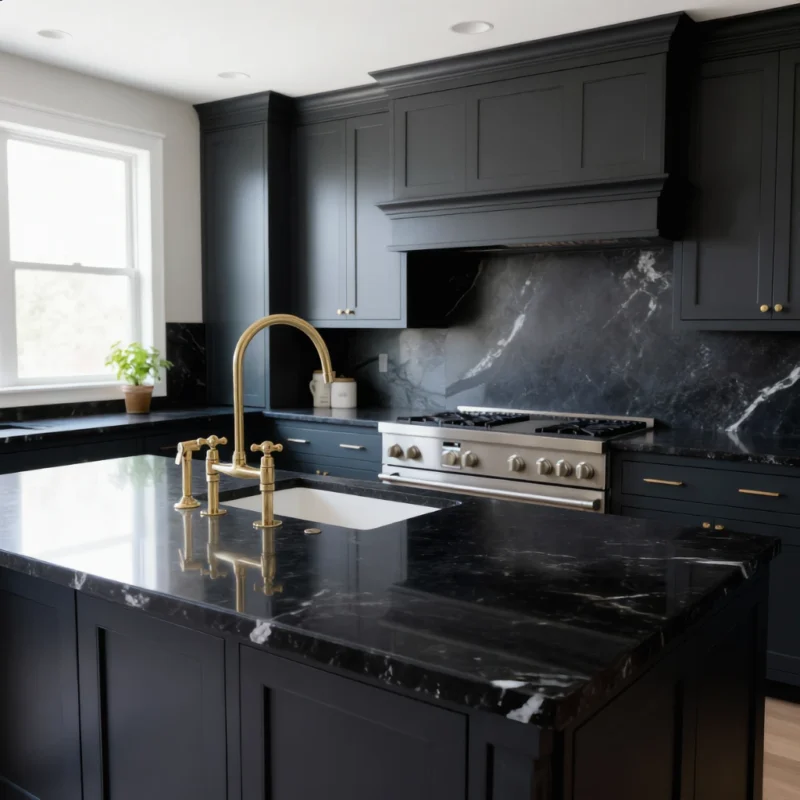
Bridge faucets remain one of the most popular choices for unlacquered brass.
Their exposed horizontal design highlights the warmth of the material while complementing farmhouse, English country, French country, and transitional kitchens.
Single-Hole Faucets
Single-hole faucets provide a cleaner, more contemporary appearance.
They’re often preferred in modern kitchens where simplicity is the goal.
Pot Fillers
If you’re including a pot filler in your kitchen, choosing the same finish can create a more coordinated appearance.
Beverage and Water Dispenser Faucets
Matching secondary fixtures can create a more consistent overall look.
Things to Consider Before Choosing an Unlacquered Brass Kitchen Faucet
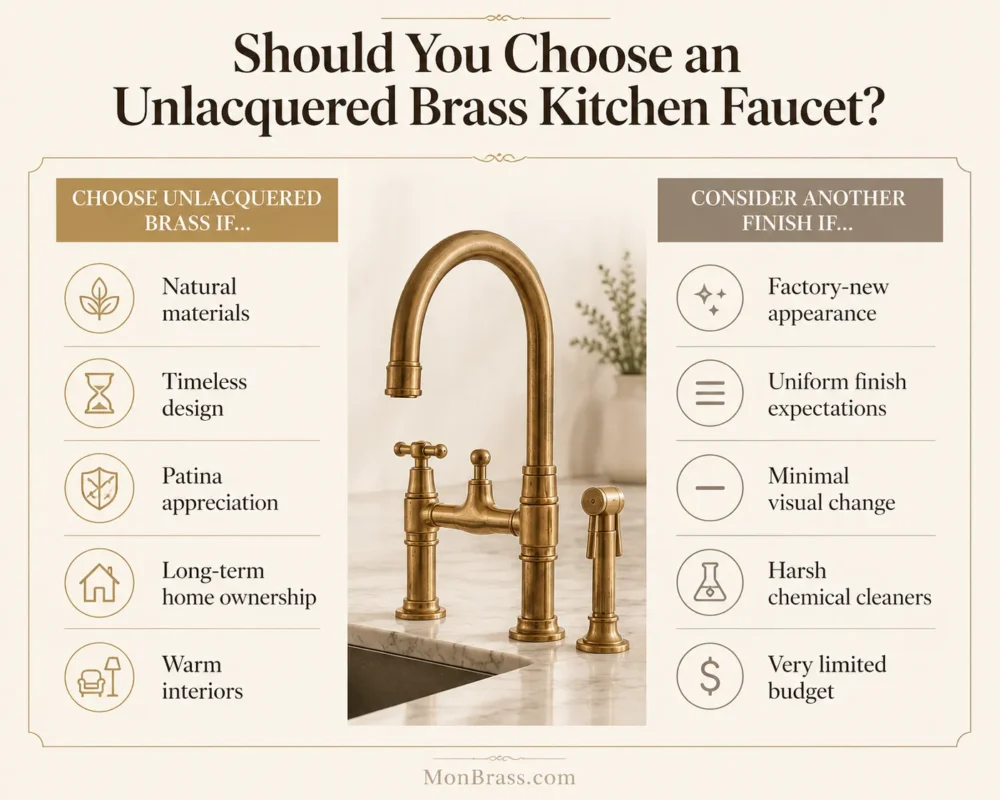
Before making your final decision, ask yourself a few practical questions.
Choose Unlacquered Brass If You:
Advantages
- Appreciate natural materials
- Like finishes that develop character
- Prefer timeless design over trendy finishes
- Enjoy warm-toned interiors
- Plan to stay in your home for many years
You May Want Another Finish If You:
Trade-Offs
- Want your faucet to remain factory-new forever
- Prefer zero visual change
- Dislike natural color variation
- Frequently use harsh chemical cleaners
Budget Considerations
While premium unlacquered brass faucets cost more initially, they often become long-term fixtures that don’t feel outdated after changing design trends.
Real-World Examples
A High-Use Family Kitchen
An unlacquered brass bridge faucet combines everyday functionality with a finish that develops more character through regular use.
A Luxury Remodel
Unlacquered brass is often selected for high-end remodels because it combines premium materials with lasting visual appeal.
A Modern Kitchen
Even minimalist kitchens benefit from the warmth of a simple single-hole brass faucet, especially when paired with white cabinetry and subtle brass accents.
A Historic Home
Because brass has been used in kitchens for generations, unlacquered finishes often feel historically appropriate without looking overly restored.
Common Mistakes to Avoid
Expecting a Permanent Bright Finish
Patina is part of the design—not a defect.
Trying to prevent any aging often leads to unnecessary maintenance.
Choosing Based Only on Photos
Most showroom images display brand-new fixtures.
Remember that the faucet you receive will gradually become more distinctive over time.
Ignoring Construction Quality
A solid brass faucet with quality internal components is a far better investment than choosing a finish alone.
Mixing Too Many Metal Finishes
Combining brass with other metals can work beautifully, but repeating each finish intentionally throughout the kitchen creates a more cohesive design.
Forgetting About Complementary Fixtures
Matching accessories like pot fillers and beverage faucets help create a unified look as all pieces develop patina together.
Frequently Asked Questions
Is unlacquered brass durable enough for everyday kitchen use?
Yes. A high-quality solid brass faucet is designed to handle everyday use for many years. The finish changes naturally, but the material itself remains highly durable.
Does unlacquered brass stain easily?
No. The surface develops a natural patina rather than permanent staining. Water spots and fingerprints typically become less noticeable as the finish matures.
How often should I polish an unlacquered brass faucet?
No. Polishing is optional and depends on the appearance you prefer.
Will the faucet match stainless steel appliances?
Yes. The warm brass finish often creates an attractive contrast against stainless steel appliances, adding visual balance to the kitchen.
Is unlacquered brass worth the extra cost?
For homeowners who appreciate natural aging, premium craftsmanship, and timeless materials, many find it to be a worthwhile long-term investment.
Conclusion
An unlacquered brass kitchen faucet isn’t simply another finish—it’s a material that evolves alongside your home. Its warm color, exceptional durability, and naturally developing patina make it a favorite for homeowners who appreciate authentic materials and timeless design.
As long as you understand that the finish is meant to change, unlacquered brass can be one of the most beautiful and enduring choices for a kitchen. Choosing a well-built solid brass faucet, pairing it with complementary materials, and embracing its natural aging process will help ensure it continues looking better with every passing year.
