





Uncategorized
How Long Does Unlacquered Brass Last? A Realistic Look at Lifespan, Patina, and Long-Term Value
Jul
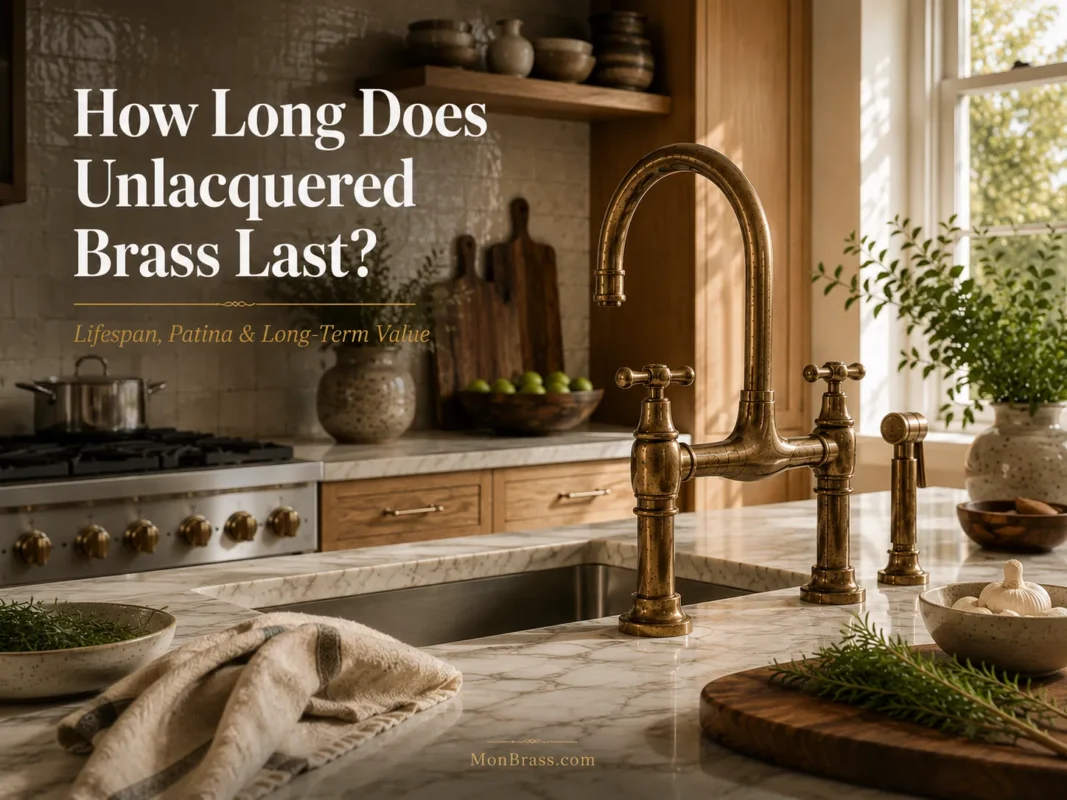
Choosing new faucets, cabinet hardware, or shower fixtures often comes down to more than appearance. Many homeowners love the warm, living finish of unlacquered brass but hesitate because they’re unsure how long it actually lasts. If you’ve been wondering how long does unlacquered brass last, the answer is reassuring: when it’s made from solid brass and properly cared for, it can last for generations.
Unlike coated finishes that eventually peel or wear away, unlacquered brass doesn’t rely on a protective lacquer. Instead, the metal naturally develops a patina that changes over time. That aging process is often viewed as part of its appeal rather than a flaw. Understanding how brass ages, what affects its longevity, and what kind of maintenance it requires can help you decide whether it’s the right finish for your home.
The Short Answer: Unlacquered Brass Can Last for Decades
A high-quality unlacquered brass fixture can easily remain functional for 50 years or more, and many solid brass fixtures installed decades ago are still in daily use.
The finish itself doesn’t “wear out” in the traditional sense because there isn’t a clear protective coating to fail. Instead, the surface gradually darkens, develops character, and reflects the environment in which it’s used.
The actual lifespan depends on several factors:
- Whether the fixture is made from solid brass or brass-plated materials
- Water quality
- Installation quality
- Routine maintenance
- Frequency of use
- Indoor environmental conditions
In practice, the finish often changes long before the fixture itself reaches the end of its usable life.
Why Unlacquered Brass Lasts So Long
One reason unlacquered brass has remained popular for centuries is the durability of the underlying material.
Solid brass is an alloy made primarily of copper and zinc. It naturally resists corrosion better than many other fixture materials and doesn’t depend on surface coatings to maintain its structural integrity.
Instead of flaking or peeling, the exposed brass reacts with oxygen, moisture, and oils from everyday handling. This reaction forms a patina that actually protects the surface beneath.
That’s why antique brass door handles, faucets, and architectural hardware can still be found in historic homes after decades of daily use.
What Happens to the Finish Over Time?
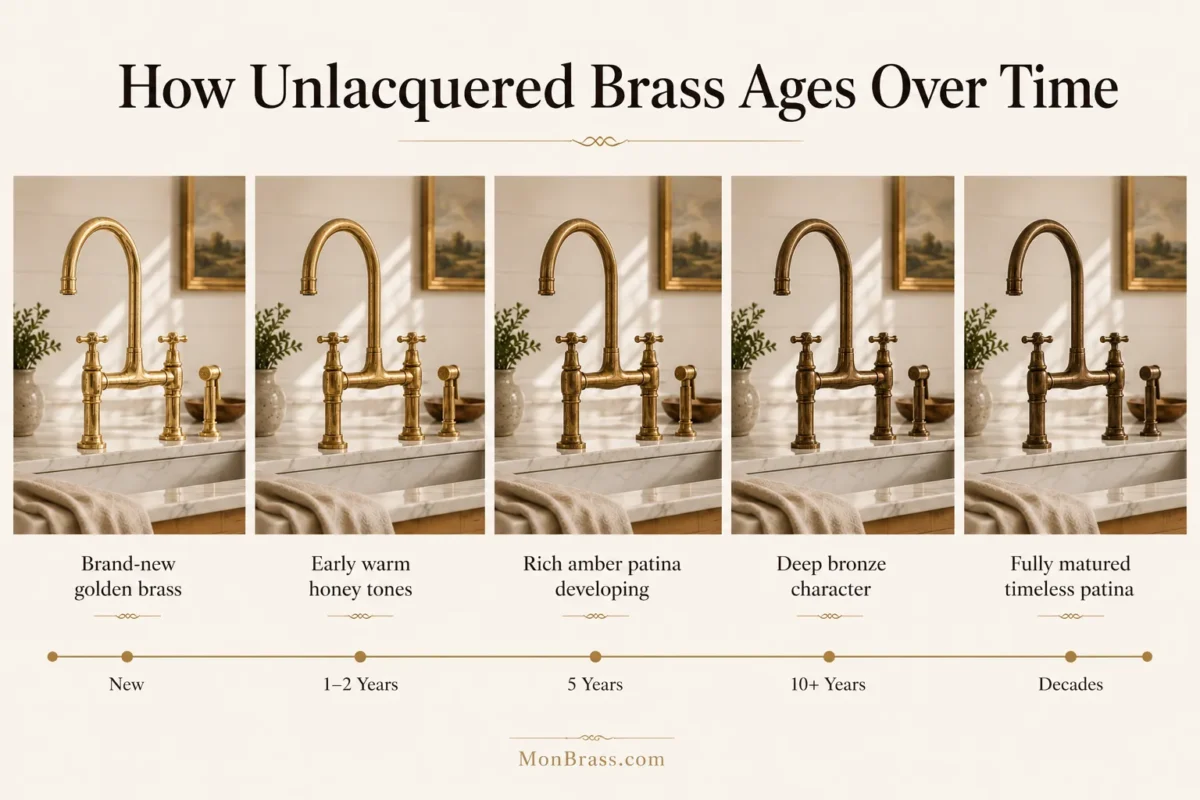
Over time, unlacquered brass gradually changes from a bright golden finish to warmer honey, amber, and deeper brown tones. The exact pace varies depending on humidity, water quality, and everyday use, so no two fixtures age in exactly the same way.
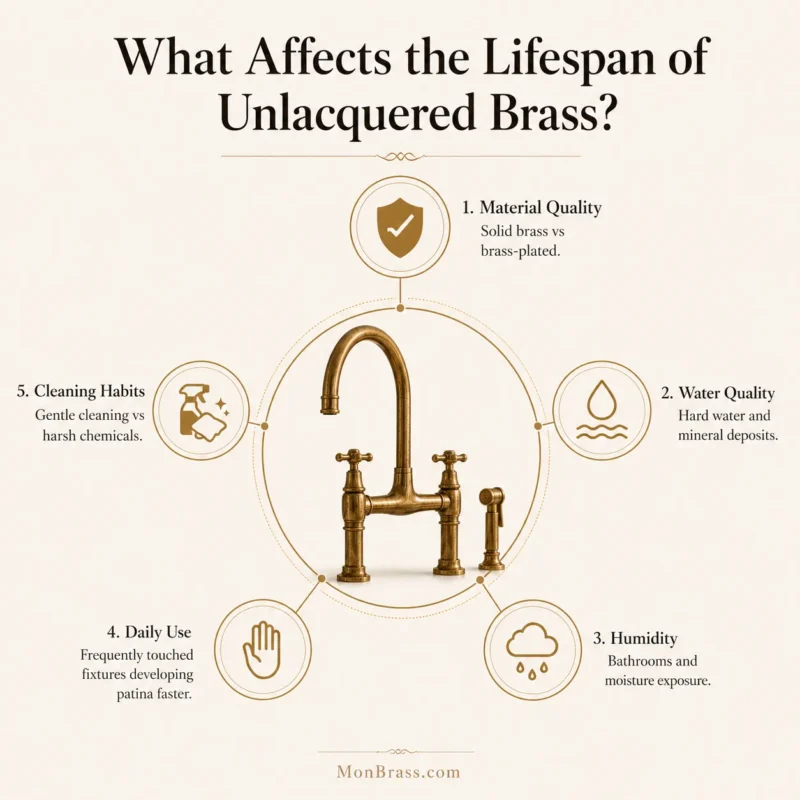
Factors That Affect How Long Unlacquered Brass Lasts
Material Quality
Not all brass fixtures are created equal.
Solid brass typically lasts much longer than brass-plated alternatives. With plated fixtures, the thin brass layer can eventually wear away, exposing the material underneath.
If longevity is a priority, choosing solid brass is usually the better investment.
Water Quality
Water chemistry has a significant impact on the appearance of unlacquered brass.
Homes with hard water often experience:
- Faster mineral buildup
- More visible water spots
- Slightly quicker patina development
The good news is that these cosmetic changes don’t usually affect the lifespan of the fixture itself.
Humidity
Bathrooms naturally contain more moisture than other rooms.
In high-humidity environments, brass tends to develop patina more quickly. This accelerated aging is completely normal and often creates the rich character many homeowners are hoping for.
Daily Use
Frequently touched surfaces age differently than decorative ones.
For example:
- Kitchen faucets often develop patina faster than bathroom faucets.
- Cabinet pulls near cooking areas darken more quickly.
- Guest bathroom fixtures may remain brighter for years because they’re used less often.
This uneven aging creates one-of-a-kind character that many designers intentionally seek.
Cleaning Habits
Harsh cleaners shorten the life of the finish—not the brass itself.
Avoid:
- Abrasive scrub pads
- Bleach
- Ammonia-based cleaners
- Strong acidic chemicals
Instead, most routine cleaning only requires:
- Warm water
- Mild dish soap
- A soft microfiber cloth
From a maintenance standpoint, gentle cleaning preserves the natural aging process without damaging the surface.
Does the Patina Protect the Brass?
Yes. The surface develops a natural patina over time, and this layer helps protect the underlying brass while giving it its distinctive aged appearance. Color changes are a normal characteristic of the finish rather than a sign that the fixture is wearing out.
Can You Make Unlacquered Brass Look New Again?
Yes. Brass polish can restore much of the original golden color, although doing so removes the existing patina and the natural aging process begins again.
Things to Consider Before Choosing Unlacquered Brass
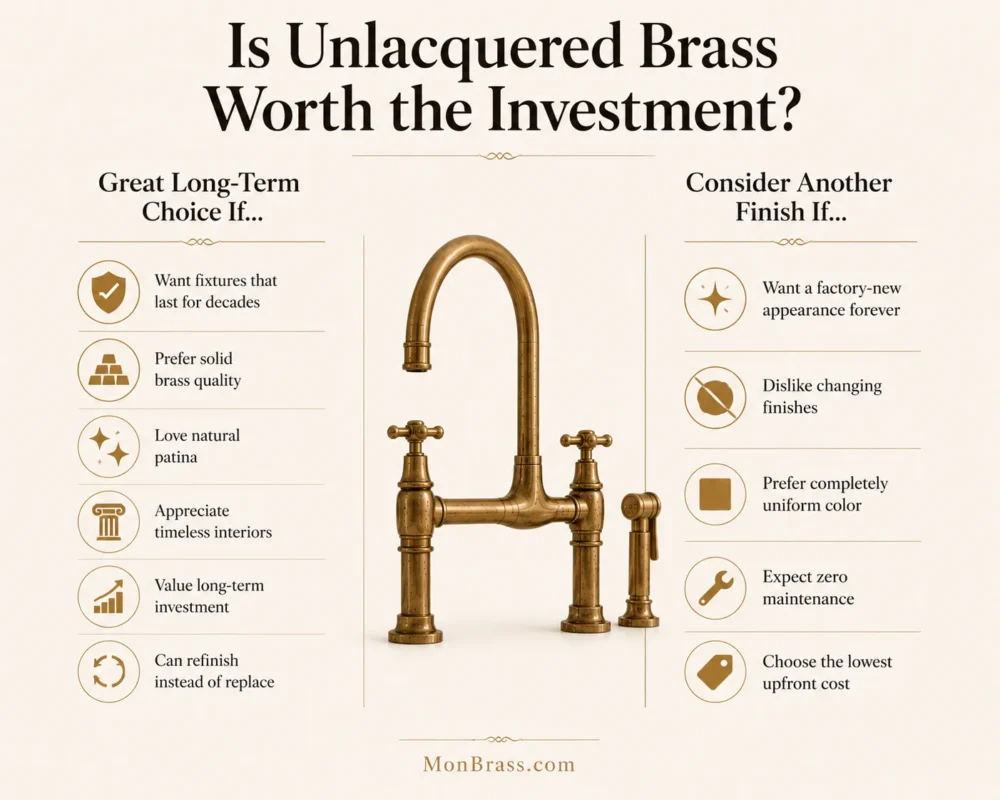
Before selecting unlacquered brass for your renovation, it’s worth weighing both the advantages and the trade-offs.
Advantages
- Extremely long lifespan when made from solid brass
- Naturally develops unique character
- No lacquer coating to peel or chip
- Complements traditional and modern interiors
- Can often be refinished instead of replaced
- Timeless appearance that rarely goes out of style
Drawbacks
- Appearance changes continuously
- Water spots are more noticeable than on some finishes
- Requires occasional gentle cleaning
- Patina develops unevenly at first
- Not ideal for homeowners who prefer a consistently polished finish
Budget Considerations
Unlacquered brass fixtures generally cost more than mass-produced plated finishes.
However, because they’re often made from heavier, solid materials and can remain attractive for decades, many homeowners view the higher initial investment as worthwhile over the long term.
Real-World Examples
Family Bathroom
A busy household with children will usually see patina develop relatively quickly due to constant use. Handles, faucets, and towel hooks often darken unevenly during the first year before blending into a more uniform finish.
Guest Bathroom
Fixtures may stay noticeably brighter because they’re handled less frequently. Patina develops more slowly and often appears softer.
High-Use Kitchen
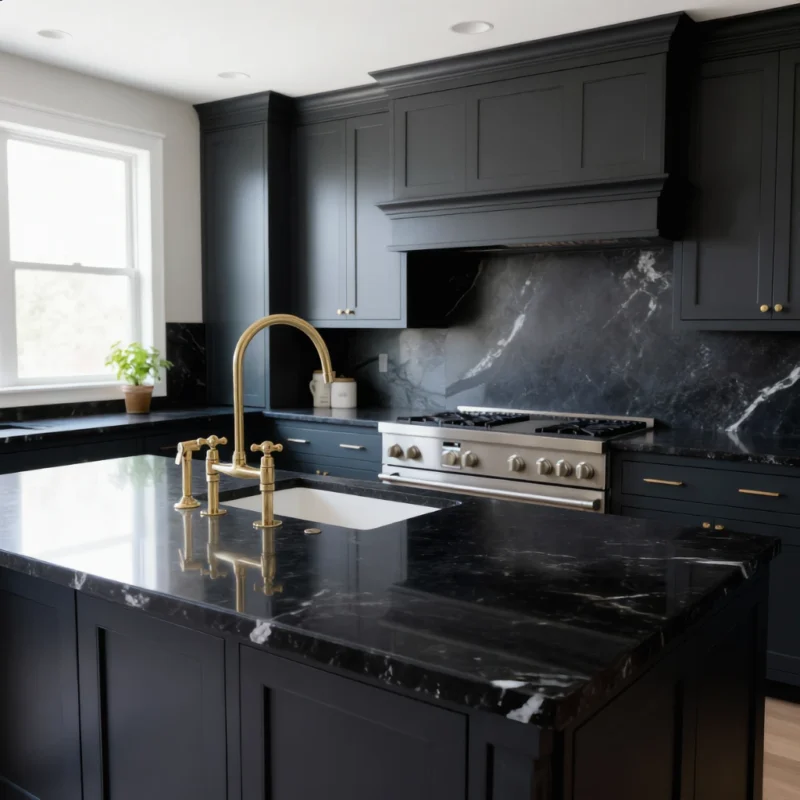
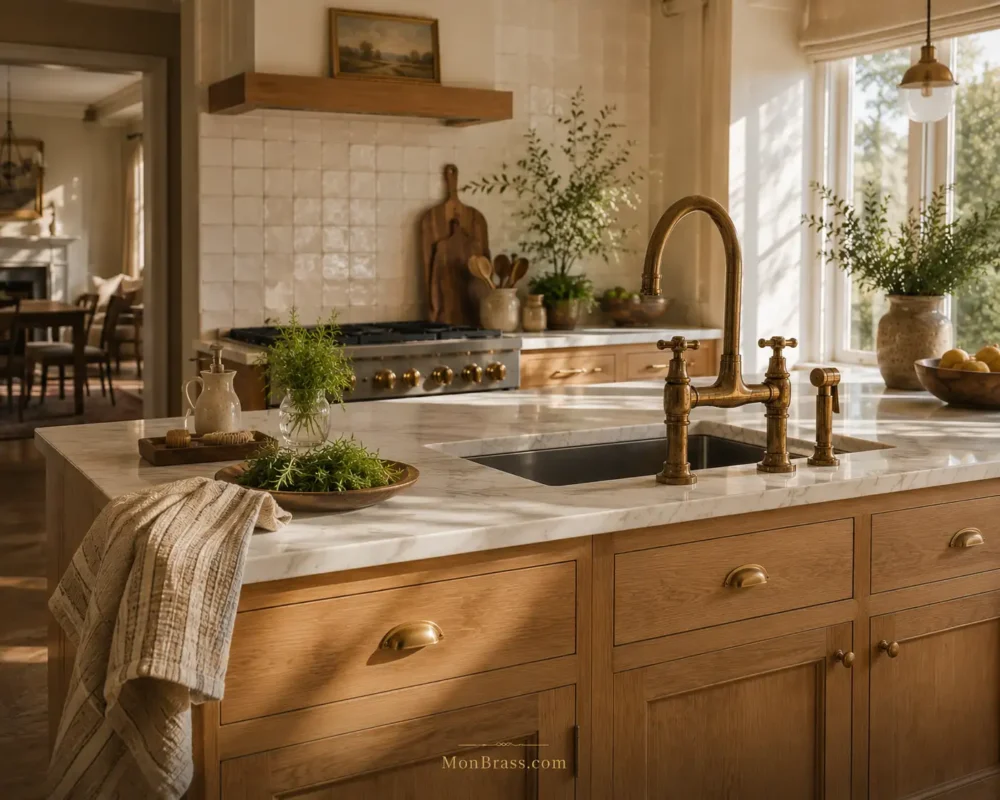
Kitchen faucets experience frequent contact with water, food preparation, and hand oils. Expect faster color changes, especially around the handle and spout.
Historic Home Renovation
Many designers choose unlacquered brass because its natural aging complements older architectural details. Instead of looking artificially aged, the fixtures gradually become more consistent with the home’s original character.
Contemporary Luxury Home
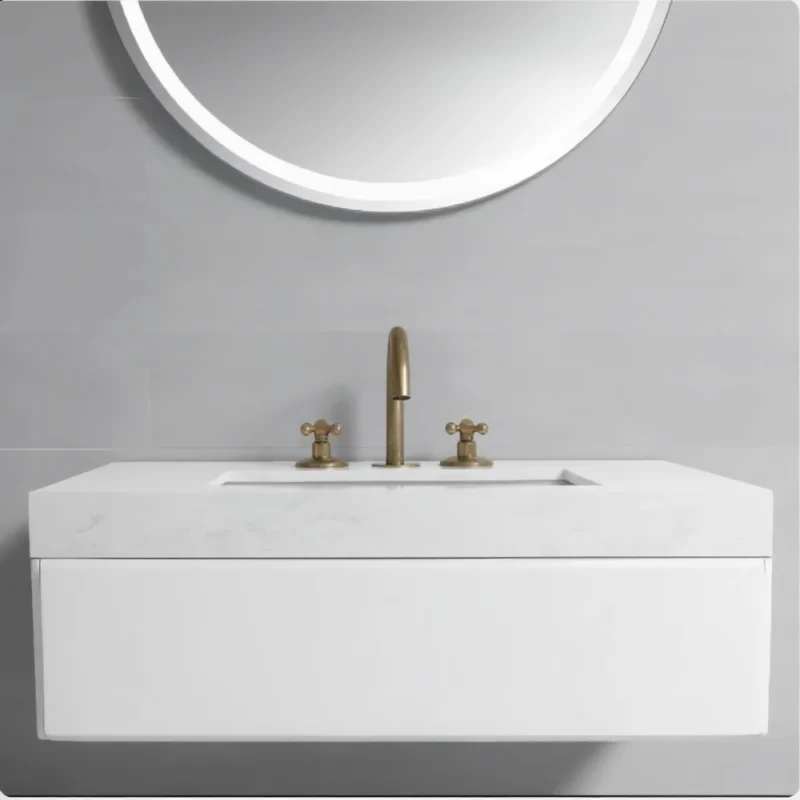
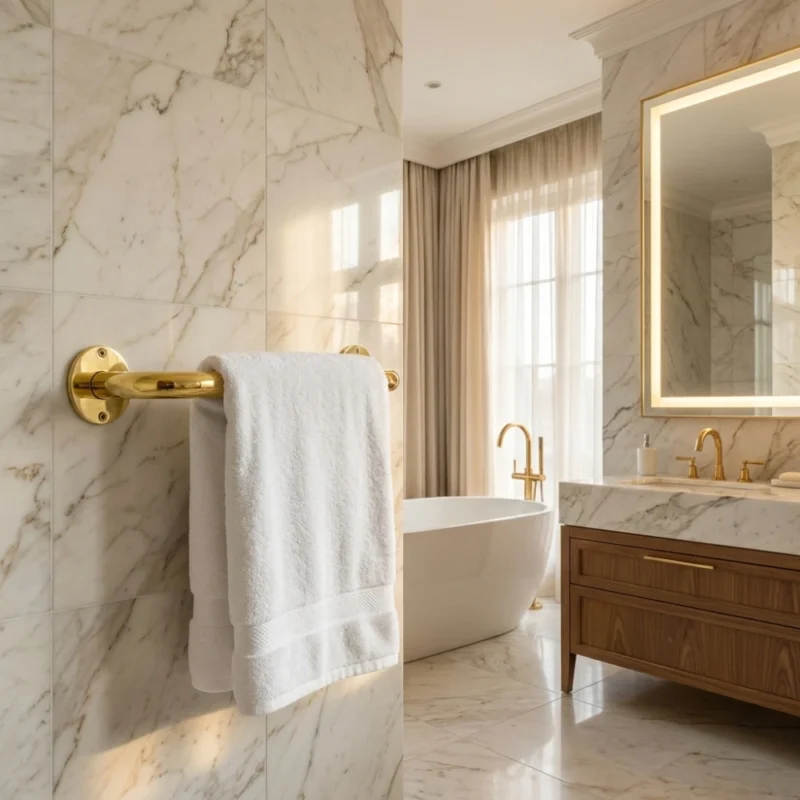
In modern interiors, unlacquered brass often provides warmth that contrasts beautifully with stone countertops, white cabinetry, and minimalist finishes.
Common Mistakes Homeowners Make
Expecting It to Stay Bright Forever
Perhaps the most common misunderstanding is assuming unlacquered brass behaves like polished chrome.
Its defining characteristic is that it changes over time.
Using Harsh Cleaning Products
Aggressive cleaners can create uneven discoloration or remove desirable patina.
Simple soap and water are usually all that’s needed.
Confusing Patina with Damage
Darkening isn’t corrosion.
Unless there’s physical damage or severe neglect, changing color is simply part of the finish’s natural lifecycle.
Buying Brass-Plated Fixtures Instead of Solid Brass
Many products marketed as brass actually have only a thin decorative coating.
Solid brass generally offers significantly greater longevity and can often be refinished if needed.
Mixing Expectations Within the Same Room
Because different fixtures receive different amounts of use, they won’t age at exactly the same pace.
Understanding this before installation helps avoid disappointment later.
Is Unlacquered Brass a Good Long-Term Investment?
For homeowners planning to stay in their home for many years, unlacquered brass often offers excellent long-term value.
Unlike finishes designed to maintain a factory appearance indefinitely, this finish becomes more distinctive with age.
It’s especially popular among homeowners who appreciate authentic materials and understand that natural aging is part of the design rather than something to hide.
If you prefer fixtures that always look exactly the same, a lacquered finish or another protective coating may better suit your expectations.
Frequently Asked Questions
Does unlacquered brass wear out?
No. The finish changes color over time, but the underlying solid brass can remain functional for many decades when properly maintained.
Can unlacquered brass last a lifetime?
Yes. High-quality solid brass fixtures commonly last several decades, and many remain in service for 50 years or longer.
Does water damage unlacquered brass?
Normal household water doesn’t typically damage brass. Hard water may leave mineral deposits or encourage faster patina development, but these are usually cosmetic rather than structural issues.
Will every fixture age the same way?
No. Fixtures in kitchens, humid bathrooms, or frequently touched areas generally develop patina faster than decorative hardware or fixtures in guest spaces.
Is unlacquered brass difficult to maintain?
Not usually. Routine care consists mainly of gentle cleaning with mild soap, water, and a soft cloth. The finish is designed to age naturally, so constant polishing isn’t necessary.
Conclusion
Unlacquered brass isn’t designed to remain unchanged—and that’s exactly why many homeowners choose it. A quality solid brass fixture can last for generations while gradually developing a rich, distinctive patina that reflects everyday life in your home.
If you’re comfortable with a finish that evolves instead of staying factory-new, unlacquered brass offers exceptional longevity, timeless character, and the ability to age gracefully. Understanding how it behaves over the years makes it much easier to decide whether it’s the right fit for your kitchen, bathroom, or whole-home renovation.
