





Uncategorized
Unlacquered Brass vs Cheap Brass Fixtures: What’s the Real Difference?
Jul
Choosing brass fixtures can feel confusing once you start comparing prices. One faucet might cost a few hundred dollars, while another that looks almost identical costs three or four times as much. It’s natural to wonder whether the premium price is justified or if you’re simply paying for a designer label.
The truth is that unlacquered brass vs cheap brass fixtures isn’t just a matter of appearance. Material quality, construction, finish, durability, maintenance, and long-term performance all play a role. While inexpensive fixtures can be a practical choice for some projects, understanding where manufacturers cut costs helps you decide whether spending more makes sense for your home.
What Makes Unlacquered Brass Different?
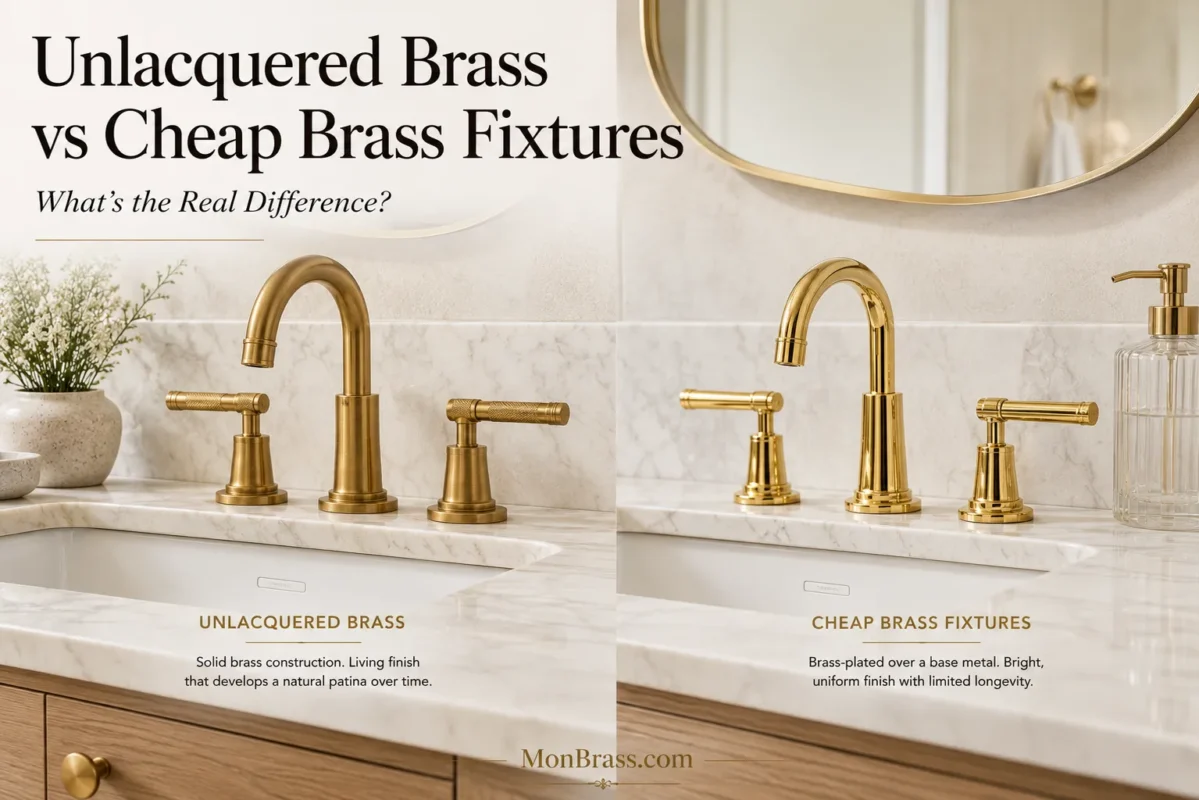
Unlacquered brass is solid brass without a protective clear coating. Instead of remaining shiny forever, the surface naturally reacts to air, moisture, oils from your hands, and minerals in water.
Over time, this creates a patina—a darker, richer finish that many homeowners and designers intentionally seek.
Unlike coated finishes that try to preserve a factory-fresh appearance, unlacquered brass is designed to evolve. Every fixture ages differently depending on how it’s used and the environment around it.
What Are Cheap Brass Fixtures?
The phrase “cheap brass fixtures” can describe several different products.
Some are made from solid brass but use lower-cost manufacturing methods. Others are brass-plated over zinc alloy, stainless steel, or other base metals. Some simply use lower-quality internal components while maintaining an attractive exterior.
Price alone doesn’t determine quality.
However, lower-cost fixtures often reduce expenses through one or more of the following:
- Thinner brass plating
- Less durable cartridges
- Lower-quality valves
- Lightweight construction
- Simpler manufacturing processes
- Less consistent finishing
A fixture can look attractive in a showroom but perform very differently after years of daily use.
Unlacquered Brass vs Cheap Brass Fixtures at a Glance
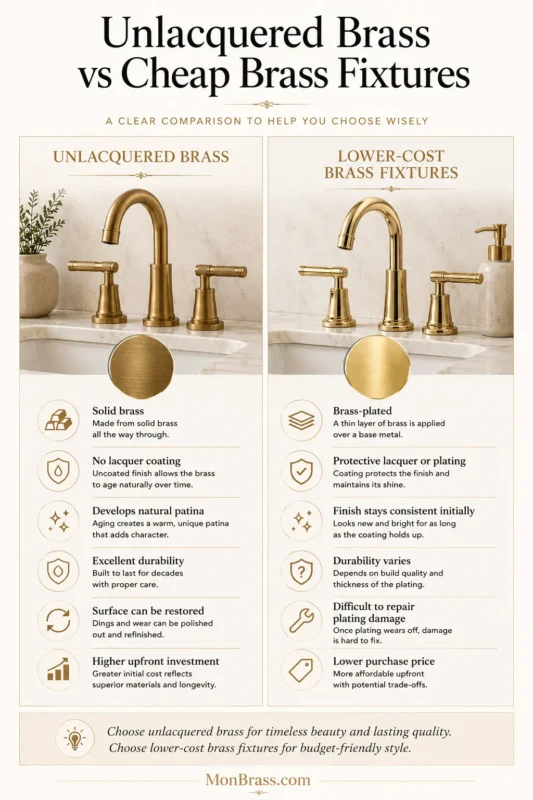
| Feature | Unlacquered Brass | Cheap Brass Fixtures |
| Material | Usually solid brass | Often brass-plated or mixed materials |
| Finish | No protective lacquer | Typically lacquered or plated |
| Aging | Develops natural patina | Designed to stay the same until coating wears |
| Durability | Excellent with proper care | Varies widely by manufacturer |
| Repairability | Surface can often be restored | Plating damage is difficult to repair |
| Appearance | Changes over time | Usually remains consistent until wear appears |
| Price | Higher upfront investment | Lower initial cost |
The biggest difference isn’t simply longevity—it’s how each product is intended to age.
Material Quality Matters More Than Finish
Many buyers focus on color without considering what’s underneath.
A fixture made from solid brass generally offers greater strength and corrosion resistance than one built around lower-cost metals with a decorative brass coating.
This becomes especially important for high-use fixtures such as:
- Kitchen faucets
- Shower valves
- Pot fillers
- Wall-mounted faucets
- Frequently used bathroom sinks
During installation, heavier fixtures often feel more substantial. That doesn’t automatically mean they’re better, but quality construction usually becomes more noticeable after years of regular use.
How Each Finish Changes Over Time
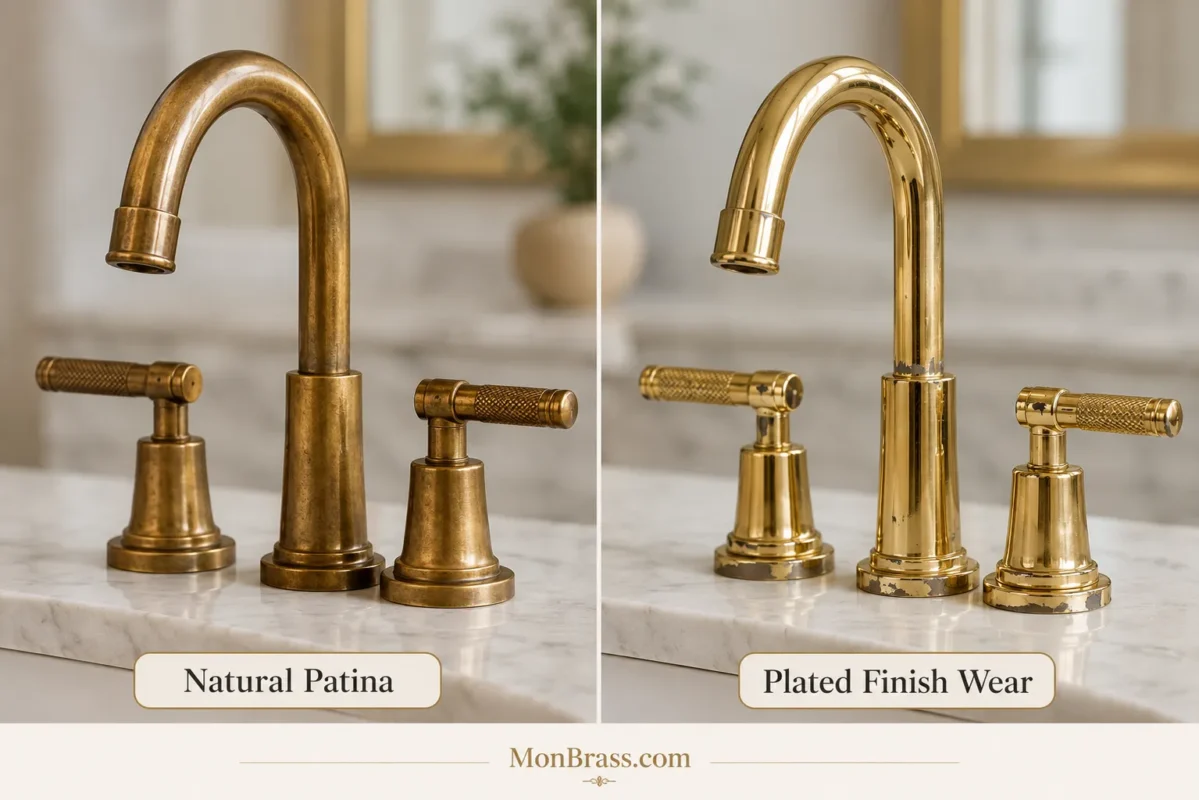
One of the largest differences appears several years after installation.
Unlacquered Brass
The finish gradually develops character through normal use. Depending on the environment, homeowners often notice richer tones and subtle variation rather than a perfectly uniform surface.
Cheap Brass Fixtures
Lower-cost fixtures usually rely on lacquer or plating to maintain a consistent appearance.
As coatings wear, some fixtures may eventually show:
- Scratches exposing the base metal
- Worn edges
- Uneven discoloration
- Peeling or flaking plating
Not every inexpensive fixture experiences these problems, but they are generally more common with thinner coatings.
Performance Beyond Appearance
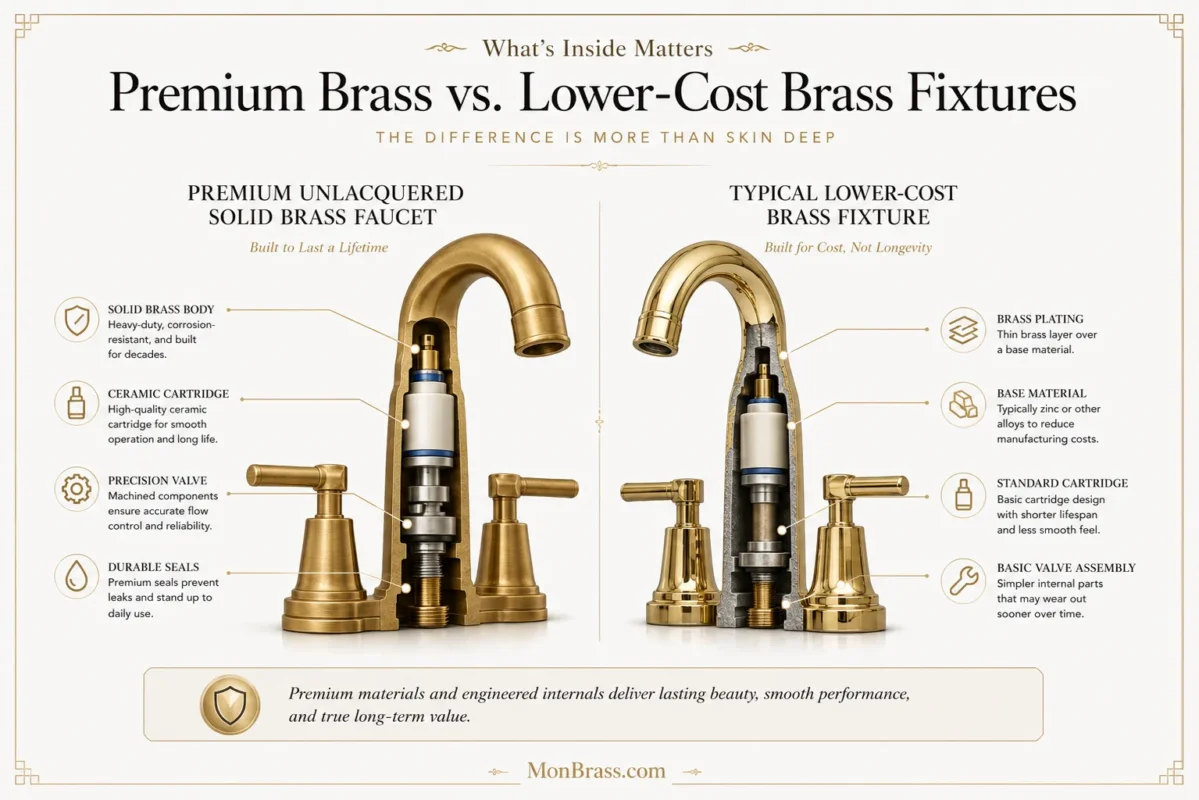
The outside finish is only part of the story.
Inside every faucet or shower fixture are components responsible for water flow and reliability.
Higher-quality fixtures often include:
- Premium ceramic cartridges
- Better seals
- Stronger valve assemblies
- More consistent machining
- Higher manufacturing tolerances
These internal components often have a greater impact on long-term reliability than the visible finish alone.
Maintenance Differences
Maintenance expectations also differ.
Caring for Unlacquered Brass
Most homeowners clean unlacquered brass gently and allow the finish to continue evolving naturally. Some occasionally polish the surface, while others prefer the character that develops over time.
Caring for Lower-Cost Brass Fixtures
Lacquered or plated finishes also benefit from gentle cleaning.
Avoid abrasive pads, harsh chemicals, or acidic cleaners that may damage the protective coating. Once plating wears through, restoring the original appearance is often difficult.
Things to Consider Before Choosing Between Unlacquered Brass and Cheap Brass Fixtures
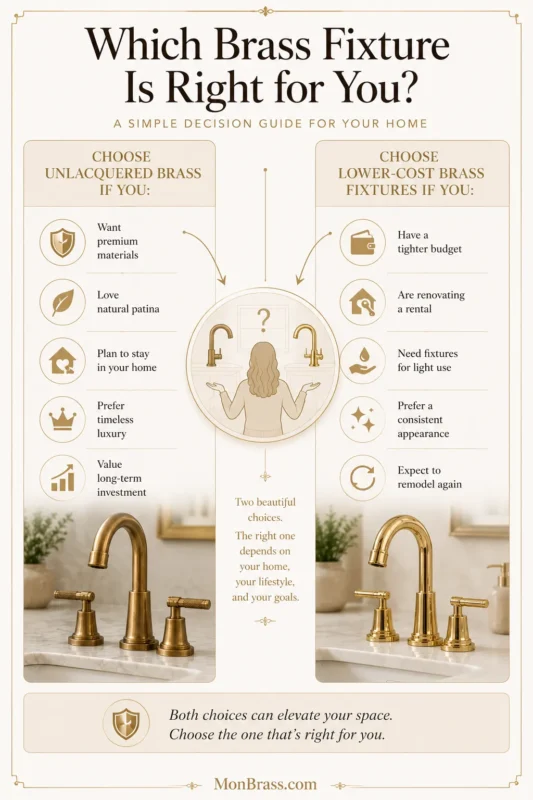
Both options have advantages depending on your priorities.
Choose Unlacquered Brass If You:
- Appreciate natural aging.
- Want premium materials.
- Plan to stay in your home for many years.
- Enjoy timeless or traditional interiors.
- Prefer fixtures that develop character over time.
Choose Lower-Cost Brass Fixtures If You:
- Have a limited renovation budget.
- Need fixtures for a rental property.
- Are remodeling a guest bathroom with lighter use.
- Prefer a finish that stays relatively consistent.
- Expect to renovate again within several years.
Neither choice is universally right or wrong.
The better option depends on your budget, expectations, and how long you plan to own the home.
Common Mistakes When Comparing Brass Fixtures
Assuming All Brass Fixtures Are Solid Brass
Many products advertised as “brass” contain only a decorative brass layer.
Always verify the base material before purchasing.
Judging Only by Color
Two fixtures can have nearly identical finishes while using completely different materials and internal components.
Expecting Unlacquered Brass to Stay Bright Forever
Natural color change is one of the defining characteristics of an unlacquered finish rather than a manufacturing defect.
Buying Without Asking About Replacement Parts
Quality manufacturers often make replacement cartridges and repair parts readily available, which can extend the useful life of the fixture.
Choosing Based Solely on Price
The least expensive option isn’t always the best value, and the highest price doesn’t automatically indicate the best quality.
Comparing construction, materials, warranties, and replacement-part availability usually provides a more complete picture.
Frequently Asked Questions
Is unlacquered brass always solid brass?
Most unlacquered brass fixtures are made from solid brass, but it’s still important to confirm the manufacturer’s specifications before buying.
Why are unlacquered brass fixtures more expensive?
Higher-quality materials, precision manufacturing, premium internal components, and the absence of a protective lacquer all contribute to the higher price.
Can cheap brass fixtures last a long time?
Yes. A well-made brass-plated or lacquered fixture can provide many years of service, particularly in lower-use areas. Quality varies considerably between manufacturers.
Does patina reduce performance?
No. Patina affects only the surface appearance. It doesn’t reduce the normal operation or structural integrity of a properly manufactured brass fixture.
Is unlacquered brass worth the extra money?
That depends on your priorities. Homeowners who value premium materials, long-term ownership, and a finish that naturally evolves often consider it a worthwhile investment, while others may prefer a lower-cost fixture that maintains a more consistent appearance.
Conclusion
Comparing unlacquered brass with inexpensive brass fixtures isn’t simply about deciding which looks better today. It’s about understanding how each product is built, how it is expected to age, and which option best fits your renovation goals.
Looking beyond the finish to evaluate materials, construction quality, internal components, and long-term expectations will help you choose a fixture that continues to perform well long after installation.
