





Unlacquered Brass
Unlacquered Brass: The Complete Guide to Patina, Care, Design & Buying Decisions
Jun
Everything you need to know about living brass finishes, how they age, and whether they’re right for your home.
Introduction
Some materials become more beautiful with time.
Unlacquered brass is one of them. Prized for its warmth, character, and timeless appeal, it has become a favorite in luxury kitchens and bathrooms alike.
Before investing in a living finish, here’s everything you need to know.
Why Trust This Guide?
At MonBrass, we specialize in premium brass fixtures and work closely with homeowners, designers, and builders who choose unlacquered brass for their projects. Through years of experience with living brass finishes, we’ve seen how they perform, age, and evolve in real homes.
This guide combines practical expertise with industry knowledge to help you make an informed decision with confidence.
What Is Unlacquered Brass?
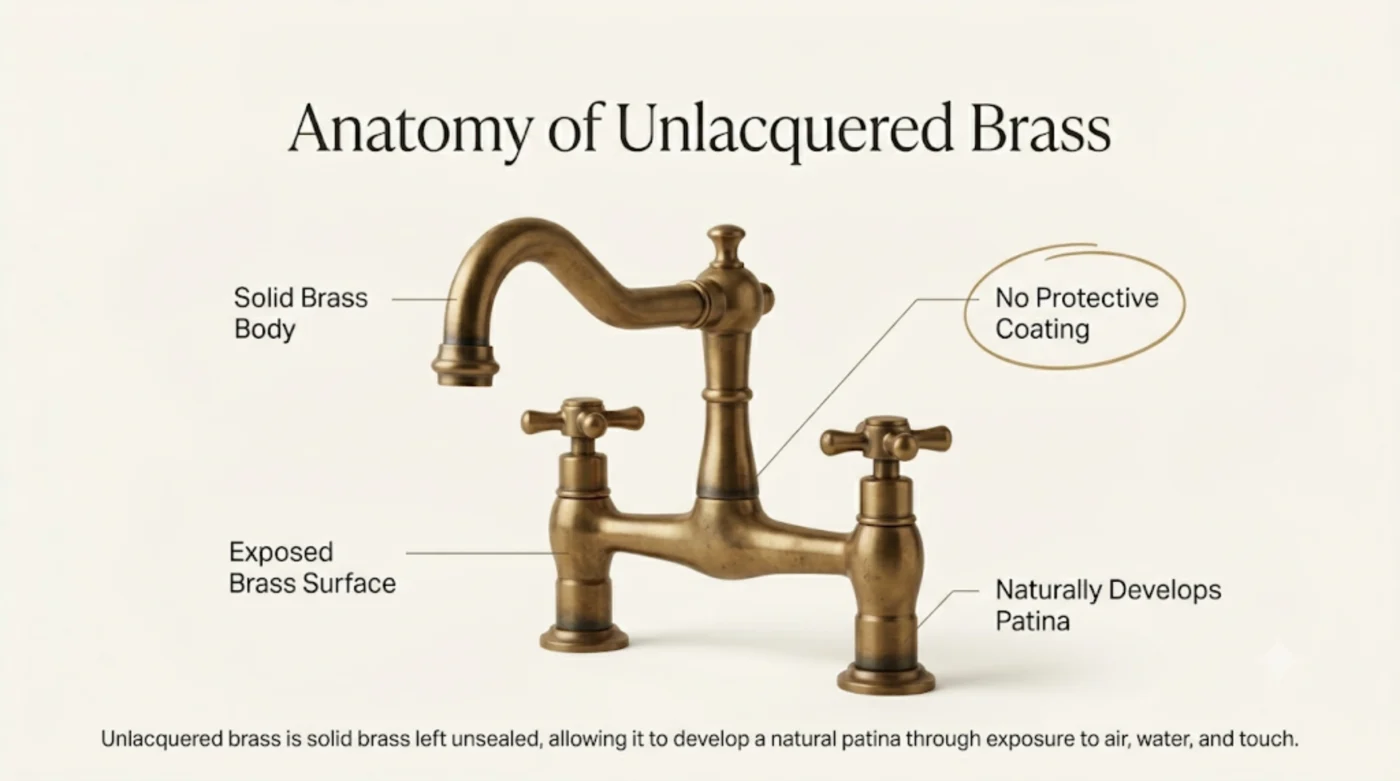
Unlacquered brass is brass that has not been coated with a protective lacquer or clear sealant. Unlike coated finishes designed to maintain a consistent appearance, unlacquered brass remains exposed to its environment and naturally changes over time.
Brass itself is an alloy primarily composed of copper and zinc. Its durability, corrosion resistance, and warm golden tone have made it a preferred material in architecture, decorative hardware, plumbing fixtures, and furniture for centuries.
What makes unlacquered brass unique is not simply its appearance on day one, but how it evolves after installation.
Because the surface is left unsealed, it interacts with air, moisture, touch, and everyday use. These natural interactions gradually alter the finish, creating a patina that reflects the environment in which the fixture lives.
This is why unlacquered brass is often referred to as a living finish. Rather than remaining frozen in time, it develops character through use. Areas touched frequently may darken more quickly, while less-used areas retain more of their original brightness. Over the years, every fixture develops its own unique appearance.
Unlacquered Brass vs Lacquered Brass
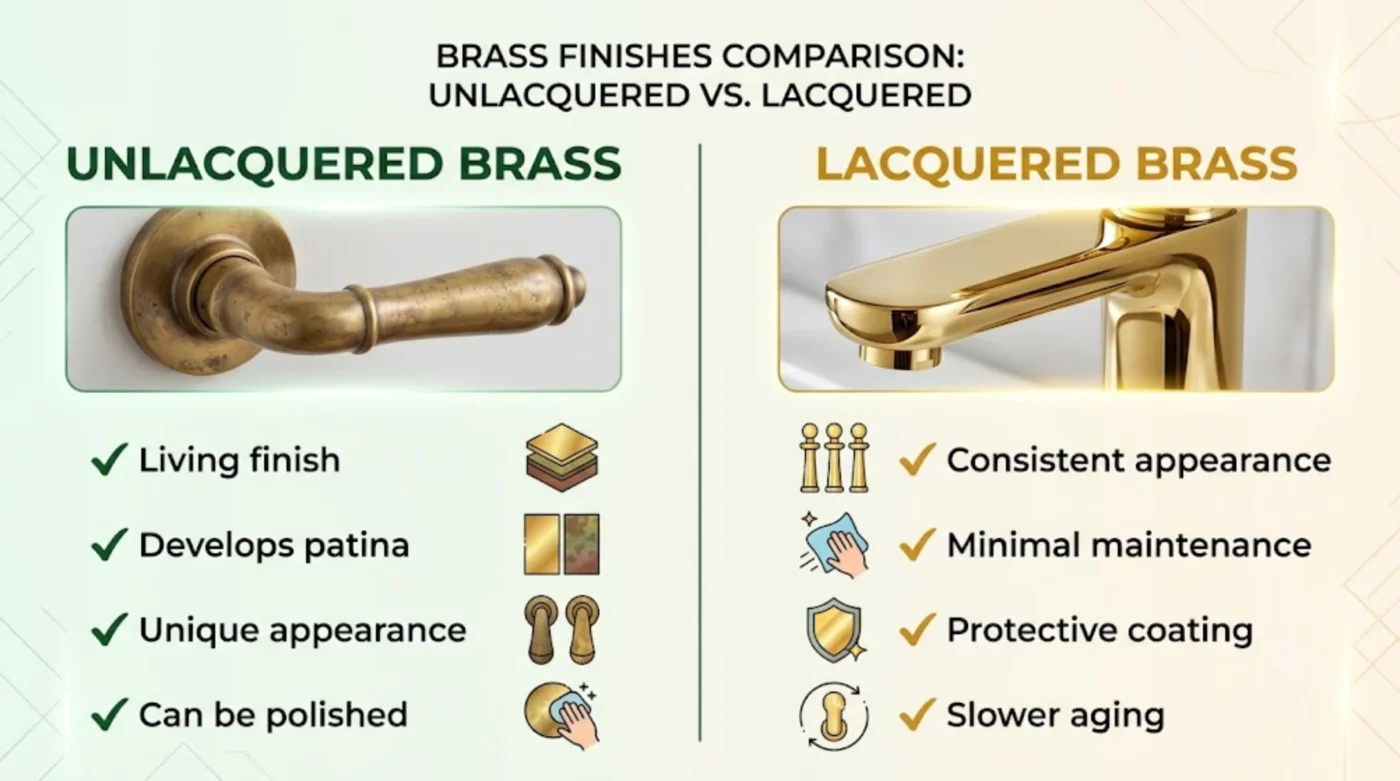
The difference is straightforward.
Lacquered brass is protected by a clear coating that slows oxidation and helps preserve a uniform appearance. Unlacquered brass has no such barrier, allowing the metal to age naturally.
Neither option is inherently better. The right choice depends on whether you prefer consistency or evolution.
Solid Brass vs Brass-Plated Fixtures
When evaluating unlacquered brass products, construction matters as much as the finish itself.
Solid brass fixtures are manufactured primarily from brass throughout the product. They offer superior durability, more authentic aging, and can often be restored through polishing if desired.
Brass-plated products use a thin brass layer over another material. While generally less expensive, they may wear differently over time and cannot always be refinished.
For homeowners seeking the true unlacquered brass experience, solid brass is usually the preferred choice.
How Unlacquered Brass Changes Over Time
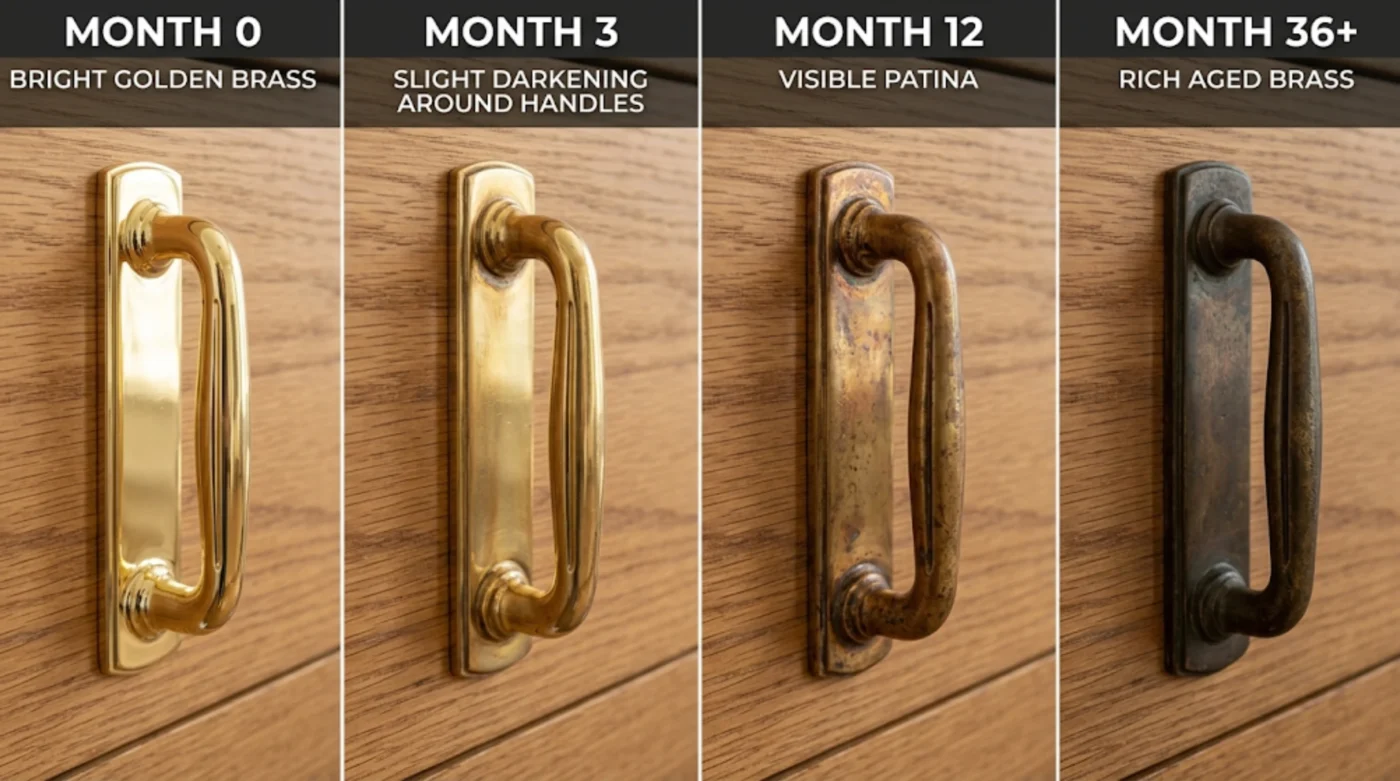
One of the most important things to understand about unlacquered brass is that change is expected.
The finish is designed to evolve.
Why Patina Develops
Patina is the result of a natural oxidation process. As brass interacts with oxygen, humidity, water, skin oils, and environmental conditions, subtle color changes begin to appear on the surface.
This process happens gradually and varies from one home to another.
Initially, most unlacquered brass fixtures display a bright golden appearance. Over time, the finish often becomes warmer, deeper, and more nuanced. The exact result depends on how and where the fixture is used.
What Influences Aging?
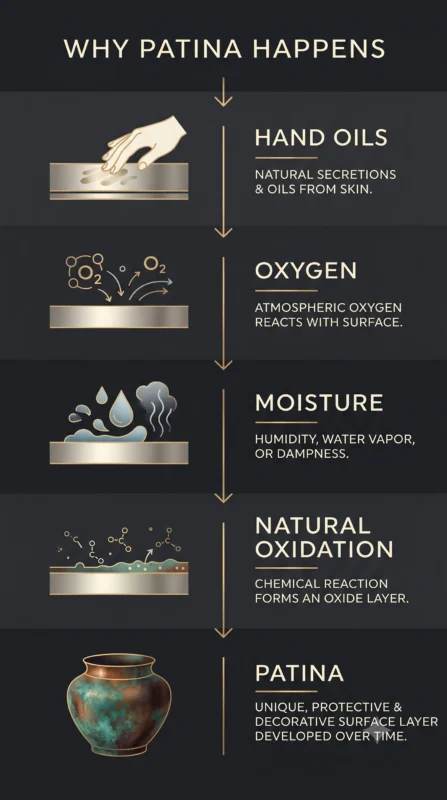
No two pieces of unlacquered brass age exactly alike.
Several factors influence how quickly patina develops:
- Humidity levels
- Water quality
- Frequency of use
- Cleaning habits
- Climate and environment
- Exposure to sunlight
A kitchen faucet used dozens of times each day will often age differently than decorative hardware in a guest bathroom.
For many homeowners and designers, this individuality is part of the appeal.
Can Unlacquered Brass Turn Green?
Yes, under certain conditions.
Because brass contains copper, prolonged oxidation can eventually create a blue-green patina known as verdigris. This process is common on historic architectural brass exposed to the elements.
In most indoor residential applications, green patina develops slowly and is usually minimal. If it appears, it can often be cleaned or reduced if desired.
Does Brass Rust?
No.
Rust occurs when iron oxidizes. Brass contains no iron, so it does not rust like steel.
It may darken, tarnish, or develop patina, but these natural changes should not be confused with rust or structural deterioration.
Caring for Unlacquered Brass
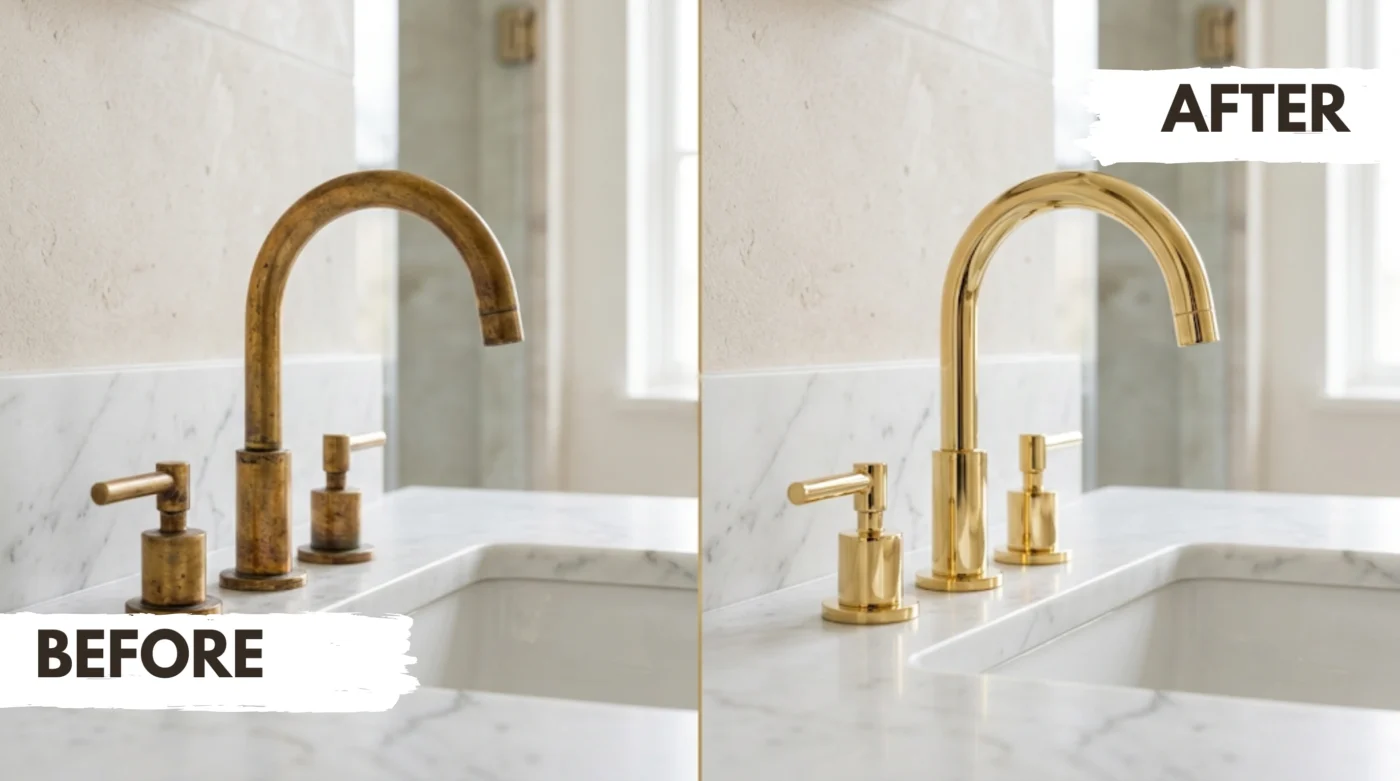
How to Accelerate the Patina on Unlacquered Brass
Unlacquered brass arrives with a bright golden finish, but many homeowners prefer the aged character of a developed patina. The process can be accelerated using simple household ingredients such as vinegar, salt, or lemon juice, helping brass achieve a richer, lived-in appearance more quickly.
Learn how to safely speed up the patina process in our dedicated guide.
How to Clean Unlacquered Brass Without Removing Patina
If you love the natural patina, gentle cleaning is key. Mild soap, warm water, and a soft cloth are usually enough to remove dirt and residue while preserving the finish’s unique character.
See our complete guide to cleaning unlacquered brass while protecting its patina.
How to Restore the Original Shine of Unlacquered Brass
Unlike many finishes, unlacquered brass can be refreshed at any time. Polishing helps reduce patina and restore much of the fixture’s original golden shine, giving you the flexibility to choose the look you prefer.
Read our guide on restoring and maintaining bright unlacquered brass.
Benefits of Unlacquered Brass
The growing popularity of unlacquered brass isn’t simply a design trend. Its appeal is rooted in qualities that have made brass desirable for generations.
Timeless Appeal
Few finishes bridge traditional and contemporary design as effortlessly as unlacquered brass.
Its warmth complements everything from historic homes and European-inspired interiors to modern organic spaces. Unlike trend-driven finishes that rise and fall in popularity, brass has remained relevant for centuries.
Authentic Character
Many modern finishes attempt to imitate age.
Unlacquered brass develops it naturally.
Over time, touch points, water exposure, and everyday use contribute to an appearance that cannot be replicated in a factory. The result feels authentic because it is authentic.
Durability & Longevity
High-quality brass fixtures are built to last.
The development of patina affects appearance, not performance. Properly manufactured brass fixtures can remain functional for decades while continuing to develop visual character.
Design Versatility
One reason designers consistently specify unlacquered brass is its ability to pair beautifully with a wide range of materials.
It works particularly well alongside:
- Marble
- Limestone
- Natural wood
- Painted cabinetry
- Plaster finishes
- Natural stone surfaces
Few finishes offer the same flexibility across different design styles.
Potential Drawbacks
Unlacquered brass isn’t the right choice for everyone.
Understanding its drawbacks is essential before making an investment.
Fingerprints & Water Spots
Because the surface remains unprotected, fingerprints and water marks are more visible than on coated finishes.
Many homeowners embrace these signs of use as part of the material’s character. Others may find them distracting.
Uneven Early Patina
Patina rarely develops perfectly evenly.
During the first several months, some areas may darken faster than others. This transitional stage is normal, though it can surprise homeowners expecting a uniform appearance.
Not Ideal for Those Seeking Consistency
Some people prefer finishes that look exactly the same year after year.
If maintaining a pristine, unchanged appearance is important to you, brushed brass or lacquered brass may be a better fit.
Unlacquered brass rewards those who appreciate natural variation and gradual change.
Unlacquered Brass vs Other Brass Finishes
When choosing brass fixtures, homeowners are often comparing several different finish options.
The primary difference comes down to one question:
Do you want the finish to change over time?
| Finish | Changes Over Time | Maintenance | Appearance |
|---|---|---|---|
| Unlacquered Brass | Yes | Moderate | Living finish |
| Brushed Brass | Minimal | Low | Soft textured |
| Satin Brass | Minimal | Low | Smooth and understated |
| Polished Brass | Very little | Moderate | Bright and reflective |
| Antique Brass | No | Low | Pre-aged appearance |
| Lacquered Brass | No | Low | Consistent finish |
Where Unlacquered Brass Works Best
Unlacquered brass performs particularly well in spaces where natural materials and craftsmanship are central to the design.
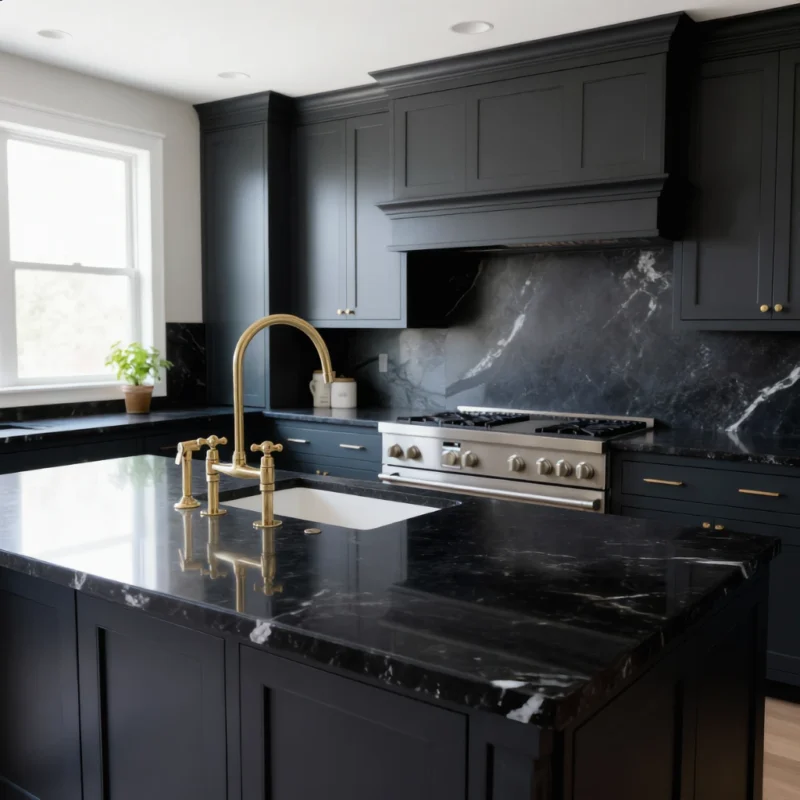
Kitchen Faucets
Kitchen faucets are among the most popular applications because regular use encourages beautiful patina development over time.
Pot Fillers
Few fixtures communicate timeless luxury quite like an unlacquered brass pot filler. Against natural stone or handcrafted tile, the effect is especially striking.
Bathroom Fixtures
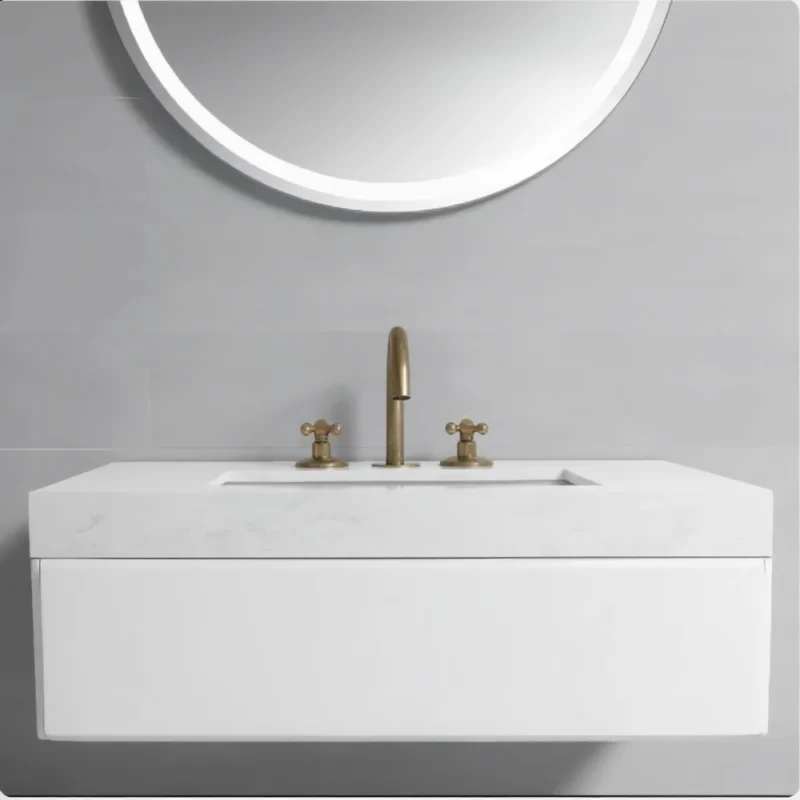
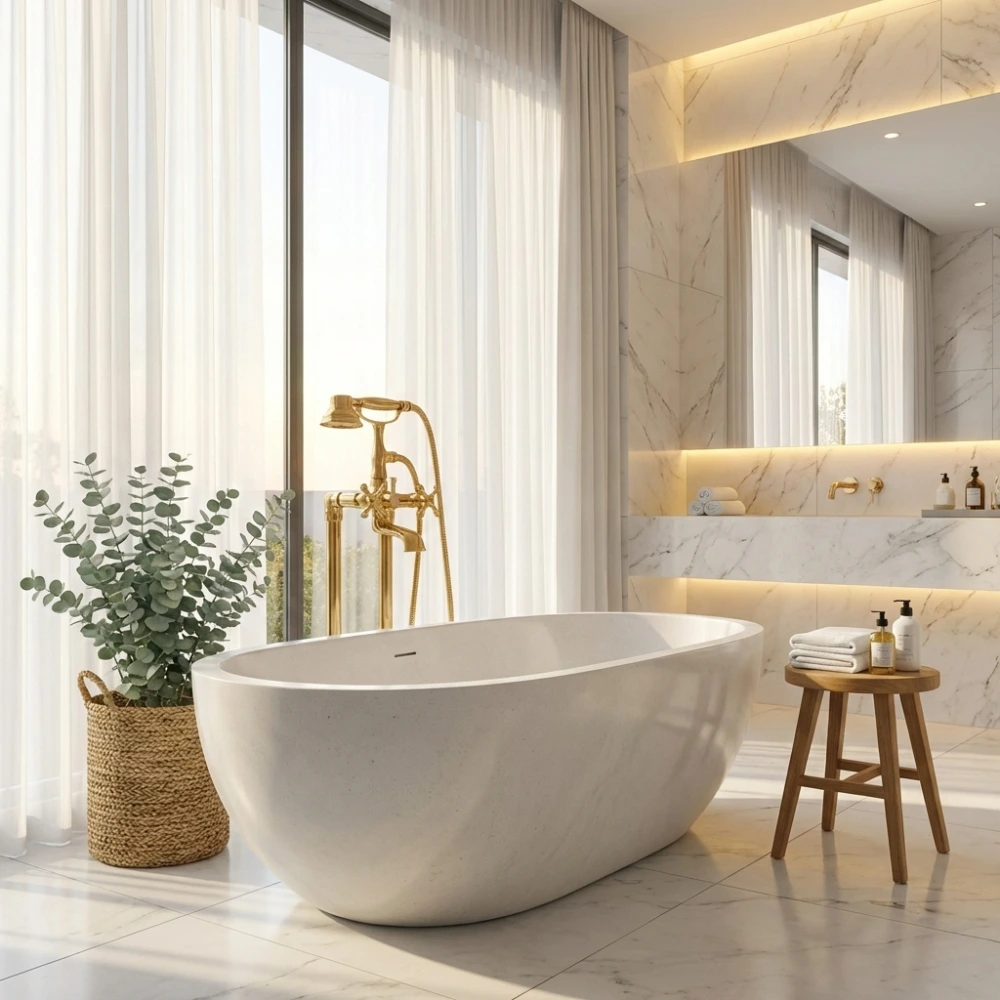
Bathrooms provide ideal conditions for brass to develop character while complementing materials such as marble, limestone, and wood.
Shower Systems
For custom bathrooms, unlacquered brass shower systems create a warm, sophisticated focal point.
Cabinet Hardware
Knobs and pulls offer one of the easiest ways to introduce living brass into a home. Because they are touched frequently, they develop character naturally.
Design Inspiration
One reason unlacquered brass remains a favorite among designers is its ability to elevate surrounding materials rather than dominate them.
White Kitchens
White cabinetry and brass create a timeless combination that feels both elegant and welcoming.
Natural Wood Cabinetry
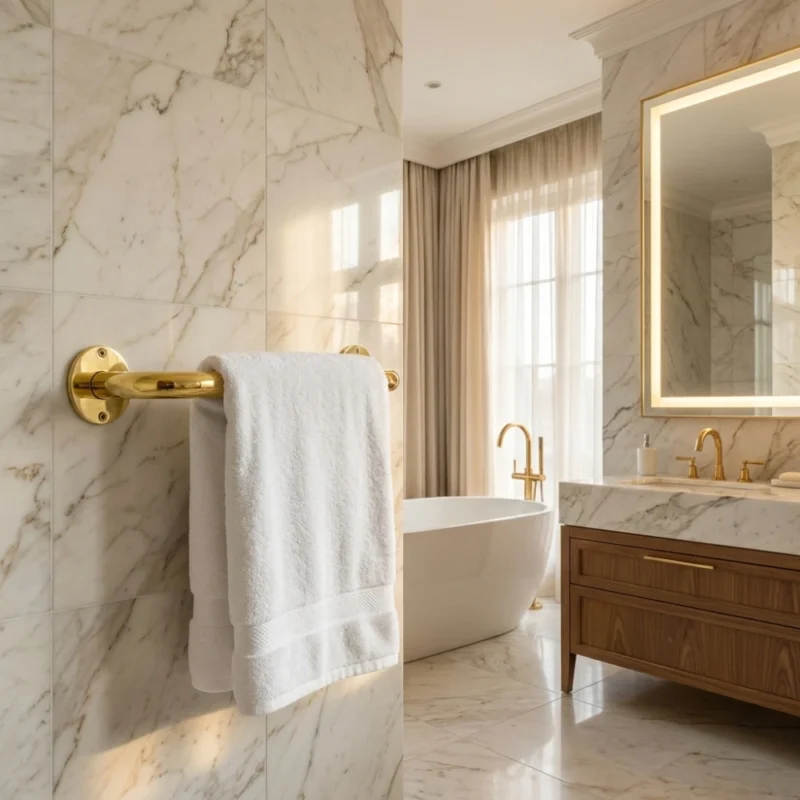
Walnut, oak, and unlacquered brass share a common quality: they become more beautiful with age.
Marble & Natural Stone
Few pairings feel as enduring as brass and marble. Together they communicate craftsmanship, permanence, and understated luxury.
European-Inspired Interiors
Unlacquered brass is frequently found in English country kitchens, Belgian-inspired homes, and classic European interiors where authenticity is valued over perfection.
Quiet Luxury Design
The growing popularity of quiet luxury has reinforced interest in natural materials that age gracefully. Unlacquered brass aligns perfectly with this philosophy.
How to Choose High-Quality Unlacquered Brass Fixtures
Not all brass fixtures are created equal.
When evaluating products, look beyond the finish itself.
Solid Brass Construction
Solid brass provides better durability, longevity, and more authentic aging than plated alternatives.
Quality Components
Internal components such as cartridges, valves, and moving parts often determine how well a fixture performs over the long term.
Serviceability
Premium fixtures should be designed for maintenance and repair rather than replacement.
Warranty & Support
A strong warranty often reflects confidence in product quality and manufacturing standards.
Questions to Ask Before Buying
Before purchasing, consider asking:
- Is the fixture solid brass?
- Is the finish truly unlacquered?
- How will the finish age?
- Are replacement parts available?
- What warranty is offered?
Transparent answers are often a good indicator of a reputable manufacturer.
Frequently Asked Questions
What is unlacquered brass?
Brass that has not been sealed with a protective coating, allowing it to develop a natural patina over time.
How quickly does unlacquered brass patina?
Most homeowners notice subtle changes within weeks, with more significant patina developing over months and years.
Does unlacquered brass rust?
No. Brass contains no iron and therefore does not rust like steel.
Can unlacquered brass turn green?
Yes. Under certain conditions, copper oxidation can create a blue-green patina known as verdigris.
Is unlacquered brass difficult to maintain?
Not typically. Routine care is simple, though homeowners should expect the finish to change over time.
Can unlacquered brass be polished?
Yes. Polishing can often remove surface oxidation and restore much of the original shine.
Is unlacquered brass worth the investment?
For homeowners who value craftsmanship, authenticity, and timeless design, many consider it well worth the cost.
Final Thoughts
Unlacquered brass isn’t a finish that stays the same.
That’s precisely the point.
While many modern materials are designed to resist change, unlacquered brass embraces it. Over time, it develops character that reflects how a home is lived in, creating an appearance that cannot be manufactured or replicated.
For homeowners who appreciate authenticity, craftsmanship, and timeless design, few materials offer a more rewarding experience.
