





Uncategorized
How Fast Does Unlacquered Brass Patina? A Realistic Timeline for Homeowners
Jun
You install a beautiful unlacquered brass faucet, cabinet pull, or light fixture because you love its warm golden appearance. Then the waiting begins.
Some homeowners expect dramatic changes within a few weeks. Others assume brass will look exactly the same for years. The reality falls somewhere in between, which is why one of the most common questions people ask is: How fast does unlacquered brass patina?
The answer depends on much more than the metal itself. Humidity, daily use, location, and the environment around the fixture all influence how quickly the finish evolves. Understanding these factors can help you set realistic expectations and decide whether a living finish is right for your home.
Why There Is No Single Patina Timeline
One of the biggest misconceptions about unlacquered brass is that every fixture ages at the same speed.
In reality, two identical brass faucets installed on the same day can look noticeably different after several months. One may begin developing a richer appearance, while the other still looks relatively close to new.
That’s because patina responds to the conditions surrounding the metal. Every home creates a different combination of humidity, touch, water exposure, and air quality, which means there is no universal schedule for brass aging.
Instead of asking when brass will patina, it’s often more useful to ask how quickly brass is likely to patina under your home’s specific conditions.
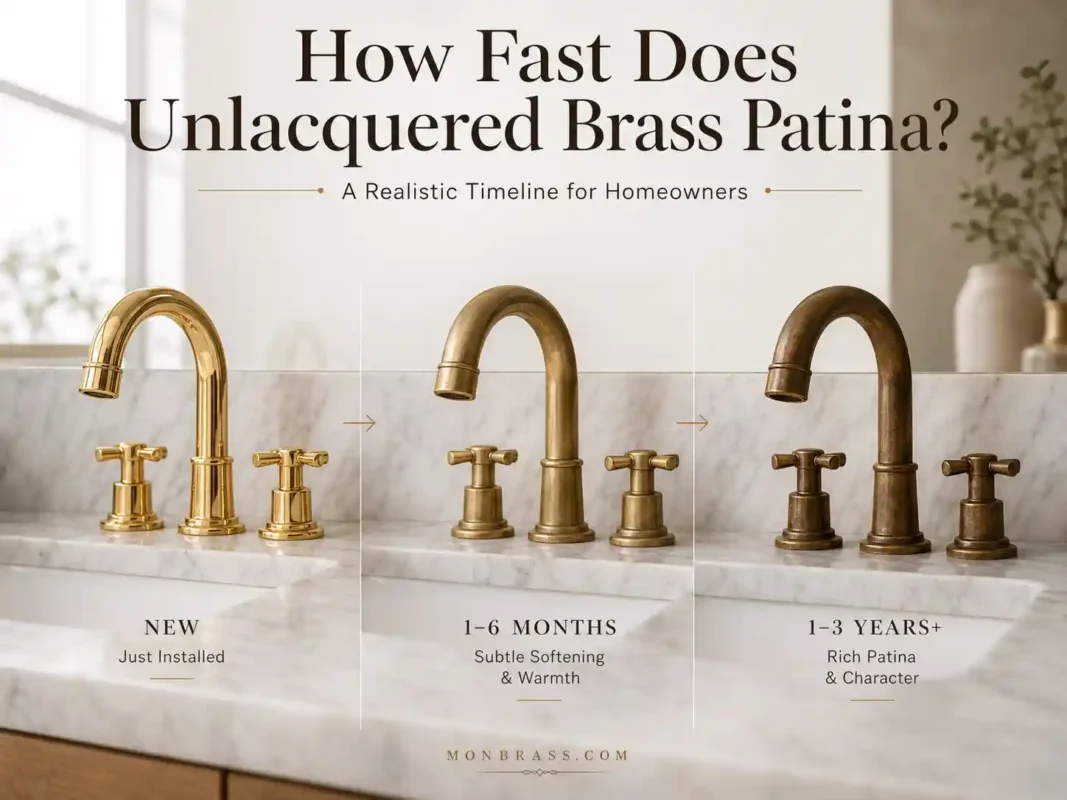
A Typical Patina Timeline
Although every installation is unique, most homeowners can expect a gradual progression rather than an overnight transformation.
| Time After Installation | What You May Notice |
| First Few Weeks | Little to no visible change |
| 1–3 Months | Slight softening of shine in frequently touched areas |
| 3–6 Months | More noticeable variation begins to appear |
| 6–12 Months | Character and depth continue to develop |
| 1–3 Years | A richer, more established patina forms |
| 3+ Years | A mature finish with unique aging patterns |
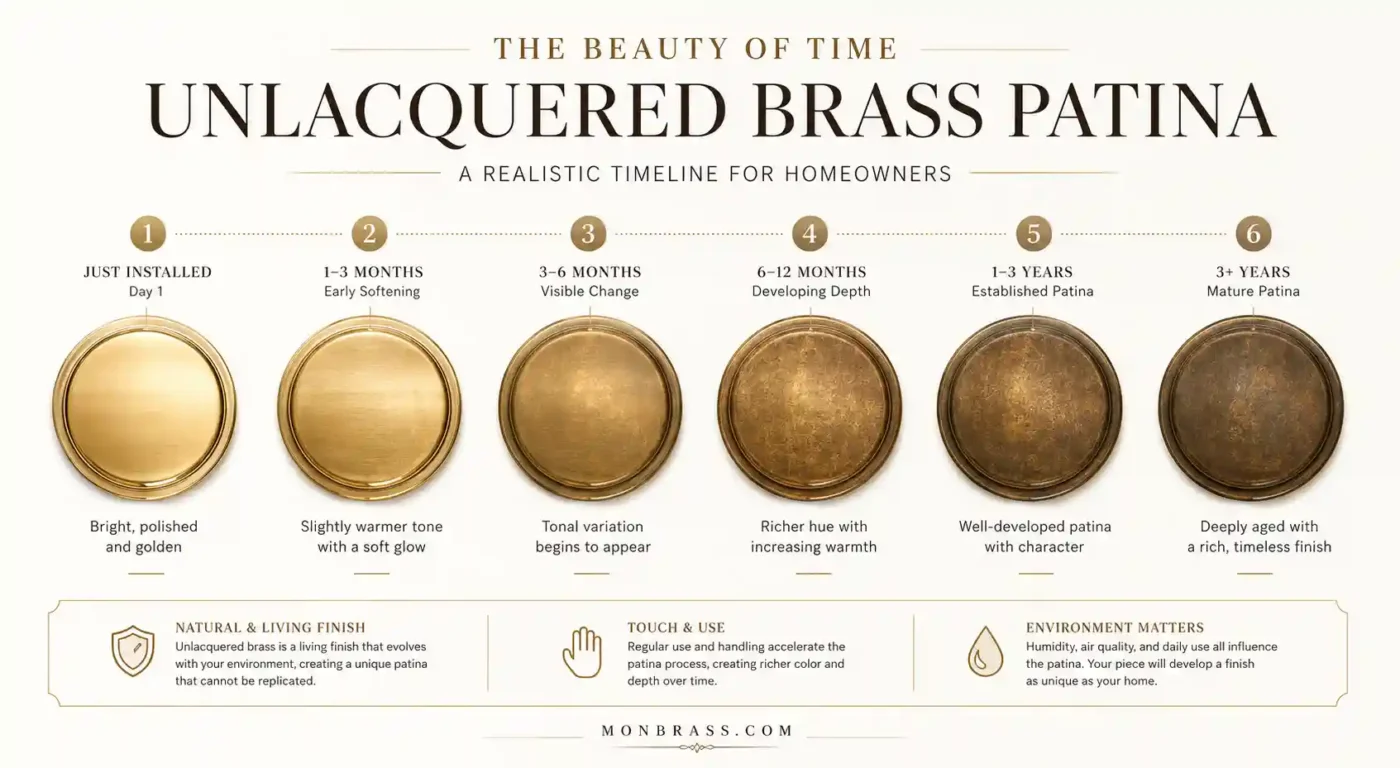
Many people don’t notice the changes day by day. Instead, they compare the fixture with older photos and realize how much the appearance has gradually evolved.
Homeowners who are curious about what these visual changes actually look like over time often find that every piece develops its own unique character.
What Affects How Fast Brass Patinas?
Several factors can dramatically influence the speed of the aging process.
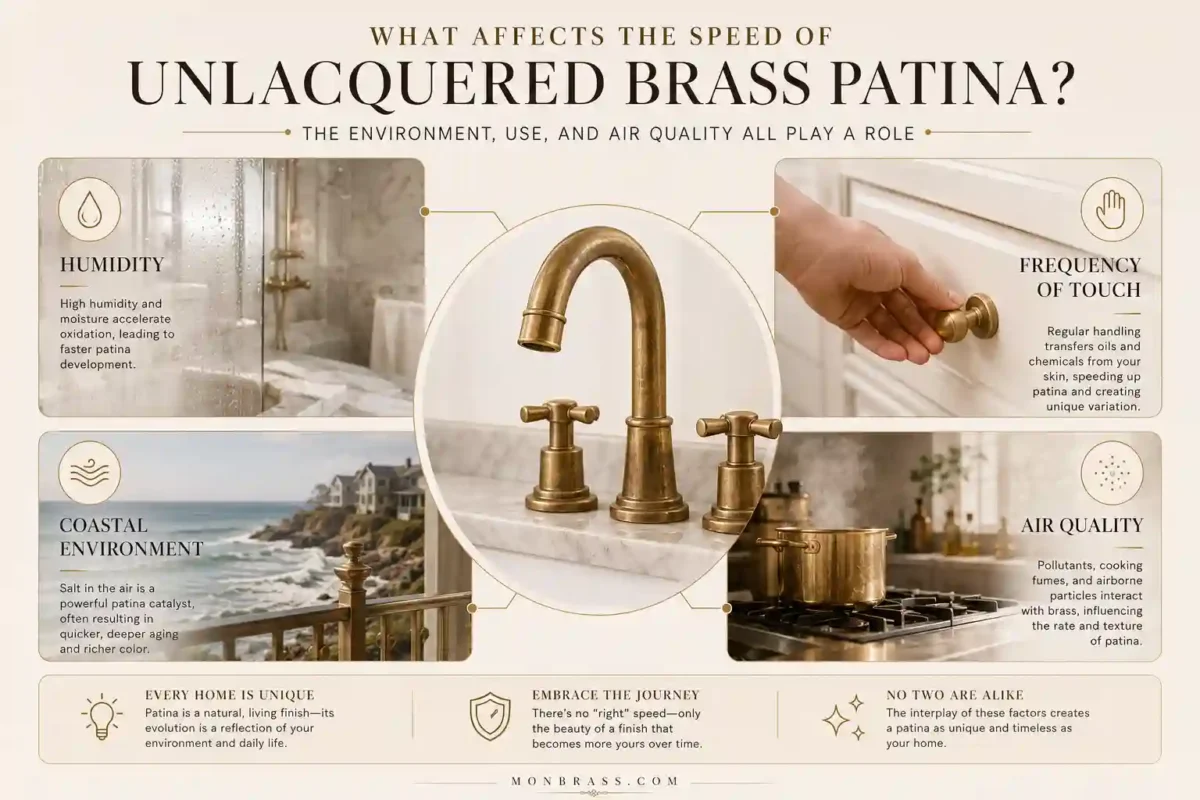
Humidity
Humidity is one of the strongest influences on patina development. Brass installed in bathrooms, kitchens, or other moisture-rich spaces often changes more quickly than brass placed in drier rooms.
Steam, condensation, and regular exposure to water all encourage the natural surface reaction that creates patina.
Frequency of Touch
Everyday contact transfers natural oils and moisture from your hands onto the metal. This is why cabinet pulls, faucets, and door handles often develop character more quickly than decorative pieces that are rarely touched.
Coastal vs Inland Environments
Homes near the ocean frequently experience faster aging because salt particles in the air encourage oxidation. Inland homes often see a slower, more gradual transformation.
Air Quality
The environment inside your home also plays a role. Cooking oils, smoke, and other airborne particles can subtly influence how brass changes over time, which is one reason kitchen fixtures may age differently than decorative items elsewhere in the house.
Homeowners interested in how water, humidity, and daily use affect brass in specific rooms may also notice that kitchens and bathrooms create their own unique aging conditions.
Which Brass Fixtures Patina the Fastest?
Not all brass fixtures age at the same rate.
Generally, pieces that receive the most contact and environmental exposure develop patina more quickly. These often include:
- Kitchen faucets.
- Bathroom faucets.
- Cabinet hardware.
- Door handles.
- Pot fillers.
- Towel bars.
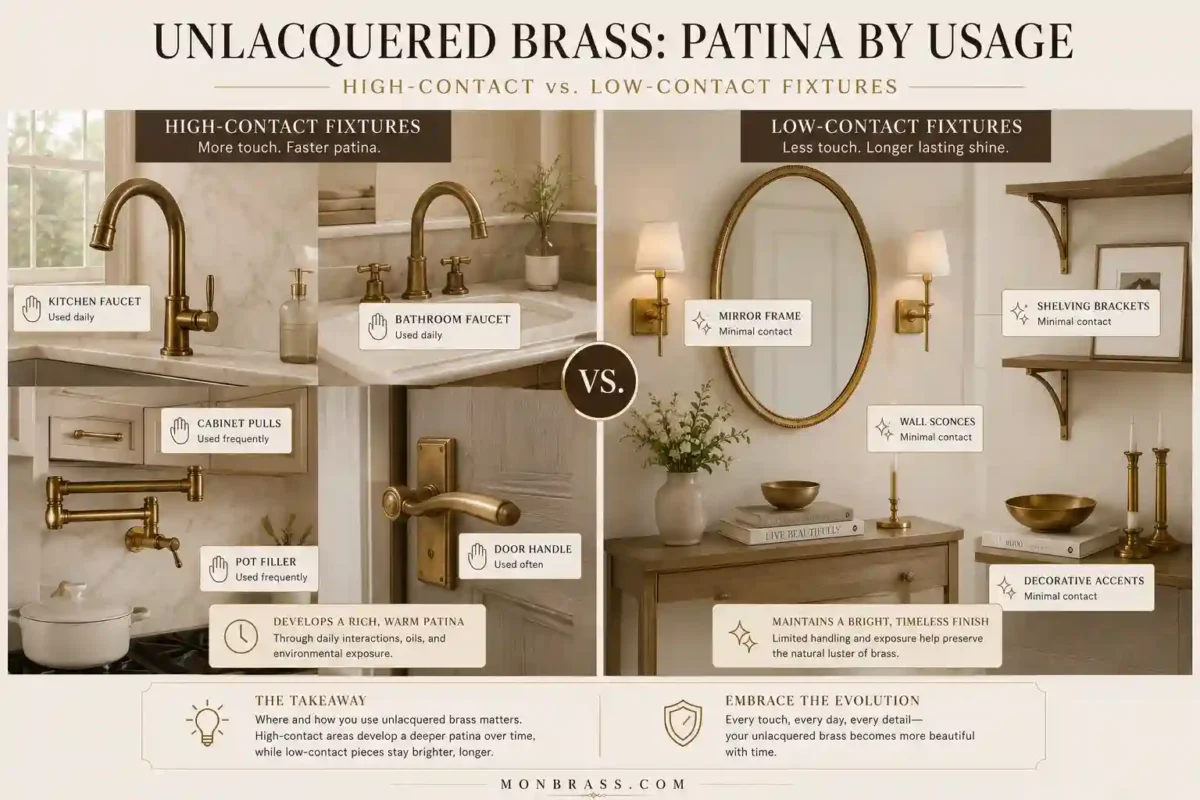
Decorative items that experience less handling, such as mirrors, picture frames, wall sconces, and shelving brackets, usually change more gradually.
The difference often comes down to one simple factor: the more interaction a fixture has with people, water, and humidity, the more opportunities it has to develop character.
What Does Early Patina Look Like?
One of the most common surprises for new homeowners is how subtle the first changes can be.
Rather than suddenly turning dark brown, unlacquered brass usually develops small variations that become more noticeable over time. Early signs often include:
- A softer overall shine.
- Slightly warmer or deeper gold tones.
- Minor darkening around edges and corners.
- Fingerprint patterns that linger a little longer.
- Small differences between frequently touched and untouched areas.
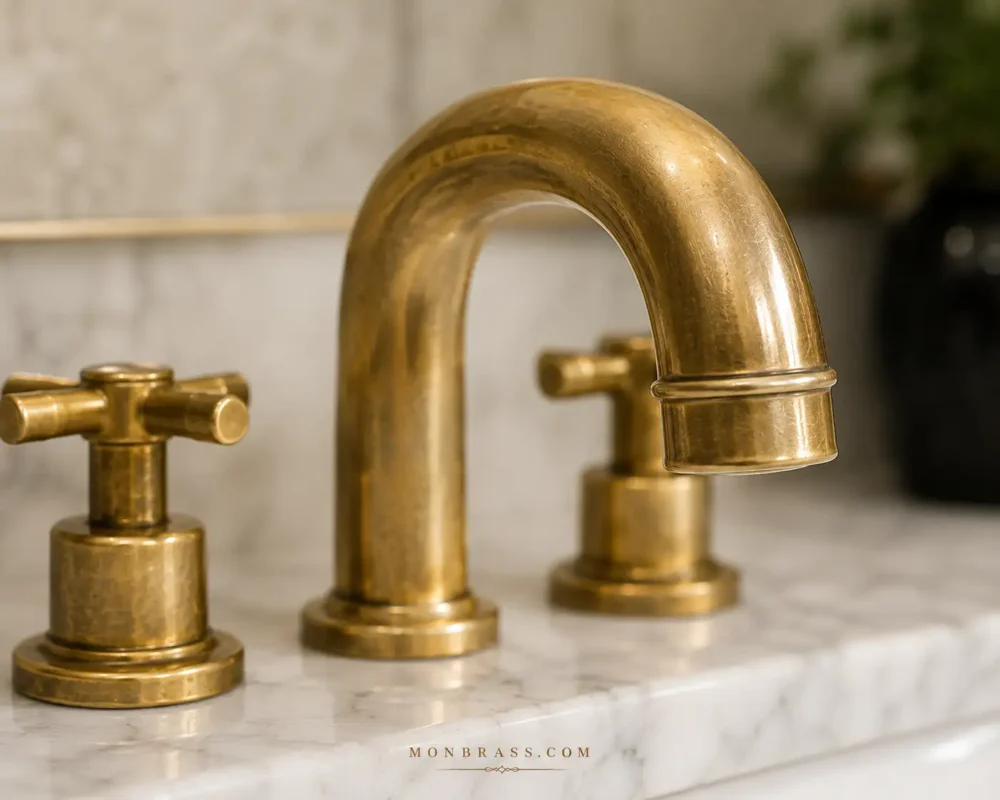
These early changes are often so gradual that visitors may not notice them at all.
Why Some Homeowners Think Their Brass Isn’t Patinaing
A surprising number of homeowners become concerned when their brass still looks bright after several months.
In most cases, nothing is wrong. A combination of low humidity, limited handling, dry indoor conditions, or occasional polishing can slow visible changes. Some products may also have light factory treatments that temporarily delay the earliest stages of oxidation.
Patience is often the only thing required. The absence of dramatic changes during the first few months does not mean the finish will stay that way forever.
Can You Speed Up or Slow Down the Process?
The short answer is yes—but only to a certain extent.
Environmental conditions naturally influence how quickly unlacquered brass develops patina. Higher humidity and more frequent contact generally encourage faster changes, while drier conditions and occasional maintenance can slow the process.
Some homeowners intentionally try to accelerate aging, while others prefer to preserve the brighter look for as long as possible. Either approach is a matter of personal preference, and the finish will continue evolving naturally over time.
If you’re considering actively encouraging or slowing the aging process, it’s worth understanding how different maintenance choices and environmental conditions influence the final result.
Common Expectations vs Reality
| Expectation | Reality |
| Brass turns dark immediately | Changes are usually gradual |
| All brass ages equally | Environment plays a major role |
| Patina means damage | Normal patina is harmless |
| Touching doesn’t matter | Frequent contact encourages aging |
| Polishing permanently stops patina | Brass continues evolving afterward |
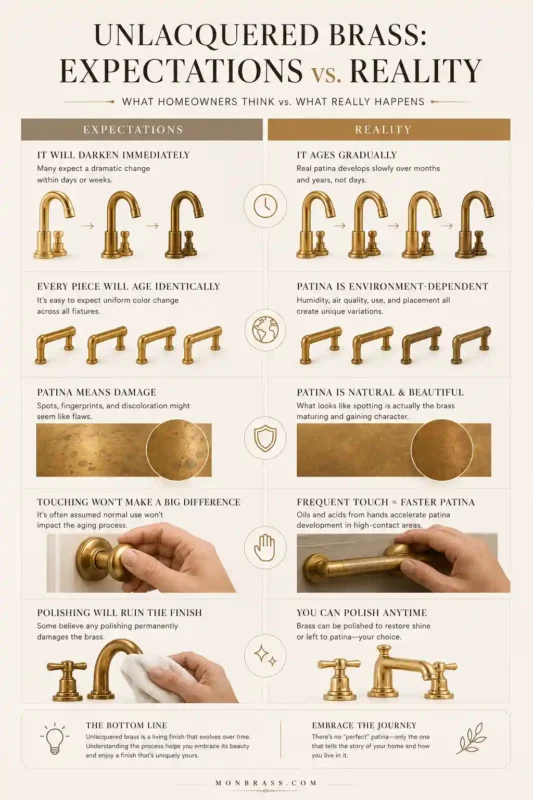
Understanding these realities helps homeowners appreciate the material for what it is: a living finish that responds to the environment around it.
FAQ
Does unlacquered brass patina faster in a bathroom?
Yes. Bathrooms usually have higher humidity levels and more frequent exposure to steam and water, which can encourage faster patina development.
Can brass start patinaing within weeks?
Yes. High-touch fixtures in humid environments sometimes show subtle changes within the first few weeks, although significant visual changes usually develop more gradually.
Does polished brass patina faster than brushed brass?
The surrounding environment generally has a much greater effect on aging than the surface texture itself.
Will fingerprints permanently mark unlacquered brass?
Not usually. They often become part of the natural aging pattern and gradually blend into the developing finish.
Can I remove patina if I don’t like the look?
Yes. In many cases, the original shine can be restored, although the natural aging process will begin again once the brass is exposed to everyday conditions.
Conclusion
The speed at which unlacquered brass develops patina depends less on the calendar and more on the environment around it. Humidity, daily use, air quality, and the amount of contact a fixture receives all shape the process. Rather than following a fixed schedule, unlacquered brass evolves at its own pace, creating a finish that becomes uniquely connected to the home in which it lives. For many homeowners, that gradual and individual transformation is part of what makes the material so appealing.
