





Uncategorized
Unlacquered Brass vs Bronze: A Complete Comparison for Homeowners
Jul
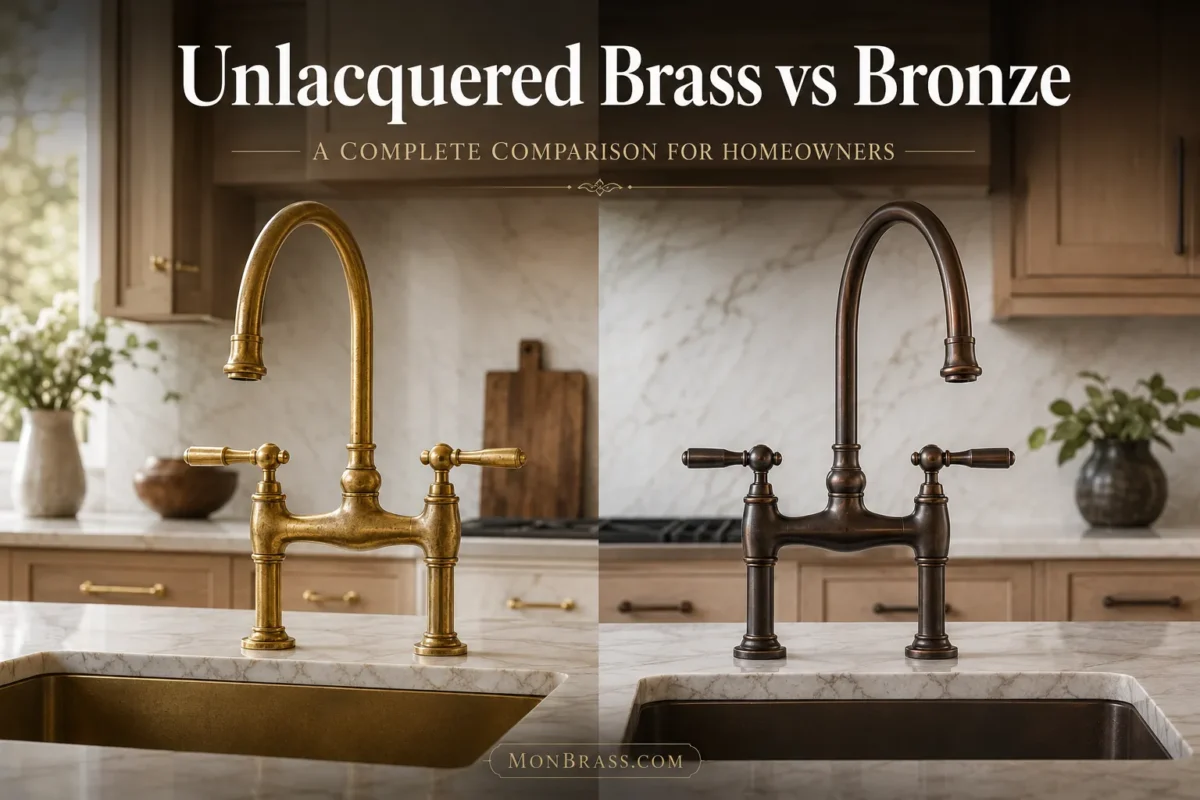
Choosing between unlacquered brass vs bronze is about much more than color. While both finishes are popular in kitchens and bathrooms, they age differently, require different levels of maintenance, and create distinct design styles over time.
Many homeowners assume they’re simply two shades of the same material, but that’s not the case. The way each finish reacts to moisture, fingerprints, cleaning products, and daily use can dramatically affect how your fixtures look a few years after installation.
Whether you’re selecting a kitchen faucet, cabinet hardware, shower system, or bathroom accessories, understanding these differences will help you choose a finish you’ll continue to enjoy long after your renovation is complete.
Understanding Unlacquered Brass and Bronze
Although they often appear together in luxury design collections, unlacquered brass and bronze are different materials with unique characteristics.
What Is Unlacquered Brass?
Unlacquered brass is solid brass without a protective clear coating. Because there is no lacquer sealing the surface, the metal reacts naturally with air, water, oils from your hands, and humidity.
Over time, this reaction creates a rich patina that gradually darkens the finish. Some areas become deeper in tone, while frequently touched spots may remain brighter due to regular contact.
One thing homeowners often notice is that no two unlacquered brass fixtures age exactly the same way. Their appearance reflects how they’re used.
What Is Bronze?
Bronze is an alloy made primarily of copper and tin, although modern architectural bronze may include additional metals depending on the manufacturer.
Unlike unlacquered brass, many bronze fixtures are sold with a factory-applied finish, such as oil-rubbed bronze or brushed bronze. These finishes are designed to remain relatively consistent over time, although some light wear and aging are still expected.
Instead of developing the warm golden patina associated with brass, bronze generally becomes richer, deeper, and more muted.
Unlacquered Brass vs Bronze at a Glance
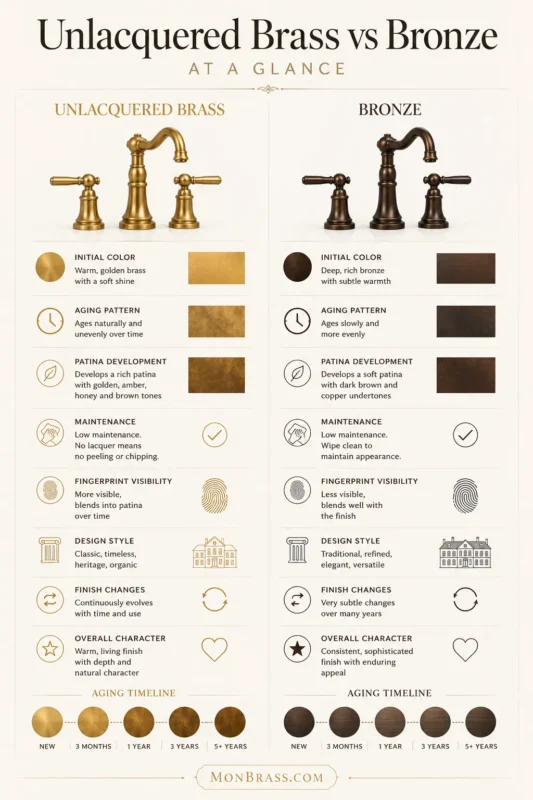
| Feature | Unlacquered Brass | Bronze |
| Initial Color | Bright warm gold | Brown, dark bronze, or deep copper |
| Aging | Develops natural patina | Ages slowly with subtle wear |
| Maintenance | Minimal polishing unless brightness is preferred | Usually low maintenance |
| Fingerprints | Visible initially | Less noticeable |
| Design Style | Traditional, European, vintage, luxury | Rustic, transitional, industrial, contemporary |
| Finish Changes | Significant over time | Usually gradual |
| Uniqueness | Every fixture ages differently | More consistent appearance |
Appearance and Patina: The Biggest Difference
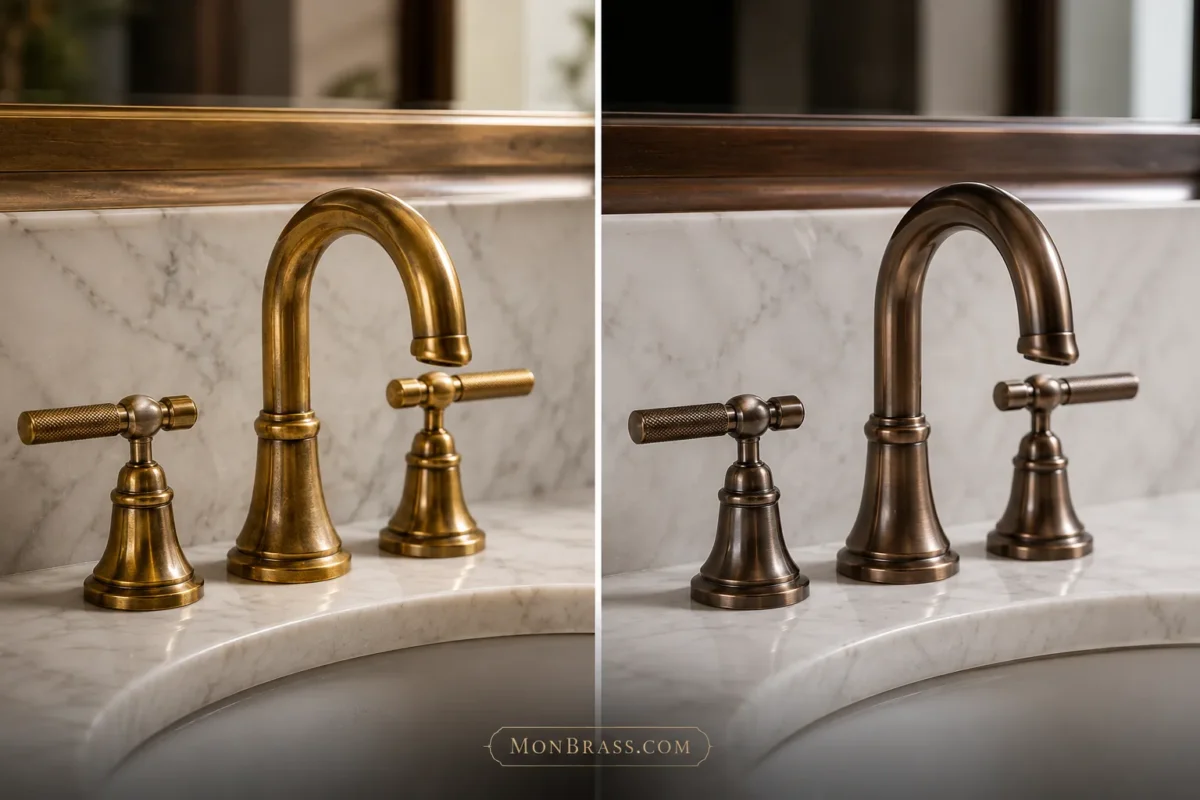
For many buyers, appearance is the deciding factor.
How Unlacquered Brass Changes
Unlacquered brass begins with a warm golden appearance and gradually develops a darker, richer patina through everyday use. Unlike bronze, the transformation is often more noticeable, making it a popular choice for homeowners who appreciate a finish that naturally evolves over time.
How Bronze Ages
Bronze generally changes much more gradually.
Depending on the finish, it may become slightly lighter around frequently touched areas or develop gentle highlights along edges. However, it rarely transforms as dramatically as unlacquered brass.
If you prefer a finish that stays relatively predictable for years, bronze often provides greater consistency.
Maintenance Requirements
Maintenance is one of the most important differences between these finishes.
Caring for Unlacquered Brass
Unlacquered brass is relatively easy to care for, but homeowners should expect its appearance to change naturally over time. Routine gentle cleaning is usually sufficient, while occasional polishing is only necessary if you prefer to restore a brighter finish rather than allow the patina to develop.
If you’re wondering how the aging process works in more detail, it’s worth reading about does unlacquered brass tarnish and what that actually means in everyday use.
Caring for Bronze
Bronze typically requires less attention.
Most manufacturers recommend:
- Soft cloth cleaning
- Mild soap
- No abrasive cleaners
- Occasional wax for certain architectural bronze finishes
Since bronze usually has a protective finish, routine maintenance focuses on preserving that coating rather than encouraging natural aging.
Durability and Everyday Performance
Both materials are durable enough for kitchens and bathrooms when properly manufactured.
The difference lies in how wear becomes visible.
Unlacquered Brass
Daily use becomes part of the finish.
Water, soap residue, humidity, and frequent touching all contribute to the evolving appearance.
In high-humidity environments, the patina often develops faster than in dry climates.
Rather than hiding wear, unlacquered brass embraces it.
Bronze
Bronze generally hides everyday wear better.
Fingerprints are less noticeable, and many darker bronze finishes conceal small scratches or mineral spots that would be more visible on polished metals.
For busy family kitchens, this can be a practical advantage.
Which Design Styles Work Best?
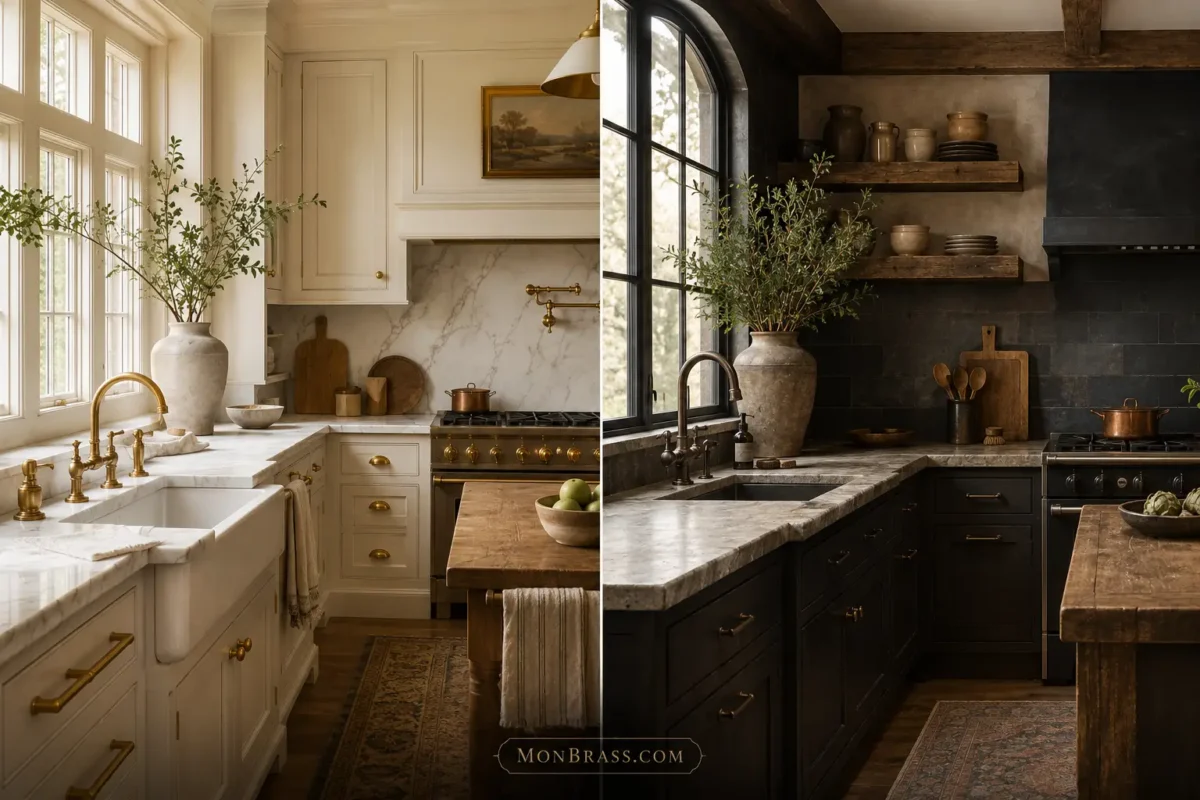
Both finishes are versatile, but each complements different interiors.
Unlacquered Brass Works Beautifully With
- English-inspired kitchens
- European farmhouse interiors
- Traditional bathrooms
- French country homes
- Historic renovations
- Luxury custom homes
- Warm minimalist spaces
Unlacquered brass is commonly associated with traditional and character-rich interiors, while bronze is often selected for spaces with darker, more understated finishes.
If you’re comparing brass finishes, understanding the differences between unlacquered brass vs antique brass or unlacquered brass vs polished brass can also help narrow your decision.
Bronze Complements
- Rustic homes
- Craftsman architecture
- Industrial interiors
- Modern farmhouse kitchens
- Mediterranean homes
- Mountain cabins
- Transitional spaces
Bronze also pairs especially well with natural stone, reclaimed wood, slate, and darker cabinetry.
Things to Consider Before Choosing Unlacquered Brass or Bronze
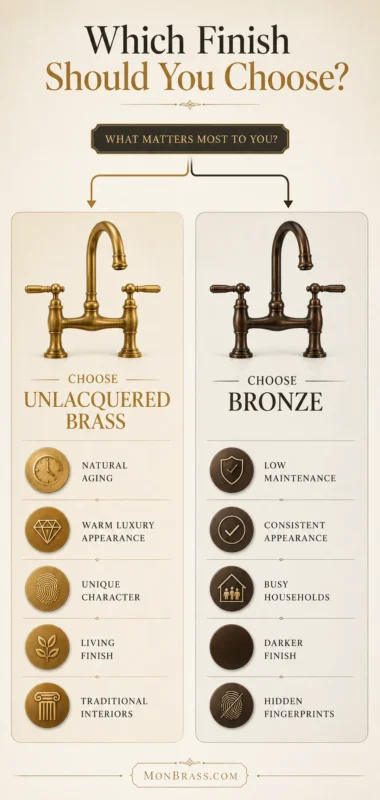
Choosing between these finishes depends on your priorities rather than which one is objectively better.
Choose Unlacquered Brass If You:
- Love finishes that evolve naturally
- Appreciate handcrafted character
- Want a warm luxury appearance
- Don’t mind visible aging
- Prefer authentic materials over factory-coated finishes
Potential drawbacks include:
- Visible fingerprints early on
- Water spots in hard water areas
- Changing appearance over time
- Occasional polishing if you prefer a bright finish
Choose Bronze If You:
- Prefer consistency
- Want lower-maintenance fixtures
- Like darker finishes
- Have a busy household with heavy daily use
- Want wear to remain less noticeable
Potential drawbacks include:
- Less dramatic character development
- Factory finishes may eventually wear unevenly
- Fewer color changes over time for those who enjoy natural aging
Real-World Examples
A Busy Family Kitchen
In a heavily used kitchen, unlacquered brass will usually show more visible change over time, while bronze tends to maintain a more consistent appearance despite frequent use.
A Luxury Bathroom
Homeowners seeking a finish that develops character often prefer unlacquered brass, while those wanting a more uniform look may find bronze a better fit.
A Guest Bathroom
Because fixtures are used less frequently, both finishes generally change more slowly, making the choice largely one of appearance rather than maintenance.
Homes with Hard Water
Hard water can leave mineral deposits on both finishes, although they are often easier to notice on lighter-colored brass than on darker bronze.
Common Misconceptions
“Bronze Doesn’t Change”
Not entirely.
While bronze changes less dramatically than unlacquered brass, it still develops wear and subtle aging over time.
“Patina Means the Fixture Is Damaged”
Natural patina is not corrosion.
It’s simply the metal reacting with its environment, creating the finish many homeowners intentionally purchase unlacquered brass to achieve.
“More Cleaning Is Better”
Aggressive polishing can actually remove the character many people value.
Gentle cleaning is usually all that’s needed.
“One Finish Is Higher Quality”
Quality depends more on construction than finish.
Solid brass fixtures with durable internal components are generally more important than whether the exterior is brass or bronze.
Which Finish Offers Better Long-Term Value?
Neither finish is universally better.
Unlacquered brass often appeals to homeowners planning to stay in their homes for many years because its appearance continues evolving with daily life.
Bronze appeals to buyers who value consistency and easier maintenance.
If you’re still weighing the benefits of living with a naturally aging finish, it’s also helpful to consider is unlacquered brass worth it and why so many interior professionals continue specifying it in custom homes.
Frequently Asked Questions
Is unlacquered brass more expensive than bronze?
Pricing varies by manufacturer, fixture quality, and construction. In many product lines, the finish itself has less impact on price than the overall quality of the fixture.
Does bronze develop green patina like copper?
Typically no. Most architectural bronze develops darker brown tones rather than the green oxidation commonly associated with exposed copper.
Can unlacquered brass be restored to its original shine?
Yes. Metal polish can remove much of the patina, although many homeowners choose to let the finish continue aging naturally.
Which finish is better for kitchens?
Both work well. Unlacquered brass creates a living finish that changes with use, while bronze generally hides fingerprints and everyday wear more effectively.
Which finish is easier to maintain?
Bronze usually requires less ongoing attention because many bronze fixtures have protective finishes that slow visible aging.
Conclusion
The choice between unlacquered brass and bronze comes down to how you want your home to evolve over time.
If you appreciate a finish that tells the story of everyday life, develops rich character, and becomes more distinctive with age, unlacquered brass offers a timeless appeal that many designers continue to favor. If you prefer a finish that stays closer to its original appearance while requiring less attention, bronze is an excellent option for both traditional and modern homes.
Understanding how each finish behaves in real-world conditions makes it much easier to select fixtures you’ll still appreciate years after your renovation is complete.
