





Uncategorized
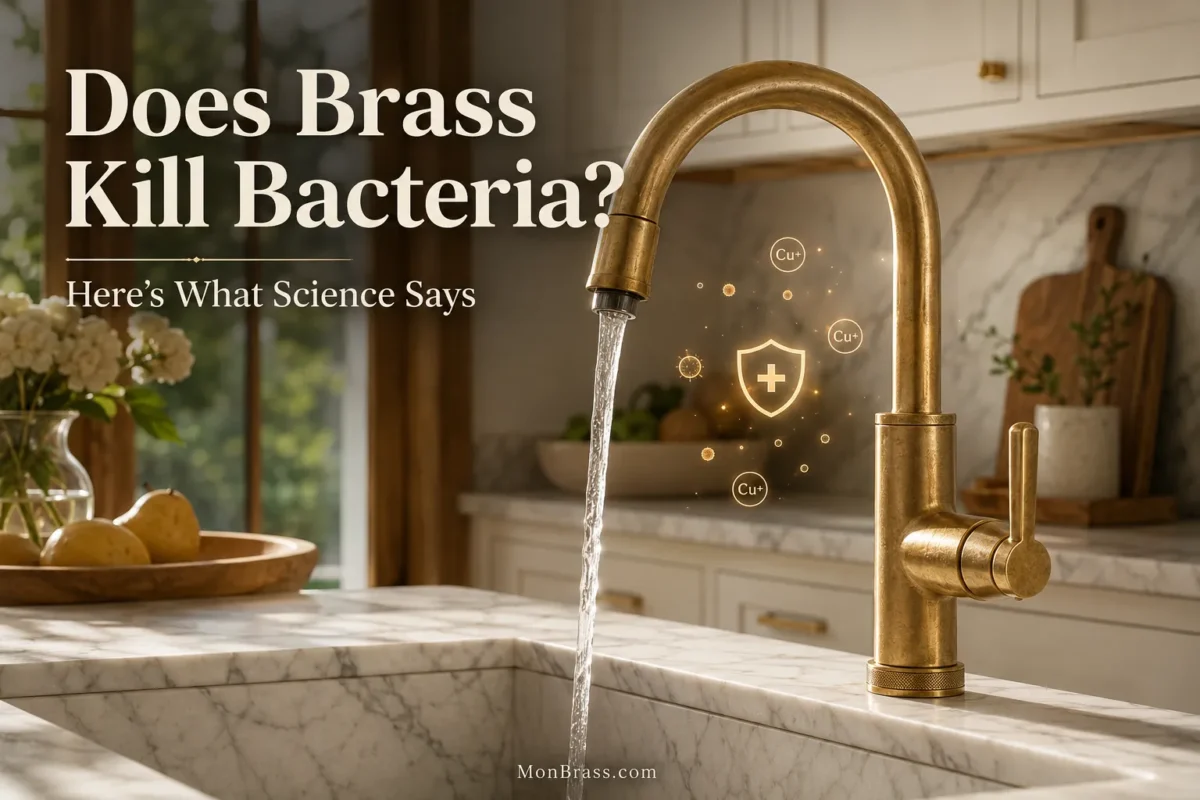
Does Brass Kill Bacteria? Here’s What Science Says
Jul
Brass has been used for centuries in everything from plumbing fixtures to door hardware, but its growing popularity has raised an interesting question: Does brass kill bacteria? If you’re choosing a brass faucet, kitchen hardware, or bathroom fixtures, you may have heard claims that brass is naturally antimicrobial. While there’s truth behind that idea, it’s important to understand what brass can and cannot do.
Brass does have natural antimicrobial properties because of its copper content, but that doesn’t mean it instantly disinfects surfaces or replaces regular cleaning. Knowing how brass works, how effective it is, and what factors influence its performance will help you make a more informed decision when selecting fixtures for your home.
Brass Can Kill Many Types of Bacteria
Brass belongs to a family of copper alloys, and copper has long been recognized for its antimicrobial properties. When bacteria come into contact with a brass surface, copper ions released from the metal interfere with the microorganisms’ normal cellular functions.
Over time, this process damages bacterial cells, making it difficult for them to survive.
Unlike coatings or chemical treatments that can wear away, these antimicrobial properties are part of the metal itself.
However, the process isn’t immediate, and it shouldn’t be viewed as a substitute for good hygiene or routine cleaning.
How Does Brass Kill Bacteria?
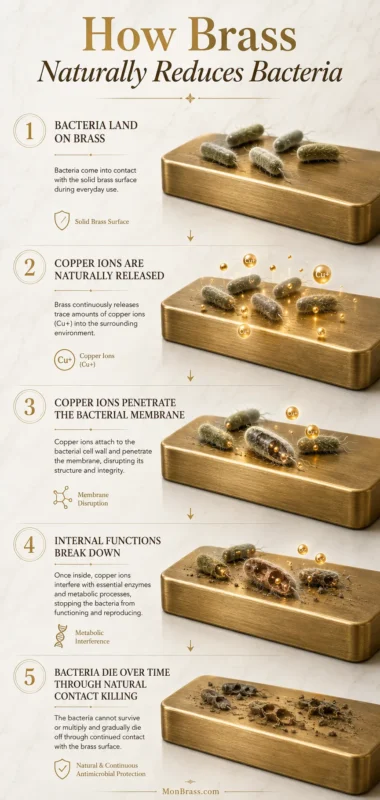
The antimicrobial action of brass occurs through several natural mechanisms.
When bacteria land on a brass surface:
- Copper ions are released from the alloy.
- These ions damage the bacteria’s outer membrane.
- Internal cell functions begin to break down.
- The bacteria lose the ability to reproduce.
- Eventually, the cells die.
Scientists often refer to this as contact killing, meaning microorganisms are damaged simply by remaining on the metal’s surface.
The exact speed depends on several factors, including the specific brass alloy, its copper content, environmental conditions, and the type of bacteria involved.
Does Unlacquered Brass Work Better Than Lacquered Brass?
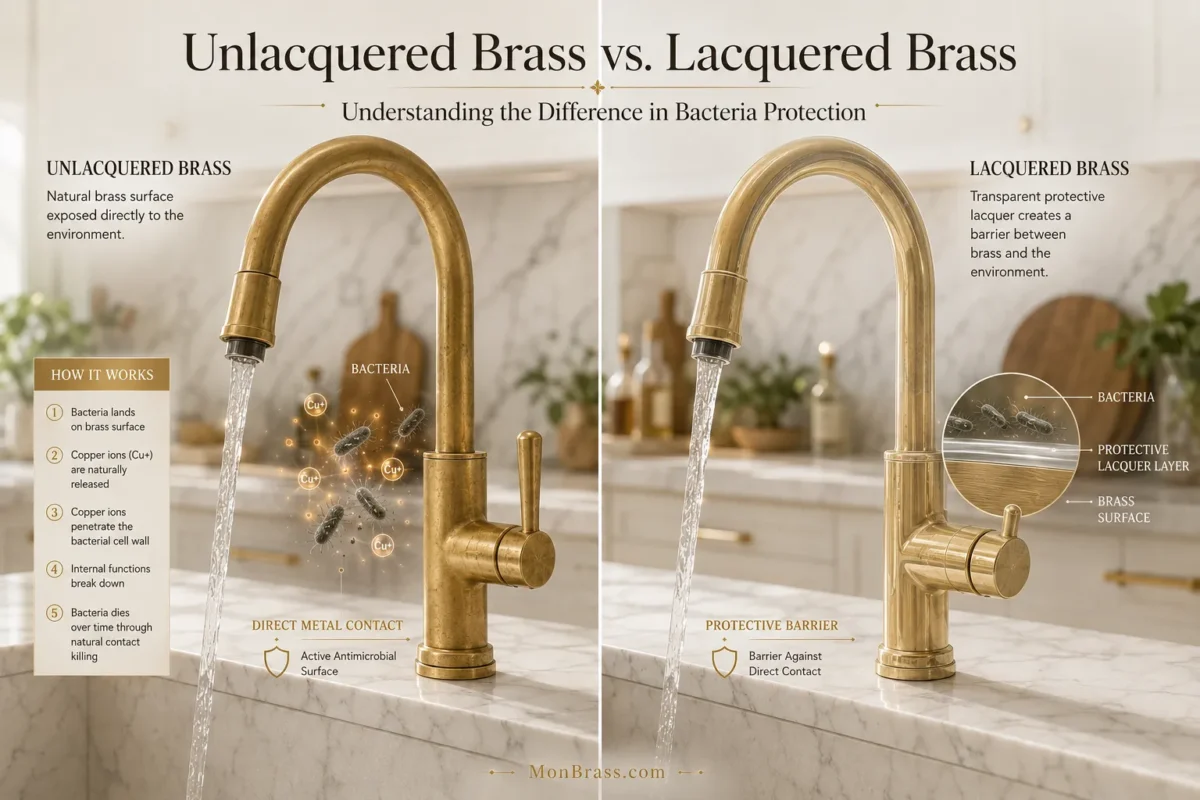
In many cases, yes.
With unlacquered brass, the metal is directly exposed to the environment. Since there is no clear protective coating covering the surface, copper ions can interact more freely with moisture and microorganisms.
A lacquered finish creates a barrier between the brass and the surrounding environment, which reduces direct contact with the metal.
Even so, choosing unlacquered brass is generally a design and maintenance decision first. Any antimicrobial benefit should be viewed as an added characteristic rather than the primary reason for selecting the finish.
Does Brass Kill Viruses Too?
Research has shown that copper-containing surfaces can also reduce the survival of certain viruses over time.
However, effectiveness varies depending on:
- The type of virus
- Environmental conditions
- Surface contamination
- Length of exposure
Because viruses behave differently than bacteria, it’s important not to assume brass provides complete protection.
Routine cleaning and proper hygiene remain essential regardless of the fixture material.
Does Patina Reduce Brass’s Antimicrobial Properties?
This is one of the most common questions homeowners ask after installing unlacquered brass.
As brass develops a natural patina, the surface changes over time.
Current research suggests copper alloys continue to retain antimicrobial activity, although performance can vary depending on the condition of the surface and other environmental factors.
From a practical standpoint, allowing unlacquered brass to age naturally does not eliminate its antimicrobial properties.
Where Brass Makes the Most Sense in a Home
Brass can be found throughout modern homes, but some locations benefit more than others.
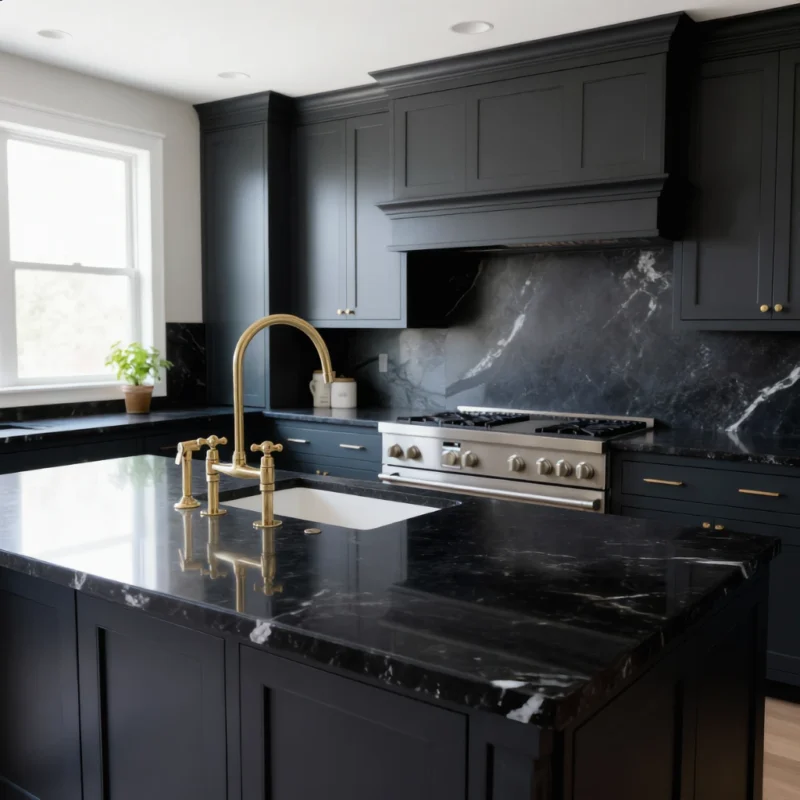
Kitchen Faucets
Kitchen faucets are touched dozens of times each day.
Because they’re frequently handled while preparing food, many homeowners appreciate the combination of durability, timeless appearance, and the natural properties of brass.
Bathroom Faucets
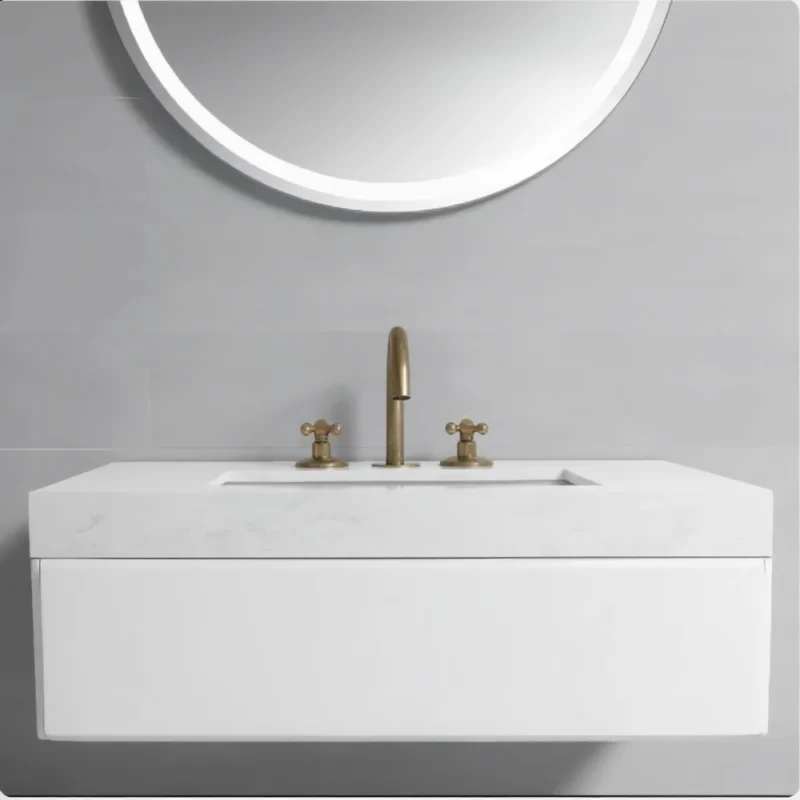
Bathroom faucet handles also receive frequent daily use, making brass a practical and attractive material for these fixtures.
Cabinet Hardware
Drawer pulls and cabinet knobs are among the most frequently touched surfaces in a home.
Choosing solid brass hardware can complement other brass fixtures while creating a cohesive design.
Door Handles
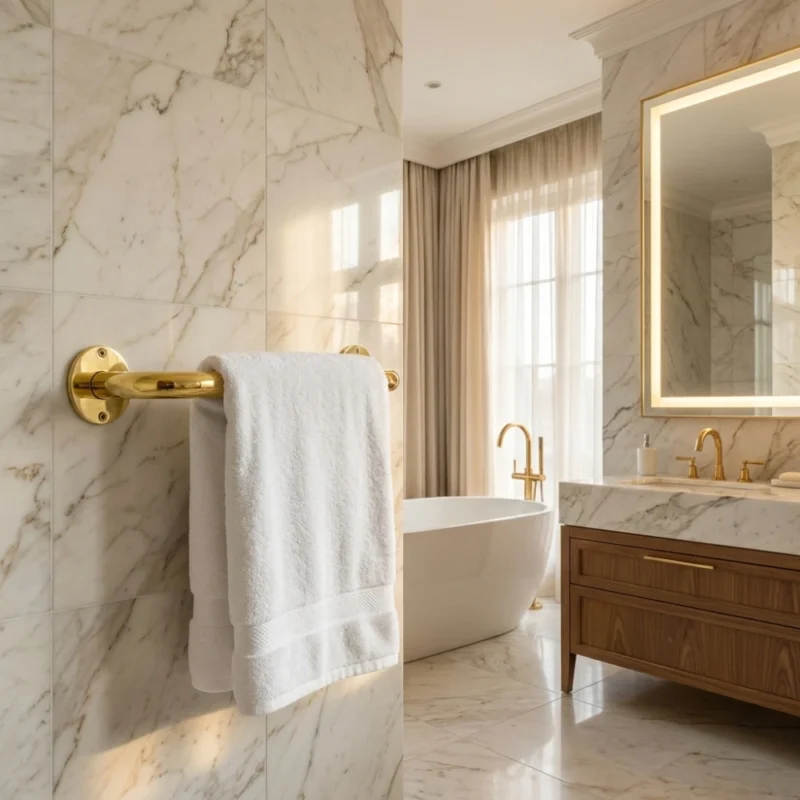
Brass door hardware has been widely used in hospitals, public buildings, and homes for many years because of its durability and ease of maintenance.
Things to Consider Before Choosing Brass
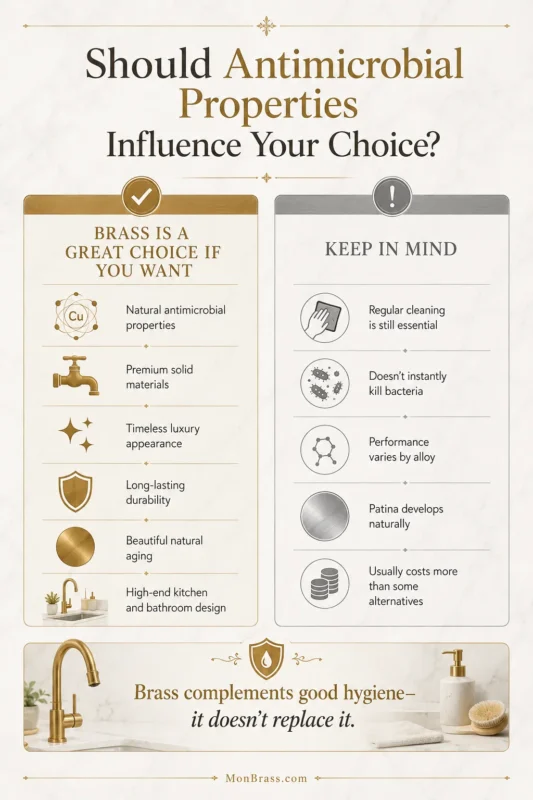
If antimicrobial properties are one of the reasons you’re considering brass, it’s worth looking at the bigger picture.
Advantages
- Naturally antimicrobial due to its copper content
- Durable material with a long service life
- Develops attractive character over time
- Available in traditional and contemporary designs
- Complements a wide variety of interior styles
Drawbacks
- Does not instantly eliminate bacteria
- Still requires regular cleaning
- Appearance may change over time depending on the finish
- Usually costs more than some alternative finishes
- Antimicrobial performance varies depending on the alloy
Maintenance Expectations
Routine cleaning remains important.
Most manufacturers recommend using:
- Mild dish soap
- Warm water
- A soft microfiber cloth
Avoid harsh chemicals and abrasive scrubbers, particularly on unlacquered brass finishes.
Brass vs. Stainless Steel: Which Is More Hygienic?
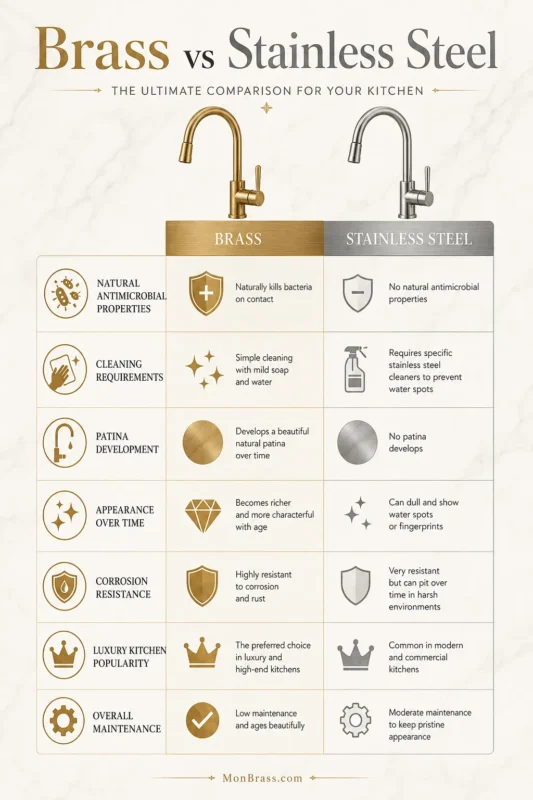
Both materials are commonly used in kitchens and bathrooms, but they work differently.
| Feature | Brass | Stainless Steel |
| Natural antimicrobial properties | Yes | No inherent antimicrobial properties |
| Requires regular cleaning | Yes | Yes |
| Develops patina | Yes (unlacquered brass) | No |
| Appearance changes over time | Yes | Usually remains consistent |
| Popular in luxury kitchens | Yes | Yes |
Stainless steel remains an excellent choice because it’s durable, easy to clean, and highly resistant to corrosion.
Brass offers the additional benefit of naturally reducing certain bacteria over time, but both materials should be cleaned regularly as part of normal household maintenance.
Real-World Examples
Family Kitchen
A busy kitchen faucet may be touched dozens of times throughout the day.
While brass contributes natural antimicrobial properties, regular wiping and cleaning remain the primary methods for maintaining a hygienic workspace.
Guest Bathroom
A guest bathroom typically experiences less traffic, so both stainless steel and brass perform well.
Many homeowners choose unlacquered brass primarily for its appearance, with antimicrobial properties serving as an additional benefit.
Luxury Remodel
Interior designers often specify unlacquered brass because of its timeless look and durability.
Any antimicrobial benefits are generally viewed as a secondary advantage.
Homes with Hard Water
Hard water can leave mineral deposits on both brass and stainless steel.
Cleaning these deposits helps preserve appearance but doesn’t significantly change the underlying material properties.
Common Misconceptions
“Brass Never Needs Cleaning”
False.
Even though brass has natural antimicrobial properties, dirt, soap residue, fingerprints, and mineral deposits should still be cleaned regularly.
“Brass Instantly Kills Every Germ”
Not true.
The antimicrobial process takes time and varies depending on the microorganism and environmental conditions.
“Patina Means the Brass Is Dirty”
Patina is a natural surface change.
It isn’t a sign of poor hygiene or material failure.
“All Brass Fixtures Perform the Same”
Different brass alloys contain varying amounts of copper.
Manufacturing methods and protective finishes can also influence how the surface behaves.
“Brass Is Better Than Cleaning”
No fixture material replaces proper household cleaning practices.
Brass should be viewed as one helpful characteristic within an overall maintenance routine.
Frequently Asked Questions
Does solid brass kill bacteria better than brass-plated fixtures?
Solid brass generally contains more brass throughout the entire fixture, while plated products have only a thin decorative layer. Material composition varies by manufacturer, so antimicrobial performance may differ.
Does unlacquered brass lose its antimicrobial properties as it ages?
No. Although the surface develops a natural patina over time, brass continues to retain antimicrobial properties, even if effectiveness may vary under different conditions.
Is brass safe for kitchen faucets?
Yes. Quality brass faucets manufactured for potable water applications are widely used in residential kitchens and are designed for everyday use.
Can brass replace disinfectants?
No. Brass complements normal hygiene practices but doesn’t replace regular cleaning or disinfecting when needed.
Is brass worth choosing for health reasons alone?
Most homeowners choose brass because of its appearance, durability, and longevity.
Its natural antimicrobial properties are best viewed as an additional benefit rather than the primary reason to select the material.
Conclusion
Brass does have genuine antimicrobial properties thanks to the copper it contains. Research has shown that many types of bacteria survive for shorter periods on brass than on many other common surfaces. Even so, brass isn’t self-cleaning and should never replace good household hygiene.
For homeowners planning a kitchen or bathroom renovation, brass offers an appealing combination of durability, timeless design, and naturally antimicrobial properties. When paired with regular cleaning and proper maintenance, it remains a practical material that performs well in everyday use.
