





Uncategorized
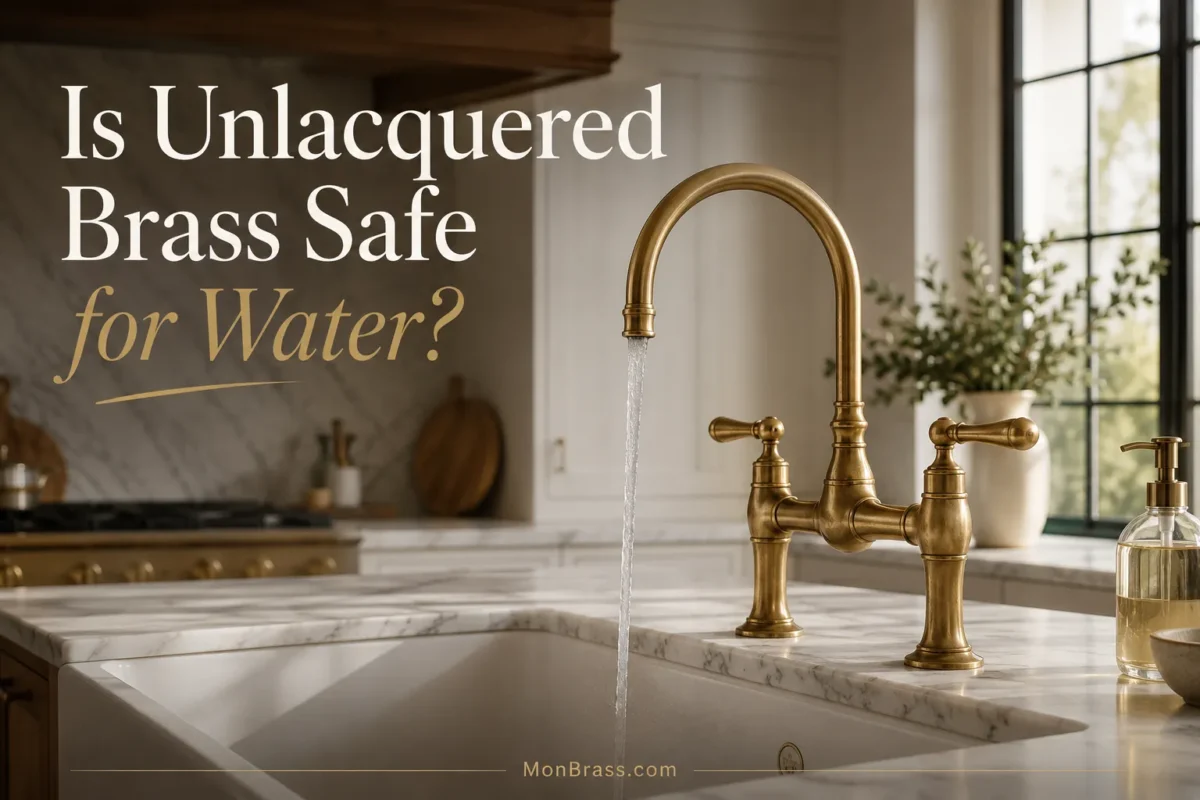
Is Unlacquered Brass Safe for Water? What Homeowners Should Know Before Choosing It
Jul
Unlacquered brass has become a favorite finish for luxury kitchens and bathrooms, but one question comes up repeatedly during remodeling projects: Is unlacquered brass safe for water? Since these fixtures are constantly exposed to moisture, many homeowners wonder whether the finish can handle everyday use, affect water quality, or develop problems over time.
The good news is that high-quality unlacquered brass fixtures are designed for regular contact with water. They’re commonly used for faucets, shower systems, pot fillers, and other plumbing fixtures in residential homes. The key is understanding how unlacquered brass behaves, what causes its appearance to change, and what you should realistically expect throughout its lifespan.
Unlacquered Brass Is Safe for Everyday Water Use
Unlacquered brass is intended to be used in wet environments. Unlike decorative hardware that may only be touched occasionally, brass faucets and shower fixtures are engineered to handle daily exposure to running water.
The term unlacquered simply means the manufacturer has not applied a clear protective coating over the brass. The absence of lacquer doesn’t make the fixture less suitable for water. Instead, it allows the brass to react naturally with air, moisture, and everyday use, creating the distinctive patina that many homeowners appreciate.
As long as the fixture is manufactured for plumbing applications and meets applicable quality standards, normal water exposure is exactly what it was designed for.
Why Water Doesn’t Damage Unlacquered Brass
One common misconception is that because unlacquered brass changes color, water must be damaging the metal.
That’s not what’s happening.
Brass has long been used in plumbing because it stands up well to regular water exposure. While unlacquered brass gradually develops a natural patina over time, these cosmetic changes are a normal characteristic of the finish rather than a sign that water is damaging the fixture.
Does Water Affect the Appearance?
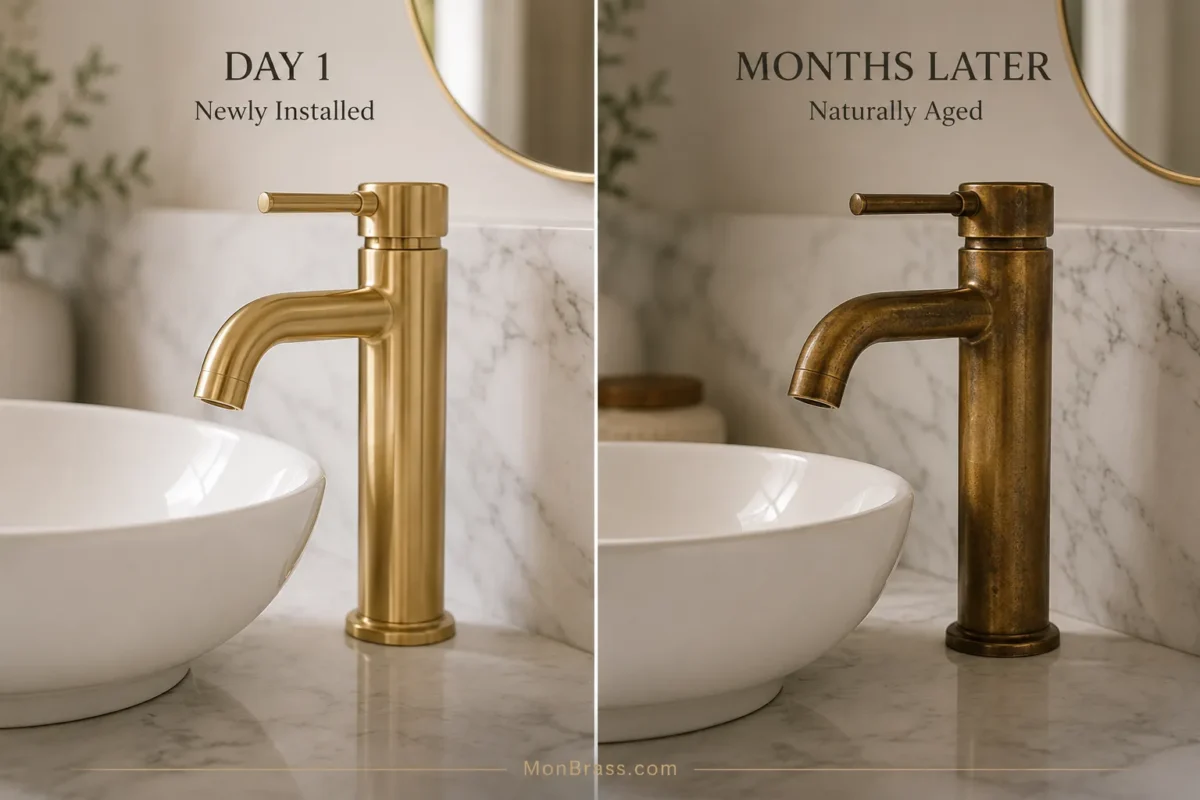
Yes. Regular exposure to water can influence the appearance of unlacquered brass over time. Depending on your home’s water quality and daily use, you may notice subtle darkening, water spots, or natural color variation as the finish gradually develops its characteristic patina.
Does Unlacquered Brass Affect Drinking Water?
This is an important distinction.
The finish on the outside of a faucet is separate from the internal components that carry water.
Modern, high-quality plumbing fixtures intended for drinking water are manufactured to comply with applicable regulations regarding lead content and potable water use. Reputable manufacturers use brass alloys and internal construction that meet current plumbing standards.
When shopping for kitchen faucets or bar faucets, look for products that are specifically designed for potable water applications and certified according to applicable plumbing requirements in your region.
If you’re purchasing from an established manufacturer, the unlacquered finish itself isn’t what determines water safety.
What About Hard Water?
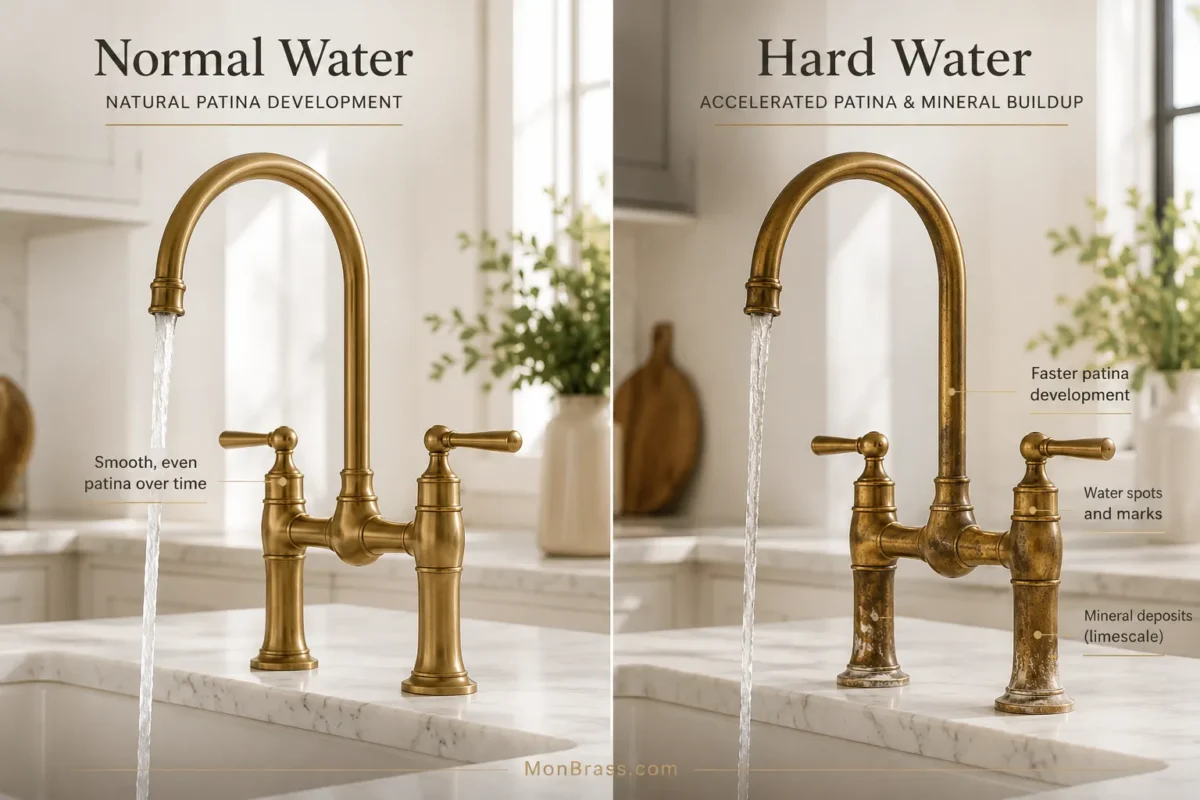
Hard water doesn’t usually harm unlacquered brass, but it does affect how the finish looks.
Homes with high mineral content often experience:
- White mineral deposits
- Water spotting
- Faster patina development
- More frequent cleaning needs
From a maintenance standpoint, these are appearance issues rather than structural problems.
Regularly wiping the fixture dry after use can significantly reduce mineral buildup while allowing the brass to continue aging naturally.
Does Unlacquered Brass Corrode?
Many people confuse patina with corrosion.
While brass does oxidize over time, that’s different from the destructive rust commonly associated with iron or steel.
Brass does not rust because it contains no iron.
Instead, exposure to air and moisture creates a stable surface layer that gives unlacquered brass its distinctive character.
In normal residential environments, this process is expected and doesn’t indicate that the fixture is failing.
Things to Consider Before Choosing Unlacquered Brass
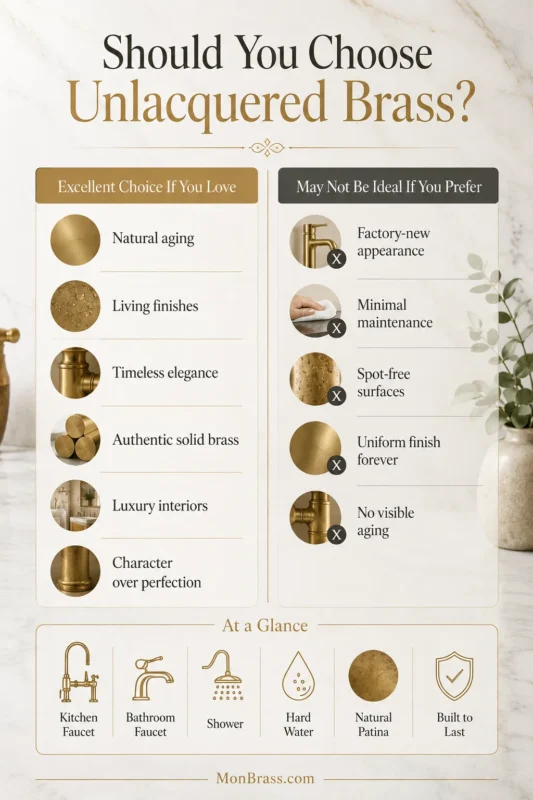
Before selecting unlacquered brass for a kitchen or bathroom, consider how you feel about a finish that changes over time.
Advantages
- Safe for everyday water exposure
- Develops a unique, living finish
- No lacquer coating that can peel or chip
- Timeless appearance that suits many design styles
- Can often be restored through polishing if desired
- Made from durable solid brass in many premium fixtures
Drawbacks
- Water spots are more visible than on brushed finishes
- Patina develops unevenly at first
- Requires gentle cleaning
- Appearance changes continuously
- Not ideal if you prefer a permanently polished look
Budget Considerations
Quality unlacquered brass fixtures often cost more than chrome or brass-plated alternatives.
However, homeowners who appreciate authentic materials often consider the long lifespan and natural aging process worth the additional investment.
Best Design Styles
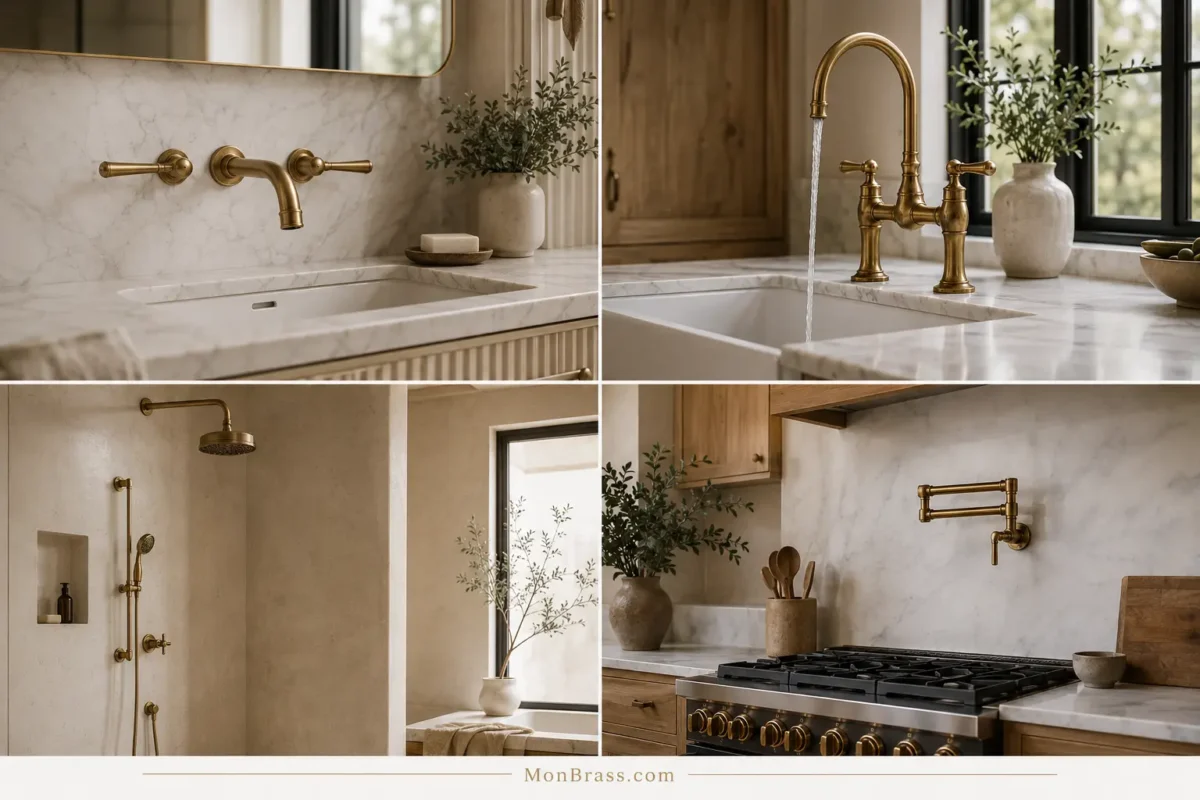
Unlacquered brass pairs especially well with:
- Traditional bathrooms
- Transitional interiors
- Farmhouse kitchens
- Modern organic spaces
- European-inspired designs
- Historic home renovations
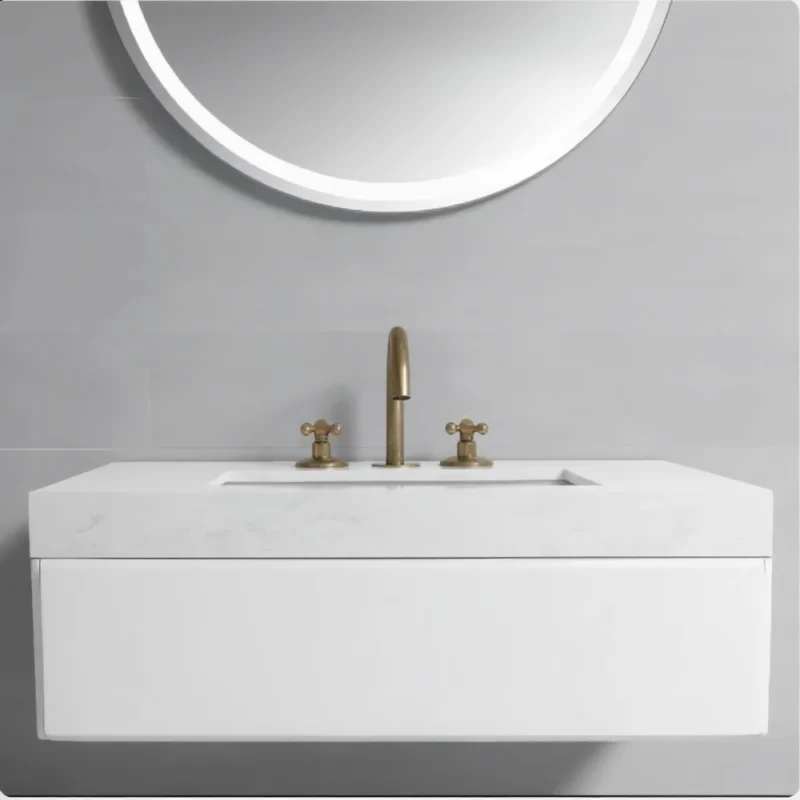
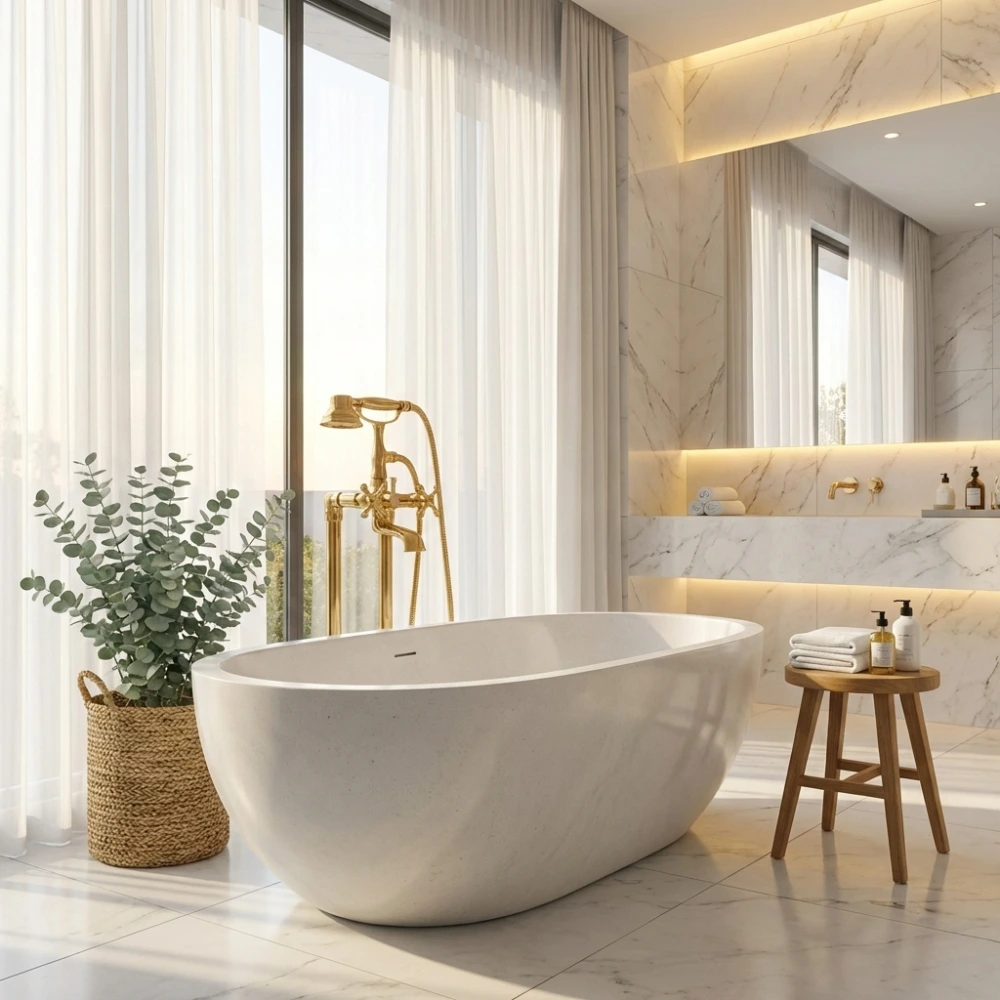
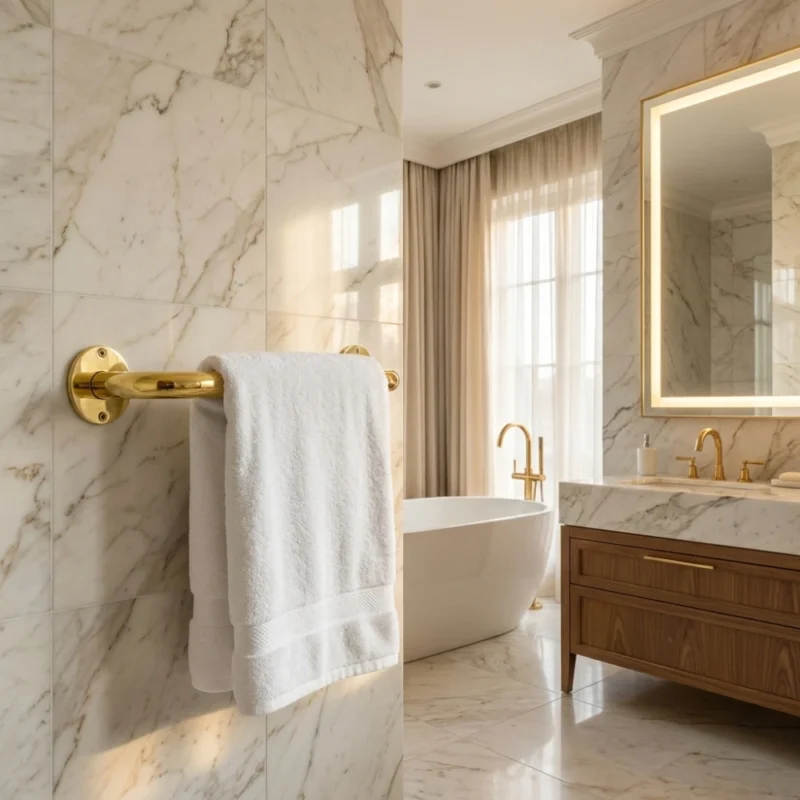
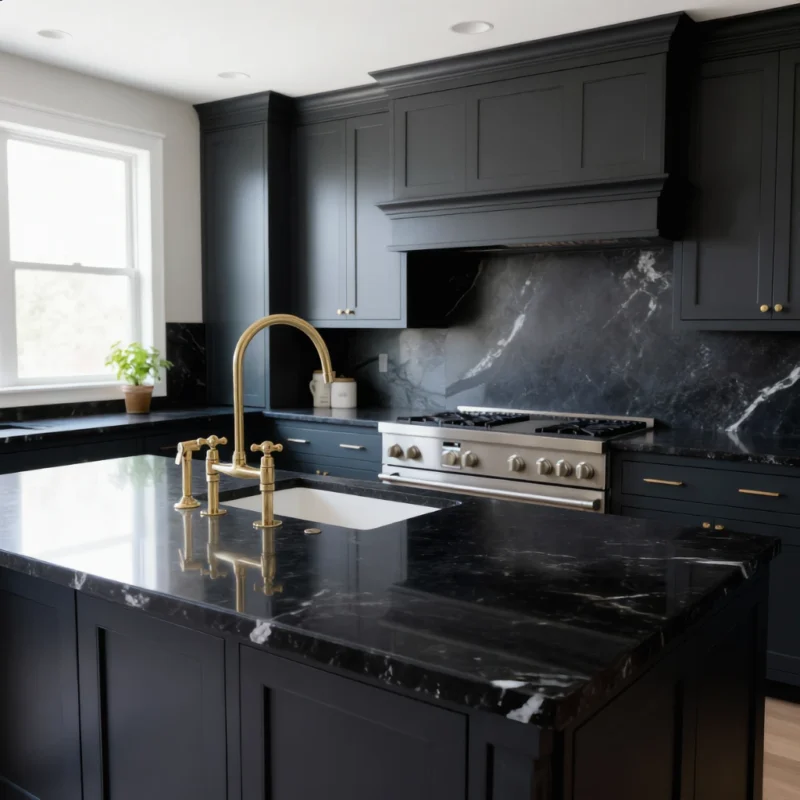
Its warmth also balances natural stone, marble, wood cabinetry, and white finishes beautifully.
Real-World Scenarios
Busy Family Kitchen
A kitchen faucet used dozens of times each day will develop patina faster than one in a rarely used guest kitchenette.
You’ll likely notice darker areas around the handle and base within the first year.
Guest Bathroom
Because usage is lighter, fixtures often remain brighter for much longer.
Patina still develops, but the process is slower and more gradual.
Homes with Hard Water
Mineral spots may appear after water dries on the surface.
Many homeowners simply wipe the fixture with a soft cloth after use to minimize buildup without interfering with the natural aging process.
Luxury Bathroom Remodel
Designers frequently specify unlacquered brass because it gains character instead of looking worn.
Rather than fighting age, the finish embraces it, creating a richer appearance over time.
How to Keep Unlacquered Brass Looking Its Best Around Water
Routine care is surprisingly simple.
Most manufacturers recommend:
- Wipe excess water away with a soft cloth when convenient.
- Clean with mild dish soap and warm water.
- Avoid abrasive scrubbers.
- Avoid bleach, ammonia, and acidic cleaners.
- Allow the natural patina to develop unless you prefer periodic polishing.
Routine care is usually enough for most homeowners, since the finish is intended to develop naturally over time.
The finish is designed to evolve, not remain frozen in time.
Common Mistakes and Misconceptions
Assuming Water Will Ruin the Finish
Water is part of the normal aging process.
It changes the appearance but doesn’t usually damage a properly manufactured brass fixture.
Thinking Patina Means the Fixture Is Wearing Out
Darkening is expected.
It’s one of the reasons people intentionally choose unlacquered brass over lacquered alternatives.
Using Harsh Cleaners
Aggressive chemicals may strip desirable patina or create uneven discoloration.
Gentle cleaning is almost always the better approach.
Buying Decorative Brass Instead of Plumbing Fixtures
Not every brass product is designed for constant water exposure.
Cabinet hardware and decorative accessories aren’t substitutes for plumbing fixtures.
Always purchase faucets and shower systems specifically manufactured for water use.
Ignoring Manufacturer Certifications
If you’re installing a kitchen faucet that supplies drinking water, choose products that meet recognized plumbing and drinking water standards.
Buying from reputable manufacturers provides additional confidence in both performance and safety.
Frequently Asked Questions
Can unlacquered brass be used in showers?
Yes. Unlacquered brass shower systems are designed for continuous exposure to water and humidity. Expect the finish to develop patina more quickly than decorative hardware.
Is it safe for kitchen faucets?
Yes, provided the faucet is manufactured for potable water use and complies with applicable plumbing standards.
Will water make unlacquered brass turn green?
Under normal indoor conditions, most fixtures develop warm brown and amber patina. Green oxidation is uncommon inside residential homes and typically occurs only under specific environmental conditions or long-term neglect.
Does unlacquered brass require special cleaners?
No. Mild soap, warm water, and a soft microfiber cloth are usually all that’s needed for routine maintenance.
Should I polish unlacquered brass?
Only if you want to restore a brighter appearance. Polishing removes the existing patina, after which the natural aging process begins again.
Conclusion
Unlacquered brass is designed to work in environments where water is part of everyday life. Whether it’s installed in a kitchen, bathroom, or shower, regular exposure to water doesn’t make the finish unsafe or unsuitable. Instead, moisture contributes to the natural patina that gives each fixture its distinctive appearance.
If you’re looking for a finish that develops character rather than trying to stay factory-new forever, unlacquered brass offers durability, timeless appeal, and reliable performance for long-term use. Understanding how it responds to water helps set realistic expectations and makes choosing the right fixture much easier.
