





Uncategorized
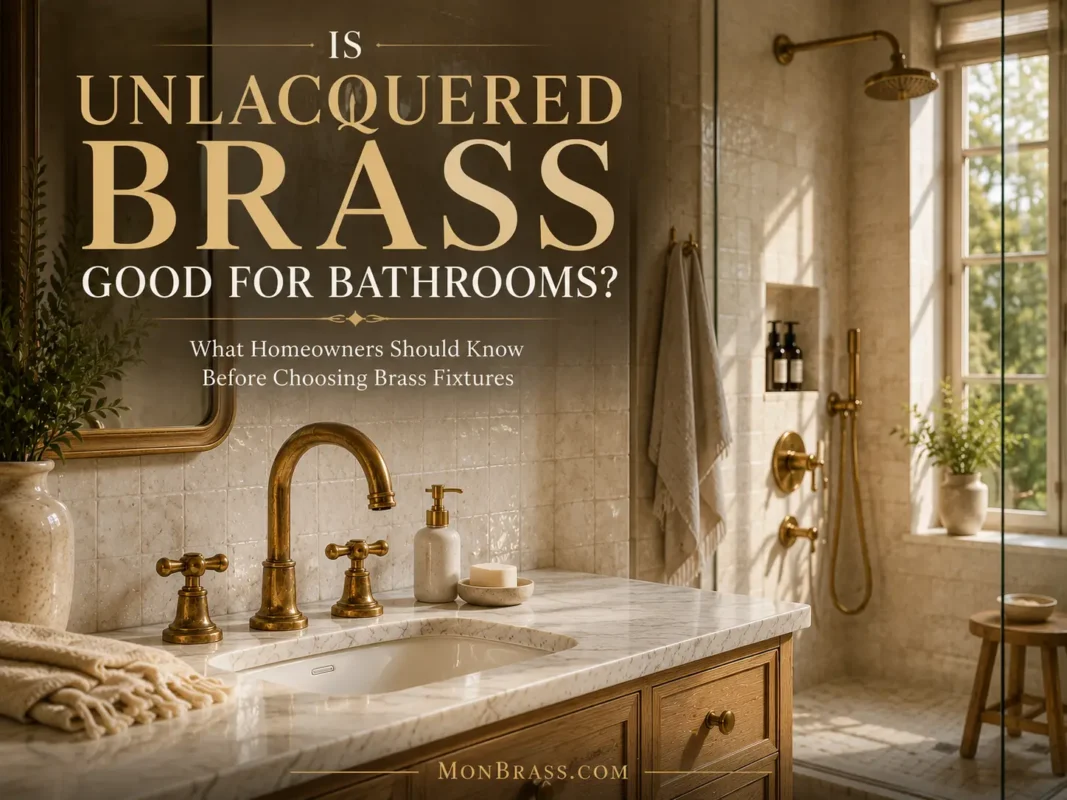
Is Unlacquered Brass Good for Bathrooms?
Jun
Bathrooms are full of moisture, water spots, soap residue, and constant daily use. That makes many homeowners wonder whether unlacquered brass is actually a smart choice or just a beautiful material that looks good in photos.
The short answer is yes—unlacquered brass is an excellent material for bathrooms when you understand how it behaves over time. Unlike plated finishes that try to stay exactly the same year after year, unlacquered brass develops a living surface that changes with use. Many homeowners and designers consider that evolution one of its biggest advantages.
Still, it isn’t the right choice for everyone. Some people love the character that develops naturally. Others prefer fixtures that look identical every day.
Before investing in brass faucets, shower systems, towel racks, or bath accessories, it’s worth understanding what actually happens when unlacquered brass meets a bathroom environment.
Why Unlacquered Brass Works So Well in Bathrooms
Bathrooms are one of the most popular places to use unlacquered brass because moisture and daily handling help create a rich, natural patina.
Unlike lacquered finishes, which are coated with a protective layer, unlacquered brass is exposed directly to the environment. As oxygen, humidity, skin oils, soap residue, and water interact with the metal, the surface slowly darkens and develops depth.
This process is completely natural.
A new brass fixture may appear bright and golden at first. Over time, it gradually develops warmer tones and subtle variation that many homeowners find appealing.
The Biggest Advantage: Patina Tells a Story
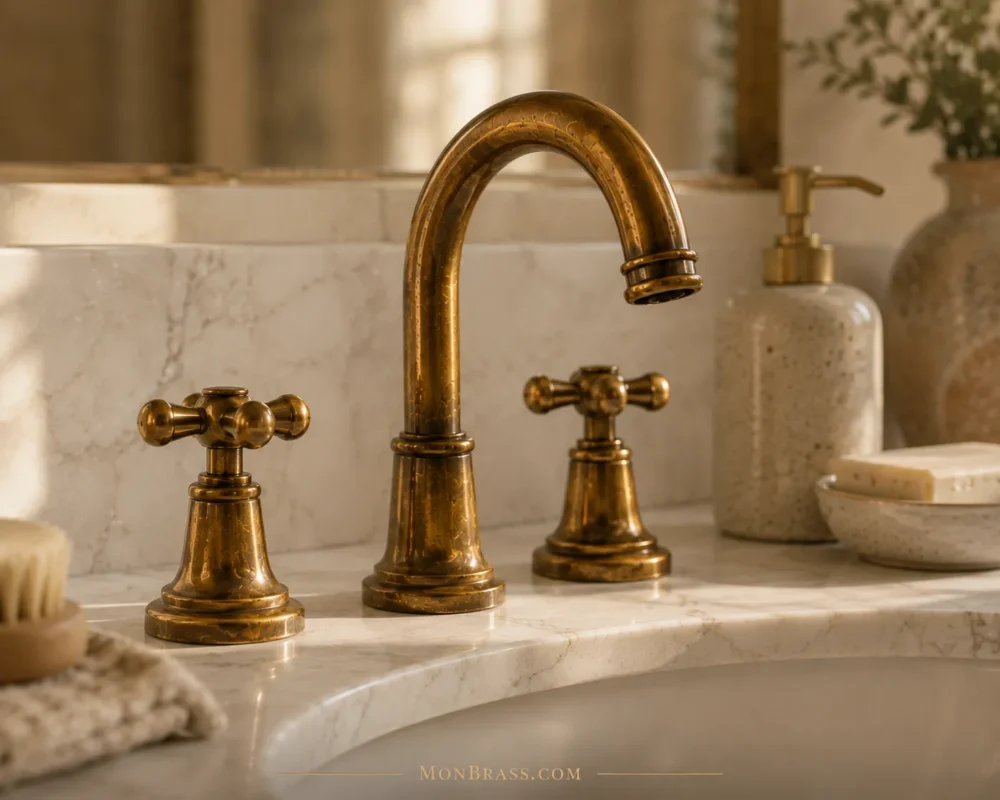
One reason many homeowners choose unlacquered brass is that no two bathrooms age exactly the same way.
Areas that receive frequent contact often age differently from areas that are rarely touched. This creates subtle variation that reflects everyday use.
For homeowners who appreciate natural materials such as marble, wood, limestone, and handcrafted details, patina often feels like a feature rather than a flaw.
Understanding how brass ages helps set realistic expectations before installation.
How Water Affects Unlacquered Brass
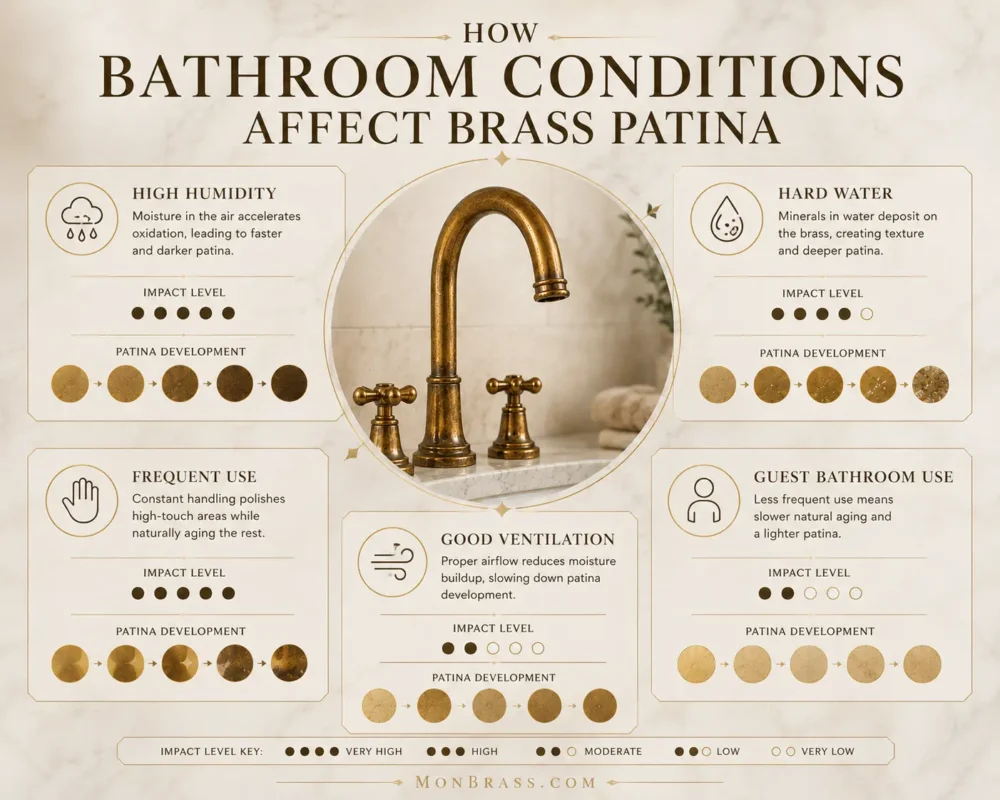
Water exposure is one of the biggest factors influencing how brass ages in a bathroom.
The amount of moisture, mineral content, and frequency of use all affect patina development.
For example:
| Bathroom Condition | Effect on Brass |
| High humidity | Faster patina development |
| Hard water | More mineral spotting |
| Frequent use | More varied aging patterns |
| Good ventilation | More even aging |
| Guest bathrooms | Slower patina formation |
A master bathroom used several times a day will usually develop patina faster than a guest bathroom that sees occasional use.
Water spots may appear during the aging process. This is normal and often blends into the developing finish over time.
Homeowners who understand how water affects brass tend to be happier with the material because they expect gradual changes rather than permanent perfection.
Does Unlacquered Brass Require a Lot of Maintenance?
This is one of the biggest misconceptions.
Many people assume unlacquered brass requires constant polishing and upkeep. In reality, the answer depends entirely on the look you want.
If You Want Patina
Maintenance is extremely simple.
Most homeowners only need to wipe fixtures occasionally with a soft cloth and mild soap when necessary.
The metal is allowed to age naturally, which means there is no need to fight the patina process.
If You Want the Original Bright Finish
Maintenance becomes more demanding.
You will need periodic polishing to remove oxidation and restore the brighter golden appearance.
Most homeowners who choose unlacquered brass eventually embrace the patina because maintaining the original factory-fresh look requires ongoing effort.
Potential Drawbacks to Consider
Unlacquered brass offers many benefits, but it is important to understand the trade-offs before making a purchase.
The Appearance Will Change
This is the most significant consideration.
If you want your faucet or shower fixture to look exactly the same five years from now, unlacquered brass may not be the best fit.
The finish is designed to evolve.
Patina Can Be Uneven at First
Early patina development sometimes creates temporary inconsistencies.
Some areas may darken faster than others. This is especially common around handles, water outlets, and frequently touched surfaces.
Fortunately, the finish usually becomes more balanced as it continues to age.
Water Spots May Be Visible
Especially in areas with hard water, spotting may appear during the aging process.
These marks often become less noticeable as the brass develops deeper tones.
Which Bathroom Styles Work Best With Unlacquered Brass?
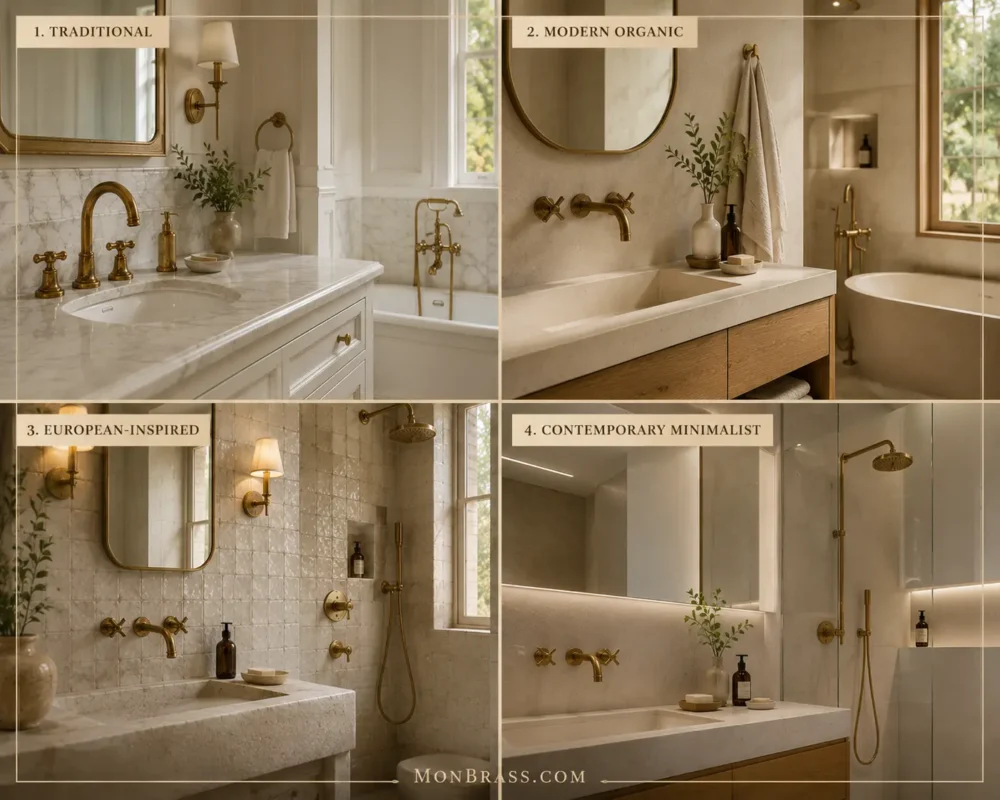
One reason unlacquered brass remains popular is its versatility.
It works comfortably in both traditional and contemporary bathrooms and pairs well with a wide variety of materials, including marble, tile, wood, and natural stone.
The specific design approach matters less than whether you appreciate a finish that develops character over time.
Choosing the Right Brass Fixtures
Not every bathroom renovation requires a complete set of brass fixtures.
Many homeowners start with one focal piece and expand later.
Popular options include:
- Wall-mounted faucets
- Widespread faucets
- Shower systems
- Tub fillers
- Towel racks
- Paper roll holders
- Cabinet hardware
- Robe hooks
When selecting fixtures, consistency is important. Using matching finishes across faucets, bath accessories, and hardware typically creates a more cohesive result.
Is Unlacquered Brass Durable Enough for Daily Use?
Absolutely.
Brass has been used in plumbing and architectural applications for generations.
The durability of unlacquered brass comes from the material itself rather than a surface coating.
Unlike some plated finishes that can chip, peel, or wear away over time, solid brass continues aging while maintaining its structural integrity.
In busy family bathrooms, this can be a major advantage.
The finish may change, but the underlying material remains strong and reliable.
Who Should Choose Unlacquered Brass?
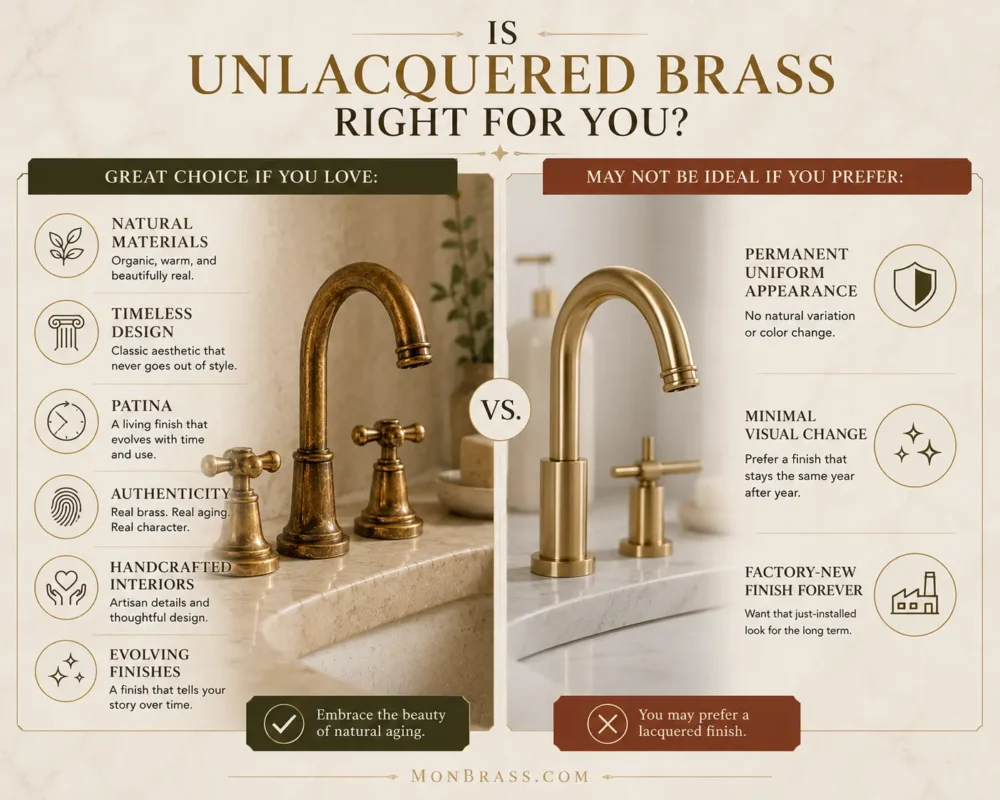
Unlacquered brass is often ideal for homeowners who:
- Appreciate natural materials
- Enjoy character and authenticity
- Prefer timeless design over trends
- Like finishes that evolve over time
- Want a luxury custom-home appearance
It may not be the best choice for homeowners who:
- Want a perfectly uniform finish forever
- Dislike visible aging
- Prefer minimal visual change
- Expect a factory-new appearance indefinitely
Understanding which category you fall into can prevent disappointment later.
Bathroom Renovation Planning Tips
If you’re incorporating unlacquered brass into a renovation, think about how the finish will work with the other materials in the room.
Consider how brass will interact with:
- Tile selections
- Stone surfaces
- Vanity finishes
- Lighting
- Mirrors
- Hardware
- Shower enclosures
Many designers recommend choosing your primary metal finish early in the renovation process so other materials can be selected around it.
Frequently Asked Questions
Does unlacquered brass turn green in bathrooms?
Under normal indoor bathroom conditions, brass typically develops warm brown, bronze, and honey-colored tones. Green oxidation is uncommon indoors and is more frequently associated with prolonged outdoor exposure.
Is unlacquered brass safe to use in showers?
Yes. Unlacquered brass is commonly used for shower systems, shower heads, valves, and related fixtures. Moisture simply contributes to the natural patina process.
Can I remove patina if I change my mind later?
In most cases, yes. Brass can usually be polished to restore a brighter appearance, although the natural aging process will begin again afterward.
Does hard water damage unlacquered brass?
Hard water typically does not damage solid brass. However, it can create mineral deposits and water spots that influence the appearance of the finish.
Will all brass fixtures age the same way?
No. Usage patterns, humidity levels, water quality, ventilation, and cleaning habits all affect how individual fixtures develop patina.
Is unlacquered brass more expensive than other finishes?
Pricing varies by manufacturer and construction quality. High-quality solid brass fixtures often cost more upfront, but many homeowners consider the longevity and timeless appearance worth the investment.
Conclusion
Choosing unlacquered brass is less about preserving a perfect finish and more about embracing a material that becomes richer with time. Bathrooms are actually one of the best environments for this process because daily use encourages the warm, layered character that makes brass so appealing.
For homeowners who appreciate authenticity, craftsmanship, and timeless design, few finishes offer the same combination of durability and personality. The result is a bathroom that feels increasingly unique as the years pass rather than one that simply gets older.
