





Uncategorized
Best Brass Cleaners for Unlacquered Brass: What to Use and What to Avoid
Jun
Unlacquered brass is loved for one reason above all others: it changes over time. Instead of keeping a factory-fresh appearance, it gradually develops a rich patina that gives kitchens and bathrooms warmth, depth, and character. That natural aging process is exactly why choosing the best brass cleaners for unlacquered brass requires a different approach than cleaning lacquered finishes or polished metals.
Many homeowners worry they’ll accidentally strip away the finish they’re trying to preserve. Others assume every brass polish is safe, only to discover that aggressive cleaners can remove months—or even years—of beautiful patina in just a few minutes. Knowing which products to use, when to use them, and when to leave the brass alone can make all the difference.
Why Unlacquered Brass Requires a Different Type of Cleaner
Unlike lacquered brass, unlacquered brass has no protective coating separating the metal from air, moisture, oils, and everyday use. Every fingerprint, splash of water, and exposure to oxygen contributes to the aging process.
From a maintenance standpoint, this means you’re not cleaning a protective finish—you’re cleaning the actual brass surface.
Because of that, the ideal cleaner depends on your goal:
- Preserve existing patina
- Remove dirt and mineral buildup
- Restore brighter golden tones
- Eliminate stubborn tarnish or oxidation
One product rarely excels at all four.
Homeowners often assume brass should always look shiny. In reality, many designers intentionally choose unlacquered brass because they appreciate its evolving appearance rather than a permanently polished finish.
What Makes a Good Brass Cleaner for Unlacquered Brass?
The best cleaner should remove contaminants without causing unnecessary damage to the metal.
Look for products that are:
- Specifically formulated for solid brass
- Non-abrasive
- Free of harsh scouring particles
- Easy to rinse completely
- Suitable for occasional rather than daily polishing
A quality cleaner should remove dirt, soap residue, fingerprints, and light oxidation while allowing you to control how much patina remains.
Avoid products that advertise heavy-duty metal restoration unless your goal is to remove years of oxidation.
The Best Types of Brass Cleaners
Mild Dish Soap and Warm Water
Best for: Routine cleaning
For most homeowners, mild dish soap remains the safest cleaner for unlacquered brass. It removes everyday dirt, oils, soap residue, and light mineral buildup without aggressively affecting the naturally developing patina.
Pros
- Safe for frequent use
- Preserves natural patina
- Inexpensive
- Won’t aggressively polish the metal
Cons
- Doesn’t remove tarnish
- Won’t restore bright brass
Specialty Brass Cleaners
Best for: Controlled polishing
Several manufacturers produce cleaners specifically designed for brass rather than general metal polish.
These products typically balance cleaning power with gentler polishing action.
They’re useful when fixtures begin looking uneven from mineral deposits or light oxidation but don’t require complete restoration.
Use sparingly rather than as part of weekly maintenance.
Brass Polishes
Best for: Restoring shine
Polishes are different from cleaners.
While cleaners primarily remove dirt, brass polish removes oxidation from the surface itself.
Over time, repeated polishing removes some of the naturally developed patina.
If your design goal is an antique or aged appearance, frequent polishing works against that objective.
Homemade Cleaning Solutions
Many homeowners prefer DIY cleaners because they’re inexpensive and readily available.
Popular options include:
- Lemon juice and baking soda
- Flour, salt, and vinegar paste
- Diluted white vinegar
These mixtures can be effective for light tarnish, but they should be viewed as occasional restoration options rather than everyday cleaners. Because acidic ingredients can brighten brass more than intended, they’re best used selectively.
Brass Cleaners Compared
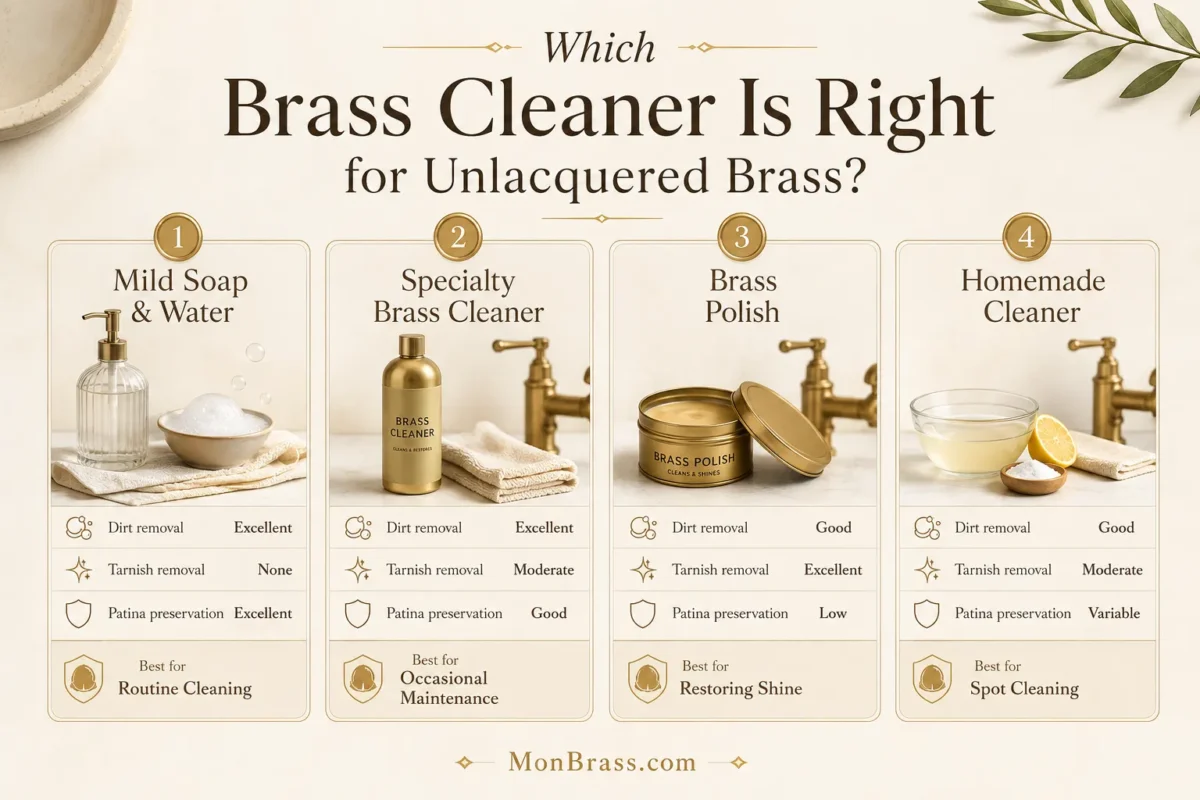
| Cleaner Type | Removes Dirt | Removes Tarnish | Preserves Patina | Best For |
| Mild soap and water | Excellent | No | Excellent | Routine cleaning |
| Specialty brass cleaner | Excellent | Moderate | Good | Occasional maintenance |
| Brass polish | Good | Excellent | Limited | Restoring shine |
| Homemade cleaner | Good | Moderate | Varies | Spot cleaning |
Cleaners and Products to Avoid
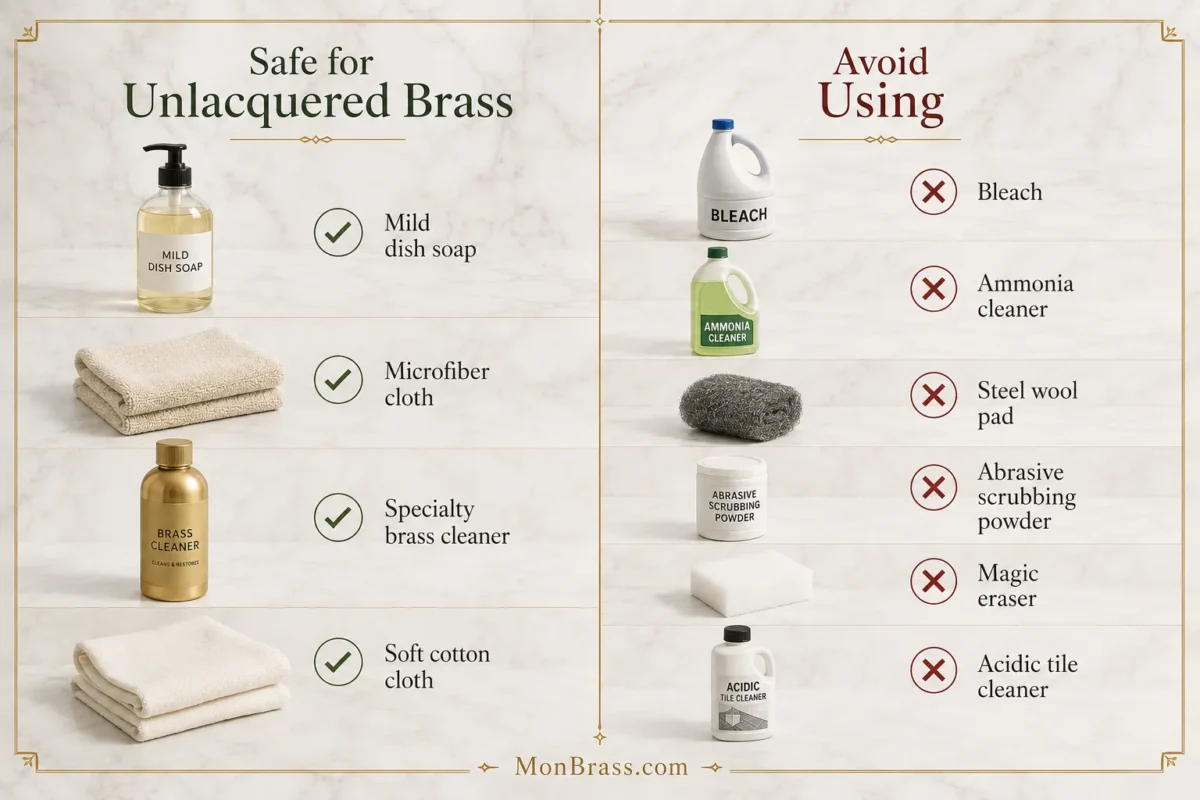
Not every household cleaner is safe for unlacquered brass.
Avoid using:
- Bleach
- Ammonia-based cleaners
- Chlorine products
- Abrasive scrubbing powders
- Steel wool
- Magic erasers on decorative finishes
- Highly acidic toilet or tile cleaners
These products may scratch the brass, create uneven discoloration, or remove desirable patina far faster than intended.
One thing homeowners often notice after using an aggressive cleaner is that the fixture becomes patchy rather than uniformly bright. Once that happens, the brass usually needs time to age naturally again.
Things to Consider Before Choosing a Brass Cleaner
Your Desired Appearance
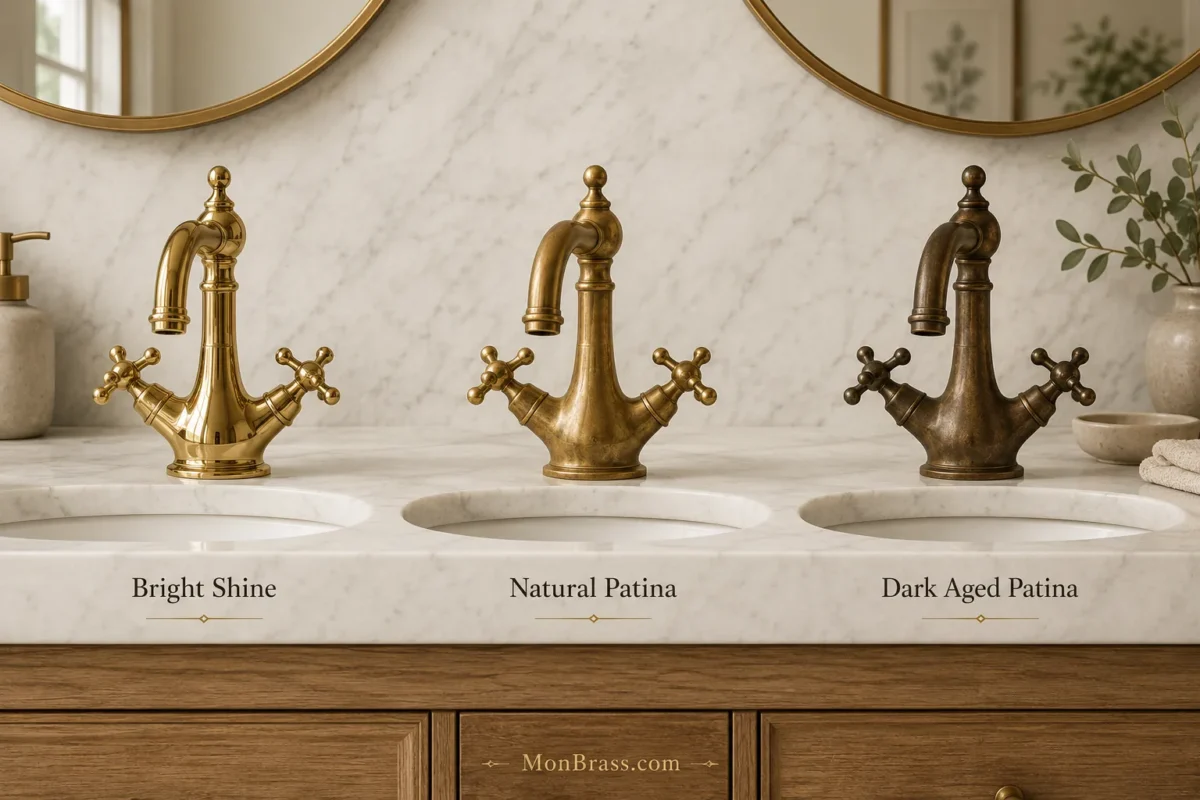
Ask yourself whether you want:
- Bright golden brass
- Soft honey-colored brass
- Dark antique patina
The cleaner you choose should support that goal rather than fight against it.
Fixture Location
Bathrooms commonly experience:
- High humidity
- Toothpaste residue
- Soap buildup
- Hard water spotting
Kitchen fixtures are more likely to encounter:
- Cooking oils
- Food residue
- Frequent hand contact
Choosing a cleaner that matches the conditions your fixtures experience is often more important than choosing the strongest product available.
Water Quality
In homes with hard water, mineral deposits often become a larger concern than tarnish.
If mineral buildup is common, a cleaner that removes residue without excessive polishing is usually the better choice.
Frequency of Cleaning
Cleaning too aggressively is usually a bigger problem than cleaning too little.
Many unlacquered brass fixtures require specialty cleaners only occasionally, while gentler products remain suitable for regular maintenance.
Budget
Routine maintenance doesn’t require expensive products.
For many households, a microfiber cloth, mild soap, and an occasional specialty brass cleaner cover nearly every cleaning need.
Real-World Examples
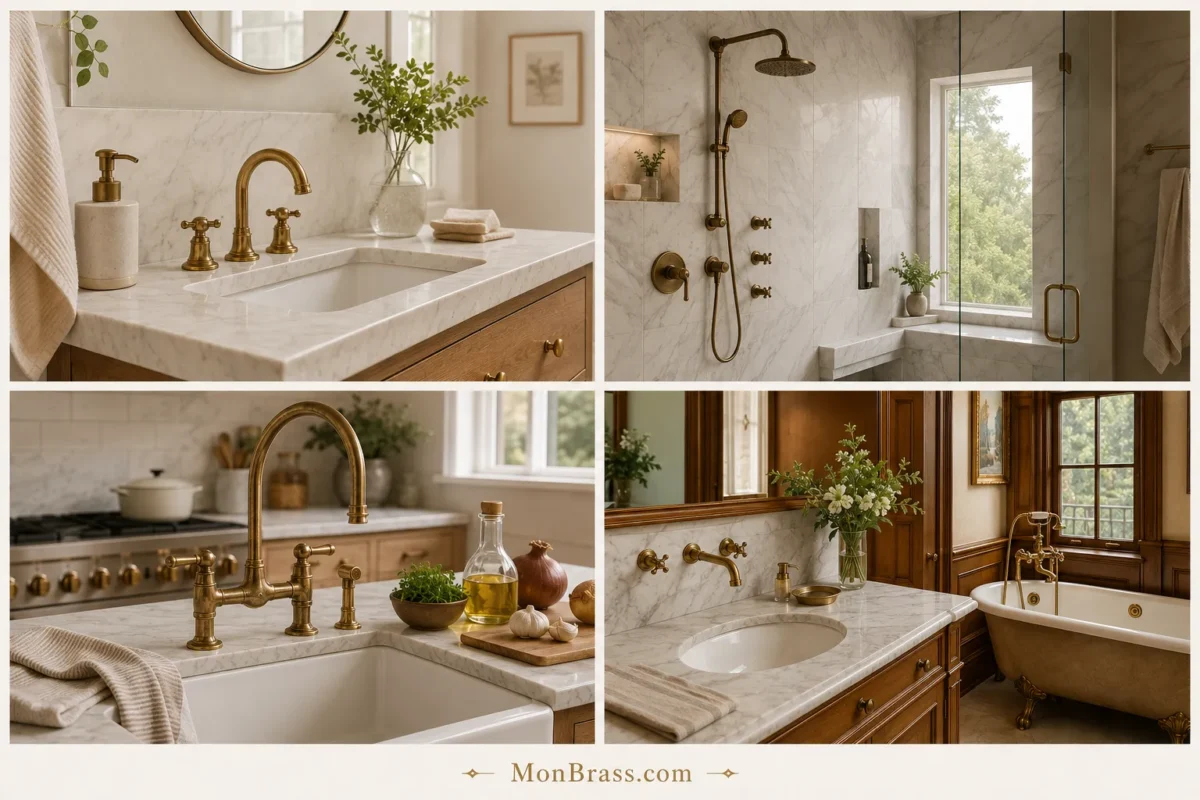
Family Bathroom
Soap residue often becomes a larger concern than tarnish, making mild, non-abrasive cleaners the most practical choice.
Luxury Primary Bathroom
Many luxury bathrooms intentionally embrace darker brass tones. Homeowners often favor gentle cleaners that preserve the existing finish rather than products designed to restore a bright shine.
High-Use Kitchen
Kitchen faucets encounter grease, food residue, and constant handling. A cleaner that removes buildup without excessive polishing is usually the best long-term option.
Historic Home Renovation
Older homes often feature unlacquered brass because it complements traditional materials like marble, natural stone, and wood. Many renovators intentionally select cleaners that preserve the aged appearance instead of reversing it.
Common Mistakes When Choosing or Using Brass Cleaners
Assuming Every Brass Cleaner Is Safe
Some products marketed for brass contain stronger polishing compounds than many homeowners realize.
Read the label carefully before applying any cleaner.
Polishing Too Frequently
Every polishing session removes a small amount of oxidation.
If you love the warm aged appearance, excessive polishing becomes counterproductive.
Using Abrasive Products
Scratches become especially noticeable on polished brass.
Choose non-abrasive cleaners and soft application materials whenever possible.
Leaving Acidic Products on Too Long
Some homemade or specialty cleaners rely on acidic ingredients that can brighten brass more aggressively than intended if left in contact with the surface.
Expecting Permanent Results
Even after polishing, unlacquered brass begins reacting with the environment again.
A brighter appearance can always change over time as the natural aging process continues.
Choosing the Right Cleaner Over Time
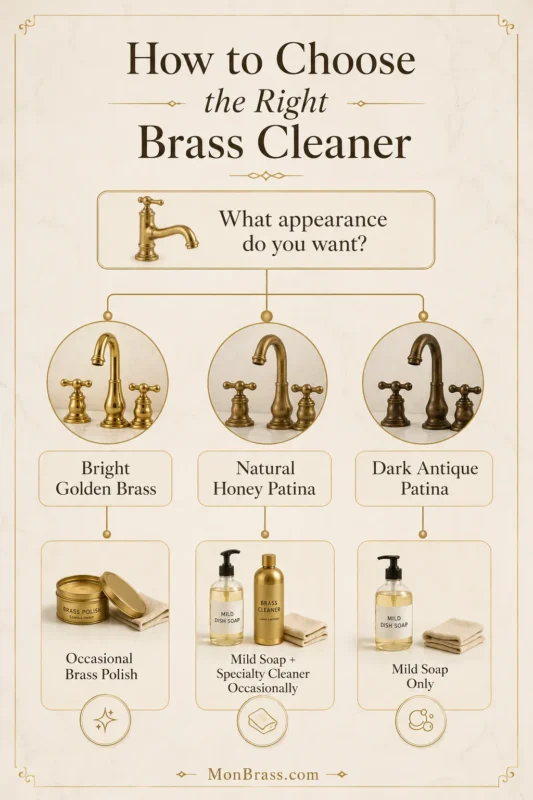
The best brass cleaner isn’t necessarily the strongest one—it’s the one that matches the appearance you want to maintain.
Homeowners who enjoy a naturally aged finish usually benefit from gentler cleaners, while those who prefer a brighter appearance may occasionally choose products with stronger polishing action.
Selecting the appropriate cleaner from the beginning often reduces the need for more aggressive restoration later.
Frequently Asked Questions
Can I use regular brass polish on unlacquered brass?
Yes, but only if you want to brighten the surface and remove existing patina. For preserving a naturally aged finish, a gentler cleaner is usually the better choice.
Is vinegar safe for unlacquered brass?
It can be useful for occasional tarnish removal, but it’s considerably more aggressive than mild routine cleaners and shouldn’t be your default maintenance product.
How often should I use brass cleaner?
Specialty brass cleaners are generally intended for occasional use. Routine maintenance typically requires only a gentle cleaner.
Will cleaning stop brass from developing patina?
No. Unlacquered brass continues to age naturally through exposure to air, moisture, and everyday handling.
Can I remove years of dark patina?
Yes. Brass polish or restoration products can significantly brighten the surface, although achieving a completely uniform appearance isn’t always possible.
Should kitchen and bathroom fixtures be cleaned differently?
The cleaner itself may be the same, but high-use kitchen fixtures often require products that remove grease and residue more effectively than fixtures exposed primarily to soap and moisture.
Final Thoughts
Choosing the right brass cleaner is less about finding the strongest product and more about preserving the appearance you want. For most unlacquered brass fixtures, gentle cleaners provide the best long-term balance between cleanliness and preserving natural character, while specialty cleaners and polishes are best reserved for occasions when a brighter appearance is the goal.
Whether you’re caring for a kitchen faucet, shower fixture, or cabinet hardware, selecting products that match your desired finish helps protect the qualities that make unlacquered brass such a timeless material.
