





Uncategorized
Unlacquered Brass Patina Stages: What to Expect as Brass Ages Naturally
Jun
Brass is one of the few materials that gets more interesting with time. While many finishes are designed to resist change, unlacquered brass does the opposite. It reacts to the environment, developing a living surface that slowly shifts in color and character. That evolving look is exactly why so many homeowners, designers, and architects choose it for kitchens, bathrooms, and custom furniture.
If you’ve recently installed an unlacquered brass faucet, cabinet hardware, or wall hook, you may be wondering if the changing color is normal. The answer is yes. Understanding the different unlacquered brass patina stages helps you appreciate the process instead of worrying that something is wrong.
Unlike plated or lacquer-coated finishes that stay almost identical year after year, unlacquered brass tells a story. Every touch, splash of water, and change in humidity leaves a subtle mark that contributes to its unique appearance.
Why Unlacquered Brass Changes Over Time
Unlacquered brass has no protective coating separating the metal from the surrounding environment. Exposure to air, moisture, and everyday handling gradually creates a natural surface reaction known as patina.
Rather than viewing this as damage, most homeowners and designers see it as one of the defining characteristics of a living finish. The exact appearance varies depending on how and where the fixture is used, which is why no two pieces age in exactly the same way.
If you’re looking for a deeper explanation of why brass darkens and how oxidation works, see our guide on why unlacquered brass turns dark.
The Main Unlacquered Brass Patina Stages
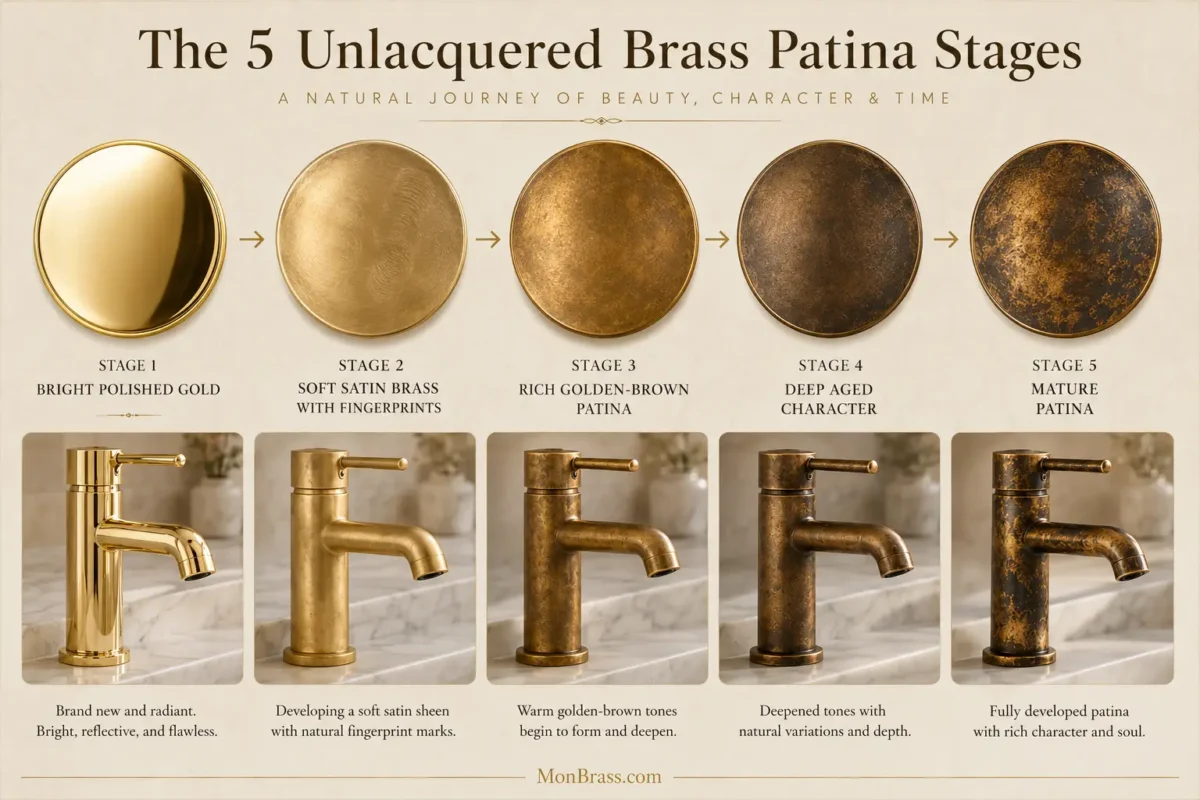
Although every piece develops differently, most unlacquered brass follows a similar aging pattern. Knowing these stages can help set realistic expectations.
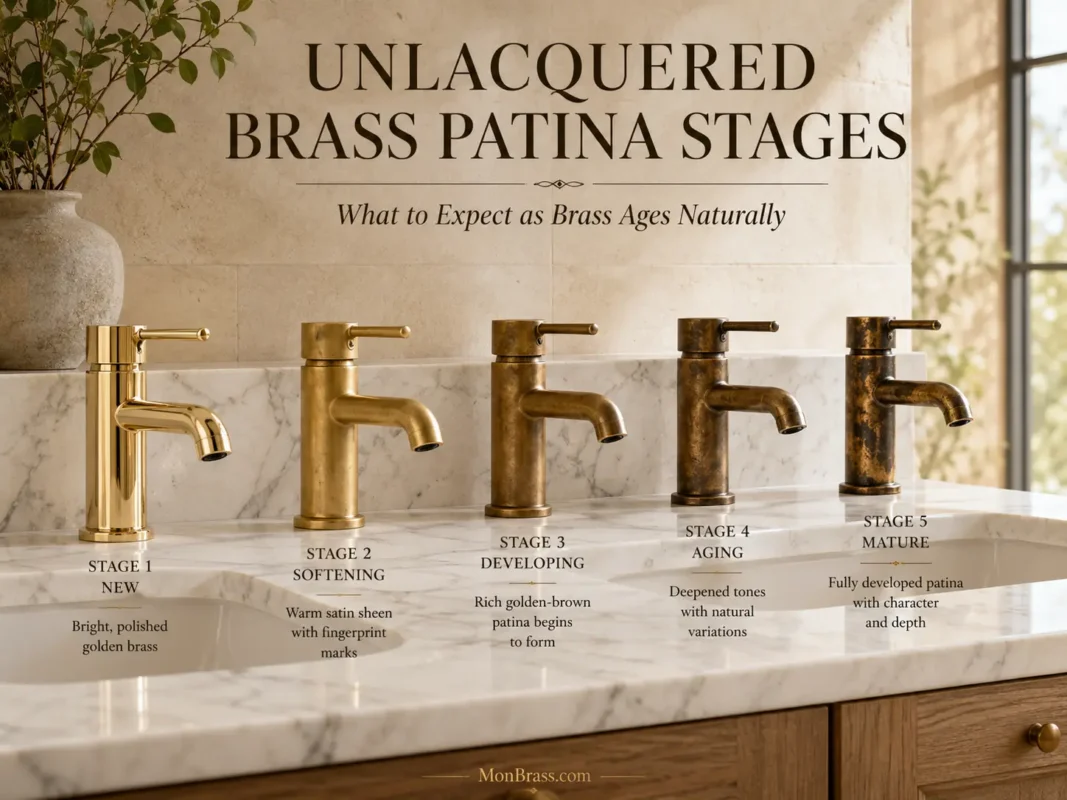
Stage 1: Bright and Polished
When it is brand new, unlacquered brass usually has a warm, golden shine. The finish often looks smooth and reflective, giving it a luxurious appearance that pairs well with both traditional and modern interiors.
At this stage, fingerprints may become visible very quickly. Even after a few days of use, you might notice slight marks or dull patches where the surface has been touched.
Many first-time buyers assume these marks are flaws, but they are actually the beginning of the patina process.
Stage 2: Soft Dulling and Fingerprint Marks
Over the first few weeks or months, the bright finish gradually softens. The brass loses some of its mirror-like shine and develops a more muted, satin appearance.
Typical signs include:
- Light brown or amber spots.
- Visible fingerprint patterns.
- Small variations in color around frequently used areas.
- Water marks that begin blending into the finish.
For many homeowners, this is the stage when they first notice that unlacquered brass is changing naturally. If you’re wondering why your brass is becoming darker, that’s usually a normal part of the aging process.
Stage 3: Rich Golden-Brown Patina
For many homeowners, this is the most attractive stage. The brass develops deeper golden and caramel tones while maintaining warmth and elegance. The surface looks less manufactured and more handcrafted.
At this point, heavily used areas may be slightly darker than the surrounding metal. Handles, knobs, and faucet levers often reveal where they have been touched most often, creating subtle patterns unique to your home.
Many interior designers specifically choose unlacquered brass because this stage pairs beautifully with natural materials such as marble, wood, limestone, and handmade tile.
Stage 4: Deep Aged Character
After a year or more, the brass often takes on a richer brown appearance with occasional darker bronze accents. Depending on the environment, some areas may become noticeably darker, while protected sections remain lighter.
A frequently used kitchen faucet, for example, may develop polished highlights where repeated handling gently brightens the surface while surrounding areas continue to darken. This layered look is one of the reasons unlacquered brass is often described as a living finish.
Stage 5: Mature Patina and Individual Character
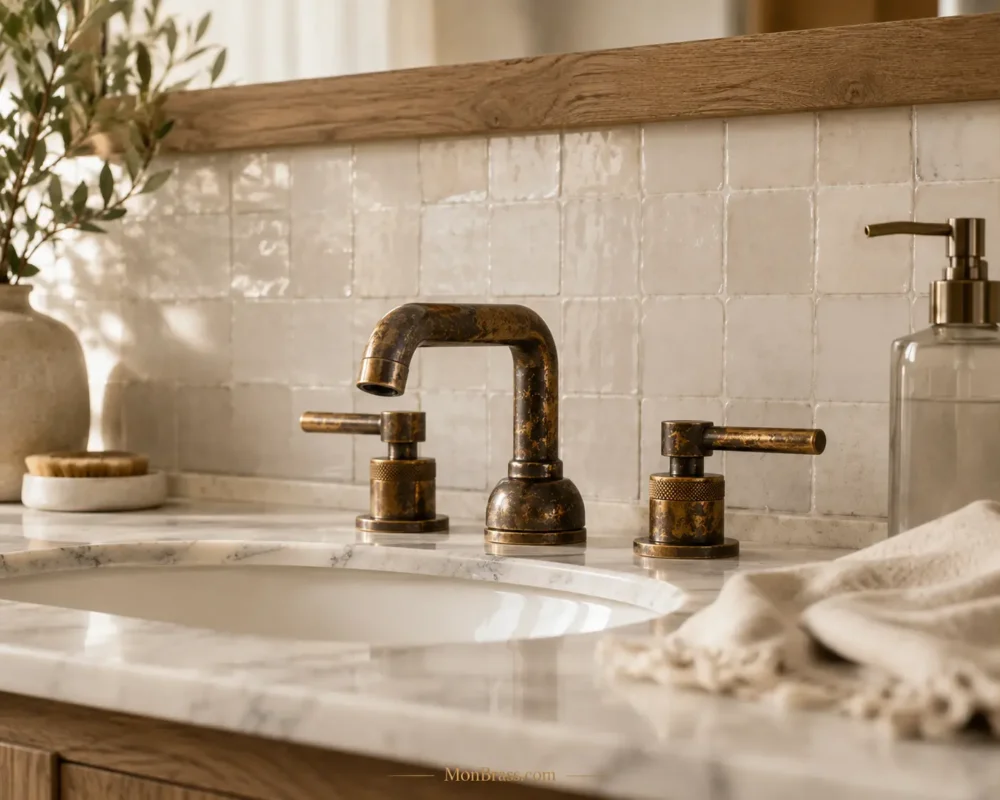
Eventually, the brass settles into a stable, mature finish. It will continue to evolve slowly, but dramatic changes become less noticeable over time.
At this point, the fixture reflects years of daily life. Tiny scratches, polished edges, darker corners, and subtle color variations all combine to create a finish that is completely unique.
No manufacturer can produce this exact appearance out of the box. It can only develop through natural aging.
What Affects How Fast Each Stage Appears?
While the visual stages remain broadly similar, the speed at which they develop can vary significantly from one home to another.
Humidity, water exposure, daily handling, local climate, and cleaning habits all influence how quickly brass moves from one stage to the next. A bathroom in a humid environment may develop a deeper finish sooner than decorative hardware in a dry room.
If you’re interested in the factors that control the aging process, our guide on how fast unlacquered brass patinas explores the timeline in more detail.
The Role of Water and Daily Use
Water and regular handling help shape the appearance of patina over time. Splashes, steam, mineral deposits, and natural skin oils all contribute to the subtle variation that develops across the surface.
Rather than creating a perfectly even finish, these everyday interactions give unlacquered brass its distinctive character. Kitchens and bathrooms often produce slightly different aging patterns because they expose fixtures to different conditions.
To learn more about the specific effects of moisture and minerals, see our article on how water affects brass patina.
Can You Speed Up the Patina Process?
Some homeowners love the bright golden look of new brass, while others prefer the appearance of a fixture that looks decades old.
Regular use is often enough to encourage natural aging, but there are also techniques that can accelerate the process. Because those methods deserve careful explanation, we’ve covered them separately in our guide on how to speed up the aging process of unlacquered brass.
For the most authentic appearance, many designers recommend simply allowing the finish to develop naturally.
Should You Clean Patina Off?
One of the biggest misconceptions about unlacquered brass is that every dark mark should be polished away. In reality, many homeowners intentionally preserve the developing finish because it adds depth and individuality.
Routine care is usually simple and gentle. If you want to remove dirt while keeping the natural character intact, it’s best to use cleaning methods designed specifically for unlacquered brass.
For a complete step-by-step guide, see our article on how to clean unlacquered brass without removing patina.
How Patina Varies by Location
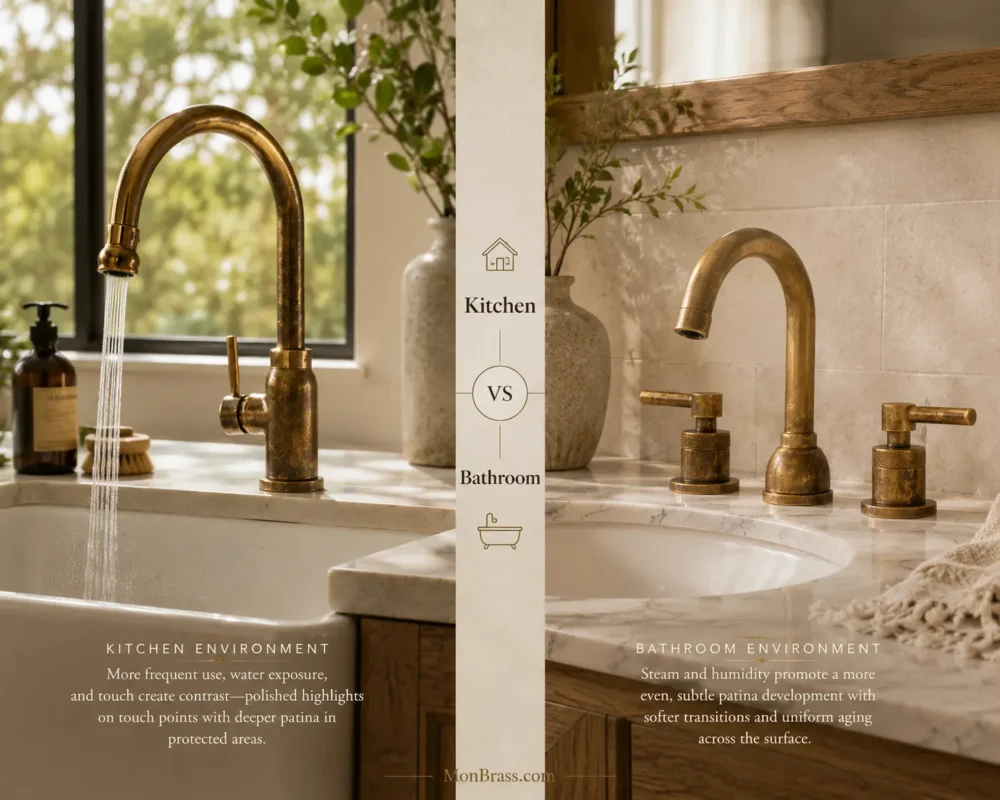
The environment around a fixture influences how the different stages appear.
A busy kitchen faucet may show stronger contrast between touched and untouched areas, while bathroom fixtures often develop a softer, more even appearance because of regular exposure to humidity and steam.
The exact result depends on how the fixture is used rather than on the room itself, which is why no two installations ever look exactly alike.
Common Mistakes People Make with Unlacquered Brass
Expecting It to Stay Bright Forever
If you want a finish that never changes, lacquered or sealed brass may be a better choice. Unlacquered brass is specifically designed to age.
Over-Cleaning the Surface
Constant polishing interrupts the natural process and can remove the character that many people choose this finish to achieve.
Worrying About Uneven Color
Patina rarely develops evenly. Darker handles, lighter edges, and random spots are all normal parts of the aging process.
Using Harsh Chemicals
Strong cleaners can strip away developing patina. Gentle maintenance is usually the best approach.
A General Timeline for Patina Development
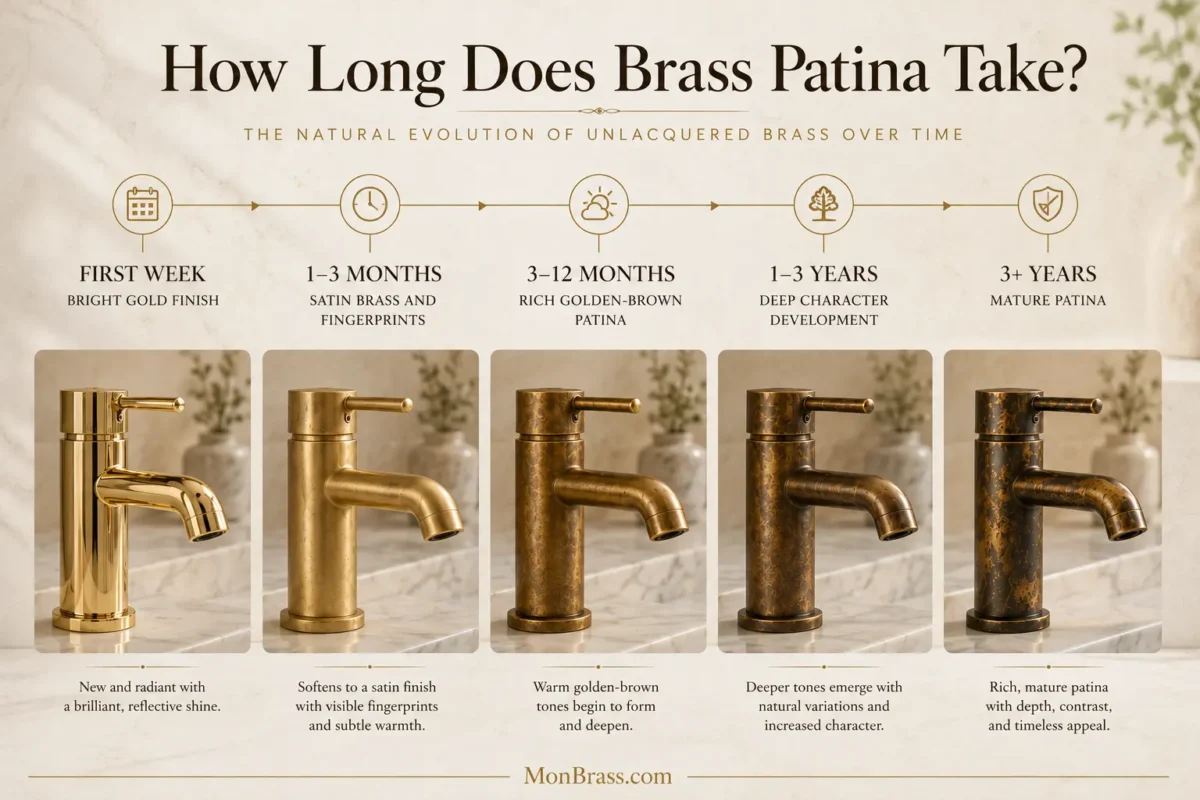
Although every environment is different, most homeowners notice visible changes within the first few months.
| Time After Installation | Typical Appearance |
| First week | Bright gold with minor fingerprints |
| 1–3 months | Soft satin finish with light darkening |
| 3–12 months | Rich golden-brown patina develops |
| 1–3 years | Deeper brown tones and distinctive character |
| 3+ years | Mature, stable finish with unique variation |
Remember that this is only a general guide. Everyday use and environmental conditions can cause the process to move faster or slower.
Frequently Asked Questions
Does every unlacquered brass fixture develop the same patina?
No. Differences in humidity, water quality, frequency of use, and everyday handling create unique aging patterns. Two identical fixtures can look surprisingly different after a year.
Can I stop unlacquered brass from aging?
Not permanently. Because the metal remains exposed, some degree of natural change is inevitable. You can slow or reset the appearance through maintenance, but the aging process will continue over time.
Will patina reduce the quality of the brass?
No. Patina is a natural surface change and is widely considered one of the material’s most desirable qualities.
Can hard water permanently stain unlacquered brass?
Mineral deposits can affect the appearance of the surface, but in many cases they become part of the natural variation that develops over time.
Is unlacquered brass harder to maintain than other finishes?
If you enjoy the evolving look, maintenance is generally minimal. Most homeowners simply clean the surface gently and allow the patina to continue developing.
Conclusion
The beauty of unlacquered brass lies in the fact that it never stays exactly the same. From its bright golden beginning to its rich, mature patina, every stage adds depth and personality that factory finishes simply cannot match.
Rather than seeing fingerprints, dark spots, or uneven color as imperfections, think of them as signs that the material is doing exactly what it was designed to do. A well-aged brass fixture reflects daily life, becoming more distinctive with every passing year.
For homeowners who appreciate natural materials and timeless design, watching brass develop its own character is one of the most rewarding parts of choosing an unlacquered finish.
