





Uncategorized
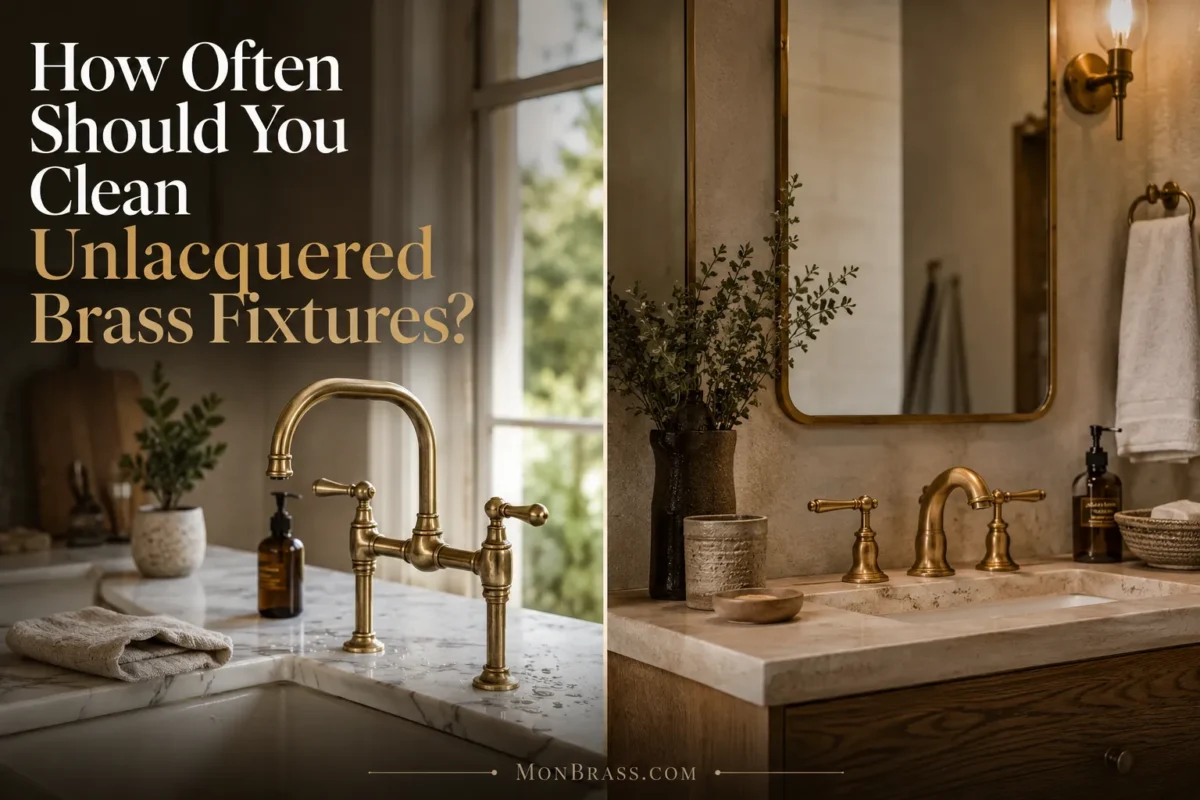
How Often Should You Clean Unlacquered Brass Fixtures?
Jun
Unlacquered brass is designed to age gracefully, so many homeowners wonder whether they should clean it regularly or simply let nature take its course. The answer isn’t as straightforward as setting a weekly schedule. How often should you clean unlacquered brass fixtures? It depends on where they’re installed, how often they’re used, the quality of your water, and the look you’re trying to achieve.
One of the biggest misconceptions is that frequent cleaning keeps unlacquered brass looking better. In reality, overly aggressive cleaning can remove the very patina that makes this finish so desirable. The goal isn’t to keep brass looking brand new—it’s to keep it clean while allowing it to develop character naturally.
There Isn’t One Cleaning Schedule for Every Fixture
Unlike chrome or stainless steel, unlacquered brass changes continuously as it reacts with its environment. That means maintenance should be based on the fixture’s condition rather than the calendar.
A kitchen faucet used dozens of times each day naturally requires more attention than a decorative wall-mounted tub filler used only occasionally.
Instead of asking, “How many times per month should I clean it?” ask these questions:
- Does it have soap or toothpaste residue?
- Are mineral deposits starting to form?
- Is grease or food buildup visible?
- Do you want to preserve the existing patina?
Cleaning should remove dirt and buildup—not prevent brass from aging.
A Practical Cleaning Schedule
The table below provides a realistic maintenance routine for most homes.
| Task | Recommended Frequency | Purpose |
| Wipe with a dry microfiber cloth | After heavy use or several times per week | Prevent water spots and mineral buildup |
| Wash with mild soap and warm water | Every 2–4 weeks | Remove everyday dirt and residue |
| Inspect for mineral deposits | Monthly | Catch buildup before it hardens |
| Use a specialty brass cleaner | Only when needed | Remove stubborn oxidation or stains |
| Polish to restore brightness | Occasionally | Brighten the surface if desired |
This schedule works well for most households, but your fixtures may require slight adjustments depending on daily use.
Factors That Affect Cleaning Frequency
How Often the Fixture Is Used
Usage has the biggest impact on maintenance.
For example:
- A primary kitchen faucet may be touched dozens of times every day.
- A guest bathroom faucet might only be used a few times each week.
- A decorative pot filler often stays surprisingly clean because it isn’t handled frequently.
Depending on how the fixture is used, the cleaning schedule can vary significantly.
Water Quality
In homes with hard water, minerals left behind after water evaporates can create cloudy spots and stubborn deposits.
These aren’t signs that the brass is deteriorating—they’re simply mineral buildup sitting on the surface.
One thing homeowners often notice is that wiping fixtures dry after use dramatically reduces the need for deeper cleaning later.
Humidity Levels
Bathrooms typically expose brass to more moisture than kitchens.
High-humidity environments can accelerate the natural oxidation process, especially around shower fixtures and tub fillers.
That doesn’t mean more polishing is necessary. It simply means regular gentle cleaning helps prevent soap residue from combining with moisture to create stubborn buildup.
Household Size
A fixture serving a family of five experiences very different wear than one in a vacation home.
More hands touching the brass means:
- More fingerprints
- More water exposure
- More soap residue
- Faster buildup of everyday grime
The finish itself isn’t being damaged—it simply benefits from more frequent light cleaning.
Cleaning by Room

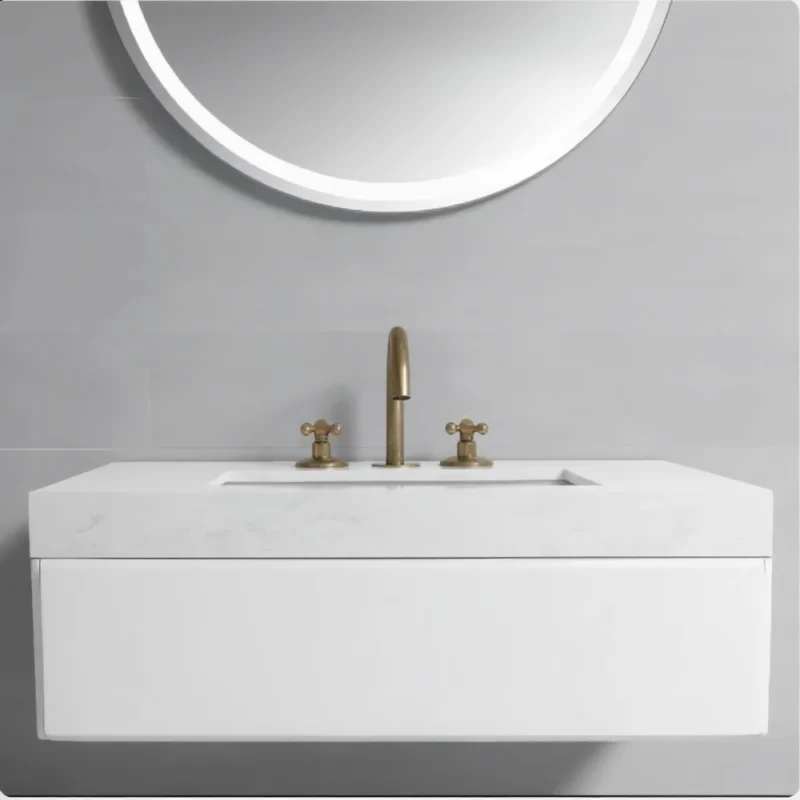
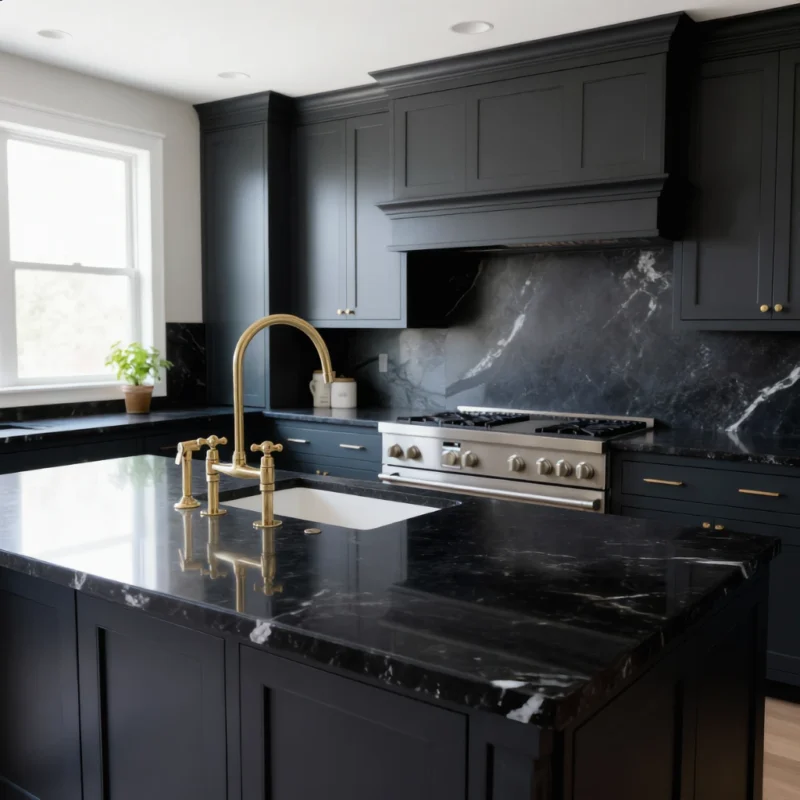
Kitchen Fixtures
Kitchen faucets are among the busiest fixtures in any home.
Cooking oils, food splashes, and frequent handwashing all contribute to surface buildup.
High-use kitchen fixtures generally require more frequent attention than decorative brass because grease, food residue, and constant handling allow buildup to accumulate more quickly. The exact schedule depends on daily use and local water conditions.
This approach works particularly well for bridge faucets, pull-down faucets, and prep sinks.
Bathroom Fixtures
Bathroom fixtures encounter different challenges.
Soap residue, toothpaste, shaving products, and cosmetic splashes are more common than grease.
Bathrooms typically require a moderate cleaning schedule because soap residue, toothpaste, and hard water deposits accumulate differently from kitchen grime. The ideal frequency depends on how heavily the fixtures are used.
Shower Fixtures
Built-in shower systems experience continuous moisture.
Shower fixtures are exposed to constant moisture, but because they’re touched less often than sink faucets, they often require less frequent cleaning than many homeowners expect.
Should You Clean Patina Off?
Usually, no. Patina is one of the defining characteristics of unlacquered brass. It develops as the metal reacts with oxygen, moisture, and everyday handling.
Some homeowners intentionally wait years before polishing because they appreciate the rich antique appearance.
Others prefer a brighter golden finish and polish periodically.
Neither approach is wrong.
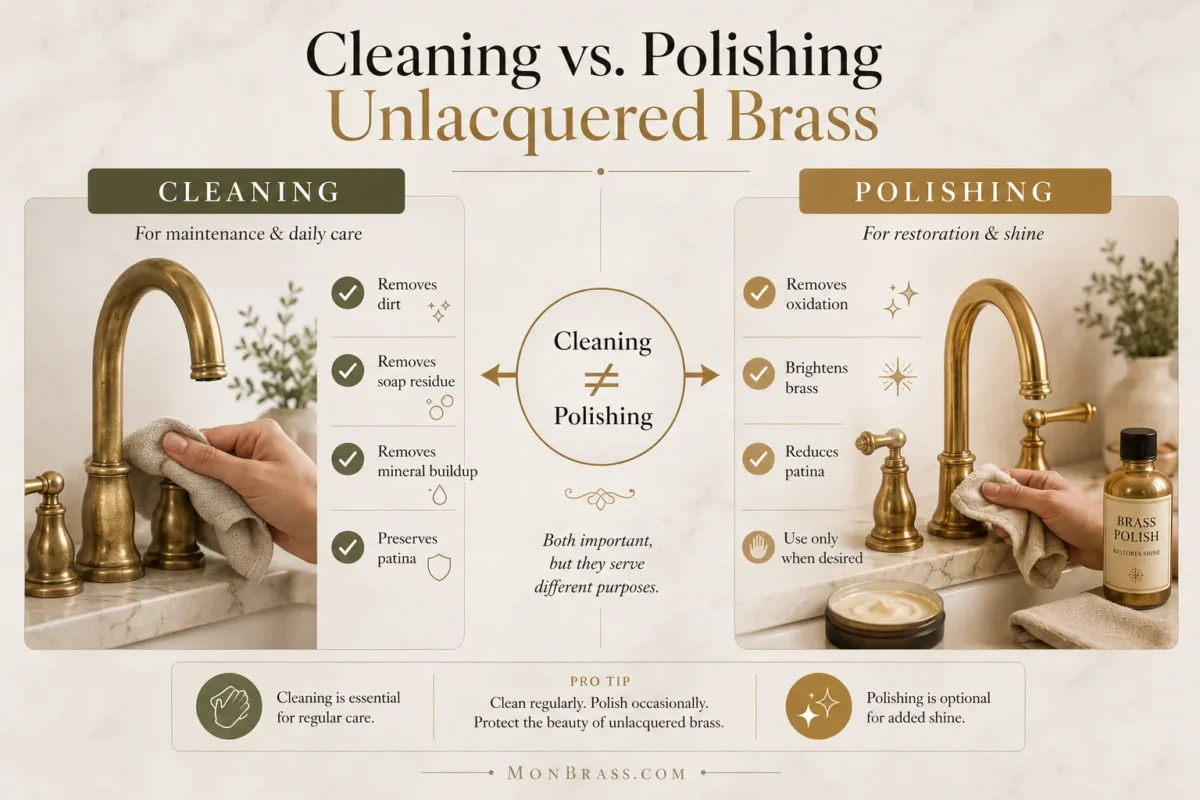
The important thing is understanding that cleaning and polishing are different.
Cleaning removes dirt.
Polishing removes oxidation.
That distinction helps homeowners avoid unnecessary maintenance.
Things to Consider Before Choosing a Cleaning Routine
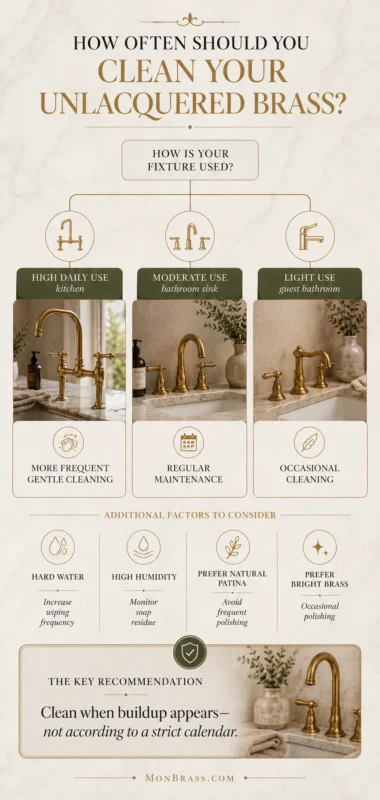
The ideal maintenance schedule depends on more than appearance.
Benefits of Following an Appropriate Cleaning Schedule
- Helps prevent heavy buildup.
- Reduces the need for aggressive restoration.
- Supports the appearance you want to maintain.
- Makes ongoing maintenance more predictable.
Potential Drawbacks
- Excessive polishing removes patina.
- Over-cleaning with harsh products may create uneven coloring.
- Abrasive tools can leave permanent scratches.
Budget Considerations
Routine maintenance is inexpensive because most fixtures require only occasional attention rather than frequent restoration.
Design Style
If your home embraces modern luxury or traditional European design, allowing brass to age naturally often enhances the overall aesthetic.
Conversely, homeowners seeking a consistently polished appearance should expect more regular polishing as part of long-term ownership.
Real-World Examples
Busy Family Kitchen
A wall-mounted bridge faucet used throughout the day benefits from wiping dry every evening and washing with mild soap every few weeks.
Frequent polishing isn’t necessary unless the homeowner prefers a brighter finish.
Guest Bathroom
Since the faucet sees relatively little use, monthly cleaning is often sufficient.
Patina develops more slowly because the fixture isn’t handled as frequently.
Luxury Primary Bathroom
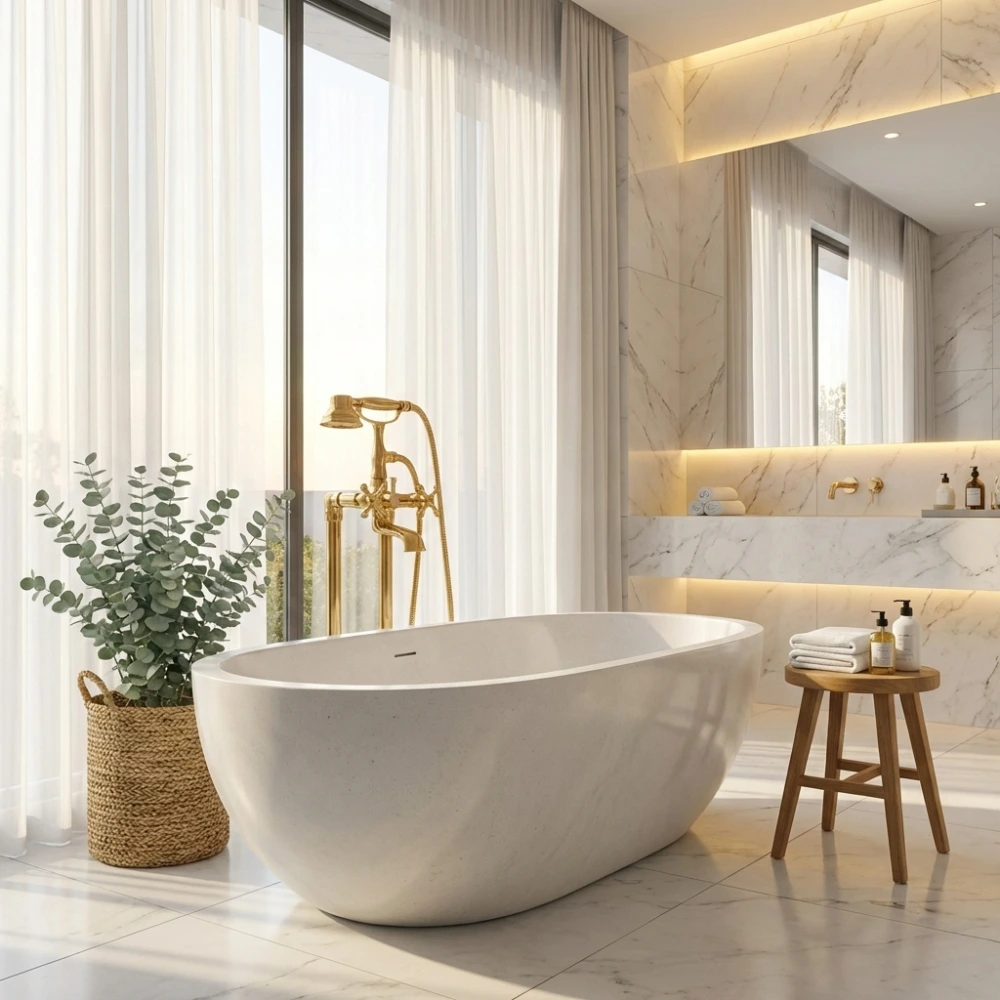
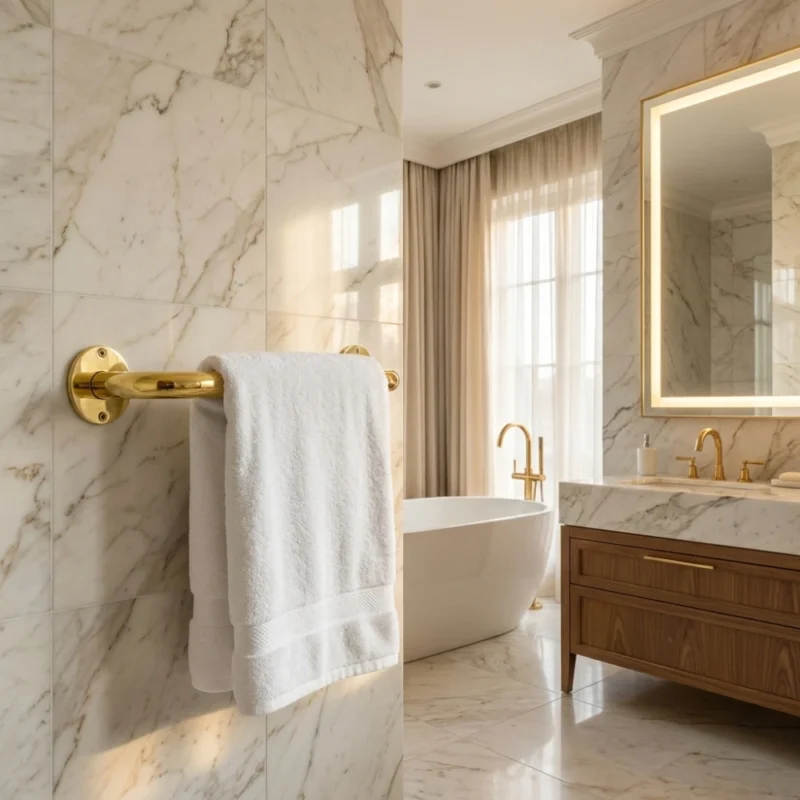
Many luxury remodels intentionally allow unlacquered brass shower systems and tub fillers to age naturally.
Routine cleaning focuses on removing soap residue while preserving the finish’s evolving character.
Historic Home
Historic renovations frequently embrace darker brass tones.
Instead of polishing away decades of character, homeowners often choose gentle maintenance that respects the finish’s natural evolution.
Common Mistakes to Avoid
Cleaning Too Often
Cleaning isn’t harmful.
Over-polishing is.
Many homeowners confuse the two and accidentally remove the finish they’re trying to preserve.
Waiting Too Long
Allowing mineral deposits or soap scum to harden makes cleaning more difficult.
Gentle routine maintenance is easier than aggressive restoration later.
Using Harsh Household Cleaners
Bleach, ammonia, abrasive powders, and steel wool should never be part of regular brass maintenance.
These products may damage the surface or create inconsistent coloring.
Ignoring Water Spots
Small mineral deposits are much easier to remove than hardened scale.
A simple wipe with a soft cloth after heavy use often prevents future problems.
Trying to Keep Brass Looking New Forever
Unlacquered brass isn’t designed to remain identical year after year.
Expecting a permanently bright finish often leads to unnecessary polishing.
Its evolving appearance is one of its greatest strengths.
Frequently Asked Questions
Can I clean unlacquered brass every week if needed?
Yes, provided you’re using a soft cloth with mild soap and water. Weekly gentle cleaning won’t harm the brass or stop it from developing patina.
How do I know when it’s time for a deeper cleaning?
Visible mineral deposits, soap buildup, fingerprints that don’t wipe away easily, or uneven discoloration are good signs that a more thorough cleaning is appropriate.
Should I polish my brass every time I clean it?
No. Routine cleaning removes dirt, while polishing removes oxidation. Most homeowners polish far less often than they wash their fixtures.
Does hard water mean I need to clean more often?
Usually yes. Hard water leaves mineral deposits that are easier to remove before they become heavily built up.
Can I leave the patina untouched for years?
Absolutely. Many homeowners intentionally allow unlacquered brass to age naturally with only basic cleaning to remove dirt and residue.
Will cleaning slow down the patina process?
No. Gentle cleaning removes contaminants but doesn’t stop brass from reacting with air, moisture, and everyday use.
Final Thoughts
There’s no universal cleaning schedule for unlacquered brass because every home uses its fixtures differently. The best approach is consistent, gentle maintenance that removes dirt and mineral buildup without stripping away the finish’s natural character. For most kitchens and bathrooms, wiping fixtures dry regularly and washing them with mild soap every few weeks strikes the right balance between cleanliness and preserving the beautiful patina that makes unlacquered brass so distinctive.
