





Uncategorized
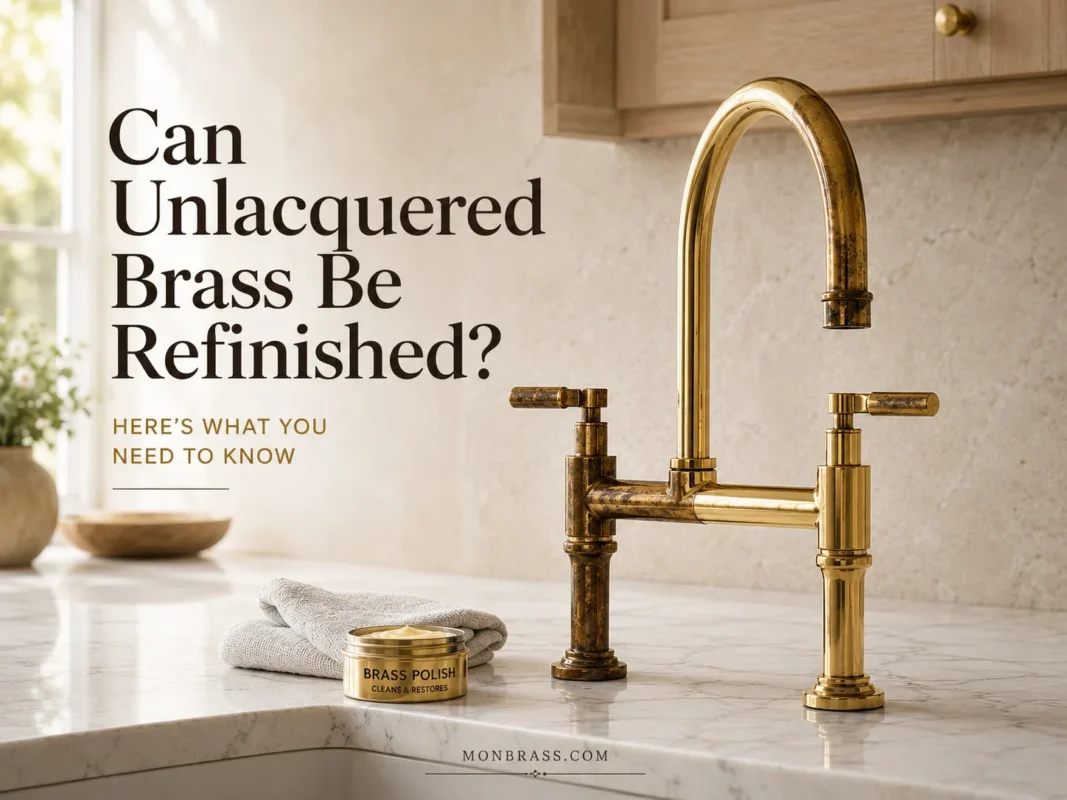
Can Unlacquered Brass Be Refinished? Here’s What You Need to Know
Jul
One of the biggest advantages of choosing unlacquered brass is that it isn’t locked into a single appearance forever. As the finish ages, it naturally develops a patina that many homeowners love, but not everyone wants their fixtures to become darker or more antique-looking. That often leads to an important question: Can unlacquered brass be refinished?
The short answer is yes—in most cases, it can. Unlike plated finishes that rely on a thin decorative coating, genuine unlacquered solid brass can usually be restored multiple times throughout its life. However, how successful the process is depends on the fixture’s construction, its condition, and what you hope to achieve.
Understanding when refinishing makes sense—and when it’s better to leave the patina alone—can help you protect both the appearance and longevity of your brass fixtures.
Why Unlacquered Brass Can Be Refinished
The key difference lies in how the fixture is made.
Unlacquered brass has no protective lacquer sealing the surface. Instead, the exposed brass reacts naturally with oxygen, moisture, oils from your hands, and everyday environmental conditions.
Because the material itself is brass—not simply a brass-colored coating—you can restore the surface without exposing another metal underneath.
This makes refinishing possible for many types of fixtures, including:
- Kitchen faucets
- Bathroom faucets
- Shower systems
- Cabinet knobs and pulls
- Door hardware
- Pot fillers
- Towel bars
In contrast, many brass-plated fixtures cannot be refinished in the same way because polishing eventually removes the thin brass layer rather than restoring it.
What Does “Refinishing” Actually Mean?
Many people assume refinishing involves stripping the entire fixture and applying a brand-new finish.
For unlacquered brass, that’s usually not the case.
Depending on the condition of the fixture, refinishing typically means refreshing the existing surface by reducing oxidation, discoloration, or other signs of normal wear.
The goal isn’t always to make the fixture look factory-new. Instead, refinishing restores a brighter appearance while preserving the underlying brass.
When Refinishing Works Best
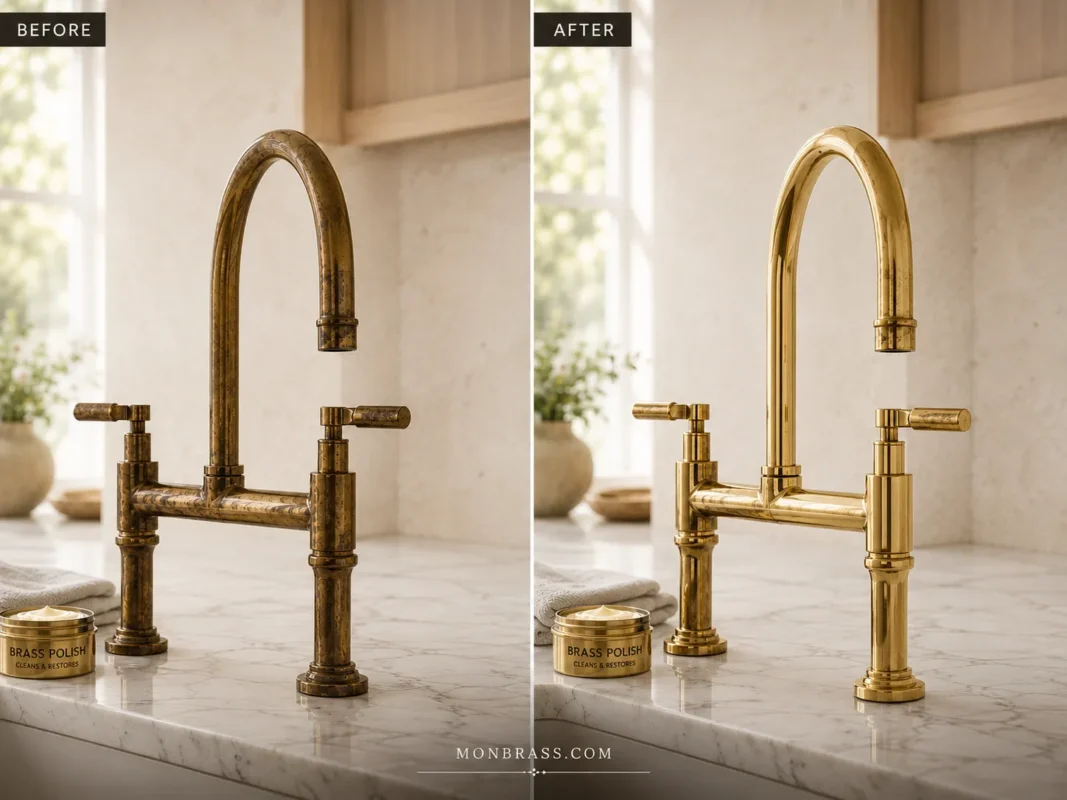
Some fixtures respond exceptionally well to restoration.
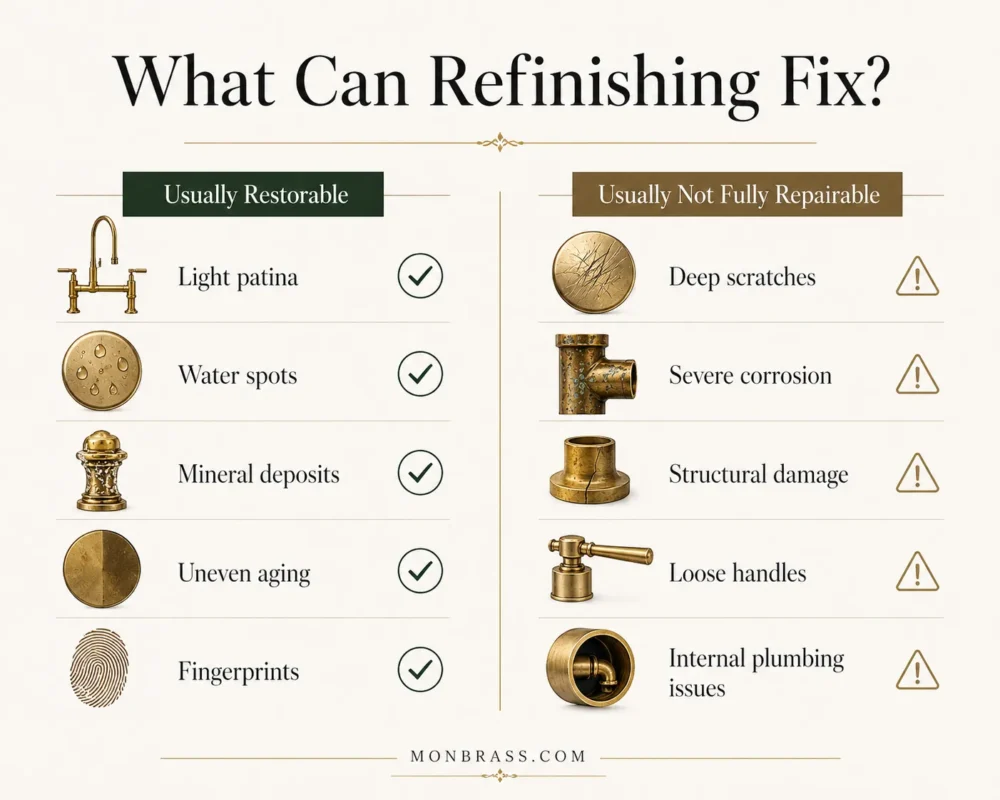
Light Patina
If the brass has simply darkened with age, refinishing can usually restore much of its original golden color.
Water Spots and Mineral Deposits
Surface buildup that dulls the finish can often be removed successfully if it hasn’t permanently affected the brass.
Fingerprints and Uneven Aging
High-touch fixtures sometimes develop uneven coloration over time. Refinishing can refresh the overall appearance before the brass naturally begins aging again.
Situations Where Results May Be Limited
Although unlacquered brass is highly restorable, it isn’t indestructible.
Some damage can’t be completely reversed.
Deep Scratches
Light surface imperfections may become less noticeable, but deeper damage often requires professional restoration and may remain visible.
Severe Corrosion
Long-term neglect or exposure to harsh chemicals can permanently affect the surface, limiting how much refinishing can improve the appearance.
Structural Damage
Refinishing only restores the exterior surface.
Loose handles, leaking faucets, damaged valves, or mechanical failures require repair or replacement rather than surface restoration.
DIY vs Professional Refinishing
Many homeowners wonder whether refinishing should be a weekend project or left to a professional.
The answer depends on the fixture and its condition.
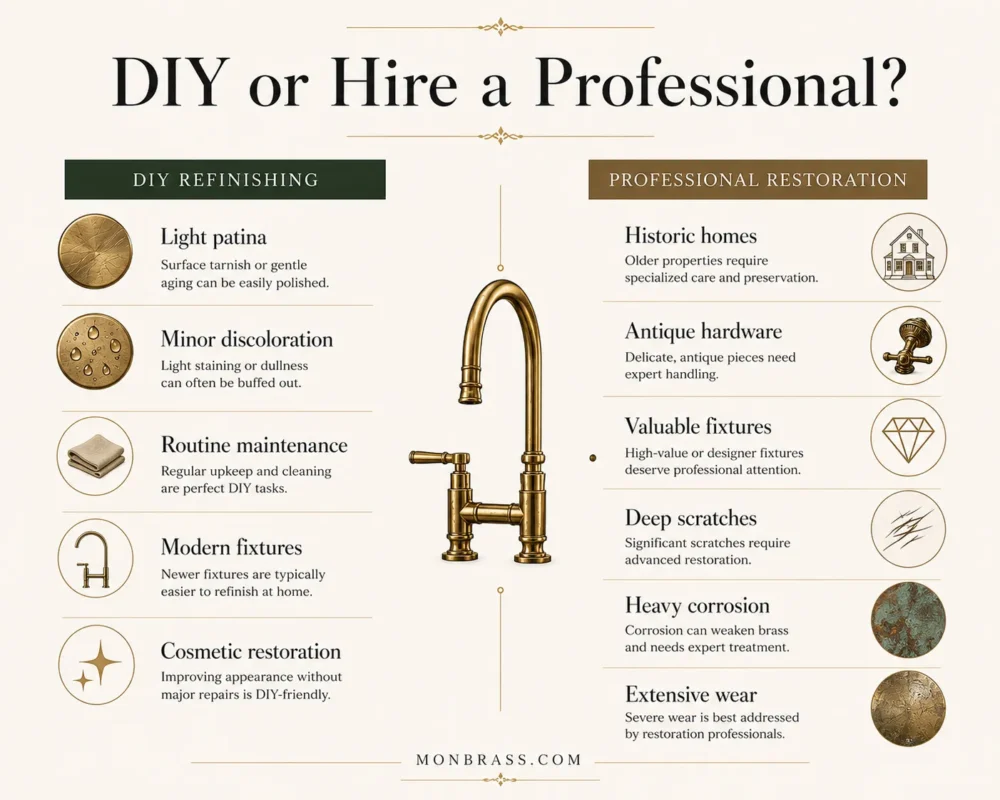
DIY Refinishing
Routine cosmetic restoration is often suitable for homeowners when the fixture has only normal surface aging or light discoloration.
If you’re planning to refinish the surface yourself, choosing one of the best brass cleaners for unlacquered brass helps reduce the risk of damaging the finish.
Professional Refinishing
Professional restoration may be the better option for:
- Valuable architectural hardware
- Historic homes
- Antique fixtures
- Extensive surface damage
- High-end custom plumbing fixtures
Professionals can often achieve more consistent results on valuable or heavily worn pieces.
What Happens After Refinishing?
One thing homeowners are sometimes surprised by is that refinishing doesn’t stop the aging process.
Once the brass has been restored, it immediately begins reacting with its environment again.
How quickly the appearance changes depends on factors such as humidity, water exposure, and everyday use.
For many homeowners, that ongoing evolution is part of the appeal. Rather than trying to prevent change permanently, they simply refresh the finish whenever they prefer a brighter appearance.
Is Refinishing Better Than Replacing the Fixture?
In many situations, yes.
One advantage of solid brass construction is that the material itself remains valuable even after years of use.
Instead of replacing an otherwise functional faucet simply because it has darkened, refinishing can often restore its appearance at a fraction of the replacement cost.
This is one area where solid brass vs brass-plated fixtures differ significantly. Solid brass generally offers much greater restoration potential because there is no decorative plating to wear through.
Real-World Examples
High-Use Kitchen Faucet
A frequently used kitchen faucet may gradually lose some of its original brightness. Refinishing can restore a fresher appearance before the surface begins aging naturally again.
Guest Bathroom
Guest bathrooms often age more slowly because the fixtures receive less daily use. Many homeowners simply leave the natural patina untouched.
Historic Homes
Owners restoring older homes often choose refinishing instead of replacement to preserve original architectural hardware.
Luxury Remodels
Some designers temporarily restore brass to a brighter finish before photography, knowing it will naturally continue evolving once the home is lived in.
Mistakes That Can Damage Unlacquered Brass
Refinishing is relatively straightforward, but a few common mistakes can produce disappointing results.
Using Abrasive Tools
Aggressive abrasives can unnecessarily scratch the brass.
Using the Wrong Cleaner
Some metal cleaners are not intended for unlacquered brass and may affect the appearance of the surface.
Expecting a Factory Finish
Even after restoration, years of normal use may leave subtle character that cannot—or should not—be completely removed.
Refinishing Too Frequently
Occasional restoration is perfectly reasonable, but constant polishing isn’t necessary for most homeowners.
Should You Refinish or Let the Patina Develop?
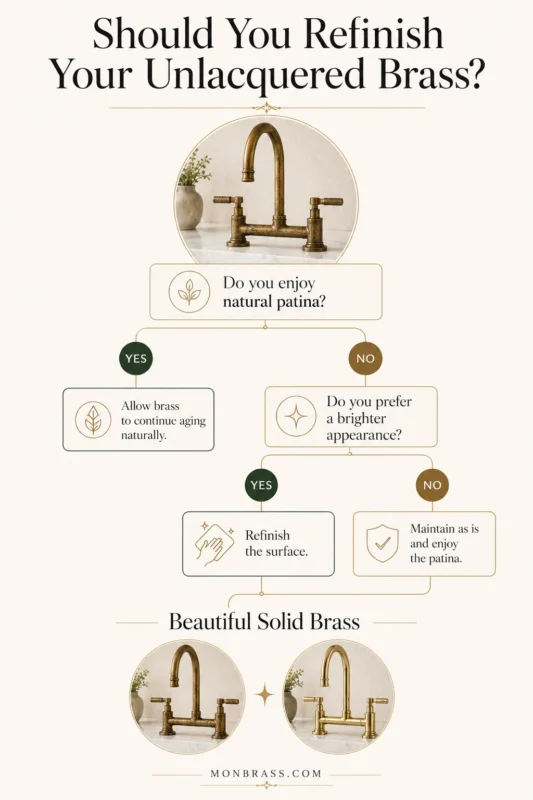
There isn’t a universally correct answer.
If you enjoy the warm character that develops naturally, leaving the brass alone requires very little intervention.
If you prefer a brighter appearance, refinishing offers the flexibility to refresh the surface without replacing the fixture.
Many homeowners settle somewhere in the middle, allowing the brass to age naturally before restoring it occasionally.
That flexibility is one of the defining characteristics of unlacquered brass and one reason it remains so popular in both traditional and contemporary homes.
Frequently Asked Questions
Can every unlacquered brass fixture be refinished?
Most solid unlacquered brass fixtures can be refinished, although results depend on their condition and whether permanent damage has occurred.
Will refinishing remove the patina completely?
Usually, yes. Restoring the surface removes much of the existing oxidation, after which the natural aging process begins again.
How often should unlacquered brass be refinished?
There is no fixed schedule. It depends entirely on your preferred appearance.
Does refinishing damage solid brass?
When carried out correctly using suitable products, occasional refinishing does not normally damage solid brass.
Is refinishing cheaper than replacing a faucet?
In many cases, yes. If the fixture remains mechanically sound, restoring the surface is usually much less expensive than replacing it.
How can I make refinished brass stay shiny longer?
Keeping the fixture clean and dry may slow visible changes, but unlacquered brass is designed to evolve naturally. If maintaining a brighter finish is your goal, how to restore the original shine of unlacquered brass naturally complements long-term maintenance.
Final Thoughts
One of the greatest strengths of unlacquered brass is that it gives homeowners options. You can embrace the rich patina that develops naturally, restore a brighter appearance whenever you choose, or alternate between the two over the life of the fixture.
As long as the fixture is made from genuine solid brass and hasn’t suffered severe physical damage, refinishing is often a practical way to extend its visual appeal without replacing quality hardware. Understanding what refinishing can realistically accomplish will help you make the right decision for your fixtures over the years.
