





Uncategorized
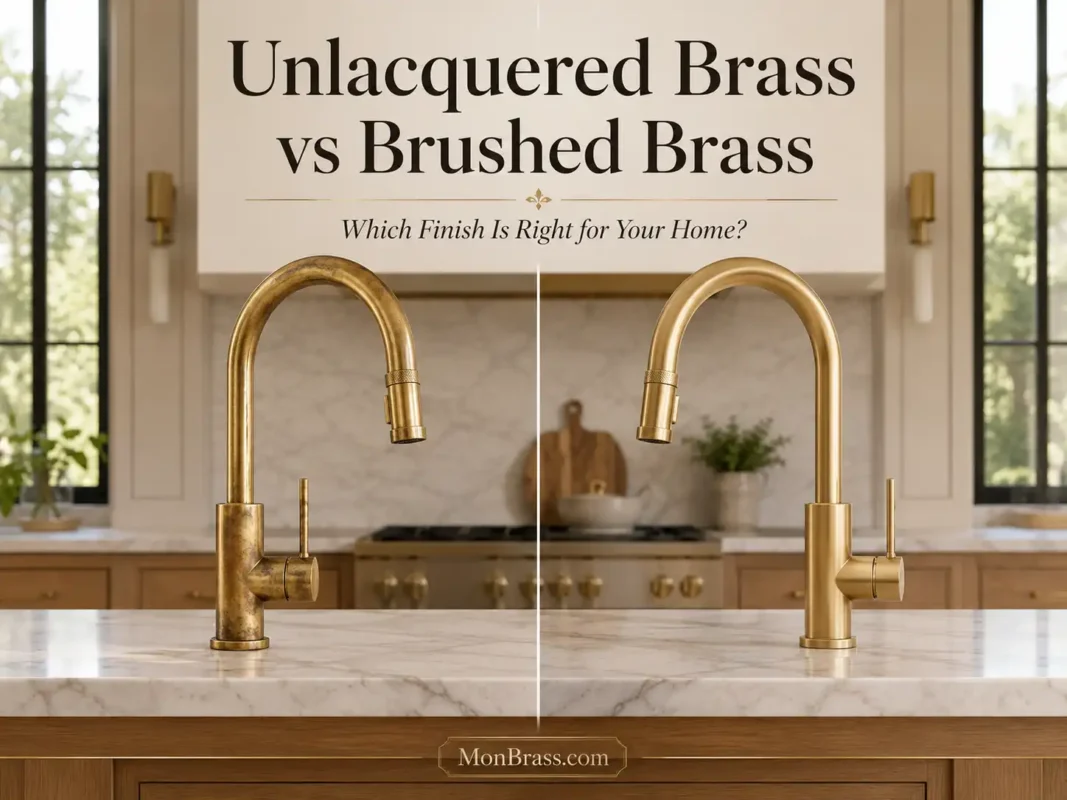
Unlacquered Brass vs Brushed Brass: Which Finish Is Right for Your Home?
Jun
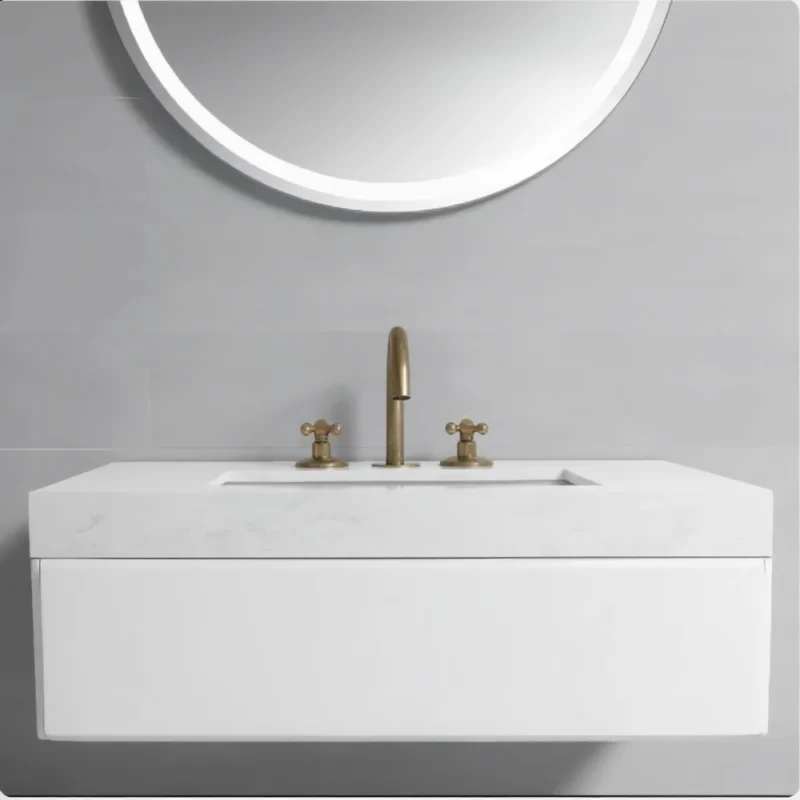
A brass finish can completely change the feel of a kitchen, bathroom, or furniture piece. Yet many homeowners find themselves comparing unlacquered brass vs brushed brass because, at first glance, the two look remarkably similar.
Both offer warm golden tones. Both work beautifully alongside natural materials. Both have become popular alternatives to chrome and stainless steel.
The difference is not simply how they look on installation day. It’s how they behave after months and years of everyday use. If you’re choosing cabinet hardware, faucets, lighting, or door handles, understanding those differences will help you choose a finish that matches your expectations.
Why This Decision Matters
Many people focus on color alone. They find a brass finish they like, install it, and assume it will always look that way.
In reality, your decision is about more than appearance. It’s about whether you want a finish that gradually evolves or one that stays largely consistent over time.
Kitchen faucets, cabinet pulls, and bathroom fixtures experience constant contact with hands, water, and everyday life. The finish you choose will respond differently to those conditions, and that’s where the distinction between unlacquered brass and brushed brass becomes important.
Unlacquered Brass vs Brushed Brass: Quick Comparison
| Feature | Unlacquered Brass | Brushed Brass |
| Surface Finish | Raw brass without a protective coating | Textured brass finish, often sealed |
| Appearance Over Time | Gradually develops character | Remains more consistent |
| Maintenance | Optional polishing if a brighter look is preferred | Low maintenance |
| Fingerprints | More visible initially | Less noticeable |
| Style | Classic, organic, traditional | Modern, transitional, contemporary |
| Uniqueness | Every piece develops differently | More predictable appearance |
If you want the shortest possible answer, it comes down to this:
- Choose unlacquered brass if you appreciate a finish that changes naturally over time.
- Choose brushed brass if you prefer a stable and predictable appearance.
What You’ll Actually Notice After Installation
This is where the differences become easier to understand.
Imagine two homeowners installing new kitchen faucets. One chooses unlacquered brass, while the other selects brushed brass.
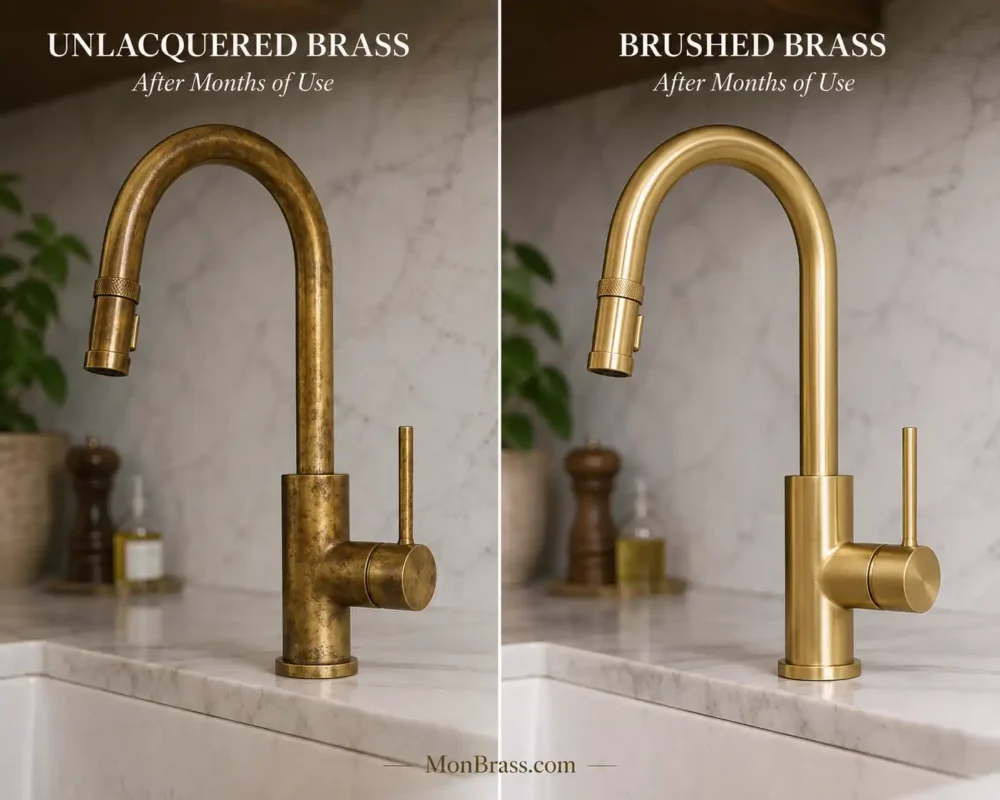
Months later, the unlacquered brass fixture may show subtle variation in tone and character, while the brushed brass fixture will usually remain much closer to the appearance it had when it was installed.
Neither outcome is better. The important question is simply which experience fits your personal preferences and the style of your home.
What Makes Unlacquered Brass Different?
Unlacquered brass is often called a living finish because the surface gradually responds to its environment.
Everyday exposure to air, moisture, handling, and normal use slowly changes the appearance of the metal. Over time, the finish develops greater depth and individuality, giving each piece a slightly different look.
One important detail many first-time buyers don’t expect is that these changes are rarely perfectly uniform. Different parts of the same fixture may develop their own subtle variations depending on how they are used.
What Makes Brushed Brass Different?
Brushed brass offers much of the warmth associated with brass without the same degree of visible change.
During manufacturing, the surface is given a fine brushed texture that softens reflections and creates a more muted appearance than polished brass. Many brushed brass fixtures also include a protective coating that helps maintain a consistent finish over time.
For homeowners who value simplicity and predictability, this lower-maintenance approach can be very appealing.
Which Finish Fits Your Design Style?
Both finishes are versatile, but they tend to complement different types of interiors.
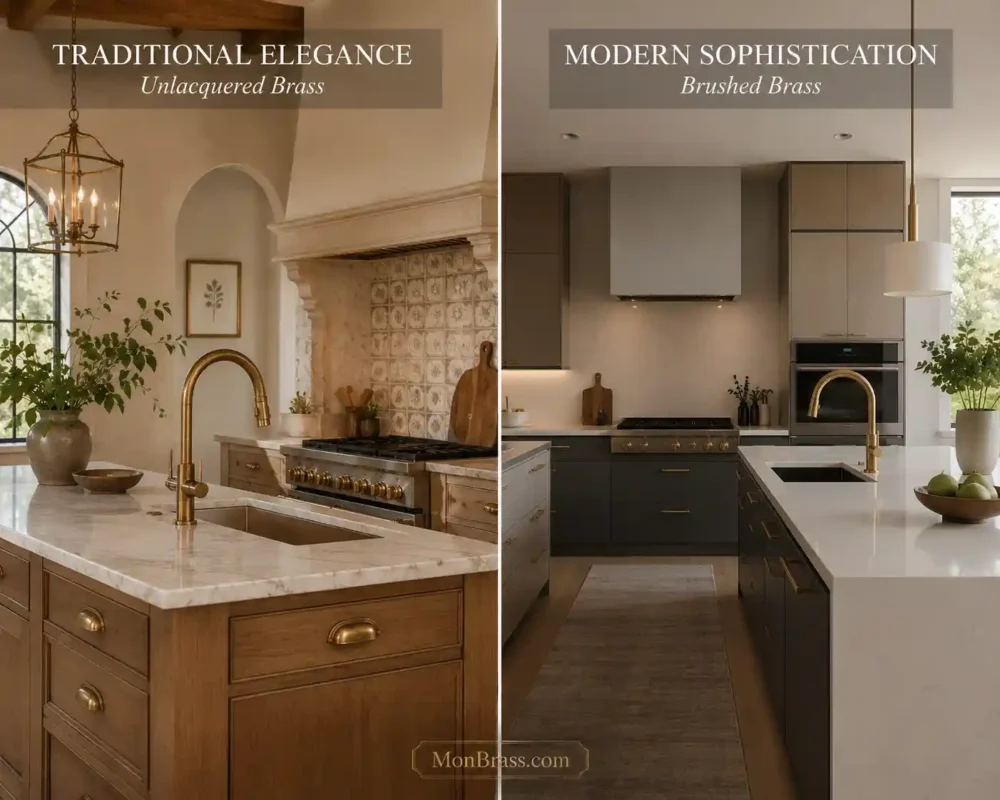
Unlacquered Brass Often Works Well In:
- Historic homes.
- Traditional interiors.
- Farmhouse kitchens.
- European-inspired spaces.
- Homes that feature natural materials such as wood and stone.
Brushed Brass Often Works Well In:
- Modern kitchens.
- Transitional interiors.
- Contemporary homes.
- Minimalist spaces.
- Projects where a more uniform appearance is preferred.
Of course, these are guidelines rather than rules. The surrounding materials, colors, and overall architecture will influence how either finish feels within a space.
Which Finish Is Easier to Maintain?
The answer depends on your expectations.
Living With Unlacquered Brass
Many homeowners simply clean the surface gently and allow it to continue evolving naturally. Others occasionally polish it to restore a brighter appearance.
Neither approach is wrong, but it’s helpful to understand that maintaining a consistently polished look requires more involvement over time.
Living With Brushed Brass
Brushed brass is generally more straightforward. A soft cloth and mild soap are usually enough to keep it looking clean, and the textured surface helps disguise minor smudges and fingerprints.
For households that prioritize convenience, this can be a significant advantage.
Fingerprints, Water Spots, and Everyday Life
Real homes involve fingerprints, cooking grease, hard water, and constant use.
Brushed brass often hides these small imperfections more effectively because of its textured surface. Unlacquered brass may initially reveal them more clearly, although many of those marks gradually blend into the natural variation that develops over time.
Understanding this difference helps set realistic expectations before you make a purchase.
Common Mistakes Buyers Make
Choosing Based Only on Photos
Online images rarely show how a finish behaves after months or years of daily use.
Expecting Unlacquered Brass to Stay Perfectly Uniform
Subtle changes and variation are a normal part of the material’s appeal.
Ignoring Your Personal Preferences
Some homeowners enjoy finishes that gradually evolve, while others prefer everything to remain neat and consistent. Neither preference is better, but choosing the finish that matches your personality often leads to greater long-term satisfaction.
Which Finish Is Better for Kitchens?
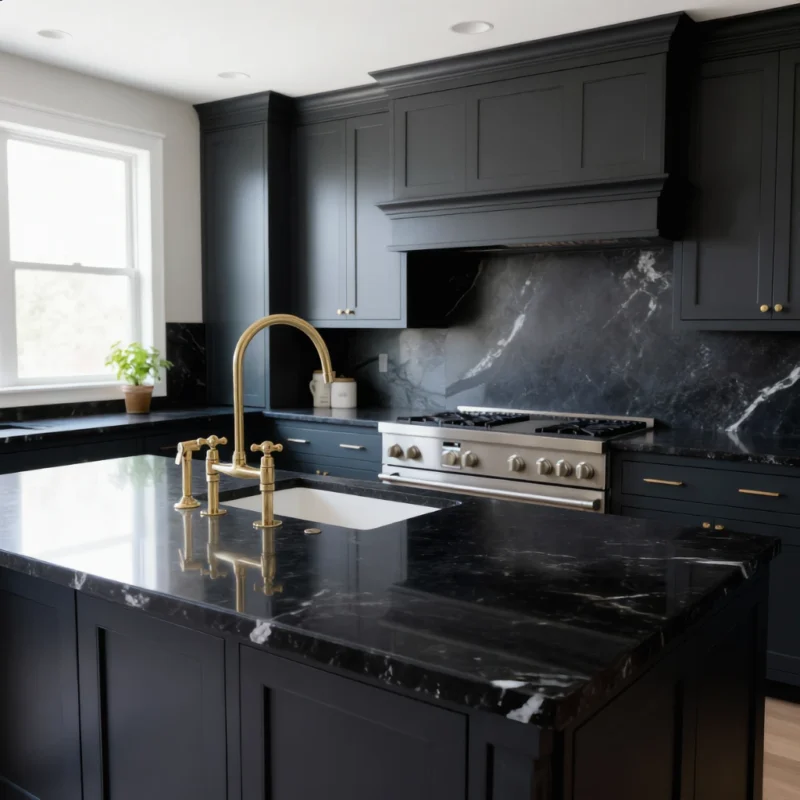
Both finishes work beautifully in kitchens.
Choose unlacquered brass if you appreciate:
- Natural materials.
- Character and individuality.
- A finish that gradually evolves.
Choose brushed brass if you prefer:
- Minimal upkeep.
- Consistency.
- Better resistance to visible fingerprints.
Which Finish Is Better for Bathrooms?
Bathrooms create a more humid environment, so the long-term appearance of the two finishes may become more noticeable.
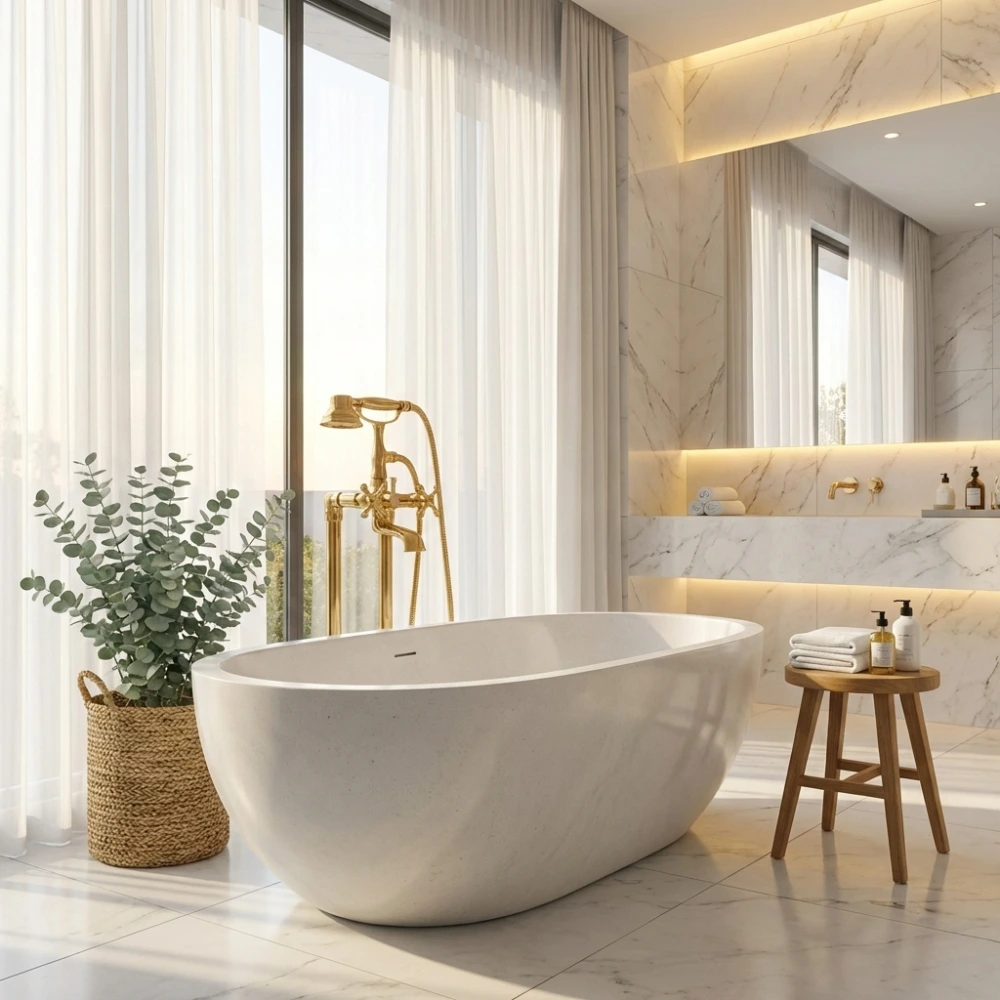
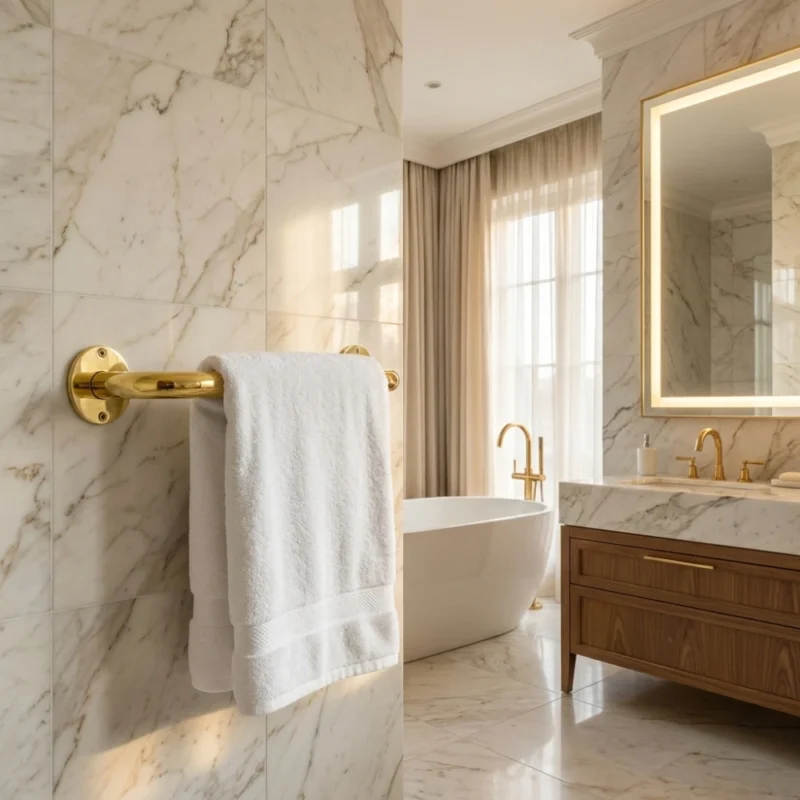
Many homeowners choose unlacquered brass because they appreciate the warmth and individuality it can bring to a bathroom over time. Others prefer brushed brass because it offers a more predictable appearance with minimal maintenance.
The right choice depends less on the room itself and more on how you want the fixtures to look years after installation.
How These Finishes Pair With Other Materials
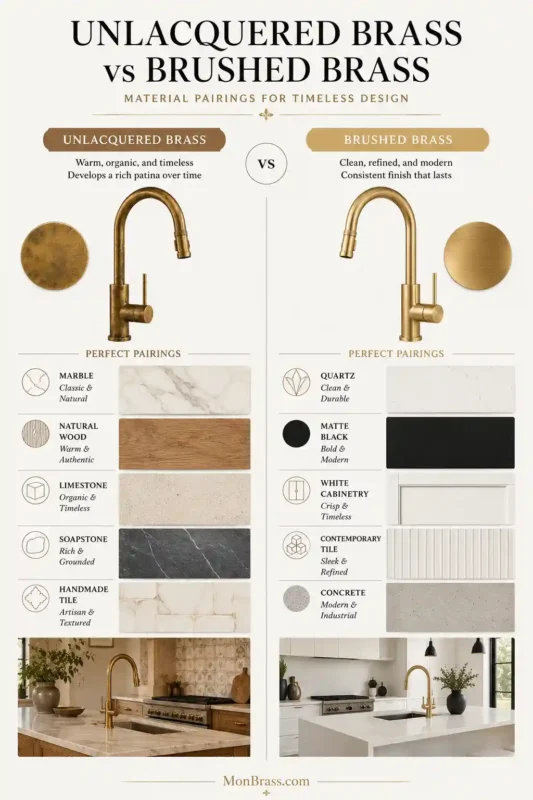
Unlacquered Brass Pairs Beautifully With:
- Marble.
- Natural wood.
- Limestone.
- Handmade tile.
- Soapstone.
- Other natural textures.
Brushed Brass Pairs Well With:
- Quartz countertops.
- Matte black accents.
- White cabinetry.
- Contemporary tile.
- Concrete surfaces.
- Modern architectural details.
A useful tip is to compare finish samples alongside your actual countertop, cabinetry, and tile selections before making a final decision.
A Simple Decision Checklist
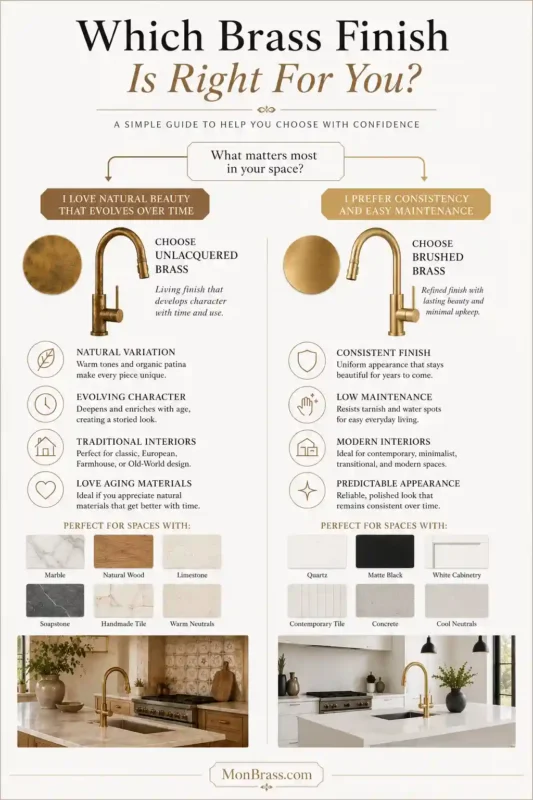
Choose Unlacquered Brass If:
✓ You appreciate natural variation.
✓ You like materials that become more individual over time.
✓ You enjoy traditional or character-rich interiors.
✓ You don’t mind subtle changes in appearance.
Choose Brushed Brass If:
✓ You prefer consistency.
✓ You want a low-maintenance finish.
✓ You dislike visible aging.
✓ Your style leans toward modern or transitional design.
Frequently Asked Questions
Does unlacquered brass eventually turn green?
In most indoor settings, significant green oxidation is uncommon. Most fixtures gradually develop warmer and deeper tones instead.
Can hard water affect brass finishes?
Yes. Hard water can leave mineral deposits on both finishes, particularly around faucets. Drying surfaces after use can help reduce buildup.
Is brushed brass the same as satin brass?
Not always. Manufacturers sometimes use these terms differently, so it’s always worth checking the product specifications.
Which finish is better for rental properties?
Brushed brass is often the easier choice because it requires less attention and maintains a more predictable appearance.
Do brass finishes go out of style?
Brass has remained popular across many design eras. While trends come and go, warm metal finishes have consistently remained relevant.
Conclusion
The best choice often comes down to how you feel about change. Some homeowners enjoy watching natural materials develop more character over time, while others prefer a finish that remains much the same year after year. Neither approach is right or wrong. By understanding how unlacquered brass and brushed brass behave in everyday life, you can choose the option that best matches your home, your lifestyle, and your expectations.
